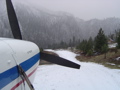
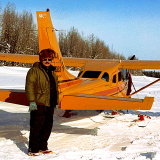
Apache POS is correct about the use of an Apache in the backcountry, though its big brother the Aztec is better at hauling a big load. The Apache may not able to carry a big load but 70mph IAS is very easy over the fence. I flew Norcals 160hp Apache on floats for years. GREAT plane on straight floats, a bit of a pig on amphibs. But it would climb at 250fpm single engine on a St. OAT day at 1000MSL. I flew it out of Caples Lake near Kirkwood which is at 8000'MSL. Sure the water run was 70 seconds long but was climbing at 500fpm after that! It really is a great, slow flying capable twin.
As for the using blue-line for flying in and out of a strips, that has got to be the biggest instructional error I have seen in twin pilots. WHAT IS BLUELINE??????????? It is your best single engine CLIMB speed. It is irrelevant unless you are SE. Yet you see inexperienced MEI's teaching it without a clear understanding what they are doing. In many twins that means flying it like a rocket on final, and wasting performance on departure. Try landing an Aerostar at Blueline some time


Same goes for VMC, flying a twin on final BELOW VMC is not going to kill you unless all 7 factors affecting VMC apply, and you don't accelerate while you bringing in power. A Twin Otter is a perfect example of a spectacular backcountry twin. DeHavilland did it right with that plane along with pretty much everything they made. I would take that anywhere a 206 would go, as long as you have the wing clearance.