Any 182 drivers out there? Yeah, I know it's got that funny wheel in the front but it's still pretty tough. I've got a '69 based in Concord, CA. It's not the prettiest plane on the ramp but it seems to get the job done.
I saw an awesome mod for the 182 at www.260se.com. Check out the videos!
C182
Tue Jan 18, 2005 10:29 pm

"Three quarters mile, I've got the ball!"
[email protected]
[email protected]
Tue Jan 18, 2005 10:46 pm
There's nothing wrong with a nosewheel. I think that a tailwheel aircraft just looks more elegant, but when it comes to practical functionality, the argument can heat up. My flight examiner for my Private was outspoken against taildraggers. The day of my checkride there was a 120/140 flyin at Santa Ynez, and they were in the pattern like Hell's Angels circling a lost female motorist. He claimed they should be outlawed. Of course, he was a King Air driver.
So, what does everyone think? The world's favorite bush planes have classically been tailwheel. What actual limitations are there on a C182 versus a C180, given equivalent horsepower?
Z
So, what does everyone think? The world's favorite bush planes have classically been tailwheel. What actual limitations are there on a C182 versus a C180, given equivalent horsepower?
Z


Tue Jan 18, 2005 11:55 pm
It's definitely a religious thing with some pilots. Personally, I'd like to have one of each but they keep selling me the wrong lottery ticket.
I think if 185s were cheaper, I'd take that over the 182 but they just cost a little more. Not to mention it's harder to find partners to go in with. Maybe the next plane.
I think if 185s were cheaper, I'd take that over the 182 but they just cost a little more. Not to mention it's harder to find partners to go in with. Maybe the next plane.
"Three quarters mile, I've got the ball!"
[email protected]
[email protected]
Fri Jan 21, 2005 6:17 pm
Hi Lumber
I have a 1965 182 (currently in the shop for overhaul)|and I also have a 185. They are both great planes but I will tell you if I am going somewhere on a real windy day and have to land on pavement I will be driving the 182. I did not have to win the lottery but I do have my priorities in order. Happy flying. Steve Riggins

Mon Jun 19, 2006 6:48 am
182's
I've got a 1956 (first year they were sold) 182. Mine is # 502 off the production line. A C-180 with a nose wheel .Share everything with exception of the nose wheel/tailwheel stuff. Also I don't have any cowl Flaps . 1956's have the most ground clearance of all the 182's. Mine has a lots of mods/STC's and field approvals.I'm a A&P /I.A. -pilot so I do all my own work. Firewall Mounted battery (see http:www.edmaircraft.com)
>extended baggage>Sportsman STOL >double puck Clevlands >LRI>Oversized mains and nose> "Modern" layout for Panel . Etc.
I have "off Roaded " quite a bit. Planning trip to Northern CA,Ore.Idaho last of june -to middle of July. Standard 0-470-L engine (-203 prop) with 5 hrs. on board . Back 2 seats (when there in )are out of 206. Load Hauler .
Decent cruise 140-150 mph over the ground at 10-11 gph. Wish I could post a picture of her- At Grand Canyon Airstrip. Bill Reid N5502B
>extended baggage>Sportsman STOL >double puck Clevlands >LRI>Oversized mains and nose> "Modern" layout for Panel . Etc.
I have "off Roaded " quite a bit. Planning trip to Northern CA,Ore.Idaho last of june -to middle of July. Standard 0-470-L engine (-203 prop) with 5 hrs. on board . Back 2 seats (when there in )are out of 206. Load Hauler .
Decent cruise 140-150 mph over the ground at 10-11 gph. Wish I could post a picture of her- At Grand Canyon Airstrip. Bill Reid N5502B
Bill Reid Hanger 22 Taxiway 1 Boulder City,NV
Mon Jun 19, 2006 9:12 am
Re: C182
I saw an awesome mod for the 182 at www.260se.com. Check out the videos![/quote]
I worked on one of those, back when it was called the Wren 260. Quite the performer, but that canard sure made the engine a bugger to get to!
My favorite of the 182's is the '59..first year for cowl flaps.
We hauled LOTS of stuff into back country strips with 182's around this area for years. Great airplane!
JH
I worked on one of those, back when it was called the Wren 260. Quite the performer, but that canard sure made the engine a bugger to get to!
My favorite of the 182's is the '59..first year for cowl flaps.
We hauled LOTS of stuff into back country strips with 182's around this area for years. Great airplane!
JH
- hardtailjohn offline
- Posts: 924
- Joined: Thu Mar 16, 2006 7:06 pm
- Location: Marion, Montana
God put me here to accomplish a certain amount of things...right now I'm so far behind, I'll never die!!
Mon Jun 19, 2006 11:16 am
A nosewheel airplane is infinitely more practical with regards to crosswind etc conditions, but a tailwheel airplane is more of a fun challenge, and therefore more of an accomplishment when you've "mastered" it. (ha!)
To put it another way, a tailwheel airplane is much more likely to bite you in the butt if you allow yourself to become complacent.
I fly a tailwheel airplane,and I can't see myself not owning one. I might own a nosedragger also if I had more than one. But I don't.
However, I'll admit that there are days when I would probably fly a nosedragger,but I decide discretion is the better part of valor, and so leave my taildragger in the hangar.
Compalcency & overconfidence has wrecked many a tailwheel airplane. Notable quote: "A man's got to know his limitations"- Dirty Harry Callahan
Eric
To put it another way, a tailwheel airplane is much more likely to bite you in the butt if you allow yourself to become complacent.
I fly a tailwheel airplane,and I can't see myself not owning one. I might own a nosedragger also if I had more than one. But I don't.
However, I'll admit that there are days when I would probably fly a nosedragger,but I decide discretion is the better part of valor, and so leave my taildragger in the hangar.
Compalcency & overconfidence has wrecked many a tailwheel airplane. Notable quote: "A man's got to know his limitations"- Dirty Harry Callahan
Eric

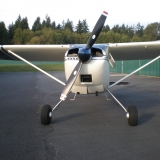
Cessna Skywagon -- accept no substitute!
Mon Jun 19, 2006 11:25 am
I've had both  a 182 and a 182 with a tailwheel. It is a much better balanced airplane with the tailwheel. Crosswinds on pavement is sometimes limiting but my home field almost always has a crosswind but is dirt and RNO has 16/34 and 7/25 so if I run out of rudder at N86 I can go to RNO or Stead. I converted it about 1400 hrs ago (STC). If I had it to do all over again I would have put the tailwheel lock on it.
SD
a 182 and a 182 with a tailwheel. It is a much better balanced airplane with the tailwheel. Crosswinds on pavement is sometimes limiting but my home field almost always has a crosswind but is dirt and RNO has 16/34 and 7/25 so if I run out of rudder at N86 I can go to RNO or Stead. I converted it about 1400 hrs ago (STC). If I had it to do all over again I would have put the tailwheel lock on it.
SD
Mon Jun 19, 2006 5:58 pm
The weak point of the 182 is the nosegear attach point. And the fact that every 182 I've met is a bit nose heavy, unless you load them aft.
If you really do go into semi rough strips, it is pretty easy to bend the firewall in the 182. Do that, and you have a MAJOR repair bill to pay. Not only that, but a bent firewall can jam the controls as well.
So, treat the nosegear on that 182 REAL gently, and you'll do fine. It is a great airplane, no doubt. But, REALLY pay attention to the nosegear.
Now, the 206 has the nose wheel attached to the motor mount, so for one thing its stronger, it's MUCH less expensive if you bend it, and it can't jam the controls unless you ram the sucker right up into the instrument panel. That is, of course, possible with talent and perseverance.
I own a tailwheel airplane, mostly cause it is the one I have. Give me a choice and I'll take the nose gear any day, if I've got to work it.
Go fly a 185 working for a while, then get in a 206 and work it for a while into the same places. Once you go tri, you won't go back.
But, they're all just airplanes, and most folks don't actually work them.
The 182 is a good load hauler, very fuel efficient, considering its speed and fuel burn, and its a good solid airframe.
Just be REALLY careful with those nosewheels, and ALWAYS do a full "around the horn" control circuit check to verify that the tunnel isn't bent.
MTV
If you really do go into semi rough strips, it is pretty easy to bend the firewall in the 182. Do that, and you have a MAJOR repair bill to pay. Not only that, but a bent firewall can jam the controls as well.
So, treat the nosegear on that 182 REAL gently, and you'll do fine. It is a great airplane, no doubt. But, REALLY pay attention to the nosegear.
Now, the 206 has the nose wheel attached to the motor mount, so for one thing its stronger, it's MUCH less expensive if you bend it, and it can't jam the controls unless you ram the sucker right up into the instrument panel. That is, of course, possible with talent and perseverance.
I own a tailwheel airplane, mostly cause it is the one I have. Give me a choice and I'll take the nose gear any day, if I've got to work it.
Go fly a 185 working for a while, then get in a 206 and work it for a while into the same places. Once you go tri, you won't go back.
But, they're all just airplanes, and most folks don't actually work them.
The 182 is a good load hauler, very fuel efficient, considering its speed and fuel burn, and its a good solid airframe.
Just be REALLY careful with those nosewheels, and ALWAYS do a full "around the horn" control circuit check to verify that the tunnel isn't bent.
MTV


Mon Jun 19, 2006 9:09 pm
I will say that I am a bit tired of the nose heavy **** I hear about the 182. Most of the folks that say this have never flown a 56 to 61 182. These 182's have the trim where the entire horizontal stabilizer pivots for the trim. Just like all the 180's and 185's. In 60 they gave it the swept tail but the trim did not change. in 62 they widened the cabin, put in a trim tab and made it very nose heavy and just overall ruined the plane. They should have called it a 183 so people would know the difference.
I am luky to have a 59 182B. It has the last strait tail, cowl flaps and a trimable rudder. Have had it into a lot a chalenging places, the latest of which was in the canyonland area of Utah. If I could get tutored by Zane I would post a few photos.
Tim
I am luky to have a 59 182B. It has the last strait tail, cowl flaps and a trimable rudder. Have had it into a lot a chalenging places, the latest of which was in the canyonland area of Utah. If I could get tutored by Zane I would post a few photos.
Tim
- qmdv offline

- Posts: 3633
- Joined: Wed Feb 15, 2006 10:22 pm
- Location: Payette
- FindMeSpot URL: http://share.findmespot.com/shared/face ... I5tqEOk0rc
- Aircraft: Cessna 182
Mon Jun 19, 2006 9:32 pm
Sorry about the rant. But for sure the 182B has a lighter nose that any other tri gear Cessna that I have flown. Oh and much lighter than the Muskateer that I put 100 hrs in.
Tim
Tim
- qmdv offline
- Posts: 3633
- Joined: Wed Feb 15, 2006 10:22 pm
- Location: Payette
- FindMeSpot URL: http://share.findmespot.com/shared/face ... I5tqEOk0rc
- Aircraft: Cessna 182
Tue Jun 20, 2006 4:03 am
Of the tri gear Cessna's I've always thought of the 182 as the first real useable airplane. That is it's the first to have enough power and useful load to really do something with it. It's also a reasonably good airplane for most everthing, kinda the SUV of airplanes. Good stable IFR airplane that has decent off airport capability, large cabin etc. You would be surprised how good an off airport airplane a 210 is, but talk about nose heavy, fly a 210 for a while and you won't think any 182 is nose heavy.
The nose wheel is the achilles heel of any trike. It's also their savior. How many have you seen ground looped in strong gusty crosswinds?
The nose wheel is the achilles heel of any trike. It's also their savior. How many have you seen ground looped in strong gusty crosswinds?
Tue Jun 20, 2006 7:14 am
Tim,
Thanks for reminding me of the older 182's. I have to admit every 182 I've flown in the last fifteen years or so was a later model. But, I have flown several older 182's, including one that spends a lot of time on floats. Didnt' even notice it was a 182 till the owner told me. Sure looks like a 180...... .
.
And, actually, I didn't mean to imply that the nose heavy characteristic is necessarily bad, but simply that it makes it a lot easier to slam the nose down in rougher stuff, so be careful.
As to landing in "rough" places, I think maybe we're discussing different sorts of "rough". What I'm talking about, and where I'd be really careful with a 182 is going into boulder patches, places with washes, ie: "rough" places. I have no qualms at all about taking a 182 into "challenging" places, cause after all, it's just an airplane, and a dang good one. The surface condition is what I was referring to, and I'm primarily discussing off-airport sites, not airstrips, though some airstrips can get pretty rough as well.
There seems to be a notion here that a 4,000 foot airstrip in a canyon is an off airport venue. It may in fact be far more challenging than a wide open 1200 foot gravel bar on a river, with cobbles, but they present very different challenges and require very different techniques. One isn't necessarily more difficult than the other, just differnt.
MTV
Thanks for reminding me of the older 182's. I have to admit every 182 I've flown in the last fifteen years or so was a later model. But, I have flown several older 182's, including one that spends a lot of time on floats. Didnt' even notice it was a 182 till the owner told me. Sure looks like a 180......
.
And, actually, I didn't mean to imply that the nose heavy characteristic is necessarily bad, but simply that it makes it a lot easier to slam the nose down in rougher stuff, so be careful.
As to landing in "rough" places, I think maybe we're discussing different sorts of "rough". What I'm talking about, and where I'd be really careful with a 182 is going into boulder patches, places with washes, ie: "rough" places. I have no qualms at all about taking a 182 into "challenging" places, cause after all, it's just an airplane, and a dang good one. The surface condition is what I was referring to, and I'm primarily discussing off-airport sites, not airstrips, though some airstrips can get pretty rough as well.
There seems to be a notion here that a 4,000 foot airstrip in a canyon is an off airport venue. It may in fact be far more challenging than a wide open 1200 foot gravel bar on a river, with cobbles, but they present very different challenges and require very different techniques. One isn't necessarily more difficult than the other, just differnt.
MTV
Thu Jun 22, 2006 12:54 am
For long cross country flight I prefer a nosegear aircraft or retractable for that matter. For unimproved landing strips, definitely a tailwheel.
I have flown the early and late model 182's, the best one I ever flew was a late 50's model, 1957 I think it was. The thing sat high enough that you could taxi it through cattle guard gates if you needed, was very light on the controls and a joy to fly.
Tailwheel aircraft demand a higher degree of performance from the pilot. Lazy, sloppy and less coordinated pilots are weeded out fairly quick in them. Tri-gear or Land-O-Matics as Cessna called them, allowed many people to become pilots that wouldn't have made it to a license in a tailwheel.
For real unimproved short strips I prefer a Super Cub because I can get into and out of places aircraft like a C-206, C-210 and C-182 can't go. The fact that it is a taildragger is less stressful when landing in new places with tall grass which may be hiding ruts, rocks anthills etc. Someone said it elsewhere on this site, if your landing in a place like this in a group, let the tailwheel aircraft land first to find the obstacles that would turn a nosegear aircraft into scrap aluminum.
Some people on here describe an unimproved strip as anything dirt 3000+ ft in length. To me that's JFK. In that case why limit yourself to just Cessnas.
Adding to JR's analogy of dirt bikes. There are people who want to ride in the dirt and take a street bike, remove the lights and add knobby tires only to be sorely disappointed with the results compared to a real dirt bike. Sure it will work to some degree, but you will never have the full utility your looking for. On the other hand would I want to be touring the highways on a dirt bike, not likely. Pilots should do some soul searching before they buy, figure out what kind of flying pleases them most and purchase accordingly for that specific purpose.
As far as the King Air pilot/CFI, chances are he progressed through the ranks in tri-gears and never sat in a tailwheel aircraft. Funny thing is a lot of the professional carrier pilots flying the really big stuff buy small taildraggers to regain the feeling of really flying.
I have flown the early and late model 182's, the best one I ever flew was a late 50's model, 1957 I think it was. The thing sat high enough that you could taxi it through cattle guard gates if you needed, was very light on the controls and a joy to fly.
Tailwheel aircraft demand a higher degree of performance from the pilot. Lazy, sloppy and less coordinated pilots are weeded out fairly quick in them. Tri-gear or Land-O-Matics as Cessna called them, allowed many people to become pilots that wouldn't have made it to a license in a tailwheel.
For real unimproved short strips I prefer a Super Cub because I can get into and out of places aircraft like a C-206, C-210 and C-182 can't go.
The fact that it is a taildragger is less stressful when landing in new places with tall grass which may be hiding ruts, rocks anthills etc. Someone said it elsewhere on this site, if your landing in a place like this in a group, let the tailwheel aircraft land first to find the obstacles that would turn a nosegear aircraft into scrap aluminum.
Some people on here describe an unimproved strip as anything dirt 3000+ ft in length. To me that's JFK. In that case why limit yourself to just Cessnas.
Adding to JR's analogy of dirt bikes. There are people who want to ride in the dirt and take a street bike, remove the lights and add knobby tires only to be sorely disappointed with the results compared to a real dirt bike. Sure it will work to some degree, but you will never have the full utility your looking for. On the other hand would I want to be touring the highways on a dirt bike, not likely. Pilots should do some soul searching before they buy, figure out what kind of flying pleases them most and purchase accordingly for that specific purpose.
As far as the King Air pilot/CFI, chances are he progressed through the ranks in tri-gears and never sat in a tailwheel aircraft. Funny thing is a lot of the professional carrier pilots flying the really big stuff buy small taildraggers to regain the feeling of really flying.
- Supercubber offline

- Posts: 213
- Joined: Sat Jul 16, 2005 1:18 pm
- Location: Rocky Mtns
Fly It Like You Mean It!
Thu Jun 22, 2006 4:50 am
On the off aorport comments,
It's different down south, very little rocks. Bushwheels are almost nonexistant. Off airport down here means anywhere you land that isn't marked on a sectional. Usually farmer fields, hay fields are best, but a cultivated field is OK as long as it isn't wet and has been disked. Abandoned roads, pastures, clearings etc. What get's you down here is usually obstacles on the approach / departure, unseen ditches, holes etc. There is a thing called a gopher turtle that can dig a hole overnight that will swallow a 6.00x6 rather easily.
Down south the power an airplane has seems to be at least as important as the flotation of the landing gear. Down here a 182 is a respectable off airport airplane, a 172 isn't. You can take your wife and two kids with an ice chest and land on a hard packed beach with a 182. Now while the supercub is the standard that other "bush" planes seem to be measured by, try that in one.
The motorcycle is a good analogy. The Supercub may be the Husquvarna CR of airplanes and the Piper Malibu a Gold Wing, I would say that the 182 is about as good as an all around airplane as can be found in a affordable tricycle.
Of course I think a Maule M-6/235 is even better It is slanted a little more towards the Supercub than the Malibu
It's different down south, very little rocks. Bushwheels are almost nonexistant. Off airport down here means anywhere you land that isn't marked on a sectional. Usually farmer fields, hay fields are best, but a cultivated field is OK as long as it isn't wet and has been disked. Abandoned roads, pastures, clearings etc. What get's you down here is usually obstacles on the approach / departure, unseen ditches, holes etc. There is a thing called a gopher turtle that can dig a hole overnight that will swallow a 6.00x6 rather easily.
Down south the power an airplane has seems to be at least as important as the flotation of the landing gear. Down here a 182 is a respectable off airport airplane, a 172 isn't. You can take your wife and two kids with an ice chest and land on a hard packed beach with a 182. Now while the supercub is the standard that other "bush" planes seem to be measured by, try that in one.
The motorcycle is a good analogy. The Supercub may be the Husquvarna CR of airplanes and the Piper Malibu a Gold Wing, I would say that the 182 is about as good as an all around airplane as can be found in a affordable tricycle.
Of course I think a Maule M-6/235 is even better
It is slanted a little more towards the Supercub than the Malibu Sat Mar 15, 2008 12:26 pm
C-182A
Have a buddy of mine that lives in the up state washington area and flies a C182A with landis 8.50 x 6 and 10" Gar-Aero's on the mains. For years he was the owner of a 83 M5 Maule which is a remarkable aircraft, but he states there are some place he now goes that he would not even dream taking his Maule. His maule had 10" Gar-Aeros too. His opinion was the 182 with the nose gear had more overall floatation.
For those that have 182's and would like to beef up there firewall look at the seaplanes west conversion its pretty hell for stout.
Weather you have a nose wheel or tailwheel they all fly and we all have alot fun doing it. We all have limitations of skill and aircraft capabilities. How we get there is regardless.
I am a nosewheel pilot and know I would wreck a perfectly good aircraft if tried to change, so I don't. That way there ar more tailwheel aircraft out there for tailwheel pilots to enjoy.
For those that have 182's and would like to beef up there firewall look at the seaplanes west conversion its pretty hell for stout.
Weather you have a nose wheel or tailwheel they all fly and we all have alot fun doing it. We all have limitations of skill and aircraft capabilities. How we get there is regardless.
I am a nosewheel pilot and know I would wreck a perfectly good aircraft if tried to change, so I don't. That way there ar more tailwheel aircraft out there for tailwheel pilots to enjoy.
- pponkseaplane182 offline
- Posts: 4
- Joined: Fri Mar 14, 2008 11:01 pm
- Location: Kenai, AK
Sat Mar 15, 2008 5:22 pm
C182's
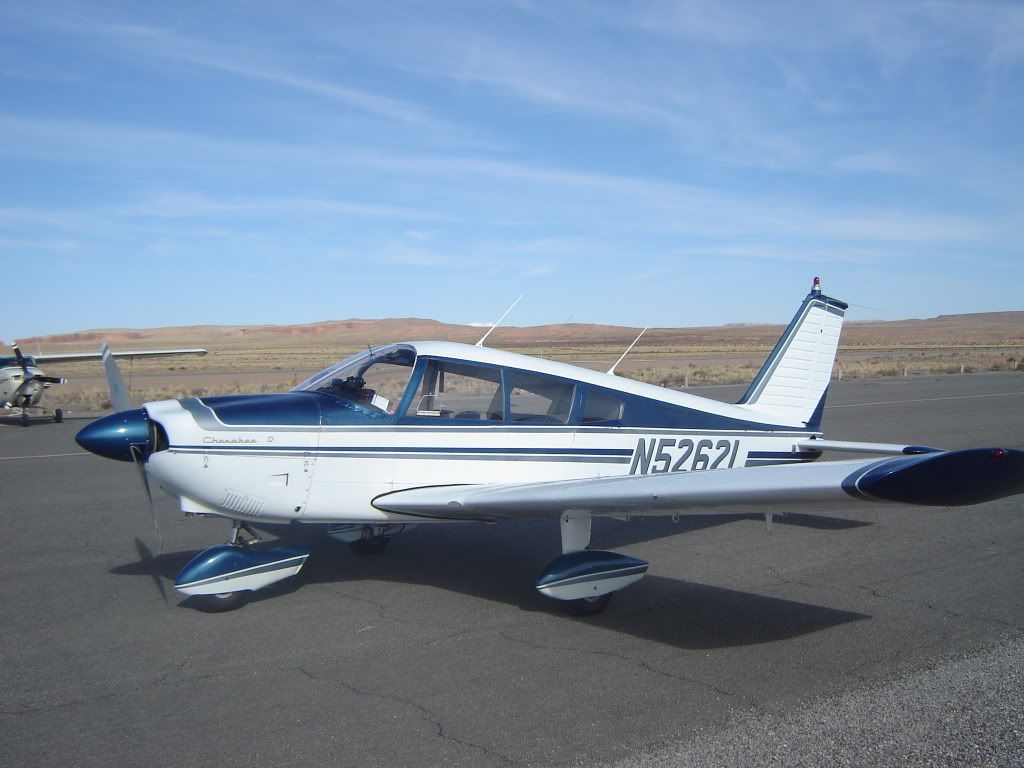
Its funny how many of us ride dirtbikes on this forum. I have a cherokee (soon a 182) that I overfly some of the nasty strips in southern Utah then go find them on my XR. Both are a blast!
If I wasn't born with hormones, I could survive on planes and dirtbikes alone. Did I just say that?
For those wanting to post pics, try this, I just figured it out a few days ago..
1. Go to photobucket.com or any other web-photos hosting sites and set up a free account, upload your photos, then go to your desired photog and copy the image (IMG) url and paste it underneath your text and whallah!! Youv'e posted pics!
Others on this forum are prolly more clever than I but this worked well my tiny cranium. Lets try it here:
If I wasn't born with hormones, I could survive on planes and dirtbikes alone. Did I just say that?
For those wanting to post pics, try this, I just figured it out a few days ago..
1. Go to photobucket.com or any other web-photos hosting sites and set up a free account, upload your photos, then go to your desired photog and copy the image (IMG) url and paste it underneath your text and whallah!! Youv'e posted pics!
Others on this forum are prolly more clever than I but this worked well my tiny cranium. Lets try it here:
- SixTwoLeemer offline

- Posts: 1285
- Joined: Thu Feb 07, 2008 10:53 am
- Location: Wasatch Front
Altitude is Time…. Airspeed is Life!
Sun Mar 16, 2008 4:37 pm
Re: C182
Lumber wrote:Any 182 drivers out there? Yeah, I know it's got that funny wheel in the front but it's still pretty tough. I've got a '69 based in Concord, CA. It's not the prettiest plane on the ramp but it seems to get the job done.
I saw an awesome mod for the 182 at www.260se.com. Check out the videos!
I fly a 59 182 and I have a few videos of some of my flights. I haven't seen you on this forum before so if you haven't seen them you can look here. www.youtube.com/skybobb. You will find 23 short videos if you keep looking. Enjoy Bob
1959 Cessna 182 Skylane N9054N
My back country videos are here: http://www.youtube.com/skybobb
"I don't belong to any organized Political party, I'm a Democrat."
Will Rogers 1879 - 1935
My back country videos are here: http://www.youtube.com/skybobb
"I don't belong to any organized Political party, I'm a Democrat."
Will Rogers 1879 - 1935
DISPLAY OPTIONS
Who is online
Users browsing this forum: No registered users and 0 guests
Latest Features
-
Live to Tell
A Minnesota pilot is surprised to learn that the sudden asymmetric drag of an out-of-rig ski can…Read More -
Creators
Working in some of the Yukon's most beautiful and remote environments, photographer Simon Blakesley captures aircraft in…Read More -
Aircraft Ownership and Maintenance
Upgrading to big tires can make a huge difference in backcountry performance, but with those gains come…Read More -
Tales from Yesteryear
In this tale from bush flying yesteryear, Don Cogger signs up to help Atlee Dodge Jr recovery…Read More


Latest Knowledge Base
-
Destinations
A regional guide with ideas for winter camping destinations in California, Nevada, New Mexico, and Arizona.Read More -
Aircraft
Finding an affordable aircraft that can handle the backcountry for $80K or less? A challenge for sure, but with the…Read More -
Aircraft
01.29.2018 - Zane - Updated tire diameter graphic to add 8.50x10 Guide to tires for use in the backcountry and off-airport landing…Read More -
Pilots
12.22.2013 - Initial article format Operating aircraft on skis and negotiating a snow-covered landscape is an entirely unique skillset and environment.…Read More


