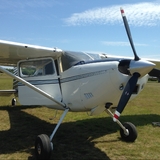
skiermanmike wrote:....Also, a friend just bought a IO550 powered A36 and it seems to be a real runway hog. I really had to scale back my recommendations of backcountry destinations for him because I was really so surprised when he told me how much pavement he was using at relatively low DA (2000’ or more? I’m not an expert here, could be just a gaining familiarity with a new plane kind of thing.).
...
If an IO550 plane is taking 2000', something is wrong or something can be changed. I'm not doubting your findings at all, I actually think it's common because of how people fly them. I've found the same seems to be the case for Scouts where the majority of owners are not flying them to their capabilities because let's be honest, they don't need to.
We've found that gap seals and VG's really help A36 short field performance. Also, CG towards the aft side helps more than most planes, unfortunately that is rarely the case when people try to shave weight out of them or go into short strips light.
Flying an A36 by the book numbers will leave you unimpressed unless you're going long distances pavement to pavement. Behind the power curve and it'll come in at 80mph stable as a rock loaded up. If I need to come in really short, I like to start retracting flaps from full to zero about 20' off the ground if landing is assured. The retract rate of the electric flaps is perfect for this. By the time you touch, you're at zero flaps, full weight on the wheels, very nose high attitude (increases as flaps retract), and slow slow slow. On takeoff, flaps 10-20 (seems to vary by airframe), nose off asap, let it fly off, suck the gear asap, off you go. If you use full flaps on TO, it'll get off the ground scary quick but what happens afterward is not impressive.
With tip tanks, I've maxed out my 8 hour duty day without refueling by running LOP. I'd highly recommend the tips with pumps, not the ones with a 4 way fuel selector.
I have about 850 hours in three A36's, all part 135. I've never flown a C210. Good recipe for bias? Haha