The story of the stolen C-172 "chased" by the F-16's brings to mind a question i've had for a while.....
My wife and I have a cottage at a lake near Canada's largest airbase (4 WING Cold Lake) and often the hornets come roaring by barly above the tree tops. If one happened to be up there going "low and slow" what are the chances of colision and/or a wake turbulance problem with the very limited time frame between visual contact and proximity.
Would their onboard radar pick up a small aircraft? Maybe the military folks(or EX) on the site could answer that question. I understand how very slim the chances of this are and have never heard of it happening but I can't help but think about it everytime a F18 scares the hell out of me when I'm sitting on my deck and makes me spill my beer!
Thanks,
Drew
Close calls with fast movers?
Tue Apr 07, 2009 9:01 pm
Wed Apr 08, 2009 5:29 am
Re: Close calls with fast movers?
The short answer is that small GA aircraft can be seen by tactical aircraft equipped with radar, but exactly how well or how reliably they will be seen depends on a variety of variables. Bottom line is don't assume they will see you on radar even though odds are good that they will. Acquiring you visually is another matter entirely and not something I'd count on.
As to the odds of such an encounter occurring, in the US anyway, if everyone is playing by the rules the odds should be low. Tactical jets can only fly low and fast in either special use airspace (SUA) or on designated and well defined military training routes (MTR). If they are operating in special use airspace GA aircraft are generally not a concern with the exception of MOAs, where military aircraft are obliged to give way to transiting traffic. Many MOAs have good radar coverage, so the military traffic receives traffic calls from the "owner" of the airspace - usually a center.
MTRs are a different animal altogether and, I believe, are generally not given the regard they deserve. MTRs are defined routes that allow tactical aircraft to practice low-level ingress and usually dump them into some form of SUA. Bear in mind that the jets don't just fly the line depicted on the chart, they maneuver dynamically throughout. Generally the route corridor is a few miles wide and a few thousand feet high to allow for this.
MTRs are depicted on sectionals and their usage is procedurally monitored by the nearest FSS. Military users check onto and off of the route with FSS. Deconflicting yourself from them is pretty easy. Scan your sectional to see if your desired route of flight has you crossing any. Then when you're getting close to one, check in with FSS to see if they have any aircraft that have reported on or even any scheduled to use it. If yes on either count, keep your head on a swivel and don't delay transiting the route. I've met a number of civilian instructors who were woefully unfamiliar with what I've just described - probably because they were never taught it well either - so I'm not surprised that there isn't widespread MTR awareness among the GA community.
I have a pretty good story about an encounter I had on while flying a route, but I'll save it for another post...
As to the odds of such an encounter occurring, in the US anyway, if everyone is playing by the rules the odds should be low. Tactical jets can only fly low and fast in either special use airspace (SUA) or on designated and well defined military training routes (MTR). If they are operating in special use airspace GA aircraft are generally not a concern with the exception of MOAs, where military aircraft are obliged to give way to transiting traffic. Many MOAs have good radar coverage, so the military traffic receives traffic calls from the "owner" of the airspace - usually a center.
MTRs are a different animal altogether and, I believe, are generally not given the regard they deserve. MTRs are defined routes that allow tactical aircraft to practice low-level ingress and usually dump them into some form of SUA. Bear in mind that the jets don't just fly the line depicted on the chart, they maneuver dynamically throughout. Generally the route corridor is a few miles wide and a few thousand feet high to allow for this.
MTRs are depicted on sectionals and their usage is procedurally monitored by the nearest FSS. Military users check onto and off of the route with FSS. Deconflicting yourself from them is pretty easy. Scan your sectional to see if your desired route of flight has you crossing any. Then when you're getting close to one, check in with FSS to see if they have any aircraft that have reported on or even any scheduled to use it. If yes on either count, keep your head on a swivel and don't delay transiting the route. I've met a number of civilian instructors who were woefully unfamiliar with what I've just described - probably because they were never taught it well either - so I'm not surprised that there isn't widespread MTR awareness among the GA community.
I have a pretty good story about an encounter I had on while flying a route, but I'll save it for another post...
Last edited by Vick on Sat Apr 11, 2009 9:48 pm, edited 2 times in total.
- Vick offline

- Posts: 823
- Joined: Fri Jan 06, 2006 2:21 pm
- Location: Grass Valley, CA
- FindMeSpot URL: http://share.findmespot.com/shared/face ... WUk8CX06AP
Solum Volamus
Wed Apr 08, 2009 7:12 am
Re: Close calls with fast movers?
Back in the 1960's the USAF B52 bombers would regularly fly very low over our small village in northern Ontario. I guess they used the same route over and over again for training runs, and there were usually several per week. I don't know why they flew so low, but it seemed like they were no more than a couple hundred feet above terrain.
One day I was with my dad when he was taking off from the lake in his C180 and just as we got over tree top height one of these B52s came by. The encounter was very sudden and dad cranked it over to give way. I always wondered if the B52 crew saw us on radar or visually. They sure did not alter course at all.
One day I was with my dad when he was taking off from the lake in his C180 and just as we got over tree top height one of these B52s came by. The encounter was very sudden and dad cranked it over to give way. I always wondered if the B52 crew saw us on radar or visually. They sure did not alter course at all.
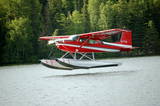
Rick's Cessna 180 float plane video http://www.youtube.com/watch?v=g6my0FM9F_Q
Wed Apr 08, 2009 7:37 am
Re: Close calls with fast movers?
A number of years ago, a friend of mine was flying S-3's for the Navy and would rotate through Fallon Naval Air Station from time to time for weapons training. He told me this story that involved an F-18 at Fallon. After a normal day of training, in which everything went as planned, they were reviewing the gun camera footage as a normal followup to the days exercises. Someone noticed an anomaly on the tape and they rewound it and played it back slow motion. What they saw was a Super Cub that they had missed by just a few yards. Neither the pilot or the RIO had any idea of the near miss. Granted, the Super Cub was in the restricted area where he should not have been, but it's an object lesson on how well the crew of the F-18 can spot conflicting traffic.

Wed Apr 08, 2009 8:32 am
Re: Close calls with fast movers?
A couple of years ago I was flying my Luscombe (no transponder, no radio, did have a GPS) back from Indiana. At 2,000 ft, a couple miles north of a MOA, a F-16 came from the south at my altitude and looped around behind me and then back in front of the plane. He was on his side and I could see his helmet tilted back as if to look at the Luscombe. I think he overshot his MOA and I am pretty sure he saw me. I certainly saw him! 
Last edited by Skystrider on Wed Apr 08, 2009 12:18 pm, edited 1 time in total.
- Skystrider offline
- Posts: 1232
- Joined: Wed Jan 24, 2007 1:44 pm
- Location: Saylorsburg
- Aircraft: Zenith CH701 w/ Jabiru 3300
Wed Apr 08, 2009 9:49 am
Re: Close calls with fast movers?
Good information, Vick, with one minor exception: While military aviators are required to check on and off an MTR with the nearest FSS, in fact, the FSS system has no way to record or log that information. So, you can check with FSS all you like, but unless you happen to get lucky and talk to the FSS operator who took the call from the military flight, you probably won't get any info on the activity on the route.
The thing that spooks me is landings and takeoffs, in the boonies, and the possibility of a military airplane coming by about the time I lift off.
As to military aircraft's on board radar, a two man crew can have the RIO in the back monitoring the radar, but you're still apt to dissapear in ground clutter. In a single pilot military airplane, at 540 knots and 500 feet, the pilot's attention is likely focused largely on dirt, not radars...
I had a BUFF (B-52) fly UNDER me, when I was at about 600 feet once, circling a radio tagged wolf. In fact, the B-52 can easily operate below the 250 knot speed limit at low level, and so they do not need to be on an MTR or in a MOA.
The military has a 500 foot lower limit for most of its pilots, with some pilots authorized down to 300 feet in specified airspace.
However, boys will be boys....
MTV
The thing that spooks me is landings and takeoffs, in the boonies, and the possibility of a military airplane coming by about the time I lift off.
As to military aircraft's on board radar, a two man crew can have the RIO in the back monitoring the radar, but you're still apt to dissapear in ground clutter. In a single pilot military airplane, at 540 knots and 500 feet, the pilot's attention is likely focused largely on dirt, not radars...
I had a BUFF (B-52) fly UNDER me, when I was at about 600 feet once, circling a radio tagged wolf. In fact, the B-52 can easily operate below the 250 knot speed limit at low level, and so they do not need to be on an MTR or in a MOA.
The military has a 500 foot lower limit for most of its pilots, with some pilots authorized down to 300 feet in specified airspace.
However, boys will be boys....
MTV


Wed Apr 08, 2009 11:34 am
Re: Close calls with fast movers?
mtv wrote:While military aviators are required to check on and off an MTR with the nearest FSS, in fact, the FSS system has no way to record or log that information. So, you can check with FSS all you like, but unless you happen to get lucky and talk to the FSS operator who took the call from the military flight, you probably won't get any info on the activity on the route.
Military users are required to schedule usage of the route though, so FSS will be able to tell you if they have anyone scheduled. And most routes don't take more than 30-45 minutes to complete, so unless there was a shift change FSS should be able to tell you if they have had anyone check on recently.
mtv wrote:The thing that spooks me is landings and takeoffs, in the boonies, and the possibility of a military airplane coming by about the time I lift off.
Closest thing I've had to a mid-air was just as I was clearing a parallel tree line from a charted grass strip. Forest service/fire planes bee-lining it back for another load came literally over at tree top level - lead almost clipped me, because he was coming at me from my 7 o'clock, I only saw him after he jinked hard to the left and pulled up. Doubtful they even knew they were flying over a strip.
mtv wrote: As to military aircraft's on board radar, a two man crew can have the RIO in the back monitoring the radar, but you're still apt to dissapear in ground clutter. In a single pilot military airplane, at 540 knots and 500 feet, the pilot's attention is likely focused largely on dirt, not radars...
There's no ground clutter if you are looking up at your target, which is the likely scenario if the mil jet is at 300' and the VFR traffic he locks up is around a thousand or so. I've had precisely this scenario (while flying a single seat aircraft) - if you get a contact while you're at 300' and 450kts the prudent thing to do is climb a little so that you can devote some attention to determining if there is a conflict.
mtv wrote:The military has a 500 foot lower limit for most of its pilots, with some pilots authorized down to 300 feet in specified airspace.
On an MTR it's typically not the qualification of the aircrew that determines the altitude flown. Though many routes permit down to 300' many have higher minimum altitudes - it just depends what route it is.
- Vick offline
- Posts: 823
- Joined: Fri Jan 06, 2006 2:21 pm
- Location: Grass Valley, CA
- FindMeSpot URL: http://share.findmespot.com/shared/face ... WUk8CX06AP
Solum Volamus
Wed Apr 08, 2009 12:14 pm
Re: Close calls with fast movers?
A friend of mine who flies a J-3 was out checking stock tanks in their pasture up in NW nebraska had a B-52 fly under him from behind. Said it didn't bother him too much at the time but when he got back home and put it on the ground it finally sunk in. He very seldom flies the J-3 over 1000ft AGL.
Out on the family ranch in SW South Dakota, many times when I was younger, the B-52's would fly over so low you could see the pilots. They would come in low and slow and there were times I would be settings posts, see a shadow only to look up to see the plane...never heard it coming. Hard to believe such a thing could sneek up on you.
HC
Out on the family ranch in SW South Dakota, many times when I was younger, the B-52's would fly over so low you could see the pilots. They would come in low and slow and there were times I would be settings posts, see a shadow only to look up to see the plane...never heard it coming. Hard to believe such a thing could sneek up on you.
HC
'05 7GCBC High Country Explorer
The faster I go , the farther behind I get.
The faster I go , the farther behind I get.
Wed Apr 08, 2009 2:04 pm
Re: Close calls with fast movers?
Vick,
Okay, so call your "local" AFSS and ask them when a local MTR is scheduled. I'm betting they'll tell you it's scheduled all day.
My point was that, while the military folks do their part in this deal, the "new and improved" AFSS system isn't holding up its end of the deal.
Air Force aviators are specifically and individually qualified to how low they are permitted to fly. It's not just the route. Dunno about the rest.
MTV
Okay, so call your "local" AFSS and ask them when a local MTR is scheduled. I'm betting they'll tell you it's scheduled all day.
My point was that, while the military folks do their part in this deal, the "new and improved" AFSS system isn't holding up its end of the deal.
Air Force aviators are specifically and individually qualified to how low they are permitted to fly. It's not just the route. Dunno about the rest.
MTV
Wed Apr 08, 2009 5:23 pm
Re: Close calls with fast movers?
The A-10 guys from Whiteman AFB, MO gave a talk at our local EAA meeting and avoidance was one of our questions. They said they don't have on-board radar so keep your transponders on when flying through central Missouri!
Wed Apr 08, 2009 7:43 pm
Re: Close calls with fast movers?
What they saw was a Super Cub that they had missed by just a few yards. Neither the pilot or the RIO had any idea of the near miss.
I attended a safety seminar put on by Hill AFB and the SLC ATC Center about 3 weeks ago. The Hill guys showed actual video from an F-16 (If I remeber correctly) in an MOA that missed a single engine Cessna by about 50 feet. Controlers can be heard warning the crew, but they were so focused on their target, they didn't pay any attention. Even after the fact they acted like it didn't really happen.
They had on-board rader, too but must not have been looking at it.
- blackrock offline
- Posts: 1576
- Joined: Tue Jan 29, 2008 6:54 pm
- Location: Elko, NV
- FindMeSpot URL: http://share.findmespot.com/shared/face ... BFmtASxjeV
- Aircraft: Bearhawk
Fri Apr 10, 2009 9:43 pm
Re: Close calls with fast movers?
Had a F-18 fast mover come up and close one day when I was just north of 29 Palms Marine base . I was doing my regulated 130 knots going east to west in the civilian side of there airspace. He had gear and flaps hanging on his side of the fence .Looking down at my GPS I was within couple hundred yards of there restricted airspace. Decided to see how slow F-18 could fly > Dropped 40 degrees and slowed to 50 knots (200ft. AGL) and watched fast mover almost become dirt dart. He went to full afterburner and streaked across my nose in sharp right turn. Behind him and me was another space jockey in another F-18 >he went behind me in full blowtorch mode. They went out 3-4 miles to the north and turned the wick up to come right past my nose at full tilt boogie -complementary 1 finger salute ! This is one of several encounters . In helicopters they do it all the time -saw a mid air between Helicopter(UH-1H) and F-105 once and nobody got to go home. Was involved in Mid air> helicopter to helicopter once and all survived to make it to the bar that night. Saw several other mid airs that didn't turn out so lucky.
- 182 STOL driver offline
- Posts: 1529
- Joined: Tue Apr 22, 2008 8:27 pm
Sat Apr 11, 2009 11:25 am
Re: Close calls with fast movers?
Drew,
I used to fly US Navy FA-18's out of Cold Lake as support for the Canadians Top Gun School Training. You are correct; they/we flew very low at high speeds with little insight from our radar (ground clutter). We did follow, for the most part, scripted routes returning back to Cold Lake Base or entering to the working area's (MOA). My strong advice is stay out of the working areas or be in radio contact with someone who is talking to the jets. The other piece of the advice is talk with the local fighter guys (they're good guys), and ask them their entry and exit routes to the base - then stay out of those routes.
I recall flying tight formation at 350+kts tree top level with two sections (4 jets). Much of my attention was looking at the other three aircraft in close proximity and not hitting them or the wires/tree tops/smoke stacks/etc. In other words coming back to the base is like driving down a fast freeway - don't be on it unless you are going the same direction and same speed - might get run over.
Oh, and don't punish the military aviators, they need real life low and fast practice to develop task saturation skill sets while still getting the job done.
All the Best,
Rob
I used to fly US Navy FA-18's out of Cold Lake as support for the Canadians Top Gun School Training. You are correct; they/we flew very low at high speeds with little insight from our radar (ground clutter). We did follow, for the most part, scripted routes returning back to Cold Lake Base or entering to the working area's (MOA). My strong advice is stay out of the working areas or be in radio contact with someone who is talking to the jets. The other piece of the advice is talk with the local fighter guys (they're good guys), and ask them their entry and exit routes to the base - then stay out of those routes.
I recall flying tight formation at 350+kts tree top level with two sections (4 jets). Much of my attention was looking at the other three aircraft in close proximity and not hitting them or the wires/tree tops/smoke stacks/etc. In other words coming back to the base is like driving down a fast freeway - don't be on it unless you are going the same direction and same speed - might get run over.
Oh, and don't punish the military aviators, they need real life low and fast practice to develop task saturation skill sets while still getting the job done.
All the Best,
Rob
Home field Sutter County Airport (o52).
Sat Apr 11, 2009 11:40 am
Re: Close calls with fast movers?
Most of my experiences were not fast haulers, but heavy haulers. This was a couple days ago. The one that really got me was when a FedEx 747 cut in front of me, slightly higher.

- patrol guy offline

- Posts: 1749
- Joined: Wed Apr 11, 2007 2:52 pm
- Location: east of the river
...remember, life is uncertain, eat desert first!
... and, those that pound their guns into plows, will plow for those who don't.
... and, those that pound their guns into plows, will plow for those who don't.
Sat Apr 11, 2009 7:23 pm
Re: Close calls with fast movers?
RR wrote:Drew,
I used to fly US Navy FA-18's out of Cold Lake as support for the Canadians Top Gun School Training. You are correct; they/we flew very low at high speeds with little insight from our radar (ground clutter). We did follow, for the most part, scripted routes returning back to Cold Lake Base or entering to the working area's (MOA). My strong advice is stay out of the working areas or be in radio contact with someone who is talking to the jets. The other piece of the advice is talk with the local fighter guys (they're good guys), and ask them their entry and exit routes to the base - then stay out of those routes.
I recall flying tight formation at 350+kts tree top level with two sections (4 jets). Much of my attention was looking at the other three aircraft in close proximity and not hitting them or the wires/tree tops/smoke stacks/etc. In other words coming back to the base is like driving down a fast freeway - don't be on it unless you are going the same direction and same speed - might get run over.
Oh, and don't punish the military aviators, they need real life low and fast practice to develop task saturation skill sets while still getting the job done.
All the Best,
Rob
Thanks for the replys everyone! We have an early model Lazair and low and slow is all it will do! Check the notams and contact the FSS....And Rob, if you are participating in Maple flag exercises this year and flying over Murphy Lake (35 NM SE of Cold laKE) give me a wing wag or stop bye for a cold one!
Cheers,
Drew
Sat Apr 11, 2009 7:52 pm
Re: Close calls with fast movers?
In the late 70's I was flying a 172 at about 5000ft to Barstow-Daggett from Fox Field in Lancaster, Calif. There was a small corridor between Edwards and Palmdale restricted airspace which I was transiting.
Off might right wing about 500ft below and half mile an SR-71 scooted by.
Off might right wing about 500ft below and half mile an SR-71 scooted by.
- average guy offline
- Posts: 19
- Joined: Thu Sep 04, 2008 11:02 am
- Location: South Carolina
DISPLAY OPTIONS
Who is online
Users browsing this forum: No registered users and 0 guests
Latest Features
-
Live to Tell
A Minnesota pilot is surprised to learn that the sudden asymmetric drag of an out-of-rig ski can…Read More -
Creators
Working in some of the Yukon's most beautiful and remote environments, photographer Simon Blakesley captures aircraft in…Read More -
Aircraft Ownership and Maintenance
Upgrading to big tires can make a huge difference in backcountry performance, but with those gains come…Read More -
Tales from Yesteryear
In this tale from bush flying yesteryear, Don Cogger signs up to help Atlee Dodge Jr recovery…Read More


Latest Knowledge Base
-
Destinations
A regional guide with ideas for winter camping destinations in California, Nevada, New Mexico, and Arizona.Read More -
Aircraft
Finding an affordable aircraft that can handle the backcountry for $80K or less? A challenge for sure, but with the…Read More -
Aircraft
01.29.2018 - Zane - Updated tire diameter graphic to add 8.50x10 Guide to tires for use in the backcountry and off-airport landing…Read More -
Pilots
12.22.2013 - Initial article format Operating aircraft on skis and negotiating a snow-covered landscape is an entirely unique skillset and environment.…Read More


