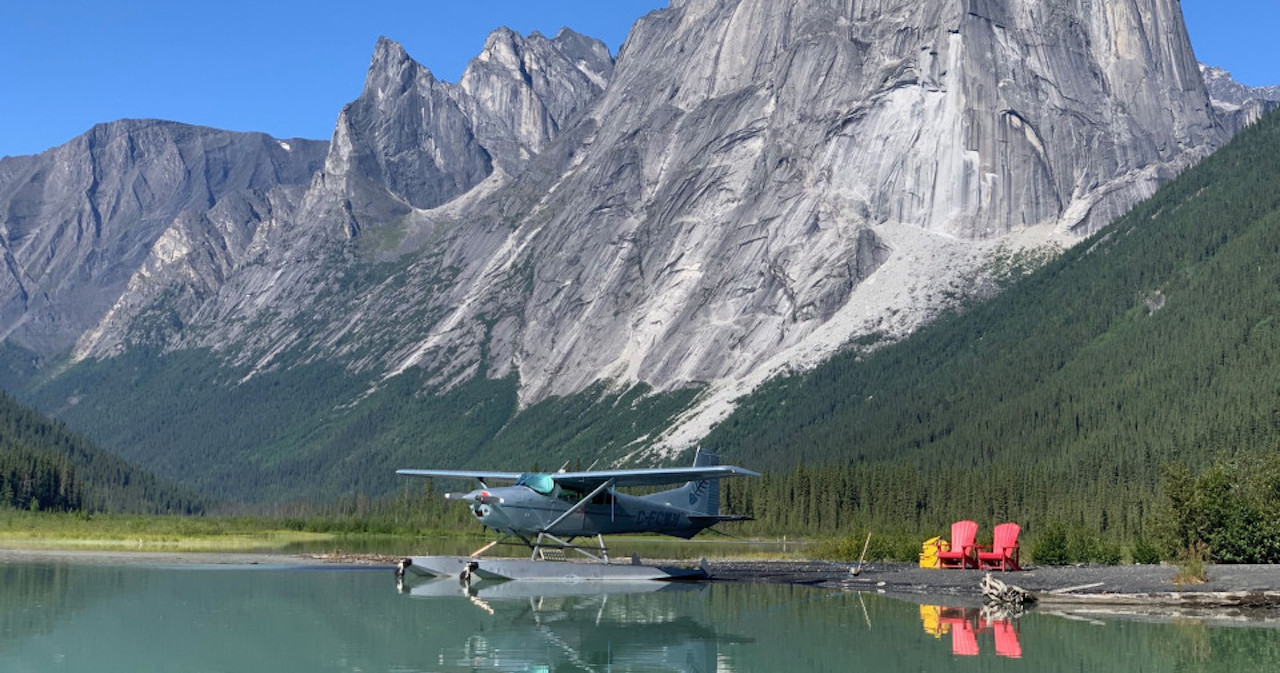
Looking at installing some cowl louvers to aid in CHT cooling. I see a few options out there, does anyone have experience with the most effective louver??
In particular there are the "pushed out" louver - http://www.rvtraining.com/html/atp/html ... l#louver11
These seem to be common with the RV guys
and the "pushed in" louver - http://bearhawkaircraft.com/BHgallery/i ... 0_8952.JPG
which seem to be popular with bearhawk .. cessna
On closer look these two examples may be the same louver installed inside out ???
Any comments are welcome. I am on amphib floats, maule cowl and Lyc O-540A1D5 (250hp) and mostly looking to lower climb and cruise temps. We have already gone through the process or sealing up the baffles 100% and ensuring all tin work fits properly.
Thanks
Cowl Louver
Thu Feb 14, 2013 7:29 am
Thu Feb 14, 2013 1:44 pm
Re: Cowl Louver
I have seen photos of one Bearhawk which operates down in the central American desert, and he literally has louvers over all the free space downstream from the baffles, maybe 12-16 louvers total... Perhaps it's just me, but it makes me think you only get a certain amount of value from them in terms of added cooling. The first ones probably help, but maybe it's diminishing returns after that?? So in that case, how much air the whatever design of louver lets through is probably a function of the rest of the cooling system as much as the louver itself?? 2c

Thu Feb 14, 2013 2:58 pm
Re: Cowl Louver
The FIRST thing I would do in your case is add a lip to the lower edge of your cowling air outlet. Are you experimental? If so, you could fabricate a cooling lip from fiberglass. You want approximately a 45 degree downward. Here's one for an Agtruck, but I'd go with closer to a 45 degree angle. This helps to reduce pressure in the lower cowl, thus increasing the pressure differential between the upper (high pressure) cowl and lower (low pressure) cowl.
These things are really simple, and they really do work.
MTV
These things are really simple, and they really do work.
MTV

Thu Feb 14, 2013 9:21 pm
Re: Cowl Louver
Ditto on MTV's suggestion on adding a lip to the air outlet. We got ours for the Bearhawk from Alaska Bushwheels. We replaced our original with a Piper factory louver that is a big improvement. I can probably dig up the P/N if you're interested.
Fri Feb 15, 2013 12:13 am
Re: Cowl Louver
Cooker
Are you certified or experimental ?
Are you certified or experimental ?
- 175 magnum offline
- Posts: 546
- Joined: Sun Mar 28, 2010 2:13 pm
- Location: surrey bc canada
Fri Feb 15, 2013 1:14 pm
Re: Cowl Louver
We are experimental.
No flying lately due to winter and all i can do is daydream
Right now temps are under control but could be better. We have experimented with a lip and best result we found using an airspeed indicator to measure pressure difference between top and bottom of cylinders is ~2.5" lip mounted at ~45 degrees.
However my assumption is that the air egress tunnel is very effective around the outer edge near the lip where the lip has created a low pressure area and less effective in the middle of the "big hole"???? See: http://www.youtube.com/watch?v=-4W6cBsjadQ for the back of our air egress, which is just the standard maule 220 cowl with the extended lip as described above. It's a pretty big hole, but i question the effectiveness.
Another assumption louvers are essentiall all effective due to lots of little lips and no gaping holes ??
The louvers in first link have a hole area of ~20 square inches i am considering installing at least 2 for a total of ~40 square inches. At the moment the air egress tunnel has an opening of ~100 square inches .... but how much of this is actually effective??? .... i guess i a trying to convince myself that the 2 louvers will significantly increase the differencial pressure due to being very efficient at what they do?? possibly more efficient than the big gaping hole at the end of the current tunnel?? I hope some on here can either agree or dissagree
at the end of the day our temps are under control, but we would like them lower. I think we have maxed the potential of our current air out tunnel with our extended lip. I also think the baffles/seals are as good as they could ever be. Also with our temps don't think it is worth any modifications at the front of the cowl
Any thoughts ?? i am no expert, this is just the daydream for today. Please feel free to point out the flaws in anything i have said. i can take the flogging
No flying lately due to winter and all i can do is daydream
Right now temps are under control but could be better. We have experimented with a lip and best result we found using an airspeed indicator to measure pressure difference between top and bottom of cylinders is ~2.5" lip mounted at ~45 degrees.
However my assumption is that the air egress tunnel is very effective around the outer edge near the lip where the lip has created a low pressure area and less effective in the middle of the "big hole"???? See: http://www.youtube.com/watch?v=-4W6cBsjadQ for the back of our air egress, which is just the standard maule 220 cowl with the extended lip as described above. It's a pretty big hole, but i question the effectiveness.
Another assumption louvers are essentiall all effective due to lots of little lips and no gaping holes ??
The louvers in first link have a hole area of ~20 square inches i am considering installing at least 2 for a total of ~40 square inches. At the moment the air egress tunnel has an opening of ~100 square inches .... but how much of this is actually effective??? .... i guess i a trying to convince myself that the 2 louvers will significantly increase the differencial pressure due to being very efficient at what they do?? possibly more efficient than the big gaping hole at the end of the current tunnel?? I hope some on here can either agree or dissagree
at the end of the day our temps are under control, but we would like them lower. I think we have maxed the potential of our current air out tunnel with our extended lip. I also think the baffles/seals are as good as they could ever be. Also with our temps don't think it is worth any modifications at the front of the cowl
Any thoughts ?? i am no expert, this is just the daydream for today. Please feel free to point out the flaws in anything i have said. i can take the flogging
Fri Feb 15, 2013 6:47 pm
Re: Cowl Louver
Cooker send me an email kenward at axion dot net
We went throught the same thing with the Roverhawk . We now cool 275hp on a 100*f day with a sustained climb of 65mph and godawful angle of climb. I will send pictures and explain.
Ken
We went throught the same thing with the Roverhawk . We now cool 275hp on a 100*f day with a sustained climb of 65mph and godawful angle of climb. I will send pictures and explain.
Ken
- 175 magnum offline
- Posts: 546
- Joined: Sun Mar 28, 2010 2:13 pm
- Location: surrey bc canada
Fri Feb 15, 2013 6:59 pm
Re: Cowl Louver
MIne would NOT cool till I added the 45 degree kickers to the radiator diffuser. I also run louvers on my oil cooler outlet... I am cooling just under 400 HP... @50 mph indicated..
About half way through this video is some pics....
http://www.youtube.com/watch?v=rCNnEgRk ... oBHd5YSUfu
About half way through this video is some pics....
http://www.youtube.com/watch?v=rCNnEgRk ... oBHd5YSUfu

Ben Haas
www.haaspowerair.com
www.haaspowerair.com
Mon Aug 26, 2013 9:30 am
Re: Cowl Louver
Who makes or sells a louver set for a C180?
- Glidergeek offline

- Posts: 1944
- Joined: Sat Sep 06, 2008 8:02 pm
- Location: Hesperia
- Aircraft: 1968 P206C
DG 400
Mon Aug 26, 2013 10:15 am
Re: Cowl Louver
The most popular option is to put the 206 louvers on the cowl. If you go to the 180/185 club page they sell the STC for $5. You simply buy the louvers from Cessna or a junk dealer and cut & rivet. It seems to please most who install it.
Mon Aug 26, 2013 12:00 pm
Re: Cowl Louver
The 45 kicker is a good solution but I would not build it too aggressively for a bird like the rv10. At rv speeds louvers would probably do the trick. If your still out there Cooker, how bout an update.
Mon Aug 26, 2013 12:20 pm
Re: Cowl Louver
With respect to all the owners and manufacturers who put a lip on the bottom outlet, this is not very efficient. Meaning it has worked on many airplanes, to some degree, but you create a lot of drag to make a small reduction in the local air pressure at the outlet. You're putting a Band-Aid on a much bigger problem.
The reason is that the typical cooling system on most airplanes was designed by a marketing and advertising firm, not an engine cooling guy.
In general, there is higher than ambient pressure on the bottom of an airplane, significantly higher than on the top or sides. This is especially true at climb angle (high "deck angle" of the fuselage). You have higher pressure from the "circulation flow theory" side and a bunch more from the "dynamic pressure" side. In layman's terms, the air is "hitting" the bottom of the fuselage harder when you raise the nose to climb.
But since the big problem is built in on most airplanes, you are left to find the biggest Band-Air and the best place to apply it.
For a standard aircraft "downdraft" cooling system, your louvers should be installed on the SIDE of the engine cowling, just under and behind the cylinders. As far up from the bottom as you can, but still being under the bottom of the cylinders and BELOW the cylinder baffling.
The "pushed out" louvers will suck a little more air out, at the expense of slightly higher drag.
Since you have the benefit of an experimental, make the louvers large, and make them moveable like the HVAC "register" in a wall. Two or three hinged "ganged" plates will suffice, it does not have to be 25 tiny little slots. Ultimately you should have a push-pull control that can open or close them. But initially, just have the opening adjustable so you can lock it in any position for testing.
The reason for making them movable is obvious, you can adjust your cooling air flow to match your flight regime. But there is another advantage. You probably want to be able to close off the bottom air exit, most or all of the way. By giving yourself the ability to get a lot of air out the side louvers (where the local air pressure is not OPPOSING the airflow like the bottom), you may be able to close off the bottom mostly or entirely.
This SHOULD have the net effect of eliminating a source of drag and inefficient cooling, and replacing it with a more efficient and powerful source of cooling. You should be able to get more cooling when you need it, and not have the drag (and loss of cooling power) from having the exit at the bottom.
There are many variables, and many factors that will affect how to best accomplish this. My opinion above assumes a standard pressure plenum cowling like on most production aircraft, a tractor propeller, and a more or less slab-sided fuselage.
Also, some cowling shapes will act like an airfoil at high angles of attack, where the intake at the front is SUCKING air out (Bernoulli, et al) instead of scooping it in, and the higher pressure at the "outlet" on the bottom is where the air is coming in from. MILD cases of of this problem can be mitigated by an "eyebrow" at the top of the cowling intake as a Band-Aid.
If you post photos of your cowling and cooling system, I would be happy to offer advice as to whether the above suggestions are more or less valid for your airplane than other airplanes. We also have several trained, degreed aero engineers here who can agree or disagree with my ideas on a professional level.
Or, you can take Mike's advice and put a lip on the bottom of your cowling, and see if that works well enough to sove your problem.
The reason is that the typical cooling system on most airplanes was designed by a marketing and advertising firm, not an engine cooling guy.
In general, there is higher than ambient pressure on the bottom of an airplane, significantly higher than on the top or sides. This is especially true at climb angle (high "deck angle" of the fuselage). You have higher pressure from the "circulation flow theory" side and a bunch more from the "dynamic pressure" side. In layman's terms, the air is "hitting" the bottom of the fuselage harder when you raise the nose to climb.
But since the big problem is built in on most airplanes, you are left to find the biggest Band-Air and the best place to apply it.
For a standard aircraft "downdraft" cooling system, your louvers should be installed on the SIDE of the engine cowling, just under and behind the cylinders. As far up from the bottom as you can, but still being under the bottom of the cylinders and BELOW the cylinder baffling.
The "pushed out" louvers will suck a little more air out, at the expense of slightly higher drag.
Since you have the benefit of an experimental, make the louvers large, and make them moveable like the HVAC "register" in a wall. Two or three hinged "ganged" plates will suffice, it does not have to be 25 tiny little slots. Ultimately you should have a push-pull control that can open or close them. But initially, just have the opening adjustable so you can lock it in any position for testing.
The reason for making them movable is obvious, you can adjust your cooling air flow to match your flight regime. But there is another advantage. You probably want to be able to close off the bottom air exit, most or all of the way. By giving yourself the ability to get a lot of air out the side louvers (where the local air pressure is not OPPOSING the airflow like the bottom), you may be able to close off the bottom mostly or entirely.
This SHOULD have the net effect of eliminating a source of drag and inefficient cooling, and replacing it with a more efficient and powerful source of cooling. You should be able to get more cooling when you need it, and not have the drag (and loss of cooling power) from having the exit at the bottom.
There are many variables, and many factors that will affect how to best accomplish this. My opinion above assumes a standard pressure plenum cowling like on most production aircraft, a tractor propeller, and a more or less slab-sided fuselage.
Also, some cowling shapes will act like an airfoil at high angles of attack, where the intake at the front is SUCKING air out (Bernoulli, et al) instead of scooping it in, and the higher pressure at the "outlet" on the bottom is where the air is coming in from. MILD cases of of this problem can be mitigated by an "eyebrow" at the top of the cowling intake as a Band-Aid.
If you post photos of your cowling and cooling system, I would be happy to offer advice as to whether the above suggestions are more or less valid for your airplane than other airplanes. We also have several trained, degreed aero engineers here who can agree or disagree with my ideas on a professional level.
Or, you can take Mike's advice and put a lip on the bottom of your cowling, and see if that works well enough to sove your problem.

.
Mon Aug 26, 2013 12:29 pm
Re: Cowl Louver
Glidergeek wrote:Who makes or sells a louver set for a C180?
Take a look at this post. Scroll down till you see the info on louvers.
http://www.backcountrypilot.org/community/forum/latest/my-185-project-in-texas-11730?start=100
- Barnstormer offline
- Posts: 2700
- Joined: Sun Oct 14, 2012 7:42 am
- Location: Alaska
- Aircraft: C185
Mon Aug 26, 2013 2:58 pm
Re: Cowl Louver
Barnstormer wrote:Glidergeek wrote:Who makes or sells a louver set for a C180?
Take a look at this post. Scroll down till you see the info on louvers.
http://www.backcountrypilot.org/community/forum/latest/my-185-project-in-texas-11730?start=100
Barnstormer thanks I got a quote from them this morning. And I do have the STC from the club. Dog are the 206s bigger than the 180 or 185s?
- Glidergeek offline
- Posts: 1944
- Joined: Sat Sep 06, 2008 8:02 pm
- Location: Hesperia
- Aircraft: 1968 P206C
DG 400
Tue Aug 27, 2013 7:18 am
Re: Cowl Louver
Hey, Flap. Good post. 
I'm impressed, especially for a Glider guy....
Just razzing...
lc
I'm impressed, especially for a Glider guy....
Just razzing...
lc
Humor may not make the world go around, but it certainly cheers up the process... 
With clothing, the opposite of NOMEX is polypro (polypropylene cloth and fleece).
Success has many fathers...... Failure is an orphan.
With clothing, the opposite of NOMEX is polypro (polypropylene cloth and fleece).
Success has many fathers...... Failure is an orphan.
Wed May 18, 2016 11:00 am
Re: Cowl Louver
Can anybody tell me exactly how the reinforcing angle goes on with the Cessna 180 cowl lovers? I have the Alphin Aircraft STC and the louvers from DiCicco. The STC drawing is very specific about location but doesn't reference the reinforcing angle anywhere that I can find. Help is appreciated.
- flyingzebra offline

- Posts: 479
- Joined: Sat Jan 24, 2009 4:53 am
- Location: Northwest Washington state
- Aircraft: Cessna Skylane 182 N3440S, Aviat Husky N2918L
Wed May 18, 2016 3:23 pm
Re: Cowl Louver
Look at the cowl "flaps" on most Carbon Cubs. Here's a link to an image: https://www.google.com/search?q=carbon+ ... 2FNqw1M%3A
This is pretty much what EZ suggested. I understand that these ducts are effective on the Carbon Cub, which did have some engine heat issues early on.
MTV
This is pretty much what EZ suggested. I understand that these ducts are effective on the Carbon Cub, which did have some engine heat issues early on.
MTV
Wed May 18, 2016 10:23 pm
Cowl Louver
I'm pretty sure they are the same as the factory Cessna parts. I installed these on a 185 last year. The angle is on the bottom.


Fri May 20, 2016 7:51 am
Re: Cowl Louver
The photo was perfect. Thanks!
- flyingzebra offline
- Posts: 479
- Joined: Sat Jan 24, 2009 4:53 am
- Location: Northwest Washington state
- Aircraft: Cessna Skylane 182 N3440S, Aviat Husky N2918L
DISPLAY OPTIONS
Who is online
Users browsing this forum: No registered users and 3 guests
Latest Features
-
-
Featured Bush Planes
As one of the undisputed legends of bush flying, the Cessna 180 hauls a…Read More -
Aircraft Ownership and Maintenance
9 modification mistakes aircraft owners make when trying to "bush out" their birds—why some…Read More -
Live to Tell
A Minnesota pilot is surprised to learn that the sudden asymmetric drag of an…Read More


Latest Knowledge Base
-
Destinations
Canada offers some of the most spectacular backcountry flying on the continent. Here's what you need to know before you go.Read More -
Safety and Survival
Hope that you never have to use your survival vest but knowing you have it and knowing how to use…Read More -
Destinations
A regional guide with ideas for winter camping destinations in California, Nevada, New Mexico, and Arizona.Read More -
Aircraft
Finding an affordable aircraft that can handle the backcountry for $80K or less? A challenge for sure, but with the…Read More