My friend sent this to me recently. A pretty interesting, although old, look at drag on an aircraft.
Drag on an Aircraft
Sat Jan 14, 2012 8:26 am
- Grassstrippilot offline

- Posts: 3536
- Joined: Wed May 31, 2006 6:17 am
- Location: Syracuse, UT
- FindMeSpot URL: https://share.garmin.com/WolfAdventures
- Aircraft: Cessna 205
Sat Jan 14, 2012 12:58 pm
Re: Drag on an Aircraft
That's a great video. The only other topic that I wish he would have shown is that drag is proportional to the square of velocity.
It always fascinates me that round has about the worst drag coefficient of any commonly used shape. It really makes me hate my round nose strut!
It always fascinates me that round has about the worst drag coefficient of any commonly used shape. It really makes me hate my round nose strut!
Sat Jan 14, 2012 2:16 pm
Re: Drag on an Aircraft
That was great! Really makes you appreciate the value of fairings on gear legs.
- Zzz offline


- Posts: 2857
- Joined: Fri Oct 08, 2004 11:09 pm
- Location: northern
- Aircraft: Swiveling desk chair
Half a century spent proving “it is better to be thought a fool than to open your mouth and remove all doubt.”
Sat Jan 14, 2012 3:01 pm
Re: Drag on an Aircraft
Zane wrote:That was great! Really makes you appreciate the value of fairings on gear legs.
In an inverse way, I have used this round tube drag thing to help heat my shop.
I have a large homemade wood boiler (burns clean, with NO smoke) for my radiant floor heat system in my shop, hangar and house, backup to the solar hot water system. During initial startup, I use a small fan that's rigged to the combustion air intake, this really kicks it in the ass and makes starting a fire super easy, like blowing on twigs when starting a campfire.
But I found that if I run the fan for more then a few minutes, the stove flue temps get way too high, (using an internal flue thermometer) so I have another fan that kicks on automatically that cools off the stack and blows it around the shop. Experimentation showed that keeping it simple was the best way: no ducting around the 8" stove pipe was needed, just the airflow hitting the round pipe, somewhat counter intuitively, was the most effcient way to remove the excess heat. Something called the Coanada effect http://en.wikipedia.org/wiki/Coand%C4%83_effect is responsible for the air hitting the pipe and then, at least at the speeds involved here, clinging to the pipe all the way around it, thus effectively acting a pretty good heat exchanger. In other words, what makes a round tube so draggy, works to my advantage in this situation. I was going to duct the airflow around the pipe, in an effort to get it to stay attached, it wasn't needed.
My new cub style landing gear on The S-7S, since I'm not trying to cool it off
 has every round tube, including the cabane V, faired. The results after fairing were dramatic, well worth the small effort involved. Reducing drag, like reducing weight, works everytime it's tried!
- courierguy offline

- Posts: 4197
- Joined: Thu Mar 31, 2005 6:52 pm
- Location: Idaho
"Its easier to apologize then ask permission"
Tex McClatchy
Tex McClatchy
Sat Jan 14, 2012 8:46 pm
Re: Drag on an Aircraft
Tom - Working on Joel to make some removable FG fairings as I can't seem to get to it. Think he's on board. I've got some of this fairing on the way for the cabane. Got a great deal.
http://streamline.8k.com/FAIRINGS.htm

http://streamline.8k.com/FAIRINGS.htm
2009 Rans S-7S Sold,
Folsom, CA
http://picasaweb.google.com/emmetw
http://oneechowhiskey.wordpress.com
https://vimeo.com/emflys/videos
Folsom, CA
http://picasaweb.google.com/emmetw
http://oneechowhiskey.wordpress.com
https://vimeo.com/emflys/videos
Sun Jan 15, 2012 11:46 am
Re: Drag on an Aircraft
I replaced the lift struts on my Maule with sealed struts. A friend had an ultralite with round tubing for landing gear and some other supports. We cut the struts and fitted them over the round struts and supports, and even on the slow speed of this craft, he was able to see about 5 MPH increase in airspeed.
Gene
Gene
- Twofiveecho offline
- Posts: 61
- Joined: Sun Oct 03, 2010 3:09 pm
- Location: Ohio, De Graff
Sun Jan 15, 2012 4:02 pm
Re: Drag on an Aircraft
That is great. While watching it, I had flashbacks of my Intro to Aerodynamics course from college. The instructor for that course has us watch a whole series of these movies for his class. The library still had them on film when we watched them. There were some others that were pretty amazing as well.
- soggyc offline
- Posts: 129
- Joined: Mon Nov 01, 2010 12:49 pm
- Location: Granite Falls
- FindMeSpot URL: http://share.findmespot.com/shared/face ... KhvYFzCT8z
Sun Jan 15, 2012 4:27 pm
Re: Drag on an Aircraft
I wondered what the drag would be from the round tubing on the Alaskan Bushwheels (ABW) heavy duty gear legs and Goodyear 8.50x6 tires on my Maule MX-7-180 so I did some research and analysis. The results indicate the amount of drag in terms of pounds of force, but not in terms of loss of airspeed or increased fuel consumption associated with overcoming the drag.
The formula for calculating drag is:
Drag Force (Newtons) = ½ * air density (kg/cubic meter) * frontal area of the surface (square meters) * coefficient of drag * square of the velocity (meters/second)
Assume the following:
Air density = 1.23 at + 15C temperature
Frontal area of the ABW gear legs = 2” * 36” or 0.05 square meters
Frontal area of Goodyear 8.50x6 tires = 8.5” * 20” or 0.11 square meters
Coefficient of drag for a sphere = 0.47
Velocity at 100 kts (115 mph) = 51.44 meters/second
Velocity at 83 kts (95 mph) = 42.70 meters/second
Drag factors at 100 kts (115 mph):
2 ABW gear legs = 70.77 Newtons or 15.91 pounds of force
2 Goodyear 8.50x6 tires = 167.09 Newtons or 37.56 pounds of force
Drag factors at 83 kts (95 mph):
2 ABW gear legs = 48.75 Newtons or 10.96 pounds of force
2 Goodyear 8.50x6 tires = 115.11 Newtons or 25.88 pounds of force
These are very approximate numbers. The surface area measurements are not precise. The shape of the ABW gear legs is complicated by the airflow around the tubes behind the front tube, which increases the coefficient of drag. The shape of the tires is not a sphere, which decreases the coefficient of drag slightly. Altitude, temperature and water vapor affect air density but this analysis assumes sea level altitude and ignores water vapor. Higher altitudes and more water vapor are associated with less air density and decreased drag.
Drag increases as the square of airspeed, so the largest effect is at cruise speed where the engine must produce much more power to overcome the drag force and maintain airspeed. During lower airspeed maneuvers, such as takeoff, climb and landing drag is much lower so there is much more engine power available.
The formula for calculating drag is:
Drag Force (Newtons) = ½ * air density (kg/cubic meter) * frontal area of the surface (square meters) * coefficient of drag * square of the velocity (meters/second)
Assume the following:
Air density = 1.23 at + 15C temperature
Frontal area of the ABW gear legs = 2” * 36” or 0.05 square meters
Frontal area of Goodyear 8.50x6 tires = 8.5” * 20” or 0.11 square meters
Coefficient of drag for a sphere = 0.47
Velocity at 100 kts (115 mph) = 51.44 meters/second
Velocity at 83 kts (95 mph) = 42.70 meters/second
Drag factors at 100 kts (115 mph):
2 ABW gear legs = 70.77 Newtons or 15.91 pounds of force
2 Goodyear 8.50x6 tires = 167.09 Newtons or 37.56 pounds of force
Drag factors at 83 kts (95 mph):
2 ABW gear legs = 48.75 Newtons or 10.96 pounds of force
2 Goodyear 8.50x6 tires = 115.11 Newtons or 25.88 pounds of force
These are very approximate numbers. The surface area measurements are not precise. The shape of the ABW gear legs is complicated by the airflow around the tubes behind the front tube, which increases the coefficient of drag. The shape of the tires is not a sphere, which decreases the coefficient of drag slightly. Altitude, temperature and water vapor affect air density but this analysis assumes sea level altitude and ignores water vapor. Higher altitudes and more water vapor are associated with less air density and decreased drag.
Drag increases as the square of airspeed, so the largest effect is at cruise speed where the engine must produce much more power to overcome the drag force and maintain airspeed. During lower airspeed maneuvers, such as takeoff, climb and landing drag is much lower so there is much more engine power available.
Sun Jan 15, 2012 6:48 pm
Re: Drag on an Aircraft
The extra drag of round and rectangular sections versus an airfoil is surprisingly large. Wow.
The draggiest thing on my plane of course are the floats. The float strut attachment points have always been of concern to me. Does anyone sell fairings for use on float attachment points to smooth out the airflow? If not, it sounds like a business opportunity for a small shop.
The draggiest thing on my plane of course are the floats. The float strut attachment points have always been of concern to me. Does anyone sell fairings for use on float attachment points to smooth out the airflow? If not, it sounds like a business opportunity for a small shop.
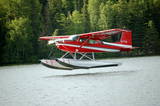
Rick's Cessna 180 float plane video http://www.youtube.com/watch?v=g6my0FM9F_Q
Mon Jan 16, 2012 6:08 am
Re: Drag on an Aircraft
Wow, that's amazing. It's no wonder the 182 RG feels so much draggier with the gear down than the fixed 182--round gear legs! That's a pretty simple yet profound way of demonstrating it, I bet the Dept. of Energy could turn that into a 4 million dollar research project that nobody could understand when they were finished.
- Nosedragger offline
- Posts: 975
- Joined: Fri Dec 31, 2010 6:40 am
- Location: SE Idaho
- FindMeSpot URL: http://share.findmespot.com/shared/face ... ACzcbTgqlT
DISPLAY OPTIONS
Who is online
Users browsing this forum: No registered users and 8 guests
Latest Features
-
Live to Tell
A Minnesota pilot is surprised to learn that the sudden asymmetric drag of an out-of-rig ski can…Read More -
Creators
Working in some of the Yukon's most beautiful and remote environments, photographer Simon Blakesley captures aircraft in…Read More -
Aircraft Ownership and Maintenance
Upgrading to big tires can make a huge difference in backcountry performance, but with those gains come…Read More -
Tales from Yesteryear
In this tale from bush flying yesteryear, Don Cogger signs up to help Atlee Dodge Jr recovery…Read More


Latest Knowledge Base
-
Destinations
A regional guide with ideas for winter camping destinations in California, Nevada, New Mexico, and Arizona.Read More -
Aircraft
Finding an affordable aircraft that can handle the backcountry for $80K or less? A challenge for sure, but with the…Read More -
Aircraft
01.29.2018 - Zane - Updated tire diameter graphic to add 8.50x10 Guide to tires for use in the backcountry and off-airport landing…Read More -
Pilots
12.22.2013 - Initial article format Operating aircraft on skis and negotiating a snow-covered landscape is an entirely unique skillset and environment.…Read More


