EGT/CHT Temps
Sun Jul 29, 2012 2:01 pm
EGT/CHT Temps
What temps are acceptable without melting cylinders and pistons, burning valves and causing expensive noises? After using my JPI 700 for 150 hours transitioning from an Alcor gauge I try to keep my EGT's below 1400* is about 50-75 ROP. This usually keeps my CHT's around 350*-360* in cruse. Anybody have any good knowledge of this? Application is O-470-50 Pponk, temps are easily manageable.
- Glidergeek offline


- Posts: 1937
- Joined: Sat Sep 06, 2008 8:02 pm
- Location: Hesperia
- Aircraft: 1968 P206C
DG 400
Sun Jul 29, 2012 3:27 pm
Re: EGT/CHT Temps
I have a PPonk 0-470-50 in my airplane as well. Like you, I run ROP and keep my EGT below 1400 and keep my CHT's around 375 in cruise. I do get a bit nervous during my cruise/climb when CHT's can creep up above 400. I watch that pretty carefully and do not allow it to stay above 400 for very long. If you are keeping your CHT's at or below 365 that seems pretty good to me.

Sun Jul 29, 2012 3:53 pm
Re: EGT/CHT Temps
Ive always heard that 380* and 1380* were pretty good targets...just add a 1 
- SixTwoLeemer offline

- Posts: 1285
- Joined: Thu Feb 07, 2008 10:53 am
- Location: Wasatch Front
Altitude is Time…. Airspeed is Life!
Sun Jul 29, 2012 4:17 pm
Re: EGT/CHT Temps
Ive always heard that 380* and 1380* were pretty good targets...just add a 1
Hmmm... very good "rule of thumb". Never thought of that
 Thanks!
 Sun Jul 29, 2012 5:07 pm
Re: EGT/CHT Temps
I was taught peak EGT in degrees is a reference point not an actual hard number target that is transferable from one engine to another. Placement of the probe changes the temp reading but the value of the gauge remains in finding the peak EGT not a particular degree and from there you lean by degrees to your target on either side of peak, whatever peak reading is.
CHT at 400 supposedly cuts the hardness of the aluminum by 50% according to my Superior O 360 engine manual. That is considered max and is also to be avoided. I would like the 360 number if I could hold it.
CHT at 400 supposedly cuts the hardness of the aluminum by 50% according to my Superior O 360 engine manual. That is considered max and is also to be avoided. I would like the 360 number if I could hold it.
Lynn Sanderson (Dirtstrip) passed away from natural causes in May 2013. He was a great contributor and will be missed dearly.
Sun Jul 29, 2012 5:49 pm
Re: EGT/CHT Temps
dirstrip wrote:
I was taught peak EGT in degrees is a reference point not an actual hard number target that is transferable from one engine to another. Placement of the probe changes the temp reading but the value of the gauge remains in finding the peak EGT.....
I was a little shocked to see peak EGT's at 1580F after the JPI install in my 180; I used the same holes in the exhaust manifold that the old Mixture Mizer came out of, and they admittedly are on the tight side of the recommended distance from the head. That said, if you believe the contemporary recommendations for engine operation, the relative movement is all that matters with EGT, absolute scale doesn't mean anything. For CHT on Continentals, I have heard the same number as 62L, 380 max cruise. I usually set the cowl flaps to give me 360 to 370 on the hottest cylinder, seems to be one notch when its warm out and 2 notches when cool, cruising at 23 squared.
Flynengr
Sun Jul 29, 2012 6:05 pm
Re: EGT/CHT Temps
Hey Russ
Pm sent
Gary
Pm sent
Gary
- shortfielder offline

- Posts: 2350
- Joined: Sun Mar 05, 2006 7:14 pm
- Location: Durango, Colorado
- FindMeSpot URL: http://share.findmespot.com/shared/face ... D263l9HKFb
If you want to go up, pull back on the controls. If you want to go down, pull back farther.
My SPOT page
My SPOT page
Sun Jul 29, 2012 6:33 pm
Re: EGT/CHT Temps
Some good reading on the subject: http://www.avweb.com/news/savvyaviator/savvy_aviator_59_egt_cht_and_leaning_198162-1.html
BL, EGT's are relative.
When running LOP on my IO-540 I'll see EGTs in the high 14's/low 15's...I keep my CHTs below 400
BL, EGT's are relative.
When running LOP on my IO-540 I'll see EGTs in the high 14's/low 15's...I keep my CHTs below 400
Sun Jul 29, 2012 9:49 pm
Re: EGT/CHT Temps
shortfielder wrote:Hey Russ
Pm sent
Gary
Got it Gary
 I scoured all the info I could this morning and never saw any numbers until the link from 260driver. 380 and high 14's to 1500* I'll try that.
Thanks all
- Glidergeek offline
- Posts: 1937
- Joined: Sat Sep 06, 2008 8:02 pm
- Location: Hesperia
- Aircraft: 1968 P206C
DG 400
Mon Jul 30, 2012 9:52 am
Re: EGT/CHT Temps
260Driver wrote:Some good reading on the subject: http://www.avweb.com/news/savvyaviator/savvy_aviator_59_egt_cht_and_leaning_198162-1.html
BL, EGT's are relative.
When running LOP on my IO-540 I'll see EGTs in the high 14's/low 15's...I keep my CHTs below 400
EGT is only a reference number; the CHT is the critical number. Damage is done when there is sufficient heat developed in the cylinder to damage parts, generally damage occurs when pre ignition and detonation occur, this is where the engine analyzers can save your engines, set your CHT alarm @ at a lower temp than critical, something like 380F, (gives you time to react) there is a specific signature for a pre ignition condition, the EGT will decrease rapidly and the CHT will increase rapidly, the burn is happening so fast or all at once, and the cylinder absorbs more of it and less heat is flowing out the exhaust. The highest CHT temps are developed around 50 to 100F rich of peek EGT, this is also your highest power setting. Personally on my engine I run rich of peek on climb out and lean of peek on most cylinders in cruse, on climb out I will adjust my speed and mixture to keep my hottest cylinder under 370F, once at cruse altitude I go lean of peek, with the JPI I can find the sweet spot by monitoring my speed, fuel flow and MPG. For my engine I found that the sweet spot is balancing EGT on #4 and #6 cylinders, #4 is lean of peek and #6 is rich of peek.
Wed Aug 01, 2012 8:53 am
Re: EGT/CHT Temps
EGT is a reference number. As a follow up to the posted article, here is an EAA webinar that Mike Busch just did in June that covers combustion theory and addresses CHT and EGT temps. Excellent presentation and worth watching. You don't need to be a member to watch them and there are a lot of good ones on there. Like others have said, 380 is what he recommends for a limit.
http://www.eaavideo.org/video.aspx?v=1678859198001
http://www.eaavideo.org/video.aspx?v=1678859198001
- Grassstrippilot offline


- Posts: 3536
- Joined: Wed May 31, 2006 6:17 am
- Location: Syracuse, UT
- FindMeSpot URL: https://share.garmin.com/WolfAdventures
- Aircraft: Cessna 205
Wed Aug 01, 2012 12:55 pm
Re: EGT/CHT Temps
This subject....
...is getting to be like religion and politics.
Bob
...is getting to be like religion and politics.
Bob
Living the Dream
Wed Aug 01, 2012 4:23 pm
Re: EGT/CHT Temps
Grassstrippilot wrote:EGT is a reference number. As a follow up to the posted article, here is an EAA webinar that Mike Busch just did in June that covers combustion theory and addresses CHT and EGT temps. Excellent presentation and worth watching. You don't need to be a member to watch them and there are a lot of good ones on there. Like others have said, 380 is what he recommends for a limit.
http://www.eaavideo.org/video.aspx?v=1678859198001
This is pretty much how I manage my engine; Mike’s Webinars have taught me allot.
I agree with about 99% of what he has to say, the red box concept is a very important one to understand, there several points that I would like to ask him about and clarifications that I would like him to make, I think that there more variables in this equation that effect engine performance and reliability. I certainly can’t argue with his success in engine longevity.
Fri Aug 03, 2012 10:07 am
Re: EGT/CHT Temps
z3skybolt wrote:This subject....
...is getting to be like religion and politics.
Bob
Yes although everyone seems to be agreeing that god is LOP! would be nice to get more imput on this from bush lads here...guys like me tha constantly go up and down, change power settings, fly t/o-t/d at different alts, etc... Wonder if following the 380CHT is the way to go rather than trying to keep my EGT at 1370 (LYC IO-390 220hp).
Lets hear from you mountain folks!
Cheers, BCT
- Backcountry Tundra offline

- Posts: 518
- Joined: Sun Mar 27, 2011 9:12 pm
- Location: Yukon Territory
- FindMeSpot URL: http://share.findmespot.com/shared/face ... WH6oiFuJCR
CF-MSV Tundra 220 from http://www.dreamaircraft.com www.copayukon.com
Sat Aug 04, 2012 8:09 am
Re: EGT/CHT Temps
There is a lot of good information on engine operation on the http://groups.yahoo.com/group/lycoming/
Yahoo Group.
This is a post from one of the most respected contributors on that site (in reference to an O-320):
Yahoo Group.
This is a post from one of the most respected contributors on that site (in reference to an O-320):
Re: CHTs
Lycoming says to keep it above 150F and below 435F in cruise and below
redline 500F in climb. If it were mine I would be fine with 275-400 in
continuous cruise and below 450 or so in climb.
Good Luck,
Mahlon
"The opinions and information provided in this and all of my posts
are hopefully helpful to you. Please use the information provided
responsibly and at you own risk."
- blackrock offline

- Posts: 1576
- Joined: Tue Jan 29, 2008 6:54 pm
- Location: Elko, NV
- FindMeSpot URL: http://share.findmespot.com/shared/face ... BFmtASxjeV
- Aircraft: Bearhawk
Mon Aug 06, 2012 5:36 pm
Re: EGT/CHT Temps
Backcountry Tundra wrote:z3skybolt wrote:This subject....
...is getting to be like religion and politics.
Bob
Yes although everyone seems to be agreeing that god is LOP! would be nice to get more imput on this from bush lads here...guys like me tha constantly go up and down, change power settings, fly t/o-t/d at different alts, etc... Wonder if following the 380CHT is the way to go rather than trying to keep my EGT at 1370 (LYC IO-390 220hp).
Lets hear from you mountain folks!
Cheers, BCT
CHTs are for engine protection, EGTs are for tuning, High CHTs will ruin your engine, and high EGTs will have no effect on engine longevity.
The hotter you get a set of cylinders the weaker they get, the more times they heat up and cool them down, the faster the change, the greater the delta, the weaker they get. I live in the mountains; when leaving the valley I take off from 2600 and climb to a minim altitude of 7500 or 8500, I rarely allow any CHT to reach 380F, I adjust my speed, climb rate and fuel mixture to keep my temps low, I only run LOP in cruse or decent, generally @ or above FL8500. But that is on a Franklin 220.
Tue Aug 07, 2012 8:35 am
Re: EGT/CHT Temps
172heavy wrote:.... I run rich of peek on climb out and lean of peek on most cylinders in cruse, on climb out I will adjust my speed and mixture to keep my hottest cylinder under 370F, once at cruse altitude I go lean of peek, with the JPI I can find the sweet spot by monitoring my speed, fuel flow and MPG. For my engine I found that the sweet spot is balancing EGT on #4 and #6 cylinders, #4 is lean of peek and #6 is rich of peek.
Do you have time to look out the window once in a while while you're doing all this?
 Holy smoke, glad I just have a little 320 Lycoming- I take off with full throttle, pull it back to 2500 for cruise-climb or cruise, and pull the red knob out "a little". Up higher, pull it out "a little more". I like to keep things simple.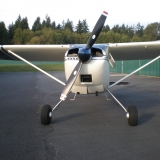
Cessna Skywagon -- accept no substitute!
Tue Aug 07, 2012 1:18 pm
Re: EGT/CHT Temps
hotrod150 wrote:172heavy wrote:.... I run rich of peek on climb out and lean of peek on most cylinders in cruse, on climb out I will adjust my speed and mixture to keep my hottest cylinder under 370F, once at cruse altitude I go lean of peek, with the JPI I can find the sweet spot by monitoring my speed, fuel flow and MPG. For my engine I found that the sweet spot is balancing EGT on #4 and #6 cylinders, #4 is lean of peek and #6 is rich of peek.
Do you have time to look out the window once in a while while you're doing all this?
Most of my flights are in the two hour range per leg and a total of four to six hours, It’s a game I play getting the most that I can out of what I have. Once you find the sweet spot its easy to find it again, you know where it is. 8.7 GPH @ 145-148MPH that’s a point to point average.
With the wife, me and our stuff. Most Franklin powered 172s get 10 to 12 GPH around 152 MPH. We put around 130 hours a year on our 172, 130x$5.00=$650.00 to $1950 per year savings, not to mention the engine will last longer running it like this. People say fuel is cheap, but in ten maybe fifteen years what will I save? But then as you know pilots are all rich. 
Thu Jun 15, 2017 4:27 pm
Re: EGT/CHT Temps
I know this thread is old, but hoping someone has an idea for me...
I've just started a new job flying a C206. I flew one for years using the old standard analog CHT gauge. This new one has an electronic EGT/CHT with a probe on each cylinder. Both planes were Continental engines... the old one C206F, this current one a C206A. Never having seen an electronic one.. i never knew the exact CHT temps during a climbout previously, and the stock gauge has no 'yellow' zone.. just green to red.
My homebase is as 300ft MSL.. and every climbout, about 4minutes in.. at 25MP - 2500RPM - Full rich Mix.. the CHT temps rise above 400 degrees, and if I don't take the rpm down it will rise to 420.
Does this seem like normal behaviour to anyone with more experience knowing the actual CHT temp?
I've just started a new job flying a C206. I flew one for years using the old standard analog CHT gauge. This new one has an electronic EGT/CHT with a probe on each cylinder. Both planes were Continental engines... the old one C206F, this current one a C206A. Never having seen an electronic one.. i never knew the exact CHT temps during a climbout previously, and the stock gauge has no 'yellow' zone.. just green to red.
My homebase is as 300ft MSL.. and every climbout, about 4minutes in.. at 25MP - 2500RPM - Full rich Mix.. the CHT temps rise above 400 degrees, and if I don't take the rpm down it will rise to 420.
Does this seem like normal behaviour to anyone with more experience knowing the actual CHT temp?
Thu Jun 15, 2017 4:34 pm
Re: EGT/CHT Temps
Go find John Deakin's archived articles called "The Pelican's Perch" and read up on how to operate big bore 6's. I'd start by not reducing MP to 25". Full throttle for takeoff, dont touch it again. Pull the prop to what you need for climb. They have an enrichening feature at wide open throttle to help with cooling by dumping even more fuel in there. Pulling the throttle for that 25" MP pulls all that cooling fuel too. The whole 25 squared thing for climb is bunk. That would help contribute to higher temps right off the bat. Turbocharged engines, different story, but I never ran any, just normally aspirated.
https://www.avweb.com/news/pelican/182544-1.html
https://www.avweb.com/news/pelican/182544-1.html
- StampCreek offline

- Posts: 32
- Joined: Thu Feb 09, 2017 9:19 am
- Location: Fort Worth
DISPLAY OPTIONS
Who is online
Users browsing this forum: No registered users and 3 guests
Latest Features
-
Live to Tell
A Minnesota pilot is surprised to learn that the sudden asymmetric drag of an out-of-rig ski can…Read More -
Creators
Working in some of the Yukon's most beautiful and remote environments, photographer Simon Blakesley captures aircraft in…Read More -
Aircraft Ownership and Maintenance
Upgrading to big tires can make a huge difference in backcountry performance, but with those gains come…Read More -
Tales from Yesteryear
In this tale from bush flying yesteryear, Don Cogger signs up to help Atlee Dodge Jr recovery…Read More


Latest Knowledge Base
-
Destinations
A regional guide with ideas for winter camping destinations in California, Nevada, New Mexico, and Arizona.Read More -
Aircraft
Finding an affordable aircraft that can handle the backcountry for $80K or less? A challenge for sure, but with the…Read More -
Aircraft
01.29.2018 - Zane - Updated tire diameter graphic to add 8.50x10 Guide to tires for use in the backcountry and off-airport landing…Read More -
Pilots
12.22.2013 - Initial article format Operating aircraft on skis and negotiating a snow-covered landscape is an entirely unique skillset and environment.…Read More


