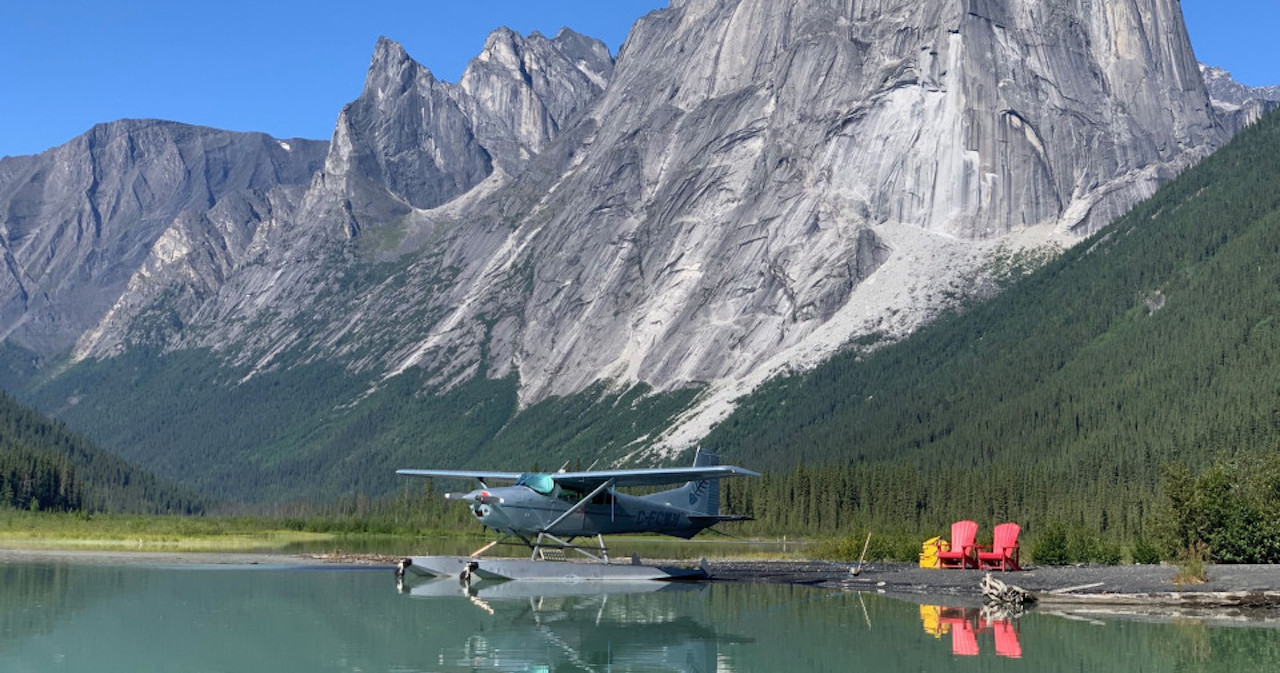
Good day, I know there is already a topic named Fiber Floats but it mostly treated about the mods. What I'm looking for is stories/advices from flyers who flew the Fiber Floats, they are 2450's but I'm told their FAA approved gross was 2750 but could take much more. In Googling, I found few negative comments about them and few very good ones. Clearly I have my eyes on a set to put on my Tundra and wanting to hear what you have to say about it.
Thanks much, BT
Fiber Floats Flying
Thu Mar 31, 2011 11:46 pm
- Backcountry Tundra offline

- Posts: 518
- Joined: Sun Mar 27, 2011 9:12 pm
- Location: Yukon Territory
- FindMeSpot URL: http://share.findmespot.com/shared/face ... WH6oiFuJCR
CF-MSV Tundra 220 from http://www.dreamaircraft.com www.copayukon.com
Fri Apr 01, 2011 4:59 am
Re: Fiber Floats Flying
I have flown FiberFloats on Cubs, Maules and a Cessna 172. They are cheap, which is their biggest plus.
They had some undesireable features, which are fixable, particularly since you're experimental:
1) They had water rudders mounted to the bottoms of the floats, and electrically actuated by a button on the control yoke/stick. The problem with these is to prevent damage to them, they were designed to go flat against the bottom if sufficient force were applied (as in you landed with one deployed a bit). My advice: Remove those pieces of excrement and install "standard" type water rudders, as in the type every other float manufacturer has used for decades.
2) the originals had a shock strut on the aft vertical struts. VERY bad idea. In semi rough water, those struts would start working, reach their limit, and then drive right through the aft fuselage attach points. Simple fix: Use regular aft struts, without the shock struts.
The floats themselves perform reasonably well. They will sit back on their heels rather dramatically while you try to stagger up onto the step, but a push on the controls will roll them over, and they'll take off in reasonable distance. A little practice and technique and they'll do fine.
As to displacement, they have plenty for an M-5 Maule, so I'm guessing they'll work for what you're dealing with. Might be a LITTLE low in the water if you're REALLY heavy, but....
Be VERY careful in step turns. These things have an inverted V bottom, and a REAL hard chine, and they WILL hook a chine and flip in an aggressive step turn. No need to turn that tight on the step anyway, but be careful.
Finally, these things are all old, and fiberglass, so look them over very carefully prior to purchase.
MTV
They had some undesireable features, which are fixable, particularly since you're experimental:
1) They had water rudders mounted to the bottoms of the floats, and electrically actuated by a button on the control yoke/stick. The problem with these is to prevent damage to them, they were designed to go flat against the bottom if sufficient force were applied (as in you landed with one deployed a bit). My advice: Remove those pieces of excrement and install "standard" type water rudders, as in the type every other float manufacturer has used for decades.
2) the originals had a shock strut on the aft vertical struts. VERY bad idea. In semi rough water, those struts would start working, reach their limit, and then drive right through the aft fuselage attach points. Simple fix: Use regular aft struts, without the shock struts.
The floats themselves perform reasonably well. They will sit back on their heels rather dramatically while you try to stagger up onto the step, but a push on the controls will roll them over, and they'll take off in reasonable distance. A little practice and technique and they'll do fine.
As to displacement, they have plenty for an M-5 Maule, so I'm guessing they'll work for what you're dealing with. Might be a LITTLE low in the water if you're REALLY heavy, but....
Be VERY careful in step turns. These things have an inverted V bottom, and a REAL hard chine, and they WILL hook a chine and flip in an aggressive step turn. No need to turn that tight on the step anyway, but be careful.
Finally, these things are all old, and fiberglass, so look them over very carefully prior to purchase.
MTV


Mon Apr 04, 2011 8:11 pm
Re: Fiber Floats Flying
A friend had a Maule on Fiber Floats. He complained about them leaking around that funny rudder mechanism. They seemed to perform well enough on takeoff and that plane had an impressive cruise speed with the 235 hp Lycoming.
Rick's Cessna 180 float plane video http://www.youtube.com/watch?v=g6my0FM9F_Q
Mon Apr 04, 2011 8:27 pm
Re: Fiber Floats Flying
Just drop for these fiber floats:
http://meadfloats.com/

Edit: further reading shows them topping out in the 2200 lb model. Maybe a little small for the Tundra.
http://meadfloats.com/
Edit: further reading shows them topping out in the 2200 lb model. Maybe a little small for the Tundra.

Mon Apr 04, 2011 8:48 pm
Re: Fiber Floats Flying
I have flown the Fiberfloat 2400 on the Maules quite a bit.
The reason for the oleo struts or later rubber donut struts is in place of cross brace wires.
There are no spreader bars or diagonal cross wires and the floats move just like Maule oleo gear. The reason for this is to soften the ride because of the inverted V hulls otherwise offering too rough a ride.
The inverted V causes water to be directed to the longitudinal center under the hull thus forming hydraulic pressure. The more you try to force the bows down, hydraulics stop them from submarineing.
Personally I liked the hydraulic/electric rudders very much as they can be used as water brakes by putting both down, or for trimming in flight, but it is important to raise them if backing onto the beach. If going forward they have a relief valve.
Maintainance is very important so you don't get one solenoid corroded.
They are tough and can be run onto a rocky beach, however they are heavier than aluminium.
Now for something different see this, or should it have it's own thread Zane.
http://www.dump.com/2010/12/21/did-you- ... oft-video/
The reason for the oleo struts or later rubber donut struts is in place of cross brace wires.
There are no spreader bars or diagonal cross wires and the floats move just like Maule oleo gear. The reason for this is to soften the ride because of the inverted V hulls otherwise offering too rough a ride.
The inverted V causes water to be directed to the longitudinal center under the hull thus forming hydraulic pressure. The more you try to force the bows down, hydraulics stop them from submarineing.
Personally I liked the hydraulic/electric rudders very much as they can be used as water brakes by putting both down, or for trimming in flight, but it is important to raise them if backing onto the beach. If going forward they have a relief valve.
Maintainance is very important so you don't get one solenoid corroded.
They are tough and can be run onto a rocky beach, however they are heavier than aluminium.
Now for something different see this, or should it have it's own thread Zane.
http://www.dump.com/2010/12/21/did-you- ... oft-video/
- maules.com offline
- Posts: 561
- Joined: Mon Jan 09, 2006 9:35 pm
- Location: west coast
DISPLAY OPTIONS
Who is online
Users browsing this forum: No registered users and 9 guests
Latest Features
-
-
Featured Bush Planes
As one of the undisputed legends of bush flying, the Cessna 180 hauls a…Read More -
Aircraft Ownership and Maintenance
9 modification mistakes aircraft owners make when trying to "bush out" their birds—why some…Read More -
Live to Tell
A Minnesota pilot is surprised to learn that the sudden asymmetric drag of an…Read More


Latest Knowledge Base
-
Destinations
Canada offers some of the most spectacular backcountry flying on the continent. Here's what you need to know before you go.Read More -
Safety and Survival
Hope that you never have to use your survival vest but knowing you have it and knowing how to use…Read More -
Destinations
A regional guide with ideas for winter camping destinations in California, Nevada, New Mexico, and Arizona.Read More -
Aircraft
Finding an affordable aircraft that can handle the backcountry for $80K or less? A challenge for sure, but with the…Read More