Backcountry Pilot • Hazards of beach landings

Hazards of beach landings

Share tips, techniques, or anything else related to flying.
42 postsPage 2 of 31, 2, 3

Re: Hazards of beach landings

dogpilot wrote:If you want more surface area, you need a setup like the Army tested on the Birddog:
Image

Works, but you have to grease 6 times as many bearing every 100 hours. Less drag though.


This is a Whitaker gear, have a set of them, going to them on my RV6 for rough field work!!

GT
M6RV6 offline
User avatar
Posts: 2313
Joined: Mon Feb 25, 2008 5:52 pm
Location: Rice Wa. 82WN Magee Creek AERODROME
FindMeSpot URL: http://share.findmespot.com/shared/face ... sWKXuhKlg2
Have as much Fun as is Safe, and Keep SMILIN! GT,

Re: Hazards of beach landings

I have done a few thousand beach landings over the years with 31 and 35" ABW and I always try and stay in the hard sand. I always drag the beach, if the beach is not very steep the sand can be very soft even pretty far up from the water, but if you drag and then come back and look at your tracks you can read it. If the sand is spraying out from your tires it is probably going to be to pretty wet and soft. I can tell if the tracks are just nice and clean with very little penetration with the weight of the airplane going 25-30 mph that it is firm. I know that the dry soft sand is going to have a lot of drag for landing and taking off so I choose this firm sand most of time.

Areas effected by tide change, whether it is ocean or river can be tricky. If there is not much change in beach elevation from the water it can look dry on top because the sun has had time to dry it out but be very wet underneath. If you drag it and the sand sprays out, it is best not to land if you see this spray pattern in the sand on either side or your tire tracks unless you are real familiar with landing sandy beaches.

Greg
Mauleguy offline
User avatar
Posts: 217
Joined: Mon Dec 05, 2005 8:43 pm
Location: Washington

Re: Hazards of beach landings

Does anyone know the story on the twin? I wonder how much of it is still under those spinners?

Image
tcj offline
User avatar
Posts: 1278
Joined: Thu May 29, 2008 12:52 pm
Location: Ellensburg, WA
tcj

Re: Hazards of beach landings

Headoutdaplane wrote:Well I guess I will be the dissenting voice here (someone has to or it is just a boring agreement fest right?). Generally, the wet sand is the firmer sand, dry sand will get you stuck - of course you want to drag the beach and land in your tracks (there is a whole slew of training we do before we cut our new pilots loose on beaches). Don't land in between water or near creeks running to the ocean. But in the whole the sand that has most recently seen the water will be the firmest. I fly the beaches on both sides of the inlet, and the outer side of the kenai in the summer a lot (everyday usually multiple trips) in grossed out 206s with 8.5/10s, last summer was my sixth year, but free advice is worth what you pay.


No dissenting voice at all, I agree completely. I've been on beaches that are as firm as pavement and longer and wider than some class D airport runways.
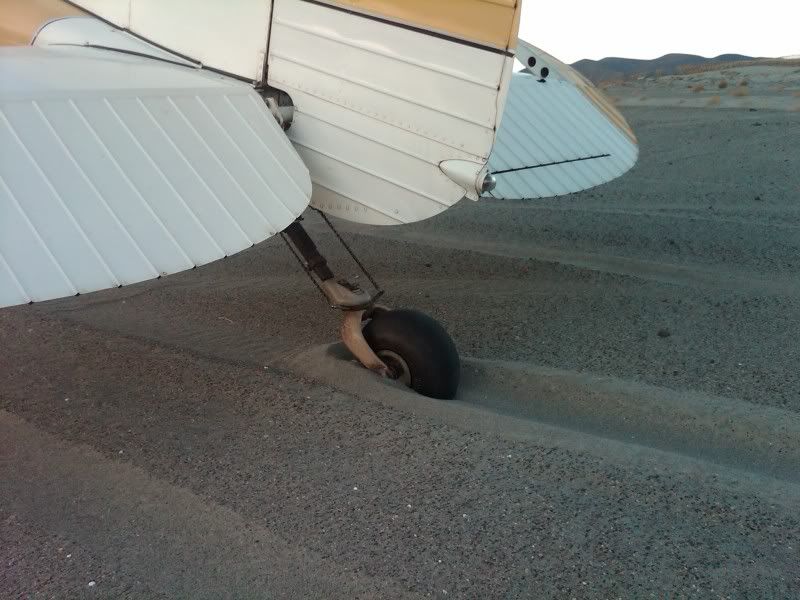
My point with the post is that beach landings are hazardous - beware! I've walked hundreds of miles of beaches and I could not predict why sometimes there is a big soft spot in the otherwise firm sand, until I stepped and sunk a boot in it. And all those wrecked planes landed on the firmest, wet sand. You are right, most of the time, wet sand will be firmer - heck, we always try to walk on the wet sand as it will almost always be firmer and easier to walk on than dry (caveat of glacial sand though). But the firmest wet sand may be slowly swallowing the plane, just jiggle it, and watch it turn to jello. I like to land right around the wrack line as long as I can stay clear of debris.
Couple other thoughts:
- Pebbles on sand surface mean firm sand underneath.
- If parking on wet sand, make a little trough so the water drains away from the tires.
- Sloped part of the beach will usually be firmer than flat.

When you guys drag the beach, how hard do you push on the sand?
AKclimber offline
Posts: 214
Joined: Mon Jan 10, 2011 6:24 pm
Location: Alaska

Re: Hazards of beach landings

robw56 wrote:
dirtstrip wrote:
AKclimber wrote:Sometimes 8.50x10s aren't big enough:
Image


On the other hand lowering the step like that makes it easier to climb in. :)
The tail of a 170 must not be very heavy. That baby bush seems to be floating along quite well in the soft sand.

Thanks for the reply.


I've seen the opposite with my set up. With 26'' bushwheels and baby bush the mains float on top in the soft sand and the tail digs in a lot more. You can see in this picture the track from my main gear wasn't deep at all, it just floated on top.
Image


That was an especially unusual spot. In the picture that shows the first takeoff attempt you can see the footprints are not even breaking the surface. It wasn't until the plane really slowed down that the mains broke through the crust - full power and it just dug in and sunk into the sand and stopped. Your picture shows what it's like to land in the dry sand.
This is the more common case:
Image
AKclimber offline
Posts: 214
Joined: Mon Jan 10, 2011 6:24 pm
Location: Alaska

Re: Hazards of beach landings

Hi guy's, I have a set of 8.50x6 and a 2.80x4 scott tailwheel to fit on my 150 taildragger with the intention of beach landings. What are your thoughts on these? The aircraft is obviously very light but with the current 6.00x6 and little maule tailwheel it doesn't accelerate too well on the soft stuff until the tail is up. I've never done a beach landing before and plan on choosing the spot well, dragging wheels etc..
onefitty offline
Posts: 233
Joined: Wed Oct 10, 2012 12:39 pm
Location: Here

Re: Hazards of beach landings

AKclimber wrote:
AKclimber wrote:Sometimes 8.50x10s aren't big enough:
Image


That was an especially unusual spot. In the picture that shows the first takeoff attempt you can see the footprints are not even breaking the surface. It wasn't until the plane really slowed down that the mains broke through the crust - full power and it just dug in and sunk into the sand and stopped. Your picture shows what it's like to land in the dry sand.


What I would love to know is how on earth did you get airborne again?
Can you even accelerate with that much sand around the mains, to get back onto the 'crust'? And if not, pushing it would be a joke!
Battson offline
Knowledge Base Author
User avatar
Posts: 1810
Joined: Wed May 09, 2012 11:19 pm
Location: New Zealand
Aircraft: Bearhawk 4-place
IO-540 260hp

Re: Hazards of beach landings

When I had a C150 I did all my beach landings with the stock 6x6 mains and stock 5x5 nosewheel. Before that I flew a Minicab GY20 with 5x5 mains on all kinds of beach landings (Ok I flipped it once taxiing from the hard wet stuff to the dry soft stuff looking for a log to tie the tail to for the handprop start before I shut down, flew it out later, long story). Reading the sand surface like others have mentioned on this thread made the biggest difference - I always preferred damp sand (I flew with a tide chart) with a little ripple to it, and if in doubt I'd drag the wheels then come around and look at the tracks before committing to a landing.

onefifty, you should be real good with the 8:50x6. Probably have more fun options, like river sandbars that don't seem to pack hard like ocean beach sand.
Karmutzen offline
User avatar
Posts: 711
Joined: Tue Apr 24, 2012 7:47 pm
Location: Great Bear Rainforest
'74 7GCBC, 26" ABW, Aera 660 feeding G5 and FC-10 FF.

Re: Hazards of beach landings

Battson wrote:
What I would love to know is how on earth did you get airborne again?
Can you even accelerate with that much sand around the mains, to get back onto the 'crust'? And if not, pushing it would be a joke!


A lot of stomping to pack the sand down. Took two tries before finally getting enough weight off the mains to accelerate.

Regarding the C-150 with the 8.50x6 tires, I think they would be too small for those beaches, but fine on more coarse substrate and the wet, hard stuff. Definitely bounce it first to see how firm the sand is, then drag your LZ for consistency of substrate, then if all good, commit. Even with the 8.50x10s which have a good sized footprint, I have to check every LZ and these outside beaches change from tide to tide and storm to storm. The one in the picture where I landed did not have any backwater a week later and the storm berm was totally rearranged.
AKclimber offline
Posts: 214
Joined: Mon Jan 10, 2011 6:24 pm
Location: Alaska

Re: Hazards of beach landings

Great pictures and interesting thread! I landed on San Juan Bay on Montague last summer so this definitely hits close to home. I was considering landing at Patton Bay but maybe i'll wait until I can trade in the 26" goodyears for some 31's just to be safe. Patton looks pretty soft, there are some pics on google earth where a guy landed his 185 there and sunk in quit a bit.
PoorMans180 offline
Posts: 21
Joined: Wed Jan 19, 2011 2:26 am
Location: Wasilla Alaska

Re: Hazards of beach landings

PoorMan's180 wrote:Great pictures and interesting thread! I landed on San Juan Bay on Montague last summer so this definitely hits close to home. I was considering landing at Patton Bay but maybe i'll wait until I can trade in the 26" goodyears for some 31's just to be safe. Patton looks pretty soft, there are some pics on google earth where a guy landed his 185 there and sunk in quit a bit.


Just looked at that 185 on Google earth - looks like he landed on the southwest side of Nellie Martin river - that is SOFT with intermittent hard spots (i.e. if you drag the hard spot, you may still end up in the soft stuff). Land only on the northeast side of the river (right side) - much harder sand - but still no guarantee. Guy got lucky he didn't end up like that 180/185 in my other picture. He's got 29s too!
Here's the story of that Pacer in my first post - he landed on the right side too!(http://avstop.com/news2/anchorage_pilot ... _alive.htm).
This is what that Pacer looks like now:
Image
That's the big problem with landing below high tide mark - you don't have much time to salvage anything from the plane much less to flip it back over or even get it unstuck.

I haven't been able to track down the stories behind the other planes.
AKclimber offline
Posts: 214
Joined: Mon Jan 10, 2011 6:24 pm
Location: Alaska

Re: Hazards of beach landings

Thanks for the info, I'll get the wheel and tyres fitted this week hopefully... Just in time for the crap NZ weather to turn foul... :cry:
onefitty offline
Posts: 233
Joined: Wed Oct 10, 2012 12:39 pm
Location: Here

Re: Hazards of beach landings

onefitty wrote:Thanks for the info, I'll get the wheel and tyres fitted this week hopefully... Just in time for the crap NZ weather to turn foul... :cry:

Hey the weather should last long enough for the STOL contest this weekend - hope to see your 150 there if it's got shoes in time!
Battson offline
Knowledge Base Author
User avatar
Posts: 1810
Joined: Wed May 09, 2012 11:19 pm
Location: New Zealand
Aircraft: Bearhawk 4-place
IO-540 260hp

Re: Hazards of beach landings

I was half tempted! But the weight classes put me up against planes with power! Short landings are no probs but +30 degrees, grass and O-200 powered 150's = long takeoffs... If I get a chance will go down for a look... You in the comp?
onefitty offline
Posts: 233
Joined: Wed Oct 10, 2012 12:39 pm
Location: Here

Re: Hazards of beach landings

I see there are at least 2 other 150's having a go anyway, one's a taildragger I think? But yep I see what you mean about the weight classes, you'd be in with the Super Cubs.

It's a really mixed bag, all the usual cast of Cubs, Maules, Skywagons, but also a Moth (precision landing), Wilga, Caravan, Fletcher, Husky, Stinson, 152/172 taildraggers, Archers, Pawnees, an Arrow, Carbon Cubs, Zeniths, Rans, a Tailwind, the Helio Courier, Citabria, 172s/182s, a few Tomohawks & a Bolkow (precision landings again), and the heavily modded Pacer (Chaser). Quite a turnout, almost 60 different pilots I think.

We're flying down in a friend's XP Hawk, but I wont be competing this year - the Bearhawk is still U/C.

Sorry OP for thread creep! [-X
Battson offline
Knowledge Base Author
User avatar
Posts: 1810
Joined: Wed May 09, 2012 11:19 pm
Location: New Zealand
Aircraft: Bearhawk 4-place
IO-540 260hp

Re: Hazards of beach landings

Well I got the 8.50's and scott TW on and weather has been perfect to try the beach but I've been to busy.... And now it's turned crap again...
onefitty offline
Posts: 233
Joined: Wed Oct 10, 2012 12:39 pm
Location: Here

Re: Hazards of beach landings

As for that last photo in the series:
it would appear that UFO's are ill equipped for soft beach landings too...
sbmaule offline
User avatar
Posts: 57
Joined: Wed Mar 06, 2013 12:27 pm
Location: Central California

Re: Hazards of beach landings

AKclimber wrote:
patrol guy wrote:That last photo might be (I am guessing) some sort of block and tackle housing for a ship's rope hoists???


At first I thought it was some sort of a wave buoy, but a closer look inside reveals some sort of a core and a bunch of "cooling" fins surrounding it. It almost makes you think of a portable nuclear rector with the core surrounded by those cooling fins. So far noone has been able to identify this.
Here is another picture of the inside:
Image
Regarding location of the beaches in the pics - I'm curious if any of the Alaska guys can id them.
Except for the twin props, all other spots are "easily" accessible (well, at least by Alaskans with airplanes standards)...


Although I have never seen one quite exactly like that, with the internal tubes and fins it’s most likely a heat exchanger of some sort, could be for cooling oil, water, air, or steam, it may even be from fresh water distillation unit.
172heavy offline
User avatar
Posts: 373
Joined: Sun Dec 13, 2009 11:55 am
Location: California, Lake Isabella

Re: Hazards of beach landings

Here's what the inside of that thing looks like:
Image

Interestingly there was another one like it further up the beach in the logs and it was fully intact.
I agree it appears like some sort of a cooling contraption with an inner core that is cooled by the fins surrounding it.
The design is very similar to a portable nuclear reactor - maybe off of a submarine?
AKclimber offline
Posts: 214
Joined: Mon Jan 10, 2011 6:24 pm
Location: Alaska

Re: Hazards of beach landings

Happened upon this thread today while searching. Good stuff. Bump.
Zzz offline
Janitorial Staff
User avatar
Posts: 2854
Joined: Fri Oct 08, 2004 11:09 pm
Location: northern
Aircraft: Swiveling desk chair
Half a century spent proving “it is better to be thought a fool than to open your mouth and remove all doubt.”

DISPLAY OPTIONS

PreviousNext
42 postsPage 2 of 31, 2, 3

Who is online

Users browsing this forum: No registered users and 0 guests

Latest Features

Latest Knowledge Base