What is the best HF antenna? I am planning on rigging a Yaesu FT-857D to my audio panel. I have seen DG brand antennas in the Missionary planes in South America. I think they are marketed as ADF antennas.
This will go on a 79 Cessna R172K
Any help would be welcome,
thanks
Gilbert
HF radio
Fri Feb 26, 2010 6:54 pm
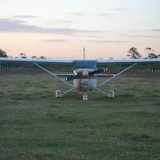
Gilbert
Mon Mar 01, 2010 2:37 pm
Re: HF radio
Gilbert, The ones I have operated were a wire antenna out to the wing tip and then back to the tail. No high technology there. The key is the tuner box inbetween the wire and the transceiver. We had fixed frequency assignments in the 4.3 mhz area. Used ground wave propagation back to the base for about a 150 mile range. What freq. are you going to be using?
An old Super Cub I operated used a trailing wire as well. You just reeled it out in flight and adjusted for max power as indicated on a bulb. They tore off frequently when pilot's forgot to reel it in for landing.
An old Super Cub I operated used a trailing wire as well. You just reeled it out in flight and adjusted for max power as indicated on a bulb. They tore off frequently when pilot's forgot to reel it in for landing.
- flightlogic offline

- Posts: 616
- Joined: Wed Dec 24, 2008 2:51 pm
- Location: Prescott
Flying is dangerous. If you think otherwise, you are new at this sport. Mind the gravity not the gap.
Mon Mar 01, 2010 7:30 pm
Re: HF radio
Don't get me started on trailing wire antennas and Super Cubs....  Lost the tension nut on one reel once, after which the reel flew over into the back seat and all the wire (160 feet of it) went zinging out the back. Now you've got a gazillion feet of wire hanging out there in the breeze. I pulled all that into the cockpit, and landed to reassemble. Pulled up to a dock at a lodge, and got some interesting looks...
Trailing wire wouldn't be my first choice. There are supposedly some better tuners out there these days, so a fixed wire might be best. That depends on the type airplane, though--how sturdy is the tail?
MTV
Lost the tension nut on one reel once, after which the reel flew over into the back seat and all the wire (160 feet of it) went zinging out the back. Now you've got a gazillion feet of wire hanging out there in the breeze. I pulled all that into the cockpit, and landed to reassemble. Pulled up to a dock at a lodge, and got some interesting looks...Trailing wire wouldn't be my first choice. There are supposedly some better tuners out there these days, so a fixed wire might be best. That depends on the type airplane, though--how sturdy is the tail?
MTV


Mon Mar 01, 2010 7:40 pm
Re: HF radio
this makes me wonder, how far do these radios go? we have a remote moose camp about 150 miles from our base, a few hills up to 300' in between, would HF radios work good in this situation? this would be a base to base setup

Mon Mar 01, 2010 8:31 pm
Re: HF radio
Thanks for the replies, I am planning on using an antenna tunner that will allow different frequencies as we will operate between 5-10 Mhz. The antennas I see being used are really ADF sense antennas sold by DG and RA miller. For good operation an HF antenna needs to be grounded, just wondering about undesired effects since the airframe would be the ground.
Most GA pilots have full band HF radios in their planes, so once out of reach from VHF comms you communicate thru HF with towers and flight watch.
LetsFlyAK:
We use HF radios a whole lot in South America, I communicate with my cattle ranch that is about 500 miles away without a problem. I do have the Andes mountains in between reaching around 14K feet. HF waves bounce from part of the atmosphere back to earth and back up until they reach their destination.
gilbert
Most GA pilots have full band HF radios in their planes, so once out of reach from VHF comms you communicate thru HF with towers and flight watch.
LetsFlyAK:
We use HF radios a whole lot in South America, I communicate with my cattle ranch that is about 500 miles away without a problem. I do have the Andes mountains in between reaching around 14K feet. HF waves bounce from part of the atmosphere back to earth and back up until they reach their destination.
gilbert
Last edited by gflores71 on Tue Mar 02, 2010 1:30 am, edited 1 time in total.
Gilbert
Tue Mar 02, 2010 12:42 am
Re: HF radio
great thanks for the info! i lost my sat phone in storage somewhere, so trying to see other options to save some $$
Tue Mar 02, 2010 6:17 am
Re: HF radio
Lets Fly,
HF requires a lot of power to transmit, so big batteries. HF, as noted, can skip, and it can go through mutiple skips. Depending on the frequency, you may have great comm out at 2000 miles, and nothing between, or any other combination. When I was in Kodiak, I could talk to KMI the marine operator in San Francisco routinely, but rarely be able to talk to someone on the other end of the island. The "right" frequency is essential. Finally, you and your station must be licensed to communicate on HF. And, the equipment isn't particularly cheap. An antenna for the ground site is also going to be pretty large. As in 80 or 100 feet long, again, depending on frequency.
Buy another satellite phone--it'll be cheaper and a LOT less hassle in the long run.
Gilbert, I don't think most of the long wire antennas I've seen and used on aircraft were modified ADF antennas--they were dedicated HF comm antennas. Most run from the cabin aft to the tail, then out to one wingtip. Even the old ADF sense antennas generally only ran from the cabin to the tail. Takes a bigger antenna for HF. I believe antenna tuners have gotten smaller and better over the years since I used this stuff.
Have you considered installing an Iridium Satellite phone system instead? We found them MUCH more reliable, and really not that expensive, unless you're really using a LOT of air time. If you're using a LOT of air time, the HF will probably be annoying enough to make the change to Satellite worthwhile. Listening to all those alien screeches and scraws.......grrrr. Seems like either I or the folks on the other end would wind up turning the volume down, and voila--no more comm..
On the other hand, we put satellite phones in a couple airplanes operating in northern Alaska, and they were great. Reliable, Light, and small antennas.
MTV
HF requires a lot of power to transmit, so big batteries. HF, as noted, can skip, and it can go through mutiple skips. Depending on the frequency, you may have great comm out at 2000 miles, and nothing between, or any other combination. When I was in Kodiak, I could talk to KMI the marine operator in San Francisco routinely, but rarely be able to talk to someone on the other end of the island. The "right" frequency is essential. Finally, you and your station must be licensed to communicate on HF. And, the equipment isn't particularly cheap. An antenna for the ground site is also going to be pretty large. As in 80 or 100 feet long, again, depending on frequency.
Buy another satellite phone--it'll be cheaper and a LOT less hassle in the long run.
Gilbert, I don't think most of the long wire antennas I've seen and used on aircraft were modified ADF antennas--they were dedicated HF comm antennas. Most run from the cabin aft to the tail, then out to one wingtip. Even the old ADF sense antennas generally only ran from the cabin to the tail. Takes a bigger antenna for HF. I believe antenna tuners have gotten smaller and better over the years since I used this stuff.
Have you considered installing an Iridium Satellite phone system instead? We found them MUCH more reliable, and really not that expensive, unless you're really using a LOT of air time. If you're using a LOT of air time, the HF will probably be annoying enough to make the change to Satellite worthwhile. Listening to all those alien screeches and scraws.......grrrr. Seems like either I or the folks on the other end would wind up turning the volume down, and voila--no more comm..
On the other hand, we put satellite phones in a couple airplanes operating in northern Alaska, and they were great. Reliable, Light, and small antennas.
MTV
Tue Mar 02, 2010 6:47 am
Re: HF radio
I have left long wires in the amazon jungle on landing. Probably still in the top of the trees down there after 35 years. If you want HF the way to go is out over the rear top cabin, to tail, to wing tip. Use this tuner it is the best (IMHO) http://www.sgcworld.com/SmartunerProductPage.html.
The long wire on a reel really does work very well as you can tune them right on. I have a reel out in the hangar that I have saved thinking someday might want to put HF ham radio in the airplane. You do have to add it to the landing check list however.
The long wire on a reel really does work very well as you can tune them right on. I have a reel out in the hangar that I have saved thinking someday might want to put HF ham radio in the airplane. You do have to add it to the landing check list however.
Tue Mar 02, 2010 6:28 pm
Re: HF radio
Thanks for the info, sat phones are an option but out in the uncivilized areas an HF radio would still be a better choice. All the ATC centers have HF radios for this reason (in Bolivia). It maskes it nice also because I can talk to the ranch base prior to landing to make sure things are ok, etc.
Another thing to consider is that I already have 5 HF radios with full band (MARS-CAP mod). One is specially nice since it's the smallest full power HF on the market ( yaesu FT-857D). I would just need to buy the antenna tunner + antenna.
Hoping to install this to my comm 3 in my Garmin 340 audio panel.
Now I just need a HD nose fork and bigger mains.
G
Another thing to consider is that I already have 5 HF radios with full band (MARS-CAP mod). One is specially nice since it's the smallest full power HF on the market ( yaesu FT-857D). I would just need to buy the antenna tunner + antenna.
Hoping to install this to my comm 3 in my Garmin 340 audio panel.
Now I just need a HD nose fork and bigger mains.
G
Gilbert
Tue Mar 02, 2010 9:40 pm
Re: HF radio
ok great for the additional information
DISPLAY OPTIONS
Who is online
Users browsing this forum: No registered users and 1 guest
Latest Features
-
Live to Tell
A Minnesota pilot is surprised to learn that the sudden asymmetric drag of an out-of-rig ski can…Read More -
Creators
Working in some of the Yukon's most beautiful and remote environments, photographer Simon Blakesley captures aircraft in…Read More -
Aircraft Ownership and Maintenance
Upgrading to big tires can make a huge difference in backcountry performance, but with those gains come…Read More -
Tales from Yesteryear
In this tale from bush flying yesteryear, Don Cogger signs up to help Atlee Dodge Jr recovery…Read More


Latest Knowledge Base
-
Destinations
A regional guide with ideas for winter camping destinations in California, Nevada, New Mexico, and Arizona.Read More -
Aircraft
Finding an affordable aircraft that can handle the backcountry for $80K or less? A challenge for sure, but with the…Read More -
Aircraft
01.29.2018 - Zane - Updated tire diameter graphic to add 8.50x10 Guide to tires for use in the backcountry and off-airport landing…Read More -
Pilots
12.22.2013 - Initial article format Operating aircraft on skis and negotiating a snow-covered landscape is an entirely unique skillset and environment.…Read More


