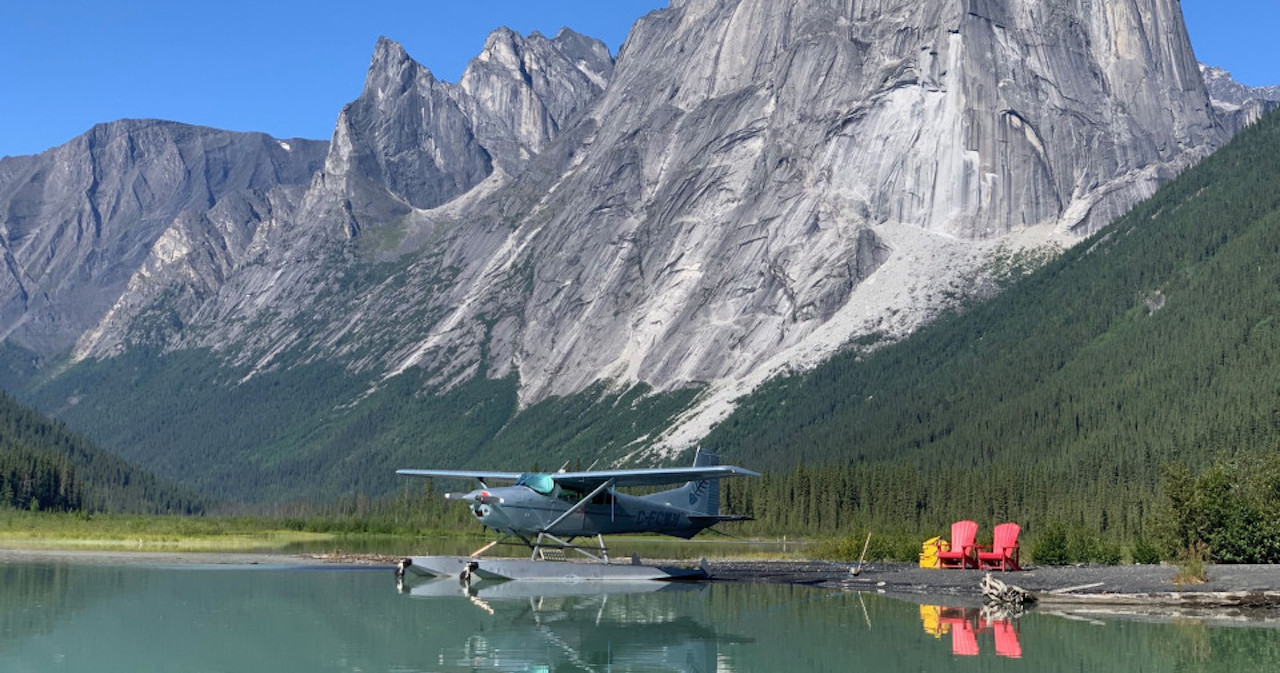
Newer training airplanes are more powerful. They are also heavier and their pilots are generally heavier. I watched a couple videos this week of pilots from low altitude airports making their first cross country flights to high altitude airports, one Sedona and one Leadville. Both landed long for safety and both took off toward down drainage egress. The runway slope at Sedona makes south (down drainage) takeoff safer except in really strong NW winds. Both left ground effect before halfway down very long runways and climbed out at pitch attitudes similar to low altitude departures.
I understand easing into the unknown of mountain flying in winter with DA similar to the Midwest in summer. I don't understand not taking advantage of long mesa runways in winter to get used to ground effect and use departure pitch attitudes that will be similar to maximum obtainable pitch attitude with passengers in the summer. Ground effect until pitch up is necessary to just clear obstructions should be default, but obviously is not. Above the tree line and/or mesa takeoff should at least be default low ground effect until cruise airspeed. Landing long on long runways is relatively safe but can trigger go around with a turn being necessary to get to down drainage egress. Waiting until 400' AGL for the turn down drainage could easily, in summer, put pilots close enough to rising terrain to require a steep turn. Attempting to maintain altitude in this steep turn is what creates a lot of fatals in the mountains. Low altitude orientation is necessary at high DA airports. Most trainer size airplanes are in the maneuvering flight envelope for a great portion of every flight. Stall/spin over at 200' over the departure end of the runway has the same result as stall/spin at the 1,000' altitude he was in such a hurry to get to. In the trainers I flew, 1,000' AGL was an altitude I didn't even attempt without thermal or orographic lift.
High Altitude Airports
Sat Feb 11, 2023 10:47 pm
- contactflying offline
- Posts: 4972
- Joined: Wed Apr 03, 2013 7:36 pm
- Location: Aurora, Missouri 2H2
Download my free "https://tinyurl.com/Safe-Maneuvering" e-book.
Mon Feb 13, 2023 8:15 am
Re: High Altitude Airports
ACS, with its numbers bias, puts pilots into a high altitude, instrument default, orientation. Expectation becomes unlimited vertical and horizontal airspace available. Pitch attitude and V numbers become synonymous. Density altitude, however, changes the pitch attitude required to maintain various V airspeeds, especially the slower ones. The lack of horizontal airspace available is in your face in most mountain flying, especially takeoff and landing. At high DA it will take longer to create vertical space available with now limited engine power, but much vertical space is available down drainage in uneven terrain to those who manage maneuvering flight safely. A wings level climb, safest in flat terrain, becomes dangerous in uneven terrain that cannot be outclimbed. Acceptance of less altitude gain before maneuvering and energy management type maneuvering is often required for mountain flying which so often must be accomplished in the maneuvering flight envelope. What can change the default pitch attitude? Head down instrument scan is not going to fix this.
- contactflying offline
- Posts: 4972
- Joined: Wed Apr 03, 2013 7:36 pm
- Location: Aurora, Missouri 2H2
Download my free "https://tinyurl.com/Safe-Maneuvering" e-book.
Tue Feb 14, 2023 5:57 am
Re: High Altitude Airports
Good info Contact; hopefully low elevation/low DA pilots (actually all pilots) will take the time to understand it. Having a home airport/strip at high elevation/DA (Denver area) using ground effect becomes routine; made my transition to backcountry/short strip flying much safer/easier for me.
- flyingjack offline

- Posts: 348
- Joined: Thu May 19, 2016 8:21 am
- Location: Erie
- Aircraft: Husky/T206H
Tue Feb 14, 2023 7:28 am
Re: High Altitude Airports
Another way to simulate high DA work back here the the low country is to fly with an big instructor in any of the old 65 hp trainers. Unfortunately most of those have a hundred hp or more now. And it is really more dangerous here where down drainage is hard to see and limited in depth.
- contactflying offline
- Posts: 4972
- Joined: Wed Apr 03, 2013 7:36 pm
- Location: Aurora, Missouri 2H2
Download my free "https://tinyurl.com/Safe-Maneuvering" e-book.
DISPLAY OPTIONS
Who is online
Users browsing this forum: No registered users and 3 guests
Latest Features
-
-
Featured Bush Planes
As one of the undisputed legends of bush flying, the Cessna 180 hauls a…Read More -
Aircraft Ownership and Maintenance
9 modification mistakes aircraft owners make when trying to "bush out" their birds—why some…Read More -
Live to Tell
A Minnesota pilot is surprised to learn that the sudden asymmetric drag of an…Read More


Latest Knowledge Base
-
Destinations
Canada offers some of the most spectacular backcountry flying on the continent. Here's what you need to know before you go.Read More -
Safety and Survival
Hope that you never have to use your survival vest but knowing you have it and knowing how to use…Read More -
Destinations
A regional guide with ideas for winter camping destinations in California, Nevada, New Mexico, and Arizona.Read More -
Aircraft
Finding an affordable aircraft that can handle the backcountry for $80K or less? A challenge for sure, but with the…Read More