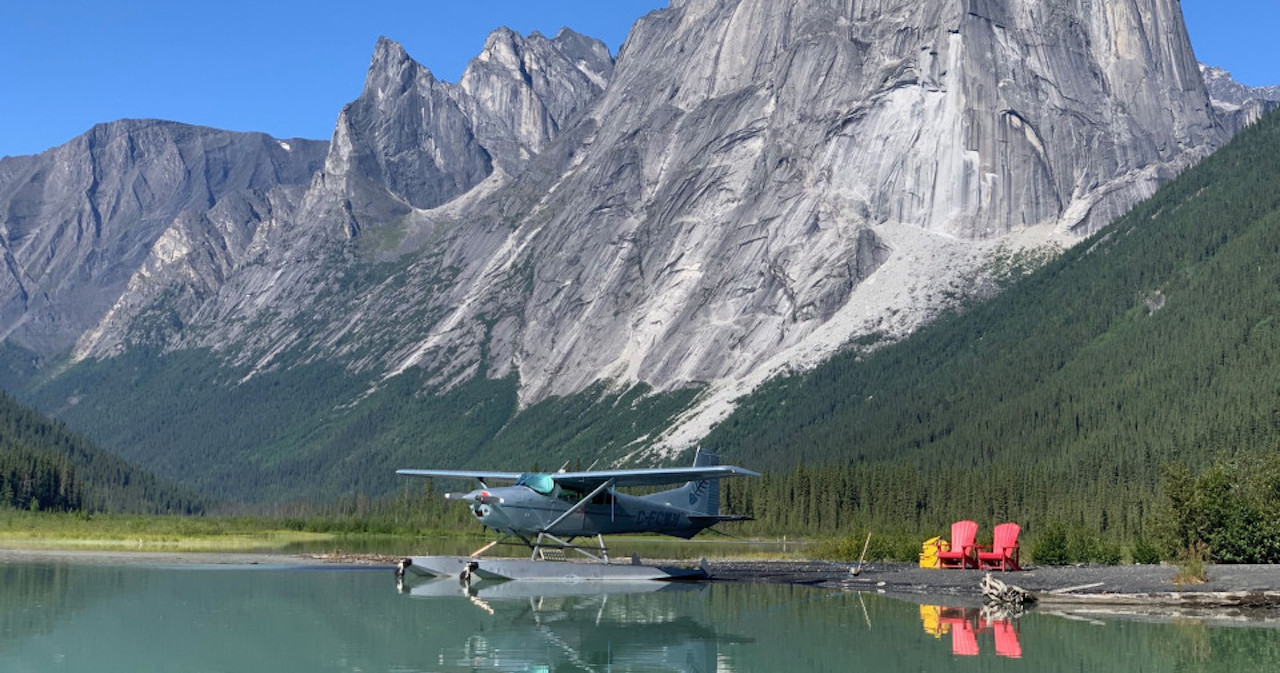
I'm contemplating returning to Northern Ontario regularly for a month each summer to help my friend run his business. I have a '79 skywagon with a float kit and I was curious about swapping wheels for floats for a month or two and whether its worth it. The operation is on an island amid lots of big lakes, Temagami, for those familiar with the area. Also any good sources for used floats out there? Is it worth it going amphibious or stick with straight floats?
Also opinions on how much training it would take to be comfy in the plane on northern lakes.
I imagine there are some BCP experts out there on this subject.
Thanks!
-Brad
How big a deal is it to seasonally put the wagon on Floats?
Sun Mar 21, 2010 6:05 pm
- Durango Skywagon offline
- Posts: 284
- Joined: Sat Oct 27, 2007 6:29 pm
- Location: Durango, Colorado
- FindMeSpot URL: http://share.findmespot.com/shared/face ... 0mZtv6OxWk
How to Overthrow the System: brew your own beer; kick in your Tee Vee; kill your own beef; build your own cabin and piss off the front porch whenever you bloody well feel like it. - Edward Abbey
My Spot Page
My Spot Page
Mon Mar 22, 2010 6:14 am
Re: How big a deal is it to seasonally put the wagon on Floa
I pay a flat fee of $300 CDN to swap wheels to floats and the same fee going the otherway. My floats are also stored for the off season at no additional charge. It usually takes aboug 3 hrs to swap, sometimes I help and other times I just drop the plane off. I try and have an oil change or something else done as a "thank you" for what I think is a pretty cheap deal.
As far as training goes, after your float endorsement, which was pretty minimal training, my insurance company required 10 additonal hrs of dual. This was far more worth while. IMO the landing and taking off on floats is easier than on wheels. The important stuff is having good judgment on where you land and how to handle wind, etc when docking. And speaking of insurance, last year due to illness in the family, I was not able to put on floats till Sept 1st. With such a short time available for camping on floats, I decided that the $600 for 2 changes AND the additonal charge for float insurance just wasn't worth it, to me. One other comment about insurance, Avemco is the only insurance company I have found that will give you 2 separate rates for insurnace, one for wheels, one for floats. While their wheel insurance is a bit higher than others, the flexibility of paying float insurance ONLY while on floats makes the overall cost much better. Avemco will allow you to switch back and forth from wheels to floats but sort of encourage you to stay on one or the other a week or two at a time.
Straight vs amphibs, for the load I usually carry, straight floats wins hands down. The cost of GOOD amphibs is very high. Bad amphibs aren't worth the price, no matter how low it is, IMO. Insurance is higher for amphibs vs straight floats. Fuel and maintenance is easier on amphibs, obviously.
With all of this said, flying floats is one of the higlights of my flying career, period.
As far as training goes, after your float endorsement, which was pretty minimal training, my insurance company required 10 additonal hrs of dual. This was far more worth while. IMO the landing and taking off on floats is easier than on wheels. The important stuff is having good judgment on where you land and how to handle wind, etc when docking. And speaking of insurance, last year due to illness in the family, I was not able to put on floats till Sept 1st. With such a short time available for camping on floats, I decided that the $600 for 2 changes AND the additonal charge for float insurance just wasn't worth it, to me. One other comment about insurance, Avemco is the only insurance company I have found that will give you 2 separate rates for insurnace, one for wheels, one for floats. While their wheel insurance is a bit higher than others, the flexibility of paying float insurance ONLY while on floats makes the overall cost much better. Avemco will allow you to switch back and forth from wheels to floats but sort of encourage you to stay on one or the other a week or two at a time.
Straight vs amphibs, for the load I usually carry, straight floats wins hands down. The cost of GOOD amphibs is very high. Bad amphibs aren't worth the price, no matter how low it is, IMO. Insurance is higher for amphibs vs straight floats. Fuel and maintenance is easier on amphibs, obviously.
With all of this said, flying floats is one of the higlights of my flying career, period.
- FloatFlyer offline
- Posts: 438
- Joined: Tue Dec 13, 2005 9:42 pm
- Location: Whidbey Island, WA,
Mon Mar 22, 2010 6:23 am
Re: How big a deal is it to seasonally put the wagon on Floa
Brad,
Changing to floats the first time is a day and a half to two day job for an experienced crew. After that, the swap is a half day deal for a good crew. Just two people: Full day job if you know what you're doing.
You need a HOIST, preferably INSIDE a hangar to lift the plane. Doing this outside in the rain and wind is a bitch--trust me, been there, done that a number of times. If on straight floats, you need to have some means to launch that seaplane, after the floats are on it, and to return it to the hoist at the end of the float season. A hangar at an airport next to a lake or float pond is ideal. Launching off a trailer works okay, but then you have to have a VERY nice grass strip to land on at the end of the season, and a forklift, or?? to carry the plane to the hangar. In float country, there are generally lots of options of airports with float facilities, that do this kind of change-overs all the time.
As to time in type, ask your insurance company. Are you talking about operating for hire?? Look into the Canadian requirements for that. You'll likely have to pass some sort of proficiency check, like a 135 checkride. Insurance companies generally have a specific requirement on floats, and expect your insurance coverage to double or triple UNLESS you are operating for hire, in which case, good luck. A low time float operator operating for hire is going to be a very high risk insurance-wise.
I can't tell you how much flying it will take to become "competent". There are lots of ways to get in trouble on floats, largely because the PILOT makes almost all the decisions: Where is the runway, how deep is the water?, how much wind, and what direction?, etc. etc. It takes a while to learn to work the airplane efficiently and safely, but it's something you can do, if you just start CAREFULLY, and don't get too carried away with yourself too soon.
If you're going to do this, I'd find someone who can work with you and give you a THOROUGH checkout in the 185 on floats. That's a lot of airplane for a float newbie, but a good checkout will get you going down the right road, at least.
Used floats: Edo 3430's are probably the best older floats. If you can find used Aerocet 3500's, Wipline 3000 or 3450s (none of which are very old). If you're working it commercially, that is. Recreational flying: EDO 2960's work fine, but you need to find a check out airman who KNOWS those floats well, or CAP 3000's are great floats, with the same proviso.
I'd stay away from first generation PeeKay floats (3500 A's or B's) although the later ones (3500 C's or D's) are good floats. Likewise, I'd stay away from the early Wipline floats, though the later ones are great floats as well. The early 3730 and 3900/4000 Wip floats are just too big for a 185, in my opinion. Wip thought so as well--their later floats are much smaller.
I'd stay away from amphibious floats if there is ANY possible way to do so. Very expensive, VERY heavy, VERY little useful load, and maintenance hogs, generally speaking. Insurance???? Hold on to your hat when you get a quote for those.
Send me a PM if you want more info, and I'll send you a phone number.
MTV
Changing to floats the first time is a day and a half to two day job for an experienced crew. After that, the swap is a half day deal for a good crew. Just two people: Full day job if you know what you're doing.
You need a HOIST, preferably INSIDE a hangar to lift the plane. Doing this outside in the rain and wind is a bitch--trust me, been there, done that a number of times. If on straight floats, you need to have some means to launch that seaplane, after the floats are on it, and to return it to the hoist at the end of the float season. A hangar at an airport next to a lake or float pond is ideal. Launching off a trailer works okay, but then you have to have a VERY nice grass strip to land on at the end of the season, and a forklift, or?? to carry the plane to the hangar. In float country, there are generally lots of options of airports with float facilities, that do this kind of change-overs all the time.
As to time in type, ask your insurance company. Are you talking about operating for hire?? Look into the Canadian requirements for that. You'll likely have to pass some sort of proficiency check, like a 135 checkride. Insurance companies generally have a specific requirement on floats, and expect your insurance coverage to double or triple UNLESS you are operating for hire, in which case, good luck. A low time float operator operating for hire is going to be a very high risk insurance-wise.
I can't tell you how much flying it will take to become "competent". There are lots of ways to get in trouble on floats, largely because the PILOT makes almost all the decisions: Where is the runway, how deep is the water?, how much wind, and what direction?, etc. etc. It takes a while to learn to work the airplane efficiently and safely, but it's something you can do, if you just start CAREFULLY, and don't get too carried away with yourself too soon.
If you're going to do this, I'd find someone who can work with you and give you a THOROUGH checkout in the 185 on floats. That's a lot of airplane for a float newbie, but a good checkout will get you going down the right road, at least.
Used floats: Edo 3430's are probably the best older floats. If you can find used Aerocet 3500's, Wipline 3000 or 3450s (none of which are very old). If you're working it commercially, that is. Recreational flying: EDO 2960's work fine, but you need to find a check out airman who KNOWS those floats well, or CAP 3000's are great floats, with the same proviso.
I'd stay away from first generation PeeKay floats (3500 A's or B's) although the later ones (3500 C's or D's) are good floats. Likewise, I'd stay away from the early Wipline floats, though the later ones are great floats as well. The early 3730 and 3900/4000 Wip floats are just too big for a 185, in my opinion. Wip thought so as well--their later floats are much smaller.
I'd stay away from amphibious floats if there is ANY possible way to do so. Very expensive, VERY heavy, VERY little useful load, and maintenance hogs, generally speaking. Insurance???? Hold on to your hat when you get a quote for those.
Send me a PM if you want more info, and I'll send you a phone number.
MTV


Mon Mar 22, 2010 6:56 am
Re: How big a deal is it to seasonally put the wagon on Floa
Float flying in northern Ontario is great. So many lakes and so few airports.
There are several float options for your Skywagon. Besides the various brands there is the amphib versus straight floats issue. Check out the COPA ( http://www.copanational.org ) classified section for used floats of all kinds. I think I remember a set of CAP 3000 s listed there recently for C$15,000. My AME charges about $1,000 for a change over to floats from wheels or skis and the same going back to wheels.
As for amphibs versus straight floats you need to consider, cost, weight, complexity of amphib gear, and also where can you get your fuel. If there is a seaplane base nearby or you have your own bulk fuel tank it should not be a problem to fly staight floats while up north. Fueling logistics become complicated when flying into areas with fewer seaplane bases. You really have to plan ahead for fuel. Airports up here won't dispense fuel into a barrel or jerry can, only into the plane's fuel tanks. My map shows Lake Temagami has a seaplane base on the northeast arm.
Most floatplanes up here have straight floats, mainly because there are so many lakes. Most floatplane owners have a fueling station set up at there home base. I have a 300 gal tank of avgas near my dock if you are ever stuck for fuel while flying in the Chapleau area. Its not uncommon to make arrangements to get fuel from other other floatplane owners.
I have often burned mogas in my C180 when avgas was not available. Is your Skywagon a 180 or 185?
If you go with the floats this summer I know you will enjoy it.
There are several float options for your Skywagon. Besides the various brands there is the amphib versus straight floats issue. Check out the COPA ( http://www.copanational.org ) classified section for used floats of all kinds. I think I remember a set of CAP 3000 s listed there recently for C$15,000. My AME charges about $1,000 for a change over to floats from wheels or skis and the same going back to wheels.
As for amphibs versus straight floats you need to consider, cost, weight, complexity of amphib gear, and also where can you get your fuel. If there is a seaplane base nearby or you have your own bulk fuel tank it should not be a problem to fly staight floats while up north. Fueling logistics become complicated when flying into areas with fewer seaplane bases. You really have to plan ahead for fuel. Airports up here won't dispense fuel into a barrel or jerry can, only into the plane's fuel tanks. My map shows Lake Temagami has a seaplane base on the northeast arm.
Most floatplanes up here have straight floats, mainly because there are so many lakes. Most floatplane owners have a fueling station set up at there home base. I have a 300 gal tank of avgas near my dock if you are ever stuck for fuel while flying in the Chapleau area. Its not uncommon to make arrangements to get fuel from other other floatplane owners.
I have often burned mogas in my C180 when avgas was not available. Is your Skywagon a 180 or 185?
If you go with the floats this summer I know you will enjoy it.
Rick's Cessna 180 float plane video http://www.youtube.com/watch?v=g6my0FM9F_Q
Mon Mar 22, 2010 7:22 am
No expert here, but I do have the same plane you have and operate in N-W Ontario on straight floats. First, in my opinion it is pretty hard to beat the fun of float flying, with skis coming in a second. Endless places to land in this country, where there is about as much water as land. With floats, remote lakes are now an option. I had the 185 on wheels for four years, then changed to straight Aerocet floats two years ago and have not taken them off yet. When I had the Super Cub on amphibs, I believe it cost $800 for float change over. I do have an opinion on amphibs, which may open up a can of worms, but so be it. They are way higher priced, heavy, more maintenance and most important, have the potential to kill you. If you accidently do a wheels down water landing, you are all but guaranteed a violent nose over. I have heard different percentages (don't profess to know the exact number) of drowning-deaths related to this, up to 70%, but whatever it may be, they are high. What do they say about retractable pilots? "Those that have and those that will". Yes, there are lights and audible systems in use today that tell if the wheels are up or down, but I can tell you from one that is quite experienced with lights, alarms and ladies talking to us through headsets, that one can get numb to it all. Do you have terrain avoidance? You can see how it would be easy to eventually ignore that voice. My point is, a wheels up landing on concrete will hurt your pocketbook, a wheels down landing on water will kill you. For straight floats, the Edo 3430's seem to be the used 185 float of choice, plenty of floatation, slick on the water, flat tops that are easy to walk on. The Aerocet 3500 is basically the same float, only composite, will be less available used and costlier. Just go somewhere for a checkout that has a Skywagon, (you can find a list of people who do checkouts on the Seaplane Pilots site). It might be a good excuse to go somewhere warm this spring and get it over with. Docking can be the tricky part and like they say "it is a ticket to learn". My Insurance did require 10 hours additional training in type, but you would probably want to do that anyway. Float insurance is expensive, but that will only be for the time it is on floats. That is my 2 cents. Steve

Mon Mar 22, 2010 7:28 am
Re: How big a deal is it to seasonally put the wagon on Floa
Great info so far, I'm going to keep looking into it and see what floats I can find.
Its a 185, and Chapleau is not too far away. I have a book from Nav Canada, I'll have to look at the seaplane info.
-Brad
Its a 185, and Chapleau is not too far away. I have a book from Nav Canada, I'll have to look at the seaplane info.
-Brad
- Durango Skywagon offline
- Posts: 284
- Joined: Sat Oct 27, 2007 6:29 pm
- Location: Durango, Colorado
- FindMeSpot URL: http://share.findmespot.com/shared/face ... 0mZtv6OxWk
How to Overthrow the System: brew your own beer; kick in your Tee Vee; kill your own beef; build your own cabin and piss off the front porch whenever you bloody well feel like it. - Edward Abbey
My Spot Page
My Spot Page
Mon Mar 22, 2010 9:48 am
Re: How big a deal is it to seasonally put the wagon on Floa
Steve,
Good comments. I highly recommend that anyone flying floats attend an underwater emergency egress training program at some point. A landing on water with wheels down need not result in fatalities, and lots of them have not. BUT, it's a pretty dramatic conclusion to a flight, and a very stressful situation, with lots of potential for bad results.
Lyle Pinepinto down in Louisiana operates a 185 on floats AND does emergency egress training. That might be a great place to kill two birds with one stone, so to speak. It's pretty hard to find anyone who has a 185 on floats who does training in it.
And, as an aside, the Aerocet 3500's are not a copy of the EDO 3430 float. They were actually modeled after the EDO 3500 amphibious float, which was a derivitive of the EDO 4000 float. Similar to the 3430, but actually quite different. The EDO 3500 amphib is a great float, as are the Aerocets.
MTV
Good comments. I highly recommend that anyone flying floats attend an underwater emergency egress training program at some point. A landing on water with wheels down need not result in fatalities, and lots of them have not. BUT, it's a pretty dramatic conclusion to a flight, and a very stressful situation, with lots of potential for bad results.
Lyle Pinepinto down in Louisiana operates a 185 on floats AND does emergency egress training. That might be a great place to kill two birds with one stone, so to speak. It's pretty hard to find anyone who has a 185 on floats who does training in it.
And, as an aside, the Aerocet 3500's are not a copy of the EDO 3430 float. They were actually modeled after the EDO 3500 amphibious float, which was a derivitive of the EDO 4000 float. Similar to the 3430, but actually quite different. The EDO 3500 amphib is a great float, as are the Aerocets.
MTV
Mon Mar 22, 2010 5:35 pm
Re: How big a deal is it to seasonally put the wagon on Floa
You could try Adventure Seaplanes or Ryan Seaplanes in Florida for skywagon checkouts on floats.
Mon Mar 22, 2010 5:39 pm
Re: How big a deal is it to seasonally put the wagon on Floa
Have u considered the Risk vs Reward  Are u prepared to lose everything u own and put your family in a position to lose everything for a few months of fun. Flying for hire has a high degree of liability that goes with it. Even after insurance. They can come after u personally. Deep pockets. With zero float time i would be surprised if u could even get insurance for a commercial operation. I would check into insurance cost before u spring $$ for the floats. U may find that the cost is prohibitive.
Are u prepared to lose everything u own and put your family in a position to lose everything for a few months of fun. Flying for hire has a high degree of liability that goes with it. Even after insurance. They can come after u personally. Deep pockets. With zero float time i would be surprised if u could even get insurance for a commercial operation. I would check into insurance cost before u spring $$ for the floats. U may find that the cost is prohibitive.Durango Skywagon wrote:I'm contemplating returning to Northern Ontario regularly for a month each summer to help my friend run his business.

Keep the shiney side up and the dirty side down...
Mon Mar 22, 2010 6:25 pm
Re: How big a deal is it to seasonally put the wagon on Floa
DonC wrote:Have u considered the Risk vs RewardDurango Skywagon wrote:I'm contemplating returning to Northern Ontario regularly for a month each summer to help my friend run his business.
I don't think Durango is planning on flying his plane commercially as part of his friend's business. To fly that plane for hire in Canada he would have to apply for a commercial charter. A float plane is just a great way to travel and explore in that part of Canada. Our back country strips just happen to be wet. There are a lot of float planes up here that are not operated commercially. Just some real fun personal transportation that opens up a whole new world of adventure.

Rick's Cessna 180 float plane video http://www.youtube.com/watch?v=g6my0FM9F_Q
Mon Mar 22, 2010 7:47 pm
Re: How big a deal is it to seasonally put the wagon on Floa
Yeah, not operating commercially, planning on using it as my personal vehicle for personal things. I know better than to risk that hornets nest. Also being deported from Canada looks bad on a record. 
- Durango Skywagon offline
- Posts: 284
- Joined: Sat Oct 27, 2007 6:29 pm
- Location: Durango, Colorado
- FindMeSpot URL: http://share.findmespot.com/shared/face ... 0mZtv6OxWk
How to Overthrow the System: brew your own beer; kick in your Tee Vee; kill your own beef; build your own cabin and piss off the front porch whenever you bloody well feel like it. - Edward Abbey
My Spot Page
My Spot Page
Thu Mar 25, 2010 7:24 pm
Re: How big a deal is it to seasonally put the wagon on Floa
Just found out my insurance carrier will not insure me as a new float flyer, I just renewed my policy through AOPA and it may not be finalized yet. Any ideas on a better insurance plan?
-Brad
-Brad
- Durango Skywagon offline
- Posts: 284
- Joined: Sat Oct 27, 2007 6:29 pm
- Location: Durango, Colorado
- FindMeSpot URL: http://share.findmespot.com/shared/face ... 0mZtv6OxWk
How to Overthrow the System: brew your own beer; kick in your Tee Vee; kill your own beef; build your own cabin and piss off the front porch whenever you bloody well feel like it. - Edward Abbey
My Spot Page
My Spot Page
Thu Mar 25, 2010 7:38 pm
Re: How big a deal is it to seasonally put the wagon on Floa
If you are not already a member, you may want to look into joining Seaplane Pilot's Association. You get a group discount through Falcon.
Thu Mar 25, 2010 7:53 pm
Re: How big a deal is it to seasonally put the wagon on Floa
As I was a low time, like zero, float flyer, I got insurance thru Bill White Insurance, not a problem, but a bit pricey. Next I went to Avemco and it was cheaper especially since I could go back to a lower cost wheel insurance in the off season. I priced Falcon and was not impressed. As previously stated, amphibs will really cost you, flying floats decreases your options even more than flying in general. All being said, it is worth it. 
- FloatFlyer offline
- Posts: 438
- Joined: Tue Dec 13, 2005 9:42 pm
- Location: Whidbey Island, WA,
Fri Mar 26, 2010 8:27 am
Re: How big a deal is it to seasonally put the wagon on Floa
Brad,
We all start out as new pilots needing insurance, but floats, especially amphibs can be tough. My insurance is with US Specialty Insurance Company. The cost is high , but as we are only on floats for a limited time in the summer, when you take them off, the price of insurance goes down. I will try to send you a PM with the name and number of the agency that insures my plane. Steve
We all start out as new pilots needing insurance, but floats, especially amphibs can be tough. My insurance is with US Specialty Insurance Company. The cost is high , but as we are only on floats for a limited time in the summer, when you take them off, the price of insurance goes down. I will try to send you a PM with the name and number of the agency that insures my plane. Steve
DISPLAY OPTIONS
Who is online
Users browsing this forum: No registered users and 2 guests
Latest Features
-
-
Featured Bush Planes
As one of the undisputed legends of bush flying, the Cessna 180 hauls a…Read More -
Aircraft Ownership and Maintenance
9 modification mistakes aircraft owners make when trying to "bush out" their birds—why some…Read More -
Live to Tell
A Minnesota pilot is surprised to learn that the sudden asymmetric drag of an…Read More


Latest Knowledge Base
-
Destinations
Canada offers some of the most spectacular backcountry flying on the continent. Here's what you need to know before you go.Read More -
Safety and Survival
Hope that you never have to use your survival vest but knowing you have it and knowing how to use…Read More -
Destinations
A regional guide with ideas for winter camping destinations in California, Nevada, New Mexico, and Arizona.Read More -
Aircraft
Finding an affordable aircraft that can handle the backcountry for $80K or less? A challenge for sure, but with the…Read More