How do hit the numbers?
Fri Jun 01, 2012 7:05 pm
How do hit the numbers?
After reading the Backcountry Landing Practice post I have a question for you seasoned guys. When on approach when a little low we can add a bit of power. If a little high we can put in some slip.
- qmdv offline

- Posts: 3633
- Joined: Wed Feb 15, 2006 10:22 pm
- Location: Payette
- FindMeSpot URL: http://share.findmespot.com/shared/face ... I5tqEOk0rc
- Aircraft: Cessna 182
Fri Jun 01, 2012 7:56 pm
Re: How do hit the numbers?
Alright Tim I can't wait what's the question 
- Glidergeek offline

- Posts: 1937
- Joined: Sat Sep 06, 2008 8:02 pm
- Location: Hesperia
- Aircraft: 1968 P206C
DG 400
Fri Jun 01, 2012 8:01 pm
Re: How do hit the numbers?
Read the top of the threadGlidergeek wrote:Alright Tim I can't wait what's the question
Tim
- qmdv offline
- Posts: 3633
- Joined: Wed Feb 15, 2006 10:22 pm
- Location: Payette
- FindMeSpot URL: http://share.findmespot.com/shared/face ... I5tqEOk0rc
- Aircraft: Cessna 182
Fri Jun 01, 2012 8:07 pm
Re: How do hit the numbers?
I did it says "how do hit the numbers" huh
huh - Glidergeek offline
- Posts: 1937
- Joined: Sat Sep 06, 2008 8:02 pm
- Location: Hesperia
- Aircraft: 1968 P206C
DG 400
Fri Jun 01, 2012 8:49 pm
Re: How do hit the numbers?
How do hit the numbers? It's easy.
Pick the numbers do hit. Push forward on the yoke until the spinner is aimed at the number you want. Push/pull to keep it lined up. Hold it until do hit.
Gump
Pick the numbers do hit. Push forward on the yoke until the spinner is aimed at the number you want. Push/pull to keep it lined up. Hold it until do hit.
Gump
Fri Jun 01, 2012 8:52 pm
Re: How do hit the numbers?
I knew there had to be a good explanation 
- Glidergeek offline
- Posts: 1937
- Joined: Sat Sep 06, 2008 8:02 pm
- Location: Hesperia
- Aircraft: 1968 P206C
DG 400
Fri Jun 01, 2012 8:54 pm
Re: How do hit the numbers?
Like this.....
This is how I did it anyways. With a slip.
This is how I did it anyways. With a slip.
- Aviatorpa11 offline
- Posts: 136
- Joined: Mon Sep 03, 2007 1:05 pm
- Location: Pleasant Grove, CA
- Aircraft: 1947 Piper PA-11
Fri Jun 01, 2012 9:12 pm
Re: How do hit the numbers?
I use both 
- OregonMaule offline
- Posts: 6977
- Joined: Fri Sep 01, 2006 9:44 pm
- Location: Orygun
My SPOT page
"They who can give up essential liberty to obtain a little temporary safety, deserve neither liberty nor safety". Ben Franklin
http://en.wikiquote.org/wiki/Benjamin_Franklin
"They who can give up essential liberty to obtain a little temporary safety, deserve neither liberty nor safety". Ben Franklin
http://en.wikiquote.org/wiki/Benjamin_Franklin
Sat Jun 02, 2012 1:25 am
Re: How do hit the numbers?
Stable approach, on speed is the first key. I keep losing my keys though.

John
KSBP
KSBP
Sat Jun 02, 2012 4:00 am
Re: How do hit the numbers?
The real seacret is to go vary vary slow, just befour you are rite over the numbars, pull back hard on the stick/yoke, wa-la, there ya are.
Gary
Gary
- shortfielder offline
- Posts: 2350
- Joined: Sun Mar 05, 2006 7:14 pm
- Location: Durango, Colorado
- FindMeSpot URL: http://share.findmespot.com/shared/face ... D263l9HKFb
If you want to go up, pull back on the controls. If you want to go down, pull back farther.
My SPOT page
My SPOT page
Sat Jun 02, 2012 6:14 am
Re: How do hit the numbers?
shortfielder wrote:The real seacret is to go vary vary slow, just befour you are rite over the numbars, pull back hard on the stick/yoke, wa-la, there ya are.
Gary
Otherwise known as the "pull back and the houses get smaller, pull back some more and they get bigger" method.
John
KSBP
KSBP
Sat Jun 02, 2012 6:16 am
Re: How do hit the numbers?
that's it, I gues the seacret is out
Have a good weekend
gary
Have a good weekend
gary
- shortfielder offline
- Posts: 2350
- Joined: Sun Mar 05, 2006 7:14 pm
- Location: Durango, Colorado
- FindMeSpot URL: http://share.findmespot.com/shared/face ... D263l9HKFb
If you want to go up, pull back on the controls. If you want to go down, pull back farther.
My SPOT page
My SPOT page
Sat Jun 02, 2012 6:26 am
Re: How do hit the numbers?
Keep both in your tool box. When over numbers drop the tool box. It do hit.
Just funin' ya. The real answer is whatever it takes. Slip with altitude margin preferred over being low with added power for obvious reasons. I actually want to see Motodave's answer, he has BCP'rs on record in his posts concerning approaches over obstacles. Is there a difference beyond size of target?
Just funin' ya. The real answer is whatever it takes. Slip with altitude margin preferred over being low with added power for obvious reasons. I actually want to see Motodave's answer, he has BCP'rs on record in his posts concerning approaches over obstacles. Is there a difference beyond size of target?
Lynn Sanderson (Dirtstrip) passed away from natural causes in May 2013. He was a great contributor and will be missed dearly.
Sat Jun 02, 2012 7:45 am
Re: How do hit the numbers?
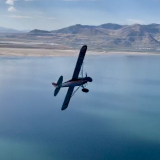
Here, hold my beer and watch this...
- aktahoe1 offline
- Posts: 2052
- Joined: Sun Jul 13, 2008 8:22 am
- Location: Alaska and Lake Tahoe = aktahoe
If it looks smooth, it might be. If it looks rough, it is...www.bigtirepilot.com ...www.alaskaheliski.com
Sun Jun 03, 2012 7:04 pm
Re: How do hit the numbers?
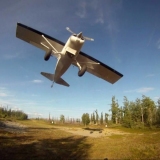
I use both, depends? Mostly I aim at them yella things, gets ya fairly close...
Mon Jun 04, 2012 11:36 am
Re: How do hit the numbers?
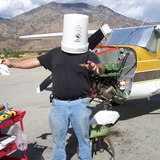
With a hammer! 
Mon Jun 04, 2012 2:44 pm
Re: How do hit the numbers?
The same way you get to Carnegie Hall..........
- Threefingeredjack offline
- Posts: 19
- Joined: Tue Apr 17, 2012 8:56 am
- Location: Oregon
The true patriotism, the only rational patriotism, is loyalty to the Nation ALL the time, loyalty to the Government when it deserves it. - - Mark Twain
Mon Jun 04, 2012 7:25 pm
Re: How do hit the numbers?
With a splat?

Cessna Skywagon -- accept no substitute!
Mon Jun 04, 2012 11:01 pm
Re: How do hit the numbers?
The same way you get to Carnegie Hall..........
+1
We need place to drop a 'Like' vote...
This one needs a 'Damn True' vote place, too!
lc
Humor may not make the world go around, but it certainly cheers up the process... 
With clothing, the opposite of NOMEX is polypro (polypropylene cloth and fleece).
Success has many fathers...... Failure is an orphan.
With clothing, the opposite of NOMEX is polypro (polypropylene cloth and fleece).
Success has many fathers...... Failure is an orphan.
Mon Apr 22, 2013 3:33 pm
Re: How do hit the numbers?
The apparent brisk walk rate of closure approach, regardless of angle of descent, will put us on the numbers every time. Look down while cruising at 500.' We are approaching everything at what appears to be a brisk walk. On 1/4 mile final, as we get closer and lower, this apparent rate of closure appears to speed up. By using power to maintain glide angle and elevator to maintain what appears to be this brisk walk, we will arrive at the numbers at or near stall speed. We will not need to round out (we are already in a landing configuration,) hold off, or flair except to protect the nose gear on airplanes that have them. Our ground speed, regardless of wind, will be slow. In a strong headwind, our airspeed will be high while our ground speed is slow. We have to be careful not to allow the airplane to move backwards. In a tailwind, our airspeed will be slow while our ground speed is slow. On short final we will often go behind the power curve and mush, requiring more power. This considerable amount of power may cause us to still be flying at slower than stall speed. All of this doesn't matter if we just keep the angle of descent with power and the apparent brisk walk with elevator. On short final we can evaluate our situation (check for zoom reserve which we don't want) by pulling back on the stick a bit. If the angle of descent decreases, we are going too fast. We need to keep the extra pitch and reduce power. If the aircraft begins to mush, we are going too slow. We need to add a bit of power to cushion the airplane onto the numbers.
I used this technique with zero time crop duster students. They all soloed in less than seven hours and never went long. While unconventional, it is a much easier approach than the hold off. The hold off burns the students brain out while waiting, completely out of control, for the thing to finally come down in it's own good time.
I am not saying we should not practice power off spot landings from time to time for the high altitude engine failure. Slips, forward or side as necessary, are very important with this round out, flair, and hold off technique. Also we need to shoot a directed course to somewhat short of the numbers. 75% of forced landings touch down in the center of the landing zone, usually resulting in damage to tin and skin.
I used this technique with zero time crop duster students. They all soloed in less than seven hours and never went long. While unconventional, it is a much easier approach than the hold off. The hold off burns the students brain out while waiting, completely out of control, for the thing to finally come down in it's own good time.
I am not saying we should not practice power off spot landings from time to time for the high altitude engine failure. Slips, forward or side as necessary, are very important with this round out, flair, and hold off technique. Also we need to shoot a directed course to somewhat short of the numbers. 75% of forced landings touch down in the center of the landing zone, usually resulting in damage to tin and skin.
- contactflying offline
- Posts: 4972
- Joined: Wed Apr 03, 2013 7:36 pm
- Location: Aurora, Missouri 2H2
Download my free "https://tinyurl.com/Safe-Maneuvering" e-book.
DISPLAY OPTIONS
Who is online
Users browsing this forum: No registered users and 1 guest
Latest Features
-
Live to Tell
A Minnesota pilot is surprised to learn that the sudden asymmetric drag of an out-of-rig ski can…Read More -
Creators
Working in some of the Yukon's most beautiful and remote environments, photographer Simon Blakesley captures aircraft in…Read More -
Aircraft Ownership and Maintenance
Upgrading to big tires can make a huge difference in backcountry performance, but with those gains come…Read More -
Tales from Yesteryear
In this tale from bush flying yesteryear, Don Cogger signs up to help Atlee Dodge Jr recovery…Read More


Latest Knowledge Base
-
Destinations
A regional guide with ideas for winter camping destinations in California, Nevada, New Mexico, and Arizona.Read More -
Aircraft
Finding an affordable aircraft that can handle the backcountry for $80K or less? A challenge for sure, but with the…Read More -
Aircraft
01.29.2018 - Zane - Updated tire diameter graphic to add 8.50x10 Guide to tires for use in the backcountry and off-airport landing…Read More -
Pilots
12.22.2013 - Initial article format Operating aircraft on skis and negotiating a snow-covered landscape is an entirely unique skillset and environment.…Read More


