There’s almost as many right ways to do things as there are wrong ways to do them, but here are a few things you might consider for a first airplane:
You've got to crawl before you can walk...EVERYONE wants to start out with a lot more airplane than they actually need. They look forward to what they eventually want to do with an airplane, not what they’re actually going to be doing with it for the next few years. Your plans are a lot more realistic than some peoples, but you might still be looking a bit too far down the road.
As a very low time pilot, it’s going to be a while before you start landing at high DA backcountry strips, or even low DA backcountry airstrips, with or without a load. Everyone progresses differently and it’s impossible to give a hard number, but it’s reasonable to expect you’ll be doing a couple hundred hours of frontcountry flying before you have the skills to start taking on easy backcountry strips with your wife and camping gear.
Yes, you do need a certain amount of power to utilize backcountry airstrips. But you also need a lot more flight experience than you’ll have in 2017, or probably 2018, and very possibly 2019, depending in large part on how much you can afford to fly.
What you really need for the next few hundred flight hours isn’t load hauling or climb performance, it’s an airplane you can afford to fly and fly and fly…and fly. What exactly that is depends on your budget, but you’ll get into the backcountry a lot faster if you start out in a tiny airplane you can afford to fly four hours a week than in a larger airplane you can only afford to fly four hours a month.
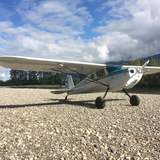
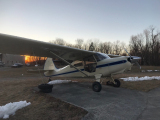
I’m a big proponent of starting out in a small, anemic, affordable airplane that doesn’t have the performance or load capacity to do backcountry camping trips at anything much above sea level. The primary reason being that you'll learn about air movement in a way you simply won't in a more powerful airplane. Also, it’s more affordable, so you fly more, and more often. But a very valid third reason is that most people benefit from having limiting factors placed on them during flight training.
Put a new pilot who wants to fly the backcountry in a high-performance airplane and it’s almost inevitable that sooner or later they’re going to try something well over their head because “the airplane is up for it”. Engine power never has and never will compensate for poor decision making, though it’s been a contributing factor to more poor decisions than most folks realize. And there's a WHOLE lot more to operating at high DA's in the mountains than horsepower.
Consider buying a two-seater with 100hp or less and then fly it a few hundred hours before worrying about camping with the wife. It’ll make you a better pilot, save you a wheelbarrow full of cash, and frankly be a lot more fun than starting off with a more powerful airplane.
If that’s just not your style, it would appear that your budget might get you into a stock Cessna 170, at least an A model. Something to look at, anyway.
Also, before you buy anything, get an insurance quote. You’re going to be paying the very highest premiums, and for no obvious reason some airplanes are dramatically more expensive to insure than others.
Take your time, go slow. Don't expect your first airplane to check all the boxes...if it does, it's probably the wrong airplane to start with.


 I would definitely prefer a larger cabin, I'm not too partial to tandems myself, so if the wife doesn't like them then it's not worth pursuing.