Anybody got a link to a power chart for a 150-horse Lycoming 320 running a fixed-pitch prop? Since I guess it has to be prop-specific to be accurate, it's an O-320-E2A with a 56" pitch Sensenich 74DM prop. Thanks,
Eric
Lyc 320 power chart
Thu Sep 24, 2009 7:30 pm


Cessna Skywagon -- accept no substitute!
Fri Sep 25, 2009 4:27 pm

Fri Sep 25, 2009 6:53 pm
Re: Lyc 320 power chart
That chart's for a 160-horse 320, and also for constant speed (note the MP/rpm settings). Not quite what I was looking for but thanks.
I remember having a power chart for the C-145 in my 170 that showed cruising altitudes and rpm/hp, based og=f course on the "stock" propeller. That's kind of more like what I'm aftyer. With a fixed prop, I can't control the MP and in fact don't even have a MP gauge.
Propbably what I want would be found in a Cherokee operating manual or somewhere like that.
Eric
I remember having a power chart for the C-145 in my 170 that showed cruising altitudes and rpm/hp, based og=f course on the "stock" propeller. That's kind of more like what I'm aftyer. With a fixed prop, I can't control the MP and in fact don't even have a MP gauge.
Propbably what I want would be found in a Cherokee operating manual or somewhere like that.
Eric
Cessna Skywagon -- accept no substitute!
Sat Sep 26, 2009 10:15 am
Re: Lyc 320 power chart
Eric, as you prob already know, the 172 I-M models used the O-320-E2D at 150hp. Perhaps there was a version that used the 74" Sensenich that you can get ahold of the POH for? I know some of the early models were spec'd with both Mac and Sensenich props and included performance data for both.

Wed Feb 24, 2016 9:42 pm
Re: Lyc 320 power chart
Long time lurker here, stumbled across this thread while trying to figure out info on my engine. I know its an old thread, but I am sure someone someday will be seek the same info.

Thu Feb 25, 2016 9:01 am
Re: Lyc 320 power chart
Those fuel burns match fairly closely to what I was getting when I had to run a fair amount ROP for cylinder cooling. Being able to lean a little more now I see closer to 9.2 at performance cruise with a 160hp O-320.
Thanks for putting these up!
Thanks for putting these up!
- CamTom12 offline

- Posts: 3705
- Joined: Sun Jul 08, 2012 1:08 pm
- Location: Huntsville
- FindMeSpot URL: https://share.delorme.com/camtom12
- Aircraft: Ruppe Racer
Experimental Pacer
home hand jam "wizard"
Thu Feb 25, 2016 10:28 pm
Re: Lyc 320 power chart
I flew pipelines with many different C-172s, some 150 horse and some 160 horse 0-320s . I ran all at 24 or 25 hundred Rpm leaned to maximum Rpm before takeoff regardless of DA. I seldom went higher than 200 ' all day long. I burned 8 to 9 gph and all the engines went about three thousand hours.
- contactflying offline
- Posts: 4972
- Joined: Wed Apr 03, 2013 7:36 pm
- Location: Aurora, Missouri 2H2
Download my free "https://tinyurl.com/Safe-Maneuvering" e-book.
Thu Feb 25, 2016 10:37 pm
Re: Lyc 320 power chart
contactflying wrote:I flew pipelines with many different C-172s, some 150 horse and some 160 horse 0-320s . I ran all at 24 or 25 hundred Rpm leaned to maximum Rpm before takeoff regardless of DA. I seldom went higher than 200 ' all day long. I burned 8 to 9 gph and all the engines went about three thousand hours.
Just what is "flying pipelines"? I here that mentioned, I see airplanes advertised that way, etc. just what exactly are you looking for?
Break
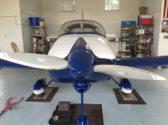
0-320's on RV aircraft run sub 8 gph leaned at altitude. I could run 150 ktas at 7 gph on a carb and I know guys that can do that on 6 gph running fuel injected, p mags, LOP. 160 hp fixed pitch.
Fri Feb 26, 2016 4:48 pm
Re: Lyc 320 power chart
Hoeschen,
Spot reports are made on all equipment, construction, exposed pipe, oil or product leak, ice or frost formation on natural gas valves, water on the top of storage tanks, dead animals, survey crews, survey stakes, vegetation restricting view, or unusual activity on or near the pipeline right of way (fifty feet swath.) Any equipment at any distance working toward the right of way is also called. Because bad weather may remain many days in the midwest, most lines there are flown weekly. In the west they are usually flown bi-weekly. Any line not flown in the prior 21 days must be shut down until flown. All spot reports must be physically investigated withing 48 hours, I think, by oil or pipeline company employees.
Spot reports are made by estimating distance from the nearest mile pole, positioned every mile in the midwest and every two to five miles out west. Many oil companies required GPS as well, but the interface technology was not there in inexpensive GPS units when I retired in 2006. The best unit I ever used was an old marine Magellan GPS that had a man overboard button. Still at 130 mph the coordinate could be way off. Does it happen when you push down or when you let the button up? The later Garmin 196s didn't have any way to get an accurate spot. I simply guessed. The company guys on the ground used the mile pole reports. They, like me, simply ignored any GPS coordinates. They said any would put them on the wrong side of the river or miles away.
As a normal operating practice, I read every mile pole. That way I could confirm the accuracy of the spot. I also found the occasional double entry or missing mile post, which I also reported. I also found unusual routing in pipelines. To be accurate you need to see every foot of the right of way. Energy management turns are the only way to do this on crooked lines.
Contact
Spot reports are made on all equipment, construction, exposed pipe, oil or product leak, ice or frost formation on natural gas valves, water on the top of storage tanks, dead animals, survey crews, survey stakes, vegetation restricting view, or unusual activity on or near the pipeline right of way (fifty feet swath.) Any equipment at any distance working toward the right of way is also called. Because bad weather may remain many days in the midwest, most lines there are flown weekly. In the west they are usually flown bi-weekly. Any line not flown in the prior 21 days must be shut down until flown. All spot reports must be physically investigated withing 48 hours, I think, by oil or pipeline company employees.
Spot reports are made by estimating distance from the nearest mile pole, positioned every mile in the midwest and every two to five miles out west. Many oil companies required GPS as well, but the interface technology was not there in inexpensive GPS units when I retired in 2006. The best unit I ever used was an old marine Magellan GPS that had a man overboard button. Still at 130 mph the coordinate could be way off. Does it happen when you push down or when you let the button up? The later Garmin 196s didn't have any way to get an accurate spot. I simply guessed. The company guys on the ground used the mile pole reports. They, like me, simply ignored any GPS coordinates. They said any would put them on the wrong side of the river or miles away.
As a normal operating practice, I read every mile pole. That way I could confirm the accuracy of the spot. I also found the occasional double entry or missing mile post, which I also reported. I also found unusual routing in pipelines. To be accurate you need to see every foot of the right of way. Energy management turns are the only way to do this on crooked lines.
Contact
- contactflying offline
- Posts: 4972
- Joined: Wed Apr 03, 2013 7:36 pm
- Location: Aurora, Missouri 2H2
Download my free "https://tinyurl.com/Safe-Maneuvering" e-book.
DISPLAY OPTIONS
Who is online
Users browsing this forum: No registered users and 1 guest
Latest Features
-
-
Featured Bush Planes
As one of the undisputed legends of bush flying, the Cessna 180 hauls a…Read More -
Aircraft Ownership and Maintenance
9 modification mistakes aircraft owners make when trying to "bush out" their birds—why some…Read More -
Live to Tell
A Minnesota pilot is surprised to learn that the sudden asymmetric drag of an…Read More




Latest Knowledge Base
-
Destinations
Canada offers some of the most spectacular backcountry flying on the continent. Here's what you need to know before you go.Read More -
Safety and Survival
Hope that you never have to use your survival vest but knowing you have it and knowing how to use…Read More -
Destinations
A regional guide with ideas for winter camping destinations in California, Nevada, New Mexico, and Arizona.Read More -
Aircraft
Finding an affordable aircraft that can handle the backcountry for $80K or less? A challenge for sure, but with the…Read More



