Good Morning,
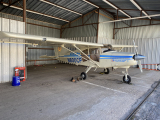
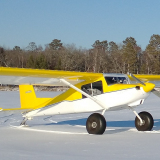
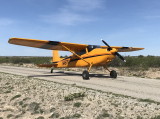
I love flying tailwheel, however I just got my hands on a Maule MXT-7-180. Is it me or does not like landing?
Any one else find this? Any tips or tricks or advice.
Thanks
David
MAULE MXT-7-180
Wed Dec 02, 2020 1:33 pm
Wed Dec 02, 2020 1:39 pm
Re: MAULE MXT-7-180
Three point attitude, with some power to mitigate sink, onto mains. The nose gear will come down automatically. In strong headwind component, flair to protect nose gear. Otherwise, same as wheel landing.
- contactflying offline
- Posts: 4972
- Joined: Wed Apr 03, 2013 7:36 pm
- Location: Aurora, Missouri 2H2
Download my free "https://tinyurl.com/Safe-Maneuvering" e-book.
Wed Dec 02, 2020 4:40 pm
Re: MAULE MXT-7-180
Bond wrote:Good Morning,
I love flying tailwheel, however I just got my hands on a Maule MXT-7-180. Is it me or does not like landing?
Any one else find this? Any tips or tricks or advice.
Thanks
David
Find an instructor who’s familiar with Maules, and get a good thorough check out!
MTV


Wed Dec 02, 2020 5:51 pm
Re: MAULE MXT-7-180
What MTV said, but until then, if you disregard his excellent advice and must go fly, try less flap on landing, it may help.
Kurt
Kurt

Wed Dec 02, 2020 7:28 pm
Re: MAULE MXT-7-180
You didn't say how fast you are landing, but I bet you need to slow down. My M7 will float forever if I'm a little too fast.
Read up on contactflying's approach principals, a brisk walk visual of touchdown point.
A quiet country airport with a clear approach that will allow you to land until your arm gets sore, is the best solution. I like to leave my trim in cruise configuration on approach, which will give you a better feel of your sink rate. Some at altitude slow flight will get that feel for you, but will not give you the floating sensation of ground effect at touchdown.
Another good practice that Jim Dulin explains is hover flight, as he calls it, in ground effect. After takeoff, stay in ground effect and slow fly down the runway. This will get you familiar with the pull of the yoke at touchdown.
I would suggest a steeper, slower approach, and be ready to give it a little shot of power at flair. Protect that nosegear.
I'm not an instructor, just passing on the things that helped me get comfortable with landing my M7-235.
Read up on contactflying's approach principals, a brisk walk visual of touchdown point.
A quiet country airport with a clear approach that will allow you to land until your arm gets sore, is the best solution. I like to leave my trim in cruise configuration on approach, which will give you a better feel of your sink rate. Some at altitude slow flight will get that feel for you, but will not give you the floating sensation of ground effect at touchdown.
Another good practice that Jim Dulin explains is hover flight, as he calls it, in ground effect. After takeoff, stay in ground effect and slow fly down the runway. This will get you familiar with the pull of the yoke at touchdown.
I would suggest a steeper, slower approach, and be ready to give it a little shot of power at flair. Protect that nosegear.
I'm not an instructor, just passing on the things that helped me get comfortable with landing my M7-235.
- wtxdragger offline


- Posts: 368
- Joined: Tue Sep 13, 2011 8:20 pm
- Location: Iraan
- Aircraft: 1989 Maule M7-235
1948 Cessna 170
Thu Dec 03, 2020 7:47 am
Re: MAULE MXT-7-180
Same here, not an instructor nor do I play one on TV.  Having said that the above advice is perfect. I know several pilots that complain about long landings and float issues. Most of them come in over the numbers at too high of speed.
I am always practicing slow flight and slow flight maneuvers. Get the intructor to take you up to altitude and practice slow flight until you are very comfortable with flying the new plane close to the edge. I feel this is the best way for me to have muscle memory and learn how to deal with how the aircraft feels on the shortest landings possible. Plus, I think it is good practice in the event one has an engine out scenario. The slower I end up on terra firma, I think the better off I will be.
I think it may have already been mentioned, but my TW instructor had me flying down the runway just barely keeping the plane off the runway. Basically hanging in ground effect where a slight decrease in throttle would have resulted in a silky smooth landing. Again, not an instructor.
Having said that the above advice is perfect. I know several pilots that complain about long landings and float issues. Most of them come in over the numbers at too high of speed. I am always practicing slow flight and slow flight maneuvers. Get the intructor to take you up to altitude and practice slow flight until you are very comfortable with flying the new plane close to the edge. I feel this is the best way for me to have muscle memory and learn how to deal with how the aircraft feels on the shortest landings possible. Plus, I think it is good practice in the event one has an engine out scenario. The slower I end up on terra firma, I think the better off I will be.
I think it may have already been mentioned, but my TW instructor had me flying down the runway just barely keeping the plane off the runway. Basically hanging in ground effect where a slight decrease in throttle would have resulted in a silky smooth landing. Again, not an instructor.
Thu Dec 03, 2020 3:32 pm
Re: MAULE MXT-7-180
I agree with pretty much everything said above...
I have a friend with a Cherokee 160 who wanted to fly somewhere that had a "short runway" (or so he said). I looked at the runway length in ForeFlight (2100 ft), and compared it to Piper's published performance data for his airplane. The book showed roughly 700' landing distance would be required. Personally, I generally make my "go / no go" decisions for a "new to me" airport based on the "over 50-foot obstacle" distance published in the charts, but even that showed only about 1300' required to land over a 50-foot obstacle... I told him what the charts showed, and asked why he was concerned about flying there. He said it was because he found the "book figures" to be WAY too optimistic – that he could not get his Cherokee down and stopped in under 2000 ft even at our home airport's 580' field elevation!
We then had a good discussion about his pattern flight and landing technique. Basically, he was taking the published final approach speed and multiplying by 1.3, and flying THAT airspeed on final. I went out and flew with him, and sure enough, he was basically flying his final approach at 85 mph, then sailing 1500-2000 feet down the runway before getting slowed down to stall speed (55 mph) to be able to touch down. Yeah, using those speeds, there was no way he would have been able to land on that 2100 foot runway... But if you slowed the final approach speed to 66 mph (1.2 Vso for short fields), or even 72 mph (1.3 Vso for normal fields) it would allowed him to land much closer to the "book" numbers, and he could have comfortably flown into that "short" runway – with plenty of distance to spare!
Turns out that early Piper Cherokee B owner's manual is pretty primitive, and offers no recommendation for short field procedures. In fact, the only reference to airspeed during landing is where the "Approach and Landing" part of the "Operating Instructions" states "the airplane should be trimmed to an approach speed of about 85 miles per hour." So, without any understanding of how to determine a reasonable approach speed for himself, he was just blindly using that figure, all the way to the flare...
I explained that the "standard" approach is 1.3 times Vso, and short field approaches are typically at 1.2 times Vso, and that those would be 72 and 66 mph ªrespectively) in his airplane, so flying at 85 mph would clearly be excessive. We flew a few times around the pattern, first using 80, then 75 mph, and that reduced his landing distances significantly – by maybe 1000 feet or so. Since I'm not a CFI, I didn't push him to actually get it down any slower, but it was enough for him to realize that the training he had received was lacking, and he agreed to get with a CFI to work on it.
I learned in my own RANS S-6ES that carrying even an extra 5 mph – flying final at 55 mph versus the recommended 46–50 mph (1.2–1.3 times Vso of 38 mph) will add significantly to the "float" during landing. It also saves wear and tear on the tires and brakes!
I have a friend with a Cherokee 160 who wanted to fly somewhere that had a "short runway" (or so he said). I looked at the runway length in ForeFlight (2100 ft), and compared it to Piper's published performance data for his airplane. The book showed roughly 700' landing distance would be required. Personally, I generally make my "go / no go" decisions for a "new to me" airport based on the "over 50-foot obstacle" distance published in the charts, but even that showed only about 1300' required to land over a 50-foot obstacle... I told him what the charts showed, and asked why he was concerned about flying there. He said it was because he found the "book figures" to be WAY too optimistic – that he could not get his Cherokee down and stopped in under 2000 ft even at our home airport's 580' field elevation!
We then had a good discussion about his pattern flight and landing technique. Basically, he was taking the published final approach speed and multiplying by 1.3, and flying THAT airspeed on final. I went out and flew with him, and sure enough, he was basically flying his final approach at 85 mph, then sailing 1500-2000 feet down the runway before getting slowed down to stall speed (55 mph) to be able to touch down. Yeah, using those speeds, there was no way he would have been able to land on that 2100 foot runway... But if you slowed the final approach speed to 66 mph (1.2 Vso for short fields), or even 72 mph (1.3 Vso for normal fields) it would allowed him to land much closer to the "book" numbers, and he could have comfortably flown into that "short" runway – with plenty of distance to spare!
Turns out that early Piper Cherokee B owner's manual is pretty primitive, and offers no recommendation for short field procedures. In fact, the only reference to airspeed during landing is where the "Approach and Landing" part of the "Operating Instructions" states "the airplane should be trimmed to an approach speed of about 85 miles per hour." So, without any understanding of how to determine a reasonable approach speed for himself, he was just blindly using that figure, all the way to the flare...
I explained that the "standard" approach is 1.3 times Vso, and short field approaches are typically at 1.2 times Vso, and that those would be 72 and 66 mph ªrespectively) in his airplane, so flying at 85 mph would clearly be excessive. We flew a few times around the pattern, first using 80, then 75 mph, and that reduced his landing distances significantly – by maybe 1000 feet or so. Since I'm not a CFI, I didn't push him to actually get it down any slower, but it was enough for him to realize that the training he had received was lacking, and he agreed to get with a CFI to work on it.
I learned in my own RANS S-6ES that carrying even an extra 5 mph – flying final at 55 mph versus the recommended 46–50 mph (1.2–1.3 times Vso of 38 mph) will add significantly to the "float" during landing. It also saves wear and tear on the tires and brakes!

Thu Dec 03, 2020 4:00 pm
Re: MAULE MXT-7-180
All good advice above, I had a 1997 MXT-180A before I picked up my M6.You didn't post speeds but it sounds like you're too fast. You should be at 55mph over the fence in that plane anything over 60mph and you'll float along. Keep the nose wheel light on landing. Once you're comfortable and confident at that speed go up to altitude and practice slower. That plane can be landed in 200' on a calm day once you have time in it.

Thu Dec 03, 2020 6:41 pm
Re: MAULE MXT-7-180
Have to agree with the Maule guys who posted above.
I fly a MXT-7 for a customer a lot. Likes to land slow (50-55, at the most) with nosewheel high.
Will really land short, like all Maules. I land it almost like I do a tailwheel Maule.
Great little airplane.
I fly a MXT-7 for a customer a lot. Likes to land slow (50-55, at the most) with nosewheel high.
Will really land short, like all Maules. I land it almost like I do a tailwheel Maule.
Great little airplane.
Fri Dec 04, 2020 10:04 am
Re: MAULE MXT-7-180
When discussing approach speeds with someone who's flying a new-to-them airplane,
I always suggest they go up to 3000' or so and do a few approach stalls--
power off, full flaps, trimmed to hands off at 70 or so.
Then start easing that stick back & watch the airspeed to see just where it lets go.
Some airplanes just don't really want to stall doing that, they'll just mush--
you have to bring the stick back smartly the last little bit, then it'll stall.
Anyway, take that approach-stall airspeed, multiply it by 1.3 or 1.4, and start practicing.
Work your way down to 1.2 (or even 1.1) over the fence.
Then experiment easing the power off as you come into ground effect.
Knowing just where it stalls will take some of the worry out of this.
I always suggest they go up to 3000' or so and do a few approach stalls--
power off, full flaps, trimmed to hands off at 70 or so.
Then start easing that stick back & watch the airspeed to see just where it lets go.
Some airplanes just don't really want to stall doing that, they'll just mush--
you have to bring the stick back smartly the last little bit, then it'll stall.
Anyway, take that approach-stall airspeed, multiply it by 1.3 or 1.4, and start practicing.
Work your way down to 1.2 (or even 1.1) over the fence.
Then experiment easing the power off as you come into ground effect.
Knowing just where it stalls will take some of the worry out of this.
Cessna Skywagon -- accept no substitute!
Fri Dec 04, 2020 11:14 am
Re: MAULE MXT-7-180
David,
You didn't give us much information on what you want to do with your airplane. It is as capable as similar tailwheel airplanes, but any airplane must be flown as slowly as comfortable for short field work. With nose gear, while pretty strong, comfortable may be nearly as slow and soft as possible. That requires power all the way to touchdown. Power all the way to touchdown requires a higher than normal pitch attitude coming into ground effect near the desired touchdown point. The only way to get comfortable with that kind of airspeed is slow flight at altitude, which will get close but not really there, and best slow flight down the runway. That slow flight in low ground effect is well below Vso. Not 1.3, not 1.2, not 1.0, but well below Vso.
After the round out and hold off that most instructors will teach you, you will still be floating down the runway at Vso and closed throttle. Having the throttle closed means the only rate of descent control left is elevator. Elevator was designed to be the airspeed control and also zoom for altitude control at maneuvering airspeed which is lost quickly in the zoom. Power was designed to be the optimum rate of descent control. In order to not have to give up throttle, we have to control airspeed on short final much more than just 1.3 Vso or even Vso. We have to do some form of power pitch approach with pitch enough to cause sink and power enough to control sink.
Click on my signature box below for a full chapter on the apparent brisk walk rate of closure short final approach to touchdown slowly and softly on the number every time. It is the same way you slow down for a stop sigh with your automobile.
Like JP256 and MTV said, find an instructor or pilot familiar with the airplane. That will get you reasonably into most somewhat short but not really short airfields. Really short requires some form of power pitch to touchdown or very near touchdown. If you are closing the throttle long before touchdown, you are going too fast for really short strips. If you are going too fast and thus close the throttle, you are giving up a very useful for landing slowly and softly exactly where you wish control,..the throttle.
You didn't give us much information on what you want to do with your airplane. It is as capable as similar tailwheel airplanes, but any airplane must be flown as slowly as comfortable for short field work. With nose gear, while pretty strong, comfortable may be nearly as slow and soft as possible. That requires power all the way to touchdown. Power all the way to touchdown requires a higher than normal pitch attitude coming into ground effect near the desired touchdown point. The only way to get comfortable with that kind of airspeed is slow flight at altitude, which will get close but not really there, and best slow flight down the runway. That slow flight in low ground effect is well below Vso. Not 1.3, not 1.2, not 1.0, but well below Vso.
After the round out and hold off that most instructors will teach you, you will still be floating down the runway at Vso and closed throttle. Having the throttle closed means the only rate of descent control left is elevator. Elevator was designed to be the airspeed control and also zoom for altitude control at maneuvering airspeed which is lost quickly in the zoom. Power was designed to be the optimum rate of descent control. In order to not have to give up throttle, we have to control airspeed on short final much more than just 1.3 Vso or even Vso. We have to do some form of power pitch approach with pitch enough to cause sink and power enough to control sink.
Click on my signature box below for a full chapter on the apparent brisk walk rate of closure short final approach to touchdown slowly and softly on the number every time. It is the same way you slow down for a stop sigh with your automobile.
Like JP256 and MTV said, find an instructor or pilot familiar with the airplane. That will get you reasonably into most somewhat short but not really short airfields. Really short requires some form of power pitch to touchdown or very near touchdown. If you are closing the throttle long before touchdown, you are going too fast for really short strips. If you are going too fast and thus close the throttle, you are giving up a very useful for landing slowly and softly exactly where you wish control,..the throttle.
- contactflying offline
- Posts: 4972
- Joined: Wed Apr 03, 2013 7:36 pm
- Location: Aurora, Missouri 2H2
Download my free "https://tinyurl.com/Safe-Maneuvering" e-book.
Fri Dec 04, 2020 11:31 am
Re: MAULE MXT-7-180
And the venier throttle is a pain in the butt until you get used to it like some of these guys have. I never did.
- contactflying offline
- Posts: 4972
- Joined: Wed Apr 03, 2013 7:36 pm
- Location: Aurora, Missouri 2H2
Download my free "https://tinyurl.com/Safe-Maneuvering" e-book.
Fri Dec 04, 2020 7:13 pm
- wtxdragger offline
- Posts: 368
- Joined: Tue Sep 13, 2011 8:20 pm
- Location: Iraan
- Aircraft: 1989 Maule M7-235
1948 Cessna 170
Tue Dec 08, 2020 9:33 am
Re: MAULE MXT-7-180
First Thank you all for the reply's. You guys are awesome.
I was told that 65 Knots is the across the fence is number. The slower I go the less ailerons I have. I am starting to think this is a rudder plane on landing. lol Its could be that its landing just fine and i am being to critical.
A bit about me, ATP 12000 plus CFI and MEI. I leave my ego at the door and am open to all teaching and advice. I really appreciate everyone and there guidance. I am gong to do some slow flight and practice.
So who is a MXT CFI in Houston TX?
I was told that 65 Knots is the across the fence is number. The slower I go the less ailerons I have. I am starting to think this is a rudder plane on landing. lol Its could be that its landing just fine and i am being to critical.
A bit about me, ATP 12000 plus CFI and MEI. I leave my ego at the door and am open to all teaching and advice. I really appreciate everyone and there guidance. I am gong to do some slow flight and practice.
So who is a MXT CFI in Houston TX?
Tue Dec 08, 2020 10:14 am
Re: MAULE MXT-7-180
Yes, slow flight is the trick. And power. Slow flight at altitude will demonstrate the primacy of the rudder. Slow flight in low ground effect over a long runway will demonstrate that the ailerons do no work in true touchdown airspeed slow flight.
- contactflying offline
- Posts: 4972
- Joined: Wed Apr 03, 2013 7:36 pm
- Location: Aurora, Missouri 2H2
Download my free "https://tinyurl.com/Safe-Maneuvering" e-book.
Tue Dec 08, 2020 3:13 pm
Re: MAULE MXT-7-180
Hard to tell from your Avatar picture but VGs really wake up the ailerons during slow flight if you don't have them. My M5 has always had them so I can't compare but have heard it's like night and day especially for the shorter aileron versions.
Tue Dec 08, 2020 3:32 pm
Re: MAULE MXT-7-180
IIRC The MX series have a shorter wing than the M series? It may mean speeds are slightly faster on approach than the M counterparts.
Having spent some time transitioning from long winged Cubs and Cessnas to a short-wing Piper, I have learned to become a little more adaptive with my technique. I carry a fair amount of power with a pitch that puts me around 65 mph or 56 kts. I dial in quite a bit of up trim and hold some forward pressure on the yoke, which I relax as I round out.
My usual technique has always been to find a pitch I like then dial in the amount of sink I want with power. There are other ways to manage energy but that seems to be the easiest.
May or may not work for that bird. The trim is a tab and not a flying tail like the Piper, but maybe it gives you some tricks to try. The advice to find an instructor with a lot of time in type is good — some people think they can teach any aircraft but some do have some idiosyncrasies that need to be learned.
Having spent some time transitioning from long winged Cubs and Cessnas to a short-wing Piper, I have learned to become a little more adaptive with my technique. I carry a fair amount of power with a pitch that puts me around 65 mph or 56 kts. I dial in quite a bit of up trim and hold some forward pressure on the yoke, which I relax as I round out.
My usual technique has always been to find a pitch I like then dial in the amount of sink I want with power. There are other ways to manage energy but that seems to be the easiest.
May or may not work for that bird. The trim is a tab and not a flying tail like the Piper, but maybe it gives you some tricks to try. The advice to find an instructor with a lot of time in type is good — some people think they can teach any aircraft but some do have some idiosyncrasies that need to be learned.
- Zzz offline


- Posts: 2854
- Joined: Fri Oct 08, 2004 11:09 pm
- Location: northern
- Aircraft: Swiveling desk chair
Half a century spent proving “it is better to be thought a fool than to open your mouth and remove all doubt.”
Tue Dec 08, 2020 3:56 pm
Re: MAULE MXT-7-180
Ailerons, when they work, are the enemy on short final and not the solution. If we are so far off we need to make a turn on short final, we need to go around and use the rudder next time. If a dogleg is well away from the approach end of the LZ a coordinated turn is fine. If close, rudder turn to keep from putting a wing into the ground. Adverse yaw is not helpful when attempting exact alignment within inches rather than feet. Again, if off by feet we need to work on dynamic proactive rudder control.
No, we are seldom aligned perfectly. If we are, we are about to become unaligned unless our feet are moving. By bracketing slightly off to left followed quickly by slightly off to the right, repeat, repeat, repeat, etc., we dynamically and proactively maintain long term alignment rather than momentary alignment followed by getting off followed by reactive realignment, etc. Add aileron with adverse yaw and we have wing wagging all the way down.
All that said, I know nothing about VGs. If they eliminate adverse yaw, I will have to admit that turning with aileron might not be so bad. No I take it back. Now we have a wing down the wrong way if the crosswind is from the other way. Just leave the damn ailerons alone except to counter drift in a crosswind.
No, we are seldom aligned perfectly. If we are, we are about to become unaligned unless our feet are moving. By bracketing slightly off to left followed quickly by slightly off to the right, repeat, repeat, repeat, etc., we dynamically and proactively maintain long term alignment rather than momentary alignment followed by getting off followed by reactive realignment, etc. Add aileron with adverse yaw and we have wing wagging all the way down.
All that said, I know nothing about VGs. If they eliminate adverse yaw, I will have to admit that turning with aileron might not be so bad. No I take it back. Now we have a wing down the wrong way if the crosswind is from the other way. Just leave the damn ailerons alone except to counter drift in a crosswind.
- contactflying offline
- Posts: 4972
- Joined: Wed Apr 03, 2013 7:36 pm
- Location: Aurora, Missouri 2H2
Download my free "https://tinyurl.com/Safe-Maneuvering" e-book.
Tue Dec 08, 2020 8:37 pm
Re: MAULE MXT-7-180
I am not an Instructor, so this is for entertainment only.
I'm a visual learner, and I watched Patrick Romano's Backcountry Aviation videos continuously when I first got my Maule. He seemed to explain it the best to me at the time and I could follow along on a video; a lot of his videos are in the cockpit.
https://www.youtube.com/c/Backcountryaviation/videos
Lately, I have been watching Isaac Bennington in his Maule M7-235. He also has many videos that are from inside the cockpit.
https://www.youtube.com/channel/UCwLSLLkO-FZ9fY1wWnaw1-g/videos
To me, they both use the same Jim Dulin Contact Flying principles, try to dissipate as much energy as you can to the point of touchdown. I also use the GoPro GPS feature on almost every flight to allow me a means to evaluate what I told my self to do and what I actually got accomplished.
Here is the proper use of a good smooth 4000' runway.
The crossroad at the start of the video is 1/2 mile from end of runway, and I'm normally 400-500' above airport elevation. At this point on a normal approach I will reduce power and maintain the same 50 mph or so and land on the end of the runway. In this video I kept the power in and the same airspeed, but with a slower descent to move down the runway closer to the hangar. After passing the crossing runway, I reduced power to get down into ground effect and then travelled as far as I needed to allow a safe exit speed into hangar area.
Another advantage of this approach is that any time from a mile or so out, I can safely land if the fan on the front decides not to spin.
I'm a visual learner, and I watched Patrick Romano's Backcountry Aviation videos continuously when I first got my Maule. He seemed to explain it the best to me at the time and I could follow along on a video; a lot of his videos are in the cockpit.
https://www.youtube.com/c/Backcountryaviation/videos
Lately, I have been watching Isaac Bennington in his Maule M7-235. He also has many videos that are from inside the cockpit.
https://www.youtube.com/channel/UCwLSLLkO-FZ9fY1wWnaw1-g/videos
To me, they both use the same Jim Dulin Contact Flying principles, try to dissipate as much energy as you can to the point of touchdown. I also use the GoPro GPS feature on almost every flight to allow me a means to evaluate what I told my self to do and what I actually got accomplished.
Here is the proper use of a good smooth 4000' runway.
The crossroad at the start of the video is 1/2 mile from end of runway, and I'm normally 400-500' above airport elevation. At this point on a normal approach I will reduce power and maintain the same 50 mph or so and land on the end of the runway. In this video I kept the power in and the same airspeed, but with a slower descent to move down the runway closer to the hangar. After passing the crossing runway, I reduced power to get down into ground effect and then travelled as far as I needed to allow a safe exit speed into hangar area.
Another advantage of this approach is that any time from a mile or so out, I can safely land if the fan on the front decides not to spin.
- wtxdragger offline
- Posts: 368
- Joined: Tue Sep 13, 2011 8:20 pm
- Location: Iraan
- Aircraft: 1989 Maule M7-235
1948 Cessna 170
Tue Dec 08, 2020 8:51 pm
Re: MAULE MXT-7-180
Very nice. Ground effect, with power/pitch and very slow airspeed, is like a warm blanket. Ground effect, with the throttle closed in the hold off technique with elevator controlling altitude, is not at all fun.
- contactflying offline
- Posts: 4972
- Joined: Wed Apr 03, 2013 7:36 pm
- Location: Aurora, Missouri 2H2
Download my free "https://tinyurl.com/Safe-Maneuvering" e-book.
DISPLAY OPTIONS
Who is online
Users browsing this forum: No registered users and 0 guests
Latest Features
-
Live to Tell
A Minnesota pilot is surprised to learn that the sudden asymmetric drag of an out-of-rig ski can…Read More -
Creators
Working in some of the Yukon's most beautiful and remote environments, photographer Simon Blakesley captures aircraft in…Read More -
Aircraft Ownership and Maintenance
Upgrading to big tires can make a huge difference in backcountry performance, but with those gains come…Read More -
Tales from Yesteryear
In this tale from bush flying yesteryear, Don Cogger signs up to help Atlee Dodge Jr recovery…Read More


Latest Knowledge Base
-
Destinations
A regional guide with ideas for winter camping destinations in California, Nevada, New Mexico, and Arizona.Read More -
Aircraft
Finding an affordable aircraft that can handle the backcountry for $80K or less? A challenge for sure, but with the…Read More -
Aircraft
01.29.2018 - Zane - Updated tire diameter graphic to add 8.50x10 Guide to tires for use in the backcountry and off-airport landing…Read More -
Pilots
12.22.2013 - Initial article format Operating aircraft on skis and negotiating a snow-covered landscape is an entirely unique skillset and environment.…Read More


