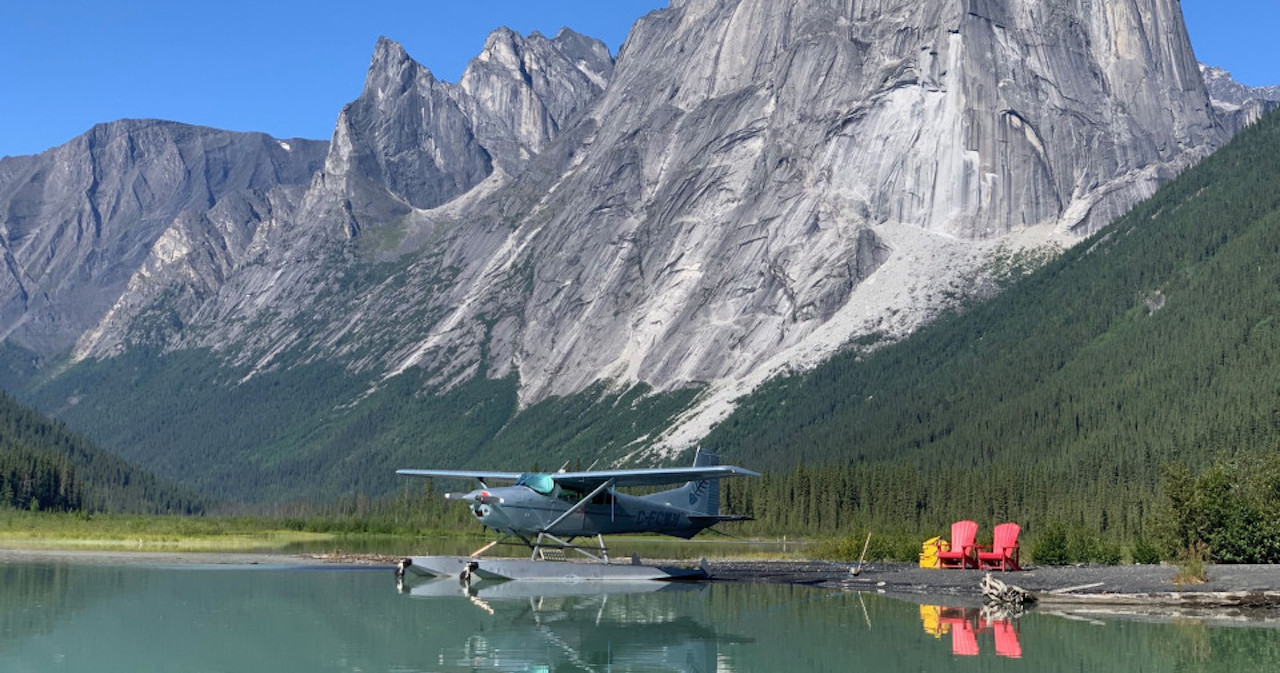
Maule totaled in Fairbanks
Tue Aug 21, 2007 10:22 pm
allowed?
As I read the regs, you can do most every regular repair and inspection, if you are under the supervision of an A&P who will approve the work. In fact, quite few shops have mechanics who are not licensed, but whose work is "signed off" after they are done by the ower or manager who is an A&P and/or IA. If I could not work on my plane, I wouldn't have one.
The truth will set you on the path to being free
Wed Aug 22, 2007 5:34 am
Mike,
Unfortunately recently in Fairbanks, the really good shops have stopped taking new customers, and frankly, several shops there seem to have developed that attitude that if you don't like it you can take it down the street. That's too bad.
A friend of mine came through from Florida, and had an alternator fail on a Lake Renegade. He needed someone to R and R. This was summer. I talked to virtually every mechanic on the field at International and could not get anyone to change it for him. I finally got a (good) mechanic friend to come down and inspect it after we changed it, and this guy inspected the work, then signed off the paperwork to keep him legal.
Everyone is really busy there, which means guys like you describe get away with a lot. Don't like it? Go down the street.
Next time, take it to Nathan and Mark at Chena Marina Air Service. Young guys with a really good customer oriented attitude.
If they have time....
MTV
Unfortunately recently in Fairbanks, the really good shops have stopped taking new customers, and frankly, several shops there seem to have developed that attitude that if you don't like it you can take it down the street. That's too bad.
A friend of mine came through from Florida, and had an alternator fail on a Lake Renegade. He needed someone to R and R. This was summer. I talked to virtually every mechanic on the field at International and could not get anyone to change it for him. I finally got a (good) mechanic friend to come down and inspect it after we changed it, and this guy inspected the work, then signed off the paperwork to keep him legal.
Everyone is really busy there, which means guys like you describe get away with a lot. Don't like it? Go down the street.
Next time, take it to Nathan and Mark at Chena Marina Air Service. Young guys with a really good customer oriented attitude.
If they have time....
MTV


Wed Aug 22, 2007 8:45 am
Steve Conaster down at Airframe Alterations has been helping me out a lot. He is an excellent guy to work with although he is usually pretty busy too.
Mike
Mike
- redlinemike offline
- Posts: 24
- Joined: Thu Jul 19, 2007 12:50 am
- Location: Fort Wainwright, AK
1970 Citabria GCBC
1983-1984 Sikorsky Blackhawk UH-60A
1983-1984 Sikorsky Blackhawk UH-60A
Wed Aug 22, 2007 8:53 am
aileron check
I was taught to do the "controls check" by grabbing the yoke with my thumbs pointing "up"...then rotating yoke clockwise my left thumb points to the right aileron (thumbs "up" aileron "up") and then counter clockwise, right thumb pointing to the left airleron. You do this while pushing the yoke in and out at the same time to feel free travel and when you look to the left and watch the aileron you can get a glimpse of the elevator traveling "up and down". One full revolution for each side. I know a guy who crashed his Cessna after it was rigged bassakwards...now he flies a supercub...it is more common than you would think. 

1976 Maule M5-235C
Wed Aug 22, 2007 10:07 am
redlinemike wrote:I just had a similar problem from a different mechanic on Chena Marina. I got my Citabria out of Annual expecting everything to be great only to find on my inspection that the hose that connects the intake to the carb box is just jammed in there and not routing the air from the intake to the carb box, so that as soon as I went to fly I am sure it would have sucked it into the carb box and suffocated the engine on take off, or worse on a go around. The aircraft is fouling plugs like crazy so I have a different mechanic look at it and discover the plugs are gapped to over twice what is allowed. The mixture screw is completely bottomed out to maximum. The carpet has just been jammed in there and is not layed in around all the trim and other pieces like it should be, he has repaired on hole in the fabric and the other he taped then never silvered or painted it. There is a new hole that I am pretty sure was not there before, and a ton of other little things.
After he tells me I am done and I move the aircraft out of his yard while he is finishing up the paperwork only to get a call that he forgot to do some inspection on the engine and he will not be able to do it for a few weeks so my choice is to let it sit grounded for a few weeks or pay another mechanic to take off all the cowling and parts that were already off during the annual to finish up the last inspection, then pay for all those parts and cowling to be reinstalled a second time.
What options do we have for dealing with something like that? More than me just getting screwed by the guy, it is just unsafe for people to be sending out airplanes like this.
I realize that the pilot in command is responsible for determining whether the aircraft is in condition for safe flight, but how can we as PIC's be sure of that when we do not do our own maintainence and in most cases would not know what to look for anyway. I am not allowed to pull apart the aircraft and look at the insides of things but I have to determine if it is air worthy? At what point does the responsibility fall on the maintainer?
Mike
Mike, let me guess...your mechanic resides at the north end of Chena Marina. Your discription sounds very similar to other stories I've heard about this guy....take your plane in for an annual and you get a $30,000 bill for a complete recover job.
I think the responsibillity belongs to us. These guys would go out of business if people would just stop going to them. If a mechanic screws you, don't go back and make sure that all your aircraft owner friends know what happened and recommend that they don't go back. These guys at Chena Marina have been in business a long time and it's because of us. It's also because the FAA refuses to take action on these mechanics when they screw up. There is no incentive not to screw up.
Here's a little story of what happened to me last spring. Like a dumbass, I went to a different mechanic on Chena Marina (not my own and not one of the two we're talking about in this thread). He's old and has a bit of a hard time getting around. I made a deal with him. I'd do some plumbing for him in exchange for an annual on my plane. He kept my plane 2 weeks and the only noticable work was a new compass mounted crooked on top of my panel right in front of my face (it actually blocked my view).
My first flight (30 minutes) to a lake went fine but when I went to take off, the engine shut off at about 40' above the water. I made a rather ungraceful landing (luckily there was enough lake). I tried a restart after I shoveled the crap out of my pants and the started fine but would not rev up past 1500...it would shut off. Long story is that the strainer screen was cloged and had accordioned shut. There was no evidence that the strainer was taken apart and cleaned...old safety wire and old gaskets were still on the thing. I was straneded at that lake for 8 hours. If that would have happened ove land something bad would have happened. The point is, go to good mechanics who you trust and spread the word about mechanics who consistently do crappy work...they'll soon be out of business or will start doing work up to decent standards.
- Capt. Kirk offline

- Posts: 154
- Joined: Thu Jul 05, 2007 3:31 pm
- Location: Fairbanks, Alaska
1970 @#%&* M4 220C on Edo 2440
Wed Aug 22, 2007 10:10 am
redlinemike wrote:What I know how to do and what I can do legally are very different things. Of course I can handle the basics lined out in part 43, but I am refering to all the stuff I am not allowed to do.
I struggle with this too. I'm a competent mechanic and know the limits of my abilities. I would feel very comfortable working beyond what is allowed in part 43...it would be less expensive for me and I'd likely get a better job out of it.
- Capt. Kirk offline
- Posts: 154
- Joined: Thu Jul 05, 2007 3:31 pm
- Location: Fairbanks, Alaska
1970 @#%&* M4 220C on Edo 2440
Wed Aug 22, 2007 10:18 am
Re: allowed?
BobWhite wrote:As I read the regs, you can do most every regular repair and inspection, if you are under the supervision of an A&P who will approve the work. In fact, quite few shops have mechanics who are not licensed, but whose work is "signed off" after they are done by the ower or manager who is an A&P and/or IA. If I could not work on my plane, I wouldn't have one.
Our local FSDO has choosen to interpret this section of the regs a bit differently. They have come down hard on a local mechanic (who was very competent and does very good work) because he was working out of his own shop and paying a licensed mechanic to come in and sign his work off. Our FAA said this was not the intent of the regs...the intent was that non-licensed mechanics could work IN THE SAME SHOP, under the DIRECT supervision of a licensed mechanic. They hit this guy with a $20,000 fine. The fine was reduced because he has since become licensed. The FAA admitted to me that they really respected this guys work and knew he did a fine job...yet they pounce on him and slap the hand of the ones who can't figuer out what up elevator is supposed to look like.
- Capt. Kirk offline
- Posts: 154
- Joined: Thu Jul 05, 2007 3:31 pm
- Location: Fairbanks, Alaska
1970 @#%&* M4 220C on Edo 2440
Wed Aug 22, 2007 10:52 am
My EAA chapter has a very nice large hangar and there are always two or three A&P's (who are members) around to watch over your shoulder or help. This allows many members to do a lot of repair work that would otherwise be in a shop somewhere. It is a great arrangement for all involved.
- Skystrider offline
- Posts: 1231
- Joined: Wed Jan 24, 2007 1:44 pm
- Location: Saylorsburg
- Aircraft: Zenith CH701 w/ Jabiru 3300
Wed Aug 22, 2007 11:09 am
very similiar to this accident
http://www.ntsb.gov/ntsb/brief.asp?ev_id=20010426X00818&key=1
http://www.ntsb.gov/ntsb/brief.asp?ev_id=20010426X00818&key=1
- bush pilot offline
- Posts: 12
- Joined: Sat Mar 12, 2005 10:51 pm
- Location: Renton, WA
Wed Aug 22, 2007 12:22 pm
bush pilot wrote:very similiar to this accident
http://www.ntsb.gov/ntsb/brief.asp?ev_id=20010426X00818&key=1
That's EXACTLY what I'm talking about. "Factors include the pilot's failure to detect the misrigged ailerons during his pre-takeoff flight control check."
Wouldn't the primary factor be "The mechanics failure to rig the ailerons correctly?" and a secondary factor that "The pilot's failure to..."
- Capt. Kirk offline
- Posts: 154
- Joined: Thu Jul 05, 2007 3:31 pm
- Location: Fairbanks, Alaska
1970 @#%&* M4 220C on Edo 2440
Wed Aug 22, 2007 2:20 pm
The primary factor was the miss-rigging of the ailerons. A contributing factor was the pilots failure to detect the mechanics FU.
The FAA seems to have little if any teeth and seems to enforce hapharzadly.
I'm a manufacturer. I caught a mechanic red handed having his own AD parts manufactured, installing them on an aircraft, signing off the installation etc. I did the leg work for the FAA. I got the paperwork to prove he had the parts made, I can prove the parts installed are bootleg parts. I turned this over to the FSDO who didn't want it, so off it went to the SUP program (suspected unapproved parts) where nothing has happened. This guy is a nut and I think they are afraid of him.
The FAA seems to have little if any teeth and seems to enforce hapharzadly.
I'm a manufacturer. I caught a mechanic red handed having his own AD parts manufactured, installing them on an aircraft, signing off the installation etc. I did the leg work for the FAA. I got the paperwork to prove he had the parts made, I can prove the parts installed are bootleg parts. I turned this over to the FSDO who didn't want it, so off it went to the SUP program (suspected unapproved parts) where nothing has happened. This guy is a nut and I think they are afraid of him.
Wed Aug 22, 2007 2:33 pm
a64pilot wrote: This guy is a nut and I think they are afraid of him.
That can be a very effective ploy. Unfortunately

- retired user offline
- Posts: 710
- Joined: Sat Oct 01, 2005 7:07 am
Wed Aug 22, 2007 4:06 pm
Nope, sorry guys, but the FAR is absolutely, unquestionably clear that the Pilot in Command has the ULTIMATE responsibility for the safe conduct of the flight--every flight, even a maintenance test flight.
Oh, and by the way, if this WAS a maintenance test flight (and it SHOULD have been, since controls were re-rigged) why was there a passenger in the airplane???? That is totally dumb on a test flight of any kind.
Check out FAR§ 91.3:
Responsibility and authority of the pilot in command.
(a) The pilot in command of an aircraft is directly responsible for, and is the final authority as to, the operation of that aircraft.
The cause of the accident was that the pilot didn't verify that the airplane was airworthy. A contributing factor was that his mechanic made it unairworthy.
No question about that one at all.
MTV
Oh, and by the way, if this WAS a maintenance test flight (and it SHOULD have been, since controls were re-rigged) why was there a passenger in the airplane???? That is totally dumb on a test flight of any kind.
Check out FAR§ 91.3:
Responsibility and authority of the pilot in command.
(a) The pilot in command of an aircraft is directly responsible for, and is the final authority as to, the operation of that aircraft.
The cause of the accident was that the pilot didn't verify that the airplane was airworthy. A contributing factor was that his mechanic made it unairworthy.
No question about that one at all.
MTV
Wed Aug 22, 2007 4:17 pm
The National Transportation Safety Board determines the probable cause(s) of this accident as follows:
the reverse rigging of the aileron flight control system resulting in aileron deflections opposite that of the pilot's inputs which lead to an uncontrolled descent into the terrain. Factors include the pilot's failure to detect the misrigged ailerons during his pre-takeoff flight control check.
What this say's unless I miss something is the the probable cause of the accident was the reverse rigging of the ailerons. A contributing factor was the pilot failing to detect the mis-rigging.
The pilot will always be the last link in the accident chain, but there is no way the cause wasn't the mechanic.
Actually what the NTSB said is the same thing most of us said
the reverse rigging of the aileron flight control system resulting in aileron deflections opposite that of the pilot's inputs which lead to an uncontrolled descent into the terrain. Factors include the pilot's failure to detect the misrigged ailerons during his pre-takeoff flight control check.
What this say's unless I miss something is the the probable cause of the accident was the reverse rigging of the ailerons. A contributing factor was the pilot failing to detect the mis-rigging.
The pilot will always be the last link in the accident chain, but there is no way the cause wasn't the mechanic.
Actually what the NTSB said is the same thing most of us said
Wed Aug 22, 2007 5:03 pm
a64pilot wrote:The National Transportation Safety Board determines the probable cause(s) of this accident as follows:
the reverse rigging of the aileron flight control system resulting in aileron deflections opposite that of the pilot's inputs which lead to an uncontrolled descent into the terrain. Factors include the pilot's failure to detect the misrigged ailerons during his pre-takeoff flight control check.
What this say's unless I miss something is the the probable cause of the accident was the reverse rigging of the ailerons. A contributing factor was the pilot failing to detect the mis-rigging.
The pilot will always be the last link in the accident chain, but there is no way the cause wasn't the mechanic.
Actually what the NTSB said is the same thing most of us said
A64...now that I re-read it, I agree. The CAUSE was the mis-rigging and a FACTOR was the pilot not catching it.
MTV, you are correct about the regs and I'm all for the pilot being ultimatly responsible for the airworthyness of the plane. The mis-rigging is a bad example because the mechanic should do it right AND the pilot should catch it if it's not. Dual ownership on that one. To what extent can the pilot be ultimatly responsible though? The pilot cannot possible check every last nut and bolt that affects the airworthyness of a plane.
I just got my plane back from an 11 month restoration...did the first test flight last Tuesday. I have no idea if there are nuts on my wing strut bolts...no idea if the wing spars are bolted to the carry-through spars or if they still have screwdrivers stuck in the bolt holes or if the motor mounts have nuts on them (really I do but just playing dumb for the moment) Am I to disassemble my whole whole plane to the extent necessary to be 100% certain it's airworthy each time it comes out of the shop? The FAA requires this of me but refuses to give me the permission to do so.
- Capt. Kirk offline
- Posts: 154
- Joined: Thu Jul 05, 2007 3:31 pm
- Location: Fairbanks, Alaska
1970 @#%&* M4 220C on Edo 2440
Wed Aug 22, 2007 5:44 pm
Kirk,
No the FAA requires you to take your airplane to an authorized person say to have your engine overhauled for example and even I believe requires you to ensure the correctness of the log book entries, but you will never see an accident report that cites the pilot for not ensuring the correct torque was applied to the rod bolts. That falls outside of the realm of pilot. Ensuring the controls are free and correct does not. Another example, the line man misfuels your airplane and you crash. You share responsibility there too because a pilot can and should check his fuel.
No the FAA requires you to take your airplane to an authorized person say to have your engine overhauled for example and even I believe requires you to ensure the correctness of the log book entries, but you will never see an accident report that cites the pilot for not ensuring the correct torque was applied to the rod bolts. That falls outside of the realm of pilot. Ensuring the controls are free and correct does not. Another example, the line man misfuels your airplane and you crash. You share responsibility there too because a pilot can and should check his fuel.
Wed Aug 22, 2007 7:59 pm
a64,
My bad, as you point out, the NTSB offers causes and contributing factors. I failed to read the NTSB report. And, you are generally correct regards the NTSB not holding the pilot responsible in cases where they could not have reasonably known of a defect.
On the other hand, the American Airlines Airbus accident that wound up in Jamaica Bay suggested somewhat the opposite. That one was somewhat of a wild card, but it shows the NTSB's true colors when the news cameras are on.
The pilot flying in that airplane did precisely what his airline had trained him to do in such a circumstance, and the vertical fin came off the plane. What he'd been trained to do was use rudder to correct for wake encounters. Airbus Industrie and the NTSB said that he exceeded the limitations of the aircraft, and therefore it was basically his fault for killing everyone on board. That sucked, in my opinion.
That accident also opened a lot of eyes on the Va discussion that ensued. Note that, according to certification standards, Va MAY NOT protect structures in a turbulence encounter with a deflection of any control surface other than the elevator. That was a new one on me, and a lot of other pilots.
Still, it is pretty easy for the pilot to verify control surface function pre flight, and as several posters here accurately pointed out, this accident should be a good reminder to do precisely that.
Hopefully, we can all learn from this accident, that one thing if nothing else.
MTV
My bad, as you point out, the NTSB offers causes and contributing factors. I failed to read the NTSB report. And, you are generally correct regards the NTSB not holding the pilot responsible in cases where they could not have reasonably known of a defect.
On the other hand, the American Airlines Airbus accident that wound up in Jamaica Bay suggested somewhat the opposite. That one was somewhat of a wild card, but it shows the NTSB's true colors when the news cameras are on.
The pilot flying in that airplane did precisely what his airline had trained him to do in such a circumstance, and the vertical fin came off the plane. What he'd been trained to do was use rudder to correct for wake encounters. Airbus Industrie and the NTSB said that he exceeded the limitations of the aircraft, and therefore it was basically his fault for killing everyone on board. That sucked, in my opinion.
That accident also opened a lot of eyes on the Va discussion that ensued. Note that, according to certification standards, Va MAY NOT protect structures in a turbulence encounter with a deflection of any control surface other than the elevator. That was a new one on me, and a lot of other pilots.
Still, it is pretty easy for the pilot to verify control surface function pre flight, and as several posters here accurately pointed out, this accident should be a good reminder to do precisely that.
Hopefully, we can all learn from this accident, that one thing if nothing else.
MTV
Wed Aug 22, 2007 10:29 pm
And then there is the Citabria owned by two partners.
One partner decides to remove the rudder for repairs.
Other partner shows up at the airplane somewhat later to take his PPL checkride.
Both Faa designated check pilot and owner do a preflight, saddle up and crash on takeoff.....no rudder!
Happenned in AK many years back.
Who's at fault?
Jeremy
One partner decides to remove the rudder for repairs.
Other partner shows up at the airplane somewhat later to take his PPL checkride.
Both Faa designated check pilot and owner do a preflight, saddle up and crash on takeoff.....no rudder!
Happenned in AK many years back.
Who's at fault?
Jeremy
- maules.com offline
- Posts: 561
- Joined: Mon Jan 09, 2006 9:35 pm
- Location: west coast
Wed Aug 22, 2007 10:47 pm
Those are my guys! I love them! Everybody in Fairbanks is busy, the best you can do is get someone who is busy and backed up BUT does good work.mtv wrote:Mike,
U
Next time, take it to Nathan and Mark at Chena Marina Air Service. Young guys with a really good customer oriented attitude.
If they have time....
MTV
- onceAndFutr_alaskaflyer offline
- Posts: 1319
- Joined: Sun Apr 23, 2006 4:23 pm
- Location: Keweenaw Peninsula, Michigan and Carson Valley, Nevada
Thu Aug 23, 2007 5:05 am
Yep, those guys worked on my airplanes for years before they bought out Karl Bakken over there. They were always a joy to be around, and always did good work. I'm VERY glad they are into their own shop now, and I highly recommend them to anyone.
Steve Conatser at Chena Marina is also a keeper, but he sort of specializes in Cub rebuilds. He does good work in any case, and is reliable.
MTV
Steve Conatser at Chena Marina is also a keeper, but he sort of specializes in Cub rebuilds. He does good work in any case, and is reliable.
MTV
DISPLAY OPTIONS
Who is online
Users browsing this forum: No registered users and 0 guests
Latest Features
-
-
Featured Bush Planes
As one of the undisputed legends of bush flying, the Cessna 180 hauls a…Read More -
Aircraft Ownership and Maintenance
9 modification mistakes aircraft owners make when trying to "bush out" their birds—why some…Read More -
Live to Tell
A Minnesota pilot is surprised to learn that the sudden asymmetric drag of an…Read More


Latest Knowledge Base
-
Destinations
Canada offers some of the most spectacular backcountry flying on the continent. Here's what you need to know before you go.Read More -
Safety and Survival
Hope that you never have to use your survival vest but knowing you have it and knowing how to use…Read More -
Destinations
A regional guide with ideas for winter camping destinations in California, Nevada, New Mexico, and Arizona.Read More -
Aircraft
Finding an affordable aircraft that can handle the backcountry for $80K or less? A challenge for sure, but with the…Read More