No Gas in my Can
Thu Jun 09, 2016 10:12 am
Re: No Gas in my Can
I've been self-fueling for 21 years now using plastic 5-gallon cans, longer than that if you include lawnmowers, motorcycles, etc, and no problem. When I fuel the airplane, I put the gas can up on the wing, get my thumb over the spout, tilt it on down into the filler neck, and let 'er fly. The can is then bonded (not grounded) to the airplane, so there should be no potential between the two.
Cessna Skywagon -- accept no substitute!
Thu Jun 09, 2016 10:30 am
Re: No Gas in my Can
It all makes complete sense.
In Oregon one cannot fuel ones own car.
I forgot, I was driving through OR, stopped to gas up and started inserting nozzle in tank.
Irate attendant comes over, says hey you can't do that.
I say Oops sorry, I forgot.
Attendant sets his Lit Cigarette on top of pump and continues my fueling.
Hmmm.
How stupid can I be, fueling myself. I guess I should take up smoking.
In Oregon one cannot fuel ones own car.
I forgot, I was driving through OR, stopped to gas up and started inserting nozzle in tank.
Irate attendant comes over, says hey you can't do that.
I say Oops sorry, I forgot.
Attendant sets his Lit Cigarette on top of pump and continues my fueling.
Hmmm.
How stupid can I be, fueling myself. I guess I should take up smoking.
- maules.com offline
- Posts: 561
- Joined: Mon Jan 09, 2006 9:35 pm
- Location: west coast
Thu Jun 09, 2016 10:37 am
Re: No Gas in my Can
maules.com wrote:It all makes complete sense.
In Oregon one cannot fuel ones own car.
I forgot, I was driving through OR, stopped to gas up and started inserting nozzle in tank.
Irate attendant comes over, says hey you can't do that.
I say Oops sorry, I forgot.
Attendant sets his Lit Cigarette on top of pump and continues my fueling.
Hmmm.
How stupid can I be, fueling myself. I guess I should take up smoking.
I always figured that was an Oregon jobs program, not a safety thing.
The safety thing that irks me is the new safety nozzles on gas cans-- they make it hard to spill a lot at the cost of ALWAYS spilling a little.
Thu Jun 09, 2016 12:36 pm
Re: No Gas in my Can
I've used plastic jugs alot and never had a fire. Recently we had a fire at Flabob and it was a result of a fuel transfer into plastic from the plane.
http://www.pe.com/articles/fire-797171- ... angar.html
http://www.pe.com/articles/fire-797171- ... angar.html
- Glidergeek offline

- Posts: 1937
- Joined: Sat Sep 06, 2008 8:02 pm
- Location: Hesperia
- Aircraft: 1968 P206C
DG 400
Thu Jun 09, 2016 1:10 pm
Re: No Gas in my Can
The beauty about living in these times is the abundant information available on the web regarding testing of containment methods, grounding, transfer and forensic examination of fire events where things went horribly wrong.
I have used plastic jugs to drain and fuel my old 182 before I knew better. Would I do it now? Only if my life depended on it. The off chance that I end up being the one in a million poor sucker that ends up in the burn ward clinging to life because I have been doing it forever and haven't had a problem yet, isn't worth the risk. That's me.
The State Fire Marshals enact laws and guide lines in an effort to protect life safety. Your life. It is each individual's choice to comply or not. Each and every one of you have the free agency to choose your position and do what you want.
Yup, this horse has been beat to death, fly safe, carry on.
Rich
I have used plastic jugs to drain and fuel my old 182 before I knew better. Would I do it now? Only if my life depended on it. The off chance that I end up being the one in a million poor sucker that ends up in the burn ward clinging to life because I have been doing it forever and haven't had a problem yet, isn't worth the risk. That's me.
The State Fire Marshals enact laws and guide lines in an effort to protect life safety. Your life. It is each individual's choice to comply or not. Each and every one of you have the free agency to choose your position and do what you want.
Yup, this horse has been beat to death, fly safe, carry on.
Rich
- PittsDriver offline
- Posts: 213
- Joined: Fri Jan 08, 2016 11:10 am
- Location: Sandy, Utah
- Aircraft: '55 Cessna 180 and '91Pitts S-2B
Thu Jun 09, 2016 5:24 pm
Re: No Gas in my Can
What if you got ya one of them ultra light flying machines. Several of the ones I have seen have gas tanks made of OMG plastic!! WTF do you do now???If you fill it with another plastic can does that double your chances of of catching on fire??
Personally the state fire Marshall can go have sex with himself.

Cheers...Rob fireMAN 33 yeas putting out fire and cutting effed up people out of mangled vehicles. I never road a desk or pushed paper. I was always the tip of the spear.
Personally the state fire Marshall can go have sex with himself.
Cheers...Rob fireMAN 33 yeas putting out fire and cutting effed up people out of mangled vehicles. I never road a desk or pushed paper. I was always the tip of the spear.
- OregonMaule offline

- Posts: 6977
- Joined: Fri Sep 01, 2006 9:44 pm
- Location: Orygun
My SPOT page
"They who can give up essential liberty to obtain a little temporary safety, deserve neither liberty nor safety". Ben Franklin
http://en.wikiquote.org/wiki/Benjamin_Franklin
"They who can give up essential liberty to obtain a little temporary safety, deserve neither liberty nor safety". Ben Franklin
http://en.wikiquote.org/wiki/Benjamin_Franklin
Thu Jun 09, 2016 5:51 pm
Re: No Gas in my Can
Anybody have the odds of injury and/or death by gas can fires?
- ExperimentalAviator offline

- Posts: 677
- Joined: Tue Apr 15, 2014 8:02 am
- Location: Plains
Thu Jun 09, 2016 7:36 pm
Re: No Gas in my Can
OregonMaule wrote:What if you got ya one of them ultra light flying machines. Several of the ones I have seen have gas tanks made of OMG plastic!! WTF do you do now???If you fill it with another plastic can does that double your chances of of catching on fire??
Personally the state fire Marshall can go have sex with himself.
Cheers...Rob fireMAN 33 yeas putting out fire and cutting effed up people out of mangled vehicles. I never road a desk or pushed paper. I was always the tip of the spear.
Good for you. Thanks for your service.
- PittsDriver offline
- Posts: 213
- Joined: Fri Jan 08, 2016 11:10 am
- Location: Sandy, Utah
- Aircraft: '55 Cessna 180 and '91Pitts S-2B
Thu Jun 09, 2016 7:44 pm
Re: No Gas in my Can
PittsDriver wrote:Good for you. Thanks for your service.
The good citizens of Oregon are still thanking him monthly.
- Zzz offline


- Posts: 2855
- Joined: Fri Oct 08, 2004 11:09 pm
- Location: northern
- Aircraft: Swiveling desk chair
Half a century spent proving “it is better to be thought a fool than to open your mouth and remove all doubt.”
Thu Jun 09, 2016 8:05 pm
Re: No Gas in my Can
ExperimentalAviator wrote:Anybody have the odds of injury and/or death by gas can fires?
Injury per year by flammable liquid fire. 3910 average from 2007-2011 ALL FLAMMABLE AND COMBUSTIBLE LIQUID FIRES!!!!!
USA population in 2009 was 305,000,000
So the odds are .0000128 in 305,000,000
.0000128 X 305,000,000=3904 ok
In 2011 there were about 196,000 PRIVATE pilots. Not ATP, student, etc. Private only.
.0000128 X 196,000= 2.5088 Private pilots injured by ALL TYPES flammable and combustible liquid fires. Not just aircraft fueling.
Deaths per year during the same period were. 454 So using the same formula.
.000001488 X 305,000,000= 453.84 OK
.000001488 X 196,000=.291648 Private pilots killed by all types of flammable and combustible liquid fires.
I do not claim to be a mathematician so let me know where I went wrong.
Looks like it is a non issue to me.
http://www.nfpa.org/news-and-research/f ... ble-liquid
Fires Starting with Flammable Gas or Flammable or Combustible Liquid
More information
"Fires Starting with Flammable Gas or Flammable or Combustible Liquid" report (PDF, 3 MB)
Errata issued June 2, 2014. Download the errata. (PDF, 14 KB)
Fact sheet
"Fires Starting with Flammable Gas" fact sheet (PDF, 251 KB)
Report: NFPA's "Fires Starting with Flammable Gas or Flammable or Combustible Liquid"
Author: John R. Hall, Jr.
Issued: February 2014
Introduction
In 2007-2011, U.S. municipal fire departments responded to an estimated average of 51,600 fires per year starting with ignition of a flammable gas and another 160,910 fires per year starting with ignition of a flammable or combustible liquid. The flammable gas fires resulted in an estimated 168 civilian deaths, 1,029 civilian injuries, and $644 million in direct property damage per year. The flammable or combustible liquid fires resulted in an estimated 454 civilian deaths, 3,910 civilian injuries, and $1.5 billion in direct property damage per year.
Cheers...Rob
- OregonMaule offline
- Posts: 6977
- Joined: Fri Sep 01, 2006 9:44 pm
- Location: Orygun
My SPOT page
"They who can give up essential liberty to obtain a little temporary safety, deserve neither liberty nor safety". Ben Franklin
http://en.wikiquote.org/wiki/Benjamin_Franklin
"They who can give up essential liberty to obtain a little temporary safety, deserve neither liberty nor safety". Ben Franklin
http://en.wikiquote.org/wiki/Benjamin_Franklin
Thu Jun 09, 2016 8:07 pm
Re: No Gas in my Can
Zzz wrote:PittsDriver wrote:Good for you. Thanks for your service.
The good citizens of Oregon are still thanking him monthly.
Just the good folks of Portland Oregon. I heard they would pay me double to stay away, if I wanted to come back.
Hey PittsDriver. Thank you too.
Cheers...Rob
- OregonMaule offline
- Posts: 6977
- Joined: Fri Sep 01, 2006 9:44 pm
- Location: Orygun
My SPOT page
"They who can give up essential liberty to obtain a little temporary safety, deserve neither liberty nor safety". Ben Franklin
http://en.wikiquote.org/wiki/Benjamin_Franklin
"They who can give up essential liberty to obtain a little temporary safety, deserve neither liberty nor safety". Ben Franklin
http://en.wikiquote.org/wiki/Benjamin_Franklin
Thu Jun 09, 2016 9:09 pm
Re: No Gas in my Can
Thanks Rob,
I'm not a numbers person, so someone else will have to check your numbers.
It looks like the odds are very low for injury or death from flammable/combustible liquid.
I'd say the odds would be lower if the numbers were just from gas cans.
I'm not a numbers person, so someone else will have to check your numbers.
It looks like the odds are very low for injury or death from flammable/combustible liquid.
I'd say the odds would be lower if the numbers were just from gas cans.
- ExperimentalAviator offline
- Posts: 677
- Joined: Tue Apr 15, 2014 8:02 am
- Location: Plains
Thu Jun 09, 2016 10:27 pm
Re: No Gas in my Can
OregonMaule wrote:ExperimentalAviator wrote:Anybody have the odds of injury and/or death by gas can fires?
Injury per year by flammable liquid fire. 3910 average from 2007-2011 ALL FLAMMABLE AND COMBUSTIBLE LIQUID FIRES!!!!!
USA population in 2009 was 305,000,000
So the odds are .0000128 in 305,000,000
.0000128 X 305,000,000=3904 ok
In 2011 there were about 196,000 PRIVATE pilots. Not ATP, student, etc. Private only.
.0000128 X 196,000= 2.5088 Private pilots injured by ALL TYPES flammable and combustible liquid fires. Not just aircraft fueling.
Deaths per year during the same period were. 454 So using the same formula.
.000001488 X 305,000,000= 453.84 OK
.000001488 X 196,000=.291648 Private pilots killed by all types of flammable and combustible liquid fires.
I do not claim to be a mathematician so let me know where I went wrong.
Looks like it is a non issue to me.
http://www.nfpa.org/news-and-research/f ... ble-liquid
Fires Starting with Flammable Gas or Flammable or Combustible Liquid
More information
"Fires Starting with Flammable Gas or Flammable or Combustible Liquid" report (PDF, 3 MB)
Errata issued June 2, 2014. Download the errata. (PDF, 14 KB)
Fact sheet
"Fires Starting with Flammable Gas" fact sheet (PDF, 251 KB)
Report: NFPA's "Fires Starting with Flammable Gas or Flammable or Combustible Liquid"
Author: John R. Hall, Jr.
Issued: February 2014
Introduction
In 2007-2011, U.S. municipal fire departments responded to an estimated average of 51,600 fires per year starting with ignition of a flammable gas and another 160,910 fires per year starting with ignition of a flammable or combustible liquid. The flammable gas fires resulted in an estimated 168 civilian deaths, 1,029 civilian injuries, and $644 million in direct property damage per year. The flammable or combustible liquid fires resulted in an estimated 454 civilian deaths, 3,910 civilian injuries, and $1.5 billion in direct property damage per year.
Cheers...Rob
Thumbs up

Fri Jun 10, 2016 2:18 pm
Re: No Gas in my Can
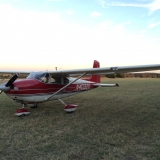
You guys are doing it all wrong.  What you need is a folding electric mountain bike, a folding bike trailer, and a 9 gallon "Nauta" fuel bladder. The plane's built in transfer pump eliminates lifting jugs on top the wing, and any chance of spillage as if I over fill it, it just dribbles out the vent exits in the wing bottoms, not all over the skylight and the top of the wing. This allows me to FULLY fill the wing tanks, with no mess, adding to range.
This pic shows me filling up with regular mo-gas, E-10 no less, at $2.24 per gallon They had pure premium mo gas, but it was .60 more per gallon and I don't need it. Having a plane that burns less then 4 GPH is helpful using this refueling method, I used 3.3 GPH on this trip to Kalispell and back, plus I had wheels for zipping around town while there.
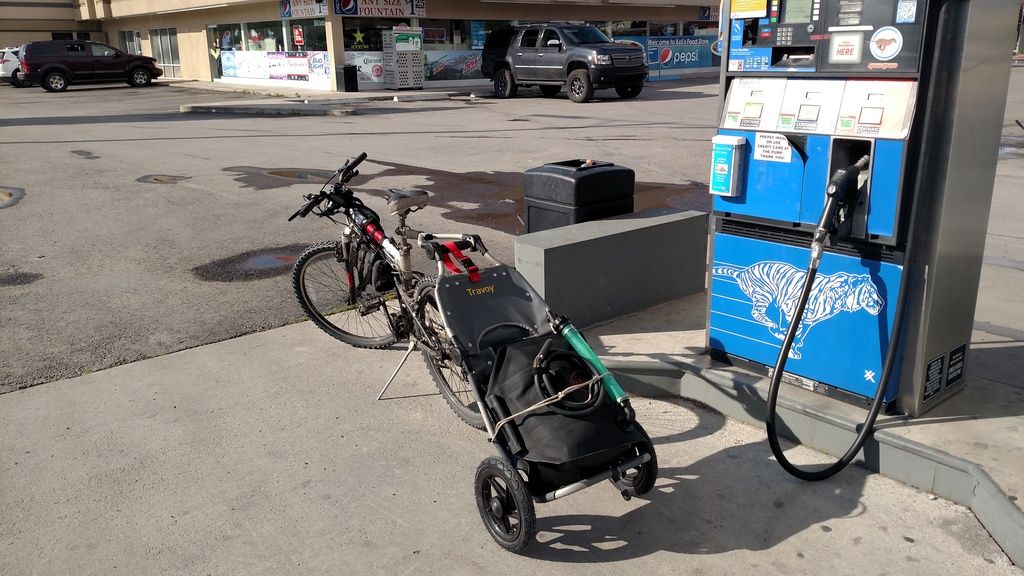
What you need is a folding electric mountain bike, a folding bike trailer, and a 9 gallon "Nauta" fuel bladder. The plane's built in transfer pump eliminates lifting jugs on top the wing, and any chance of spillage as if I over fill it, it just dribbles out the vent exits in the wing bottoms, not all over the skylight and the top of the wing. This allows me to FULLY fill the wing tanks, with no mess, adding to range.This pic shows me filling up with regular mo-gas, E-10 no less, at $2.24 per gallon
They had pure premium mo gas, but it was .60 more per gallon and I don't need it. Having a plane that burns less then 4 GPH is helpful using this refueling method, I used 3.3 GPH on this trip to Kalispell and back, plus I had wheels for zipping around town while there.- courierguy offline

- Posts: 4197
- Joined: Thu Mar 31, 2005 6:52 pm
- Location: Idaho
"Its easier to apologize then ask permission"
Tex McClatchy
Tex McClatchy
Sat Jul 02, 2016 6:48 pm
Re: No Gas in my Can
What about fuel bags? Are they anti-static?
Devils advocate here - what if your plastic can has a rubber spout?
Devils advocate here - what if your plastic can has a rubber spout?
- TxAgfisher offline
- Posts: 294
- Joined: Sun Aug 03, 2014 5:30 pm
- Location: Mineola
- Aircraft: C180 and Super Cub
Tue Jul 05, 2016 9:21 am
Re: No Gas in my Can

problem solved.
- scottf offline

- Posts: 650
- Joined: Fri Mar 23, 2012 9:56 am
- Location: Meridian, ID
- FindMeSpot URL: http://share.findmespot.com/shared/face ... cbQCpIqefS
Sun Jul 17, 2016 10:28 am
Re: No Gas in my Can
I've seen pickups drive up to the self serve at a couple of unfenced, non- towered airports and fill several plastic containers from the 100LL pump. I've wondered how liability issues might surface should the fuel spark while filling OR as it's poured into an ORV, "classic" muscle cars, aircraft, a boat, or whatever. Liabiliy for FBO's and others who own fuel systems or private airports seem to be valid concerns.
- PapernScissors offline
- Posts: 419
- Joined: Sun Mar 06, 2016 8:49 pm
- Location: Spokane
- Aircraft: Cessna 172
Sun Jul 17, 2016 2:19 pm
Re: No Gas in my Can
I have been following this local story, no word yet on how exactly it happened. http://idahostatejournal.com/news/local ... 6ccb1.html
- courierguy offline
- Posts: 4197
- Joined: Thu Mar 31, 2005 6:52 pm
- Location: Idaho
"Its easier to apologize then ask permission"
Tex McClatchy
Tex McClatchy
Sun Jul 17, 2016 3:15 pm
Re: No Gas in my Can
courierguy wrote:I have been following this local story, no word yet on how exactly it happened. http://idahostatejournal.com/news/local ... 6ccb1.html
Boats are the "Perfect Storm" for fuel fires. The hull traps fumes and then Boom. Never get in a boat being fueled.
tcj
DISPLAY OPTIONS
Who is online
Users browsing this forum: No registered users and 10 guests
Latest Features
-
Live to Tell
A Minnesota pilot is surprised to learn that the sudden asymmetric drag of an out-of-rig ski can…Read More -
Creators
Working in some of the Yukon's most beautiful and remote environments, photographer Simon Blakesley captures aircraft in…Read More -
Aircraft Ownership and Maintenance
Upgrading to big tires can make a huge difference in backcountry performance, but with those gains come…Read More -
Tales from Yesteryear
In this tale from bush flying yesteryear, Don Cogger signs up to help Atlee Dodge Jr recovery…Read More


Latest Knowledge Base
-
Destinations
A regional guide with ideas for winter camping destinations in California, Nevada, New Mexico, and Arizona.Read More -
Aircraft
Finding an affordable aircraft that can handle the backcountry for $80K or less? A challenge for sure, but with the…Read More -
Aircraft
01.29.2018 - Zane - Updated tire diameter graphic to add 8.50x10 Guide to tires for use in the backcountry and off-airport landing…Read More -
Pilots
12.22.2013 - Initial article format Operating aircraft on skis and negotiating a snow-covered landscape is an entirely unique skillset and environment.…Read More


