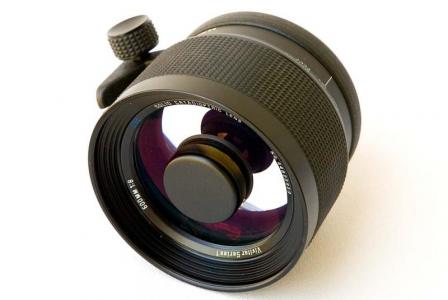
There is no one best lens any more than there’s one best aircraft…it depends on what you’re trying to do.
To me a much more realistic debate is fixed focal length (prime) lenses verses zoom lenses. Both have their advantages, and I use both depending on what I’m trying to do or the mood I’m in, but they are not necessarily interchangeable.
Zoom lenses offer tremendous versatility, but they do it with a penalty of slow f-stops, weight, and (often) image quality. That’s a great trade off for most people. Just about anyone shooting for a paycheck is more than happy to accept the limitations of a zoom lens for the versatility it offers, and if you want snapshots of your vacation and aren’t trying to explore your creative boundaries, zooms are super-convenient.
Fixed lenses are (usually) faster, smaller than a zoom incorporating that focal length, focus closer, and have more control over depth of field, assuming they’re fast. They are also (often) sharper. A person using fast prime lenses is going to be able to shoot in lower light, which is usually synonymous with interesting light. And pointing a prime 85mm lens at someone working ten feet away is a lot less intimidating to the person being photographed than having the business end of a 80~200 zoom howitzer aimed at them.
But the real difference to me is how using fixed or zoom lenses affects the way I see things. Without getting too esoteric, the power of photography is its ability to let us see things differently than we normally do. Lenses allow us to capture images in a visual perspective we cannot attain without them. Using that perspective well is a huge percentage of what makes an interesting photograph. A person shooting through a prime lens begins to see the world though that focal length, which is something very hard to do with a zoom, even for people who shoot all the time.
When you change the focal length of a zoom lens you don’t just change the framing, you also change the depth of field (what’s in focus) and the foreshortening effect (how objects appear in spacial relation to other objects). This completely changes the image. A person shooting at 40 feet with a 200mm lens will get the same framing as some shooting at 10 feet with a 50mm lens, but the images will not be identical, or even similar.
By seeing the world through a fixed focal length a person is able to develop a much more accurate pre-filter…they begin to see the picture before they raise the camera. They might give up ten opportunities for an image because their circumstance doesn’t match the lens they have, but the end result is often better images overall. That assumes they have an eye for images to begin with of course, but if they don’t it’s a moot point, as no piece of equipment can compensate for a lack of creative vision.
Whether by coincidence or design, the vast majority of my favorite images have all come from prime lenses, and while I acknowledge the versatility of zooms, I don’t enjoy shooting with them nearly as much as I enjoy my primes.
It might not be the best choice all the time, but there’s a lot to be said for putting a single prime lens on your camera and seeing what you come up with. No…you won’t get all the shots you would have gotten with a zoom, but you might be surprised by what you do get. In fact, you might find that you actually take more pictures because you simply start seeing more images.
85mm f1.4 Nikkor

 Heck. I could fly around the World twice and see a lot more $h:t than that lens for 180K.