1 killed, 1 hurt. Don't know these guys, but hate to see this. It's a small and special community of pilots who do this kind of flying. Thoughts and prayers to their families.
https://pitchengine.com/reboot/2016/12/08/fatal-plane-crash-involved-usda-wildlife-serv/002519210751188599698
Predator Crew Down In Wyoming
Fri Dec 09, 2016 9:11 am
- RanchPilot offline
- Posts: 974
- Joined: Mon Jan 24, 2011 5:18 pm
- Location: Wyoming
Experience is the knowledge that enables you to recognize a mistake when you make it again.
RanchPilot Facebook Community: http://www.facebook.com/ranchpilot777
RanchPilot Facebook Community: http://www.facebook.com/ranchpilot777
Fri Dec 09, 2016 9:18 am
Re: Predator Crew Down In Wyoming
Sigh...
So what makes this type of flying different?
So what makes this type of flying different?
- ExperimentalAviator offline
- Posts: 677
- Joined: Tue Apr 15, 2014 8:02 am
- Location: Plains
Fri Dec 09, 2016 9:34 am
Re: Predator Crew Down In Wyoming
So many variables, so close to the ground. The target is always moving, the terrain is always different and often rising, the wind can play hell, you're flying to within shotgun range for the pass, you and the gunner both have all the adrenaline of hunting and flying low, you're hanging on the motor down in dirty rough terrain, and even if the pilot does everything right the gunner can still shoot you down.
Doing this kind of flying day in and day out definitely makes you sharper, but you're always pushing the odds that something could go wrong.
Doing this kind of flying day in and day out definitely makes you sharper, but you're always pushing the odds that something could go wrong.
- RanchPilot offline
- Posts: 974
- Joined: Mon Jan 24, 2011 5:18 pm
- Location: Wyoming
Experience is the knowledge that enables you to recognize a mistake when you make it again.
RanchPilot Facebook Community: http://www.facebook.com/ranchpilot777
RanchPilot Facebook Community: http://www.facebook.com/ranchpilot777
Fri Dec 09, 2016 10:23 am
Re: Predator Crew Down In Wyoming
In the late 70s, a young son of the Evans family died flying a Super Cub on a coyote hunt in New Mexico. I was at their crop duster school at Slaton, Texas just after. My instructor, Marshall Eugene Harrison, and I wondered why the tactics used hunting animals were so different than hurting humans.
Gene wrote "A Lonely Kind of War " about his tour flying Broncos as a FAC in Vietnam and Cambodia. We wondered why energy management turns and wind management were not used in animal hunts to the extensive extent they are used both in air/ground gunnery and crop dusting. Continuous gravity thrust while on the gun run tremendously increases safety as does an upwind energy and wind management return to target. We just have to always be aware of our position in reference to wind direction and to always, when practicable, fall off the target downwind. These simple techniques are very basic in both gunnery and crop dusting.
Gene wrote "A Lonely Kind of War " about his tour flying Broncos as a FAC in Vietnam and Cambodia. We wondered why energy management turns and wind management were not used in animal hunts to the extensive extent they are used both in air/ground gunnery and crop dusting. Continuous gravity thrust while on the gun run tremendously increases safety as does an upwind energy and wind management return to target. We just have to always be aware of our position in reference to wind direction and to always, when practicable, fall off the target downwind. These simple techniques are very basic in both gunnery and crop dusting.
- contactflying offline
- Posts: 4972
- Joined: Wed Apr 03, 2013 7:36 pm
- Location: Aurora, Missouri 2H2
Download my free "https://tinyurl.com/Safe-Maneuvering" e-book.
Fri Dec 09, 2016 11:04 am
Re: Predator Crew Down In Wyoming
Those techniques are used whenever possible but, at the end of the day, you're trying to make a slow enough pass to give a guy with a shotgun the best window to hit a running coyote--and even the best pass is nothing more than a snapshot. You're always riding the razor's edge between conserving as much potential energy as you can in both altitude and airspeed to convert it into the turn when you come off target, versus slowing down and flying low enough to actually have a chance at the target in the first place. Those two objectives are almost always at odds, since an extra 5 mph or 20 feet agl makes a big difference in being able to turn around or outclimb rising terrain, but also makes a big difference in terms of getting an effective shot. Easier to do on flat ground, where terrain is not a factor and you can make a pass from any direction and factor in wind. Harder to do when the terrain dictates a one-way solution, harder still when the wind and the terrain dictate opposite one-way solutions.
I'm definitely not trying to compare it to the complexities of hunting targets on the ground who can shoot back--I've got nothing but respect for you guys who do or have done that. In its own way, though, predator flying is one of the most dynamic/close to the ground types of flying out there, other than the low level aerobatic and/or Red Bull type guys. It's different from crop dusting in the sense that everything happens spontaneously, and all of a sudden. It doesn't take much of a lapse in concentration for things to go south in a hurry.
I'm definitely not trying to compare it to the complexities of hunting targets on the ground who can shoot back--I've got nothing but respect for you guys who do or have done that. In its own way, though, predator flying is one of the most dynamic/close to the ground types of flying out there, other than the low level aerobatic and/or Red Bull type guys. It's different from crop dusting in the sense that everything happens spontaneously, and all of a sudden. It doesn't take much of a lapse in concentration for things to go south in a hurry.
- RanchPilot offline
- Posts: 974
- Joined: Mon Jan 24, 2011 5:18 pm
- Location: Wyoming
Experience is the knowledge that enables you to recognize a mistake when you make it again.
RanchPilot Facebook Community: http://www.facebook.com/ranchpilot777
RanchPilot Facebook Community: http://www.facebook.com/ranchpilot777
Fri Dec 09, 2016 11:50 am
Re: Predator Crew Down In Wyoming
There are more than a few guys out there that fly and shoot themselves  I was never able to do that with any success. Just to many things happening all at the same time.
  Muzzle control was my big worry with a gunner. It was to easy to shoot the prop or strut or worse yet shoot the pilot with a accidental discharge.
  There has been a few cases in Alaska where this has happened.
I was never able to do that with any success. Just to many things happening all at the same time. Muzzle control was my big worry with a gunner. It was to easy to shoot the prop or strut or worse yet shoot the pilot with a accidental discharge. There has been a few cases in Alaska where this has happened.
Keep the shiney side up and the dirty side down...
Fri Dec 09, 2016 11:51 am
Re: Predator Crew Down In Wyoming
Very sorry to hear this, prayers for the family and friends.
Fri Dec 09, 2016 2:03 pm
Re: Predator Crew Down In Wyoming
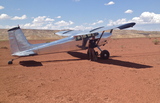
Don Sheldon in Alaska during the early days. Had mounted shotguns on wing for wolf hunting.  Bob Curtis said he had a shotgun mounted on top of his cub in the old days. Said he could load it without landing thru a hole in the greenhouse

Bob Curtis said he had a shotgun mounted on top of his cub in the old days. Said he could load it without landing thru a hole in the greenhouse Keep the shiney side up and the dirty side down...
Fri Dec 09, 2016 3:35 pm
Re: Predator Crew Down In Wyoming
Does anyone know what kind of airplane? Very sad....

Fri Dec 09, 2016 9:07 pm
Re: Predator Crew Down In Wyoming
Sorry to hear that, real demanding and high risk flying for sure, lots of things to go wrong. High winds here, downwind, the last several days, couldn't have helped.
- courierguy offline

- Posts: 4197
- Joined: Thu Mar 31, 2005 6:52 pm
- Location: Idaho
"Its easier to apologize then ask permission"
Tex McClatchy
Tex McClatchy
Fri Dec 09, 2016 9:11 pm
Re: Predator Crew Down In Wyoming
Assuming it was a Super Cub..
- RanchPilot offline
- Posts: 974
- Joined: Mon Jan 24, 2011 5:18 pm
- Location: Wyoming
Experience is the knowledge that enables you to recognize a mistake when you make it again.
RanchPilot Facebook Community: http://www.facebook.com/ranchpilot777
RanchPilot Facebook Community: http://www.facebook.com/ranchpilot777
Fri Dec 09, 2016 9:56 pm
Re: Predator Crew Down In Wyoming
A Pawnee is cheaper than a Super Cub and would safely carry 300 rounds of 40mm grenades for a chunker (300 rounds per minute rate of fire). And the aircraft is designed to crash. If hunters can use AR-15s, the government ought to be able to use military technology in this work.
- contactflying offline
- Posts: 4972
- Joined: Wed Apr 03, 2013 7:36 pm
- Location: Aurora, Missouri 2H2
Download my free "https://tinyurl.com/Safe-Maneuvering" e-book.
Sat Dec 10, 2016 5:36 am
Re: Predator Crew Down In Wyoming
Prayers out to the friends and families.
With todays technology there has to a safer way of doing that job.
With todays technology there has to a safer way of doing that job.
Sat Dec 10, 2016 12:39 pm
Re: Predator Crew Down In Wyoming
With todays technology there has to a safer way of doing that job.
Maybe a drone with a gun, controlled by an operator sitting in a Supercub flying safely above. Launch from the Supercub struts when at the scene.

Sat Dec 10, 2016 12:50 pm
Re: Predator Crew Down In Wyoming
Would there be any legal way to use a AirCam for this? Have the pilot in the back seat with the gunner in the front seat with no windscreen. You wouldn't have worry about the gunner shooting a strut, prop, wing or pilot.
- ExperimentalAviator offline
- Posts: 677
- Joined: Tue Apr 15, 2014 8:02 am
- Location: Plains
Sat Dec 10, 2016 2:47 pm
Re: Predator Crew Down In Wyoming
ExperimentalAviator wrote:Would there be any legal way to use a AirCam for this? Have the pilot in the back seat with the gunner in the front seat with no windscreen. You wouldn't have worry about the gunner shooting a strut, prop, wing or pilot.
Had to lookup AirCam..... but sure looks like it would work
Might be a little chilly in winter Not much area for loading the animals after dispatching them.  I am sure someone can get skis and big tires legal
  You would need all the cold wx gear Flylow and MTV recommend in the cold wx thread
https://www.youtube.com/watch?v=maoHutUGv4U
Keep the shiney side up and the dirty side down...
Sat Dec 10, 2016 6:02 pm
Re: Predator Crew Down In Wyoming
Why is this sort of work not done with a helicopter in the U.S? Seems the obvious solution, all our aerial shooting work down here is helicopter platform based. Is it the extra cost or some sort of regulatory hurdle?
Sent from my iPad using Tapatalk
Sent from my iPad using Tapatalk
Sat Dec 10, 2016 6:21 pm
Re: Predator Crew Down In Wyoming
NZMaule wrote:Why is this sort of work not done with a helicopter in the U.S? Seems the obvious solution, all our aerial shooting work down here is helicopter platform based. Is it the extra cost or some sort of regulatory hurdle?
Sent from my iPad using Tapatalk
Helos?
Each US taxpayer owes $167K from .gov. We can't afford it.
Total US Debts over $19 trillion and rising...
http://www.usdebtclock.org


CFII, MEI, CFISES, ATPME, IA/AP, RPPL, Ski&Amphib ops, RHC mechanic cert, RHC SC— 3000TT
Sat Dec 10, 2016 6:52 pm
Re: Predator Crew Down In Wyoming
NZMaule wrote:Why is this sort of work not done with a helicopter in the U.S? Seems the obvious solution, all our aerial shooting work down here is helicopter platform based. Is it the extra cost or some sort of regulatory hurdle?
Sent from my iPad using Tapatalk
Simple answer: $$$$$
That said, some APHIS crews do use helicopters, but most of this stuff is done with fixed wing.
MTV


Sat Dec 10, 2016 7:23 pm
Re: Predator Crew Down In Wyoming
The Australian's used Cessna O-2 Skymaster for gunship over Bell 47 for scout as a hunter-killer team in Vietnam. Inexpensive but the scout was harder to pick up if shot down.
- contactflying offline
- Posts: 4972
- Joined: Wed Apr 03, 2013 7:36 pm
- Location: Aurora, Missouri 2H2
Download my free "https://tinyurl.com/Safe-Maneuvering" e-book.
DISPLAY OPTIONS
Who is online
Users browsing this forum: No registered users and 0 guests
Latest Features
-
Live to Tell
A Minnesota pilot is surprised to learn that the sudden asymmetric drag of an out-of-rig ski can…Read More -
Creators
Working in some of the Yukon's most beautiful and remote environments, photographer Simon Blakesley captures aircraft in…Read More -
Aircraft Ownership and Maintenance
Upgrading to big tires can make a huge difference in backcountry performance, but with those gains come…Read More -
Tales from Yesteryear
In this tale from bush flying yesteryear, Don Cogger signs up to help Atlee Dodge Jr recovery…Read More


Latest Knowledge Base
-
Destinations
A regional guide with ideas for winter camping destinations in California, Nevada, New Mexico, and Arizona.Read More -
Aircraft
Finding an affordable aircraft that can handle the backcountry for $80K or less? A challenge for sure, but with the…Read More -
Aircraft
01.29.2018 - Zane - Updated tire diameter graphic to add 8.50x10 Guide to tires for use in the backcountry and off-airport landing…Read More -
Pilots
12.22.2013 - Initial article format Operating aircraft on skis and negotiating a snow-covered landscape is an entirely unique skillset and environment.…Read More


