I love the 182B that I have. The paint is less than desirable. The cost of a new paintjob if done right is about 12K. Skybob has a 182 that is bare aluminum and I was thinking of going that way.
What is the best way to get the Emron off so as to make it not to tuff to pollish.
Or just live with it the way it is. Oh and if I get a Sporstman Stol put on should I at least strip the leading edges first.
Tim
Repaint or just strip and polish
Thu May 17, 2012 6:48 am
- qmdv offline

- Posts: 3633
- Joined: Wed Feb 15, 2006 10:22 pm
- Location: Payette
- FindMeSpot URL: http://share.findmespot.com/shared/face ... I5tqEOk0rc
- Aircraft: Cessna 182
Thu May 17, 2012 7:27 am
Re: Repaint or just strip and polish
Polishing is a lot of work. I haven't polished my plane in several years; it still looks better than a plane with bad paint but it isn't pretty either.

Thu May 17, 2012 7:54 am
Re: Repaint or just strip and polish
Stripper Tim 

The one above looks like a better choice
Then the one below

The one above looks like a better choice
Then the one below
- Glidergeek offline

- Posts: 1937
- Joined: Sat Sep 06, 2008 8:02 pm
- Location: Hesperia
- Aircraft: 1968 P206C
DG 400
Thu May 17, 2012 7:55 am
Re: Repaint or just strip and polish
I participated in stripping Piper Arrow wings using a product called Soy Gel. The wings seemed to be wearing factory paint, which I assume isn't Imron. But if it works on Imron you might like using the stuff: it's soy based, non-toxic, nearly odorless, and cleans up with soapy water.
It's consistency is similar to mayonnaise. You spread it on, cover the wetted area with plastic wrap, and wait overnight. The next day you remove the plastic, scrape off the spent stripper and dissolved paint with a plastic scraper, and use scotch brite and soapy water to remove the tough stuff. If you are working outdoors you could skip the plastic scraper step and go directly to a scotch brite/soapy water step.
It's not as effective as the heavy duty industrial strippers, but the lack of fumes and dangerous chemicals made up for most of the extra time and elbow grease.
It's consistency is similar to mayonnaise. You spread it on, cover the wetted area with plastic wrap, and wait overnight. The next day you remove the plastic, scrape off the spent stripper and dissolved paint with a plastic scraper, and use scotch brite and soapy water to remove the tough stuff. If you are working outdoors you could skip the plastic scraper step and go directly to a scotch brite/soapy water step.
It's not as effective as the heavy duty industrial strippers, but the lack of fumes and dangerous chemicals made up for most of the extra time and elbow grease.
- PA12_Pilot offline

- Posts: 236
- Joined: Wed Dec 22, 2004 2:29 pm
- Location: Knoxville
Thu May 17, 2012 8:57 am
Re: Repaint or just strip and polish
qmdv wrote:I love the 182B that I have. The paint is less than desirable. The cost of a new paintjob if done right is about 12K. Skybob has a 182 that is bare aluminum and I was thinking of going that way.
What is the best way to get the Emron off so as to make it not to tuff to pollish.
Or just live with it the way it is. Oh and if I get a Sporstman Stol put on should I at least strip the leading edges first.
Tim
The paint shop in Yerrington will do it for around $8K and they do an excellent job! 4-6 week turnaround. You will then have enough for the Sportsman...
- aktahoe1 offline
- Posts: 2052
- Joined: Sun Jul 13, 2008 8:22 am
- Location: Alaska and Lake Tahoe = aktahoe
If it looks smooth, it might be. If it looks rough, it is...www.bigtirepilot.com ...www.alaskaheliski.com
Thu May 17, 2012 9:39 am
Re: Repaint or just strip and polish
Having just finished polishing part of my 28' aluminum boat - Don't even think about it. The $8-12K you pay to paint will be worth it, and it will last years with minimal maintenance.
Of course, you could not take my word for it, and strip and start polishing. You'll look like Popeye when you're done . . . my adventure went something like this: acid wash to strip . . scrub with scotch brite. . . sand with 400 grit . . . sand with 800 grit . . . sand with 1200 grit . . . start polish with 0000 steel wool . . . polish with wool bonnet . . polish with foam wheel . . .wipe down with Windex . . . repeat certain steps twice a year to maintain high polish.
And I'm not as picky with a boat that's in salt water as one would be with an airplane . . .
Of course, you could not take my word for it, and strip and start polishing. You'll look like Popeye when you're done . . . my adventure went something like this: acid wash to strip . . scrub with scotch brite. . . sand with 400 grit . . . sand with 800 grit . . . sand with 1200 grit . . . start polish with 0000 steel wool . . . polish with wool bonnet . . polish with foam wheel . . .wipe down with Windex . . . repeat certain steps twice a year to maintain high polish.
And I'm not as picky with a boat that's in salt water as one would be with an airplane . . .
- Sierra Hotel offline
- Posts: 64
- Joined: Mon Feb 14, 2011 3:18 pm
- Location: Chugiak, AK
Thu May 17, 2012 9:56 am
Re: Repaint or just strip and polish
We use a new non-toxic stripper, which the name unfortunately escapes me now. Not as quick as the old toxic strippers, you have to leave it on overnight. It takes off virtually anything, with old lacquers being the most difficult, as they turn to a gooey paste. If you strip your plane, most paint shops will discount the paint job quite a bit. There is a tremendous amount of labor & cost involved in stripping and disposing of the effluent. If you use an eco-friendly stripper, you can do sections and scrape it (using a phenolic scraper) onto plastic sheeting below the plane. Then you roll it up and toss it. You must be vary careful around the windows, as the stripper, any amount of it, will burn them. You need to use aluminum tape, overlapping the window, to strip. Then carefully do, by hand, the last bit near the window. Or strip and ruin the windows, and then replace them.
Personally, I do not really recommend bare aluminum. Paint is on there to protect the metal from the elements, not necessarily for decoration. Strip it off and you have to really work at keeping the plane clean and dry, especially the seams. Polishing actually removes some of your corrosion protection. Most skins are Alclad, a sandwich of magnesium alloy and aluminum. The magnesium makes a hard oxide that resists corrosion quite well. This layer is very thin, polish and its gone for the most part. Aside from that aspect, frequently you stripes will actually still be visible in the aluminum. For some reason, they tend to cause some difference in the metal making them visible after stripping. So even more aggressive polishing is required to make it go away, aggravating the aforementioned problems.
Polished aircraft can look cool, and if you want to spend your spare time keeping it up, ok. You just need to invest in a ton of Mother's polish a wagon load of rags and a overdeveloped right arm. You really do not want to keep it outdoors.
Personally, I do not really recommend bare aluminum. Paint is on there to protect the metal from the elements, not necessarily for decoration. Strip it off and you have to really work at keeping the plane clean and dry, especially the seams. Polishing actually removes some of your corrosion protection. Most skins are Alclad, a sandwich of magnesium alloy and aluminum. The magnesium makes a hard oxide that resists corrosion quite well. This layer is very thin, polish and its gone for the most part. Aside from that aspect, frequently you stripes will actually still be visible in the aluminum. For some reason, they tend to cause some difference in the metal making them visible after stripping. So even more aggressive polishing is required to make it go away, aggravating the aforementioned problems.
Polished aircraft can look cool, and if you want to spend your spare time keeping it up, ok. You just need to invest in a ton of Mother's polish a wagon load of rags and a overdeveloped right arm. You really do not want to keep it outdoors.
Thu May 17, 2012 10:47 am
Re: Repaint or just strip and polish
Tim,
I was in the same quandry a couple years ago, i think the post was "paint removal" (not smart enough to figure out how to link it). I remember someone posting about soda blasting for paint removal, sounded like the way to go, but i never tried it.
i ended up not doing anything, but 2 years of gravel strips and Alaska weather have me thinking about it again also. An A&P friend of mine mentioned stripping and polishing then clear coating as a way to protect the finish.
Chris
I was in the same quandry a couple years ago, i think the post was "paint removal" (not smart enough to figure out how to link it). I remember someone posting about soda blasting for paint removal, sounded like the way to go, but i never tried it.
i ended up not doing anything, but 2 years of gravel strips and Alaska weather have me thinking about it again also. An A&P friend of mine mentioned stripping and polishing then clear coating as a way to protect the finish.
Chris
Thu May 17, 2012 10:58 am
Re: Repaint or just strip and polish
Iv'e owned 3 bare/polished airplanes, an Ercoupe, square tailed C-150, and my current '57 C-172. For the C-172 the first polish job after stripping it took about 200 hours, then I spend about 25-35 hours every spring. I use Nuvite, it is a 3 step process the first time, then just the last step each year. They have a very good tutorial on their website. Plan or at least $200.00 for supplies and $500 for 2 power buffers. I don't fly near gross weight, but the full paint on a C-172 weighs about 22 pounds. You also might want to consider that owning a polished airplane is one of the causes of "Aviation Induced Divorce Syndrome" or AIDS as it is commonly called.
Dale
Gravity Strikes Again.
Gravity Strikes Again.
Thu May 17, 2012 11:33 am
Re: Repaint or just strip and polish
Tim I have a very good friend in the vinyl graphics business who has done some amount of airplane stuff (ad campaigns, TV stuff), and is really chomping at the bit to do an entire aircraft for an owner-operator customer. One of our BCP guys back East (Rod Hatcher if I remember right) is in an EAA chapter who built a CH-701 and had it covered in this vinyl, and it turned out GREAT. The vinyl is lighter, a lot cheaper, and will last ALMOST as long as a normal paint job. The trick is finding a graphics applicator who is also knowledgeable about airplanes and will treat the airplane differently than one of the punk automobile "wrap" projects. My guy is a licensed pilot.
Because this is an area that he wants to get a business foothold in, I am fairly sure you can be a "beta tester" and have him do your 182 for probably half of what a traditional paint job costs. And for the same "new foothold" reason I am 100% sure he would want to do an extra-good job, because your plane will be his poster child.
The great thing about the vinyl is that after 5 or 10 years if you want to change the color scheme, it is a LOT cheaper and faster than putting caustic chemicals on, making a tocix waste nightmare, and paying for another expensive paint to be put on.
A high-end traditional paint job, kept in a hangar, never damaged or scratched, and maintained with waxes and polishes... will of course last longer than even the best vinyl films. But the vinyl is much easier to repair, or remove a section for a mechanical repair.
After seeing the CH-701 pictures, my question was whether the film would trap moistuire and cause corrosion. My expert friend explained that the vinyl when applied properly does not leave a void to trap moisture, and covering all the seams and crevices it keeps far more moisture out than it could ever trap.
Let me know if you re interested.
Because this is an area that he wants to get a business foothold in, I am fairly sure you can be a "beta tester" and have him do your 182 for probably half of what a traditional paint job costs. And for the same "new foothold" reason I am 100% sure he would want to do an extra-good job, because your plane will be his poster child.
The great thing about the vinyl is that after 5 or 10 years if you want to change the color scheme, it is a LOT cheaper and faster than putting caustic chemicals on, making a tocix waste nightmare, and paying for another expensive paint to be put on.
A high-end traditional paint job, kept in a hangar, never damaged or scratched, and maintained with waxes and polishes... will of course last longer than even the best vinyl films. But the vinyl is much easier to repair, or remove a section for a mechanical repair.
After seeing the CH-701 pictures, my question was whether the film would trap moistuire and cause corrosion. My expert friend explained that the vinyl when applied properly does not leave a void to trap moisture, and covering all the seams and crevices it keeps far more moisture out than it could ever trap.
Let me know if you re interested.

.
Thu May 17, 2012 11:56 am
Re: Repaint or just strip and polish
aktahoe1 wrote:qmdv wrote:I love the 182B that I have. The paint is less than desirable. The cost of a new paintjob if done right is about 12K. Skybob has a 182 that is bare aluminum and I was thinking of going that way.
What is the best way to get the Emron off so as to make it not to tuff to pollish.
Or just live with it the way it is. Oh and if I get a Sporstman Stol put on should I at least strip the leading edges first.
Tim
The paint shop in Yerrington will do it for around $8K and they do an excellent job! 4-6 week turnaround. You will then have enough for the Sportsman...
Kevin, Are you going to be getting your plane repainted after all the things you're doing? Or will you just repaint the new leading edge and wing-x to match? I'm probbably going to re-paint my plane sometime in the next year or two and Yerrington is one of the places I'm considering.
Thu May 17, 2012 12:41 pm
Re: Repaint or just strip and polish
I had a polished plane once. The choice is easy, strip , put the Sportsman/vg's on and paint(the bottom off white, more forgiving for dirt and exhaust, maybe in big letters."Crape Master").
There
Gary
There
Gary
- shortfielder offline
- Posts: 2350
- Joined: Sun Mar 05, 2006 7:14 pm
- Location: Durango, Colorado
- FindMeSpot URL: http://share.findmespot.com/shared/face ... D263l9HKFb
If you want to go up, pull back on the controls. If you want to go down, pull back farther.
My SPOT page
My SPOT page
Thu May 17, 2012 1:27 pm
Re: Repaint or just strip and polish
EZFlap wrote:Tim I have a very good friend in the vinyl graphics business who has done some amount of airplane stuff (ad campaigns, TV stuff), and is really chomping at the bit to do an entire aircraft for an owner-operator customer...
Let me know if you re interested.
We've all seen the car/van wrapped in the Pepsi or Coke ads. You could wrap your plane in your company logo and write off the entire plane as advertising cost.
I also can picture this giant BCP logo plane wrap that could save Zane a bundle.
Lynn Sanderson (Dirtstrip) passed away from natural causes in May 2013. He was a great contributor and will be missed dearly.
Thu May 17, 2012 5:00 pm
Re: Repaint or just strip and polish
qmdv wrote:I love the 182B that I have. The paint is less than desirable. The cost of a new paintjob if done right is about 12K. Skybob has a 182 that is bare aluminum and I was thinking of going that way.
What is the best way to get the Emron off so as to make it not to tuff to pollish.
Or just live with it the way it is. Oh and if I get a Sporstman Stol put on should I at least strip the leading edges first.
Tim
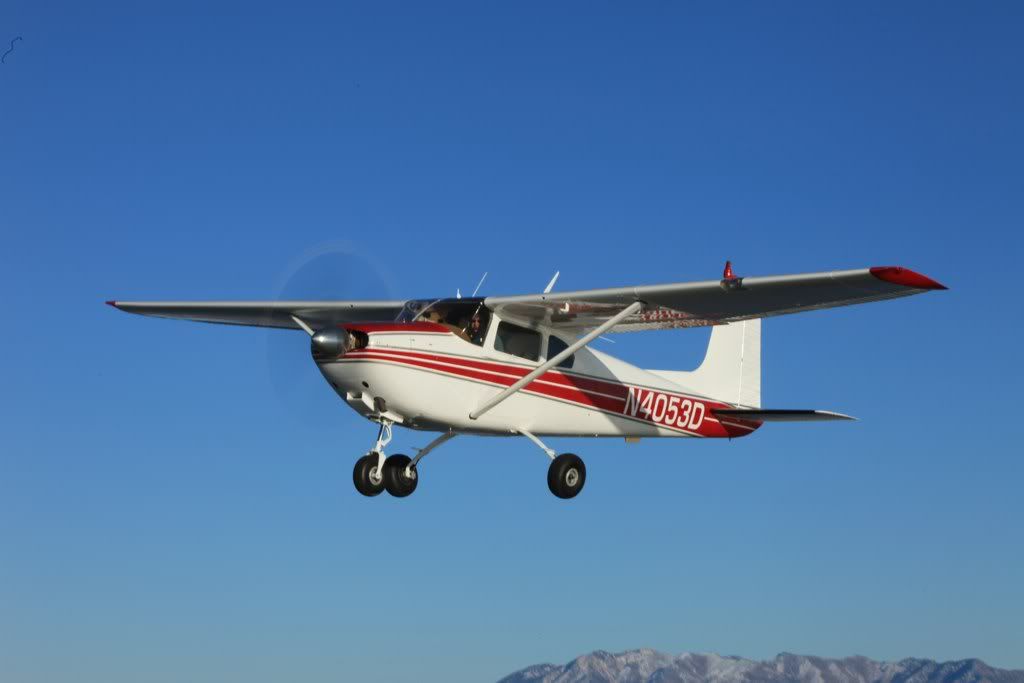
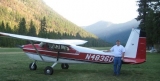
Straubes in Ogden will fix you up for 8-8.5K. They did a nice job on this one. POLISHING BLOWS PROFUSELY!
- SixTwoLeemer offline

- Posts: 1285
- Joined: Thu Feb 07, 2008 10:53 am
- Location: Wasatch Front
Altitude is Time…. Airspeed is Life!
Thu May 17, 2012 9:40 pm
Re: Repaint or just strip and polish
SixTwoLeemer wrote:qmdv wrote:I love the 182B that I have. The paint is less than desirable. The cost of a new paintjob if done right is about 12K. Skybob has a 182 that is bare aluminum and I was thinking of going that way.
What is the best way to get the Emron off so as to make it not to tuff to pollish.
Or just live with it the way it is. Oh and if I get a Sporstman Stol put on should I at least strip the leading edges first.
Tim
Straubes in Ogden will fix you up for 8-8.5K. They did a nice job on this one. POLISHING BLOWS PROFUSELY!
Beautiful plane!!
And yes...... POLISHING BLOWS PROFUSELY!!!
The only way I would polish a plane or have a plane polished, is if I have a nice tight hangar and wash the plane with Deionized Water!
I have the aluminum wheels and steps polished on my rig about once a year and they stay really nice for the whole race schedule, as long as I stay away from truck washes that use harsh chemicals for washing the rig. I try to wash our own rigs at tracks that allow us to and we have the Deionized Water tanks/filters for washing.
DISPLAY OPTIONS
Who is online
Users browsing this forum: No registered users and 2 guests
Latest Features
-
Live to Tell
A Minnesota pilot is surprised to learn that the sudden asymmetric drag of an out-of-rig ski can…Read More -
Creators
Working in some of the Yukon's most beautiful and remote environments, photographer Simon Blakesley captures aircraft in…Read More -
Aircraft Ownership and Maintenance
Upgrading to big tires can make a huge difference in backcountry performance, but with those gains come…Read More -
Tales from Yesteryear
In this tale from bush flying yesteryear, Don Cogger signs up to help Atlee Dodge Jr recovery…Read More


Latest Knowledge Base
-
Destinations
A regional guide with ideas for winter camping destinations in California, Nevada, New Mexico, and Arizona.Read More -
Aircraft
Finding an affordable aircraft that can handle the backcountry for $80K or less? A challenge for sure, but with the…Read More -
Aircraft
01.29.2018 - Zane - Updated tire diameter graphic to add 8.50x10 Guide to tires for use in the backcountry and off-airport landing…Read More -
Pilots
12.22.2013 - Initial article format Operating aircraft on skis and negotiating a snow-covered landscape is an entirely unique skillset and environment.…Read More


