Hi all,
Anyone have any experience with a soloy 206 they would like to share? We're getting one at work in the next couple weeks, so any tips I can start thinking about in advance? It will be used for low altitude surveillance work. I haven't got ahold of the POH supplement so any basics like speeds, range, general flight characteristics would be good to hear. I have a few hours in an RSTOL U206G, but no turbine time.
Thanks
Soloy 206 operating tips
Tue Oct 02, 2018 4:43 pm

Tue Oct 02, 2018 4:48 pm
Re: Soloy 206 operating tips
niente qui
Last edited by dogpilot on Mon Aug 03, 2020 9:16 pm, edited 2 times in total.
Tue Oct 02, 2018 5:28 pm
Re: Soloy 206 operating tips
It’ll blow your hair back on takeoff. Low level fuel burn is high, but hey, ya gotta stop for coffee every once in a while.
I’ve only flown one for a few hours, so can’t help much with your questions, but man do they perform.
MTV
I’ve only flown one for a few hours, so can’t help much with your questions, but man do they perform.
MTV


Tue Oct 02, 2018 6:04 pm
Re: Soloy 206 operating tips
dogpilot wrote:PM me and I'll fill you in. I have both a Soloy 206 and 207.
Now we're all curious as to what could be contentious about operating these that requires a PM.


Tue Oct 02, 2018 7:11 pm
Re: Soloy 206 operating tips
niente qui
Last edited by dogpilot on Mon Aug 03, 2020 9:16 pm, edited 1 time in total.
Wed Oct 03, 2018 12:38 am
Re: Soloy 206 operating tips
I flew one for a year back in the early 90's. The Fuel Control Units and Prop Governor are easy to be "overworked" if you make rapid throttle inputs. Slow and smooth, thinking ahead is the key to keeping both happy.
Max climbs result in very limited forward visibility. Max descents will challenge your ears if you aren't ready or used to it. You don't gain that much IAS, but the climb capability allows one to easily get up to the mid-teens where one can take advantage of winds and higher TAS.
Make sure you keep your battery charged. Use of a ground power unit for starting is also helpful for fast/cool starts.
Jughead
Max climbs result in very limited forward visibility. Max descents will challenge your ears if you aren't ready or used to it. You don't gain that much IAS, but the climb capability allows one to easily get up to the mid-teens where one can take advantage of winds and higher TAS.
Make sure you keep your battery charged. Use of a ground power unit for starting is also helpful for fast/cool starts.
Jughead
- jugheadF15 offline

- Posts: 309
- Joined: Sun Sep 20, 2009 6:12 am
- Location: Snohomish
Sun Jun 23, 2024 12:29 pm
Re: Soloy 206 operating tips
What’s real world climb and cruise (150 KTAS @ 12,000) fuel burn for the Mk I?


Sun Jun 23, 2024 8:44 pm
Re: Soloy 206 operating tips
I’m just curious, low level work in a turbine C206, seems you’re sacrificing endurance compared to a piston, I just don’t get why this would be a plane you’d buy (for $$$) for that mission, maybe if insurance said if single engine it had to be turbine, or maybe slightly lower noise report?
Ether way good to be getting some turbine time
interesting crash
“ The fuel supply line was disconnected from the fuel spray nozzle, revealing a few drops of fuel in the line. The starter-generator was engaged to check for fuel flow to the fuel spray nozzle; no fuel flowed. The fuel line to the fuel-flow transducer was disconnected and the starter-generator was engaged, with no fuel flow.
The fuel line to the check valve assembly was disconnected and the starter-generator was engaged. After a brief purge of air, fuel flowed freely from the fuel supply line. The disconnected fuel lines were reconnected, the fuel spray nozzle was connected to the fuel supply line, and the starter-generator was engaged again. After air was purged from the fuel pump, fuel flowed freely to the fuel nozzle, which produced a normal spray pattern.
The purpose of the check valve assembly is to prevent a buildup of raw fuel in the combustion case if the burner drain valve remains in the open position when the engine is not operating, which could result in a hot start. The check valve also prevents fuel nozzle drip at shutdown, reducing the risk of a fire. Based on the design, an engine restart is not possible when air from the fuel system has reached the check valve, and there is no procedure to clear the air while in-flight.”
“ NTSB Probable Cause
A total loss of engine power due to air entering the fuel system for reasons that could not be determined based on available information. Contributing to the accident was the pilot’s inability to restart the engine due to the check valve assembly design.”
http://www.kathrynsreport.com/2016/08/i ... 5.html?m=1
Ether way good to be getting some turbine time
interesting crash
“ The fuel supply line was disconnected from the fuel spray nozzle, revealing a few drops of fuel in the line. The starter-generator was engaged to check for fuel flow to the fuel spray nozzle; no fuel flowed. The fuel line to the fuel-flow transducer was disconnected and the starter-generator was engaged, with no fuel flow.
The fuel line to the check valve assembly was disconnected and the starter-generator was engaged. After a brief purge of air, fuel flowed freely from the fuel supply line. The disconnected fuel lines were reconnected, the fuel spray nozzle was connected to the fuel supply line, and the starter-generator was engaged again. After air was purged from the fuel pump, fuel flowed freely to the fuel nozzle, which produced a normal spray pattern.
The purpose of the check valve assembly is to prevent a buildup of raw fuel in the combustion case if the burner drain valve remains in the open position when the engine is not operating, which could result in a hot start. The check valve also prevents fuel nozzle drip at shutdown, reducing the risk of a fire. Based on the design, an engine restart is not possible when air from the fuel system has reached the check valve, and there is no procedure to clear the air while in-flight.”
“ NTSB Probable Cause
A total loss of engine power due to air entering the fuel system for reasons that could not be determined based on available information. Contributing to the accident was the pilot’s inability to restart the engine due to the check valve assembly design.”
http://www.kathrynsreport.com/2016/08/i ... 5.html?m=1
- NineThreeKilo offline
- Retired
- Posts: 1678
- Joined: Thu Dec 31, 2009 8:16 pm
- Location: _
Mon Jun 24, 2024 3:56 pm
Re: Soloy 206 operating tips
NineThreeKilo wrote:I’m just curious, low level work in a turbine C206, seems you’re sacrificing endurance compared to a piston, I just don’t get why this would be a plane you’d buy (for $$$) for that mission, maybe if insurance said if single engine it had to be turbine, or maybe slightly lower noise report?
Ether way good to be getting some turbine time
interesting crash
“ The fuel supply line was disconnected from the fuel spray nozzle, revealing a few drops of fuel in the line. The starter-generator was engaged to check for fuel flow to the fuel spray nozzle; no fuel flowed. The fuel line to the fuel-flow transducer was disconnected and the starter-generator was engaged, with no fuel flow.
The fuel line to the check valve assembly was disconnected and the starter-generator was engaged. After a brief purge of air, fuel flowed freely from the fuel supply line. The disconnected fuel lines were reconnected, the fuel spray nozzle was connected to the fuel supply line, and the starter-generator was engaged again. After air was purged from the fuel pump, fuel flowed freely to the fuel nozzle, which produced a normal spray pattern.
The purpose of the check valve assembly is to prevent a buildup of raw fuel in the combustion case if the burner drain valve remains in the open position when the engine is not operating, which could result in a hot start. The check valve also prevents fuel nozzle drip at shutdown, reducing the risk of a fire. Based on the design, an engine restart is not possible when air from the fuel system has reached the check valve, and there is no procedure to clear the air while in-flight.”
“ NTSB Probable Cause
A total loss of engine power due to air entering the fuel system for reasons that could not be determined based on available information. Contributing to the accident was the pilot’s inability to restart the engine due to the check valve assembly design.”
http://www.kathrynsreport.com/2016/08/i ... 5.html?m=1
By now he should have nearly 6 years of experience operating the aircraft so hopefully he’s able to share some insight.
Tue Jun 25, 2024 1:50 pm
Re: Soloy 206 operating tips
Yeah, I dusted off my necromancer robes for this one. Figured there weren't many threads on this topic, and the few who were knowledgable had chimed in so I had a better chance of a response.
For low level work, the low noise level and operating cost compared to a helicoptor would be the factors I can see. Would be a hard sell except for very specialized applications. I suspect the loiter time would be solid.
For low level work, the low noise level and operating cost compared to a helicoptor would be the factors I can see. Would be a hard sell except for very specialized applications. I suspect the loiter time would be solid.
Tue Jun 25, 2024 3:41 pm
Re: Soloy 206 operating tips
Low level fuel burn would be way above the piston, so low level loiter time would not be better with the turbine
Best I can tell this conversion maaayyybbbee makes $ense for a drop zone, but even then it’s not great compared to a short van, maybe for a rich guy playing backyard “bush pilot”, but outside from that there is a good reason you don’t see many of these in the wild
Best I can tell this conversion maaayyybbbee makes $ense for a drop zone, but even then it’s not great compared to a short van, maybe for a rich guy playing backyard “bush pilot”, but outside from that there is a good reason you don’t see many of these in the wild
- NineThreeKilo offline
- Retired
- Posts: 1678
- Joined: Thu Dec 31, 2009 8:16 pm
- Location: _
Sun Jun 30, 2024 5:12 pm
Re: Soloy 206 operating tips
I remember this old thread! I also remember at the time thinking the OP's employer has probably selected the single best ship available for their intended use. Of course it's highly probable that we are interpreting that use differently since at least I have no idea who the employer was.... or we might just not agree  And if my vision of the intended mission was correct, then it should come as no surprise that these birds are not rare in that sector, in fact quite the opposite, they are relatively common.
Mission.... that's the key. In this case, to me the OP's description of the mission 'low level surveillance' inferred law enforcement, gov't, or even civilian contract work conducted frequently at night, and almost always in locations less than conducive to good outcome of a forced landing. In these applications when the flights are predominantly over populated areas, it is almost always mandated that the ship be turbine, or multi engine. The latter doesn't generally do 'low and slow' well, and certainly negates any perceived fuel burn concerns of the turbine.
That fuel burn indecently, is like a few other commonly over played misconceptions attached to turbine use and ownership. Simply put, it takes a calculable amount of thrust to ask a C206 to do a certain task. Just because the turbine has more power available, doesn't mean you have to use it. Yes, it will burn a little more on similar power settings, but when the rest of the package fits the mission to a better degree, and when you have both the weight and power working in your favor to be able to pack a little more fuel, how much you burn really just becomes a small factor for you to adjust your bottom line for.
MX... a properly maintained light turbine will require less intensive maintenance throughout most of it's life than a big bore 6 of either flavor. Furthermore one operated in part 91,137 or as a Public Aircraft may have written into its Op's an on condition program which essentially removes overhauls in lieu of IRAN or similar. Beyond acquisition, overhaul is the single largest expense a turbine owner faces.
Acquisition cost per seat... This is why we don't see a turbine 206 at every backcountry destination. It's just a tough pill to swallow. For the well heeled who have found the niche for this airplane they still exist, for the rest of us mere mortals, it doesn't pencil. But for the operations (such as surveillance) where the cost per seat is less relevant, things start to favor other attributes that might fit the mission better. Take aerial application for example, we have one seat in use for 99% of the fleet. Consequently turbines with their superior power to weight ratio, and superb reliability factor are king. Cost more? you bet, burn more gas?, much! fit the entire package better? infinitely!
It is theoretically possible to still purchase an R1340 powered Thrush new from the factory, but there hasn't been a single example produced in forever.
Anyways... I think these things are the bees knees. A friend has a Soloy 207 that I've dreamed of owning forever, but the reality for me is my heels are just not that well
Take care, Rob
And if my vision of the intended mission was correct, then it should come as no surprise that these birds are not rare in that sector, in fact quite the opposite, they are relatively common.Mission.... that's the key. In this case, to me the OP's description of the mission 'low level surveillance' inferred law enforcement, gov't, or even civilian contract work conducted frequently at night, and almost always in locations less than conducive to good outcome of a forced landing. In these applications when the flights are predominantly over populated areas, it is almost always mandated that the ship be turbine, or multi engine. The latter doesn't generally do 'low and slow' well, and certainly negates any perceived fuel burn concerns of the turbine.
That fuel burn indecently, is like a few other commonly over played misconceptions attached to turbine use and ownership. Simply put, it takes a calculable amount of thrust to ask a C206 to do a certain task. Just because the turbine has more power available, doesn't mean you have to use it. Yes, it will burn a little more on similar power settings, but when the rest of the package fits the mission to a better degree, and when you have both the weight and power working in your favor to be able to pack a little more fuel, how much you burn really just becomes a small factor for you to adjust your bottom line for.
MX... a properly maintained light turbine will require less intensive maintenance throughout most of it's life than a big bore 6 of either flavor. Furthermore one operated in part 91,137 or as a Public Aircraft may have written into its Op's an on condition program which essentially removes overhauls in lieu of IRAN or similar. Beyond acquisition, overhaul is the single largest expense a turbine owner faces.
Acquisition cost per seat... This is why we don't see a turbine 206 at every backcountry destination. It's just a tough pill to swallow. For the well heeled who have found the niche for this airplane they still exist, for the rest of us mere mortals, it doesn't pencil. But for the operations (such as surveillance) where the cost per seat is less relevant, things start to favor other attributes that might fit the mission better. Take aerial application for example, we have one seat in use for 99% of the fleet. Consequently turbines with their superior power to weight ratio, and superb reliability factor are king. Cost more? you bet, burn more gas?, much! fit the entire package better? infinitely!
It is theoretically possible to still purchase an R1340 powered Thrush new from the factory, but there hasn't been a single example produced in forever.
Anyways... I think these things are the bees knees. A friend has a Soloy 207 that I've dreamed of owning forever, but the reality for me is my heels are just not that well
Take care, Rob

Sun Jun 30, 2024 6:04 pm
Re: Soloy 206 operating tips
Rob wrote:I remember this old thread! I also remember at the time thinking the OP's employer has probably selected the single best ship available for their intended use. Of course it's highly probable that we are interpreting that use differently since at least I have no idea who the employer was.... or we might just not agree
Mission.... that's the key. In this case, to me the OP's description of the mission 'low level surveillance' inferred law enforcement, gov't, or even civilian contract work conducted frequently at night, and almost always in locations less than conducive to good outcome of a forced landing. In these applications when the flights are predominantly over populated areas, it is almost always mandated that the ship be turbine, or multi engine. The latter doesn't generally do 'low and slow' well, and certainly negates any perceived fuel burn concerns of the turbine.
That fuel burn indecently, is like a few other commonly over played misconceptions attached to turbine use and ownership. Simply put, it takes a calculable amount of thrust to ask a C206 to do a certain task. Just because the turbine has more power available, doesn't mean you have to use it. Yes, it will burn a little more on similar power settings, but when the rest of the package fits the mission to a better degree, and when you have both the weight and power working in your favor to be able to pack a little more fuel, how much you burn really just becomes a small factor for you to adjust your bottom line for.
MX... a properly maintained light turbine will require less intensive maintenance throughout most of it's life than a big bore 6 of either flavor. Furthermore one operated in part 91,137 or as a Public Aircraft may have written into its Op's an on condition program which essentially removes overhauls in lieu of IRAN or similar. Beyond acquisition, overhaul is the single largest expense a turbine owner faces.
Acquisition cost per seat... This is why we don't see a turbine 206 at every backcountry destination. It's just a tough pill to swallow. For the well heeled who have found the niche for this airplane they still exist, for the rest of us mere mortals, it doesn't pencil. But for the operations (such as surveillance) where the cost per seat is less relevant, things start to favor other attributes that might fit the mission better. Take aerial application for example, we have one seat in use for 99% of the fleet. Consequently turbines with their superior power to weight ratio, and superb reliability factor are king. Cost more? you bet, burn more gas?, much! fit the entire package better? infinitely!
It is theoretically possible to still purchase an R1340 powered Thrush new from the factory, but there hasn't been a single example produced in forever.
Anyways... I think these things are the bees knees. A friend has a Soloy 207 that I've dreamed of owning forever, but the reality for me is my heels are just not that well
Take care, Rob
Oh, but Rob, a Thrush is a VERY different aircraft, with a VERY, VERY different mission than a 206. The single big mistake that Joe Soloy made when he certificated the Turbine 206 was not increasing the maximum gross weight. He did learn from that mistake, and when he certificated the 207 Turbine, he did increase the gross weight.
The issue is fuel burn. I ran a 206 with an IO 550, and in cruise, that engine was happy at 13 to 14 gallons per hour. Not going as fast as possible, of course, but that's loaded to gross weight of 3800 pounds, which is legal on Wipline 4000 floats.
But the Soloy 206 is limted to 3600 pounds. With an engine that simply isn't going to run at less than about 36ish gph. With 87 gallons aboard in a G model, that's less than two hours with vfr reserve. Jet fuel also weighs a little more than avgas as well.....I know, not much, but that 87 gallons equals another 87 pounds of fuel weight. A 206 lugging around over 600 pounds of fuel isn't going to have much useful load.
And, most working avgas powered 206s go out with around 60 gallons most days. That provides three hours and reserve, even at pretty high power settings.
Now, on the positive side, a Soloy 206 is faster than a stock 206, but not enough to make up for that extra fuel thirst. And, put it on floats and it's not that much faster.
Oh, and then there's the cost of conversion, fuel, and overhaul.....3000 hour tbo compared to a 550 at 2000.
That pencil would need to be a LOT sharper to work in a backcountry machine.
MTV
Sun Jun 30, 2024 9:14 pm
Re: Soloy 206 operating tips
Hi Mike,
I am almost 100% certain we agree more in the real life scenario than in the internet 'guess at the mission' scenario. And incidentally , I need to run a team of mules in to the foothills of Garfield about halfway between Lima and Monida this spring. It's a personal mission, and I have some questions I think you might be able to shed light on, I'd like to PM you about.
Back to Soloy's 206. I agree, the only back country guy I know that can make one pencil out is a Swiss cat that wanders to AK yearly-ish and burns money for fun. Wayyy out of my league.
On the other hand, for LE, mil spec govt type, or spec ops contract work, I can't think of any of those scenarios that gave 2 nickles thought on fuel burn past - can we make it work? The Basler super-3 comes to mind If they can make a stretch DC-3 gunship with a pair of -67's pencil, are we really going to question how hard it is to make the little Allison make sense? In another thread we are talking about Q's (a pregnant Crash-8) putting out fires where no one even lives.... ... Hers's one for G44, I didn't ask, so I hope it doesn't land me in hot water, but it is one of the guys that fly's with us when it suits 

And again, low level night ops over a city = twin or turbine, there is simply no getting around that, even a Twin Beech isn't going to do better at fuel burn than the Soloy, while failing at the rest of the mission.
And yes... why didn't Joe go for the GW increase? because if there's one thing I can do well, it's dream about the flying machines I should own
Take care, Rob
I am almost 100% certain we agree more in the real life scenario than in the internet 'guess at the mission' scenario. And incidentally , I need to run a team of mules in to the foothills of Garfield about halfway between Lima and Monida this spring. It's a personal mission, and I have some questions I think you might be able to shed light on, I'd like to PM you about.
Back to Soloy's 206. I agree, the only back country guy I know that can make one pencil out is a Swiss cat that wanders to AK yearly-ish and burns money for fun. Wayyy out of my league.
On the other hand, for LE, mil spec govt type, or spec ops contract work, I can't think of any of those scenarios that gave 2 nickles thought on fuel burn past - can we make it work? The Basler super-3 comes to mind
If they can make a stretch DC-3 gunship with a pair of -67's pencil, are we really going to question how hard it is to make the little Allison make sense? In another thread we are talking about Q's (a pregnant Crash-8) putting out fires where no one even lives.... ... Hers's one for G44, I didn't ask, so I hope it doesn't land me in hot water, but it is one of the guys that fly's with us when it suits And again, low level night ops over a city = twin or turbine, there is simply no getting around that, even a Twin Beech isn't going to do better at fuel burn than the Soloy, while failing at the rest of the mission.
And yes... why didn't Joe go for the GW increase?
because if there's one thing I can do well, it's dream about the flying machines I should own Take care, Rob
Sun Jun 30, 2024 9:47 pm
Re: Soloy 206 operating tips
MTV, is 36gph typical cruise fuel burn from your experience? I’ve found data suggesting mid 40s for climb and mid to upper 20s for sensible cruise. But, I’ve got an email out to the company who now owns the STC to confirm. It’s been a while since I sent the email so I’m going to give them a call after the holiday.
Tue Jul 02, 2024 10:27 am
Re: Soloy 206 operating tips
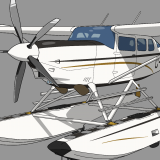
I thought id make an account and chime in on turbine 206s!
on amphibs the Soloy is a great aircraft and a stepping stone to turbo beaver or a Kodiak. With the benefits of less operating cost, less handling costs at airports. Ive met some amphib owners and most previously had a Piston 206 and wanted more umph without going to a turbo beaver or anything bigger.
I spoke with Soloy at Kosh last year and I believe they are building a new one right now. it's been a while apparently. Cost is high as they use a brand new engine.
up in Canada I had the opportunity and purchased a Turbine that has MTV's main quirk solved. a soloy much outperforms its useful load.
this bird is remanufactured with a bigger wing and fuel tank. and has 4400lbs GW (Canadian Amateur Built).
the B17c fuel burn down low is 31G/H at 80% Tq at 135TAS amphib, up higher 26 ish. Im assuming the Soloy is pretty much the same. Not sure wheel performance yet. Hoping to find out this winter. Climbs over 1000fpm
sadly theres only a couple of these built years ago before no more..
how do you add images on this place?
on amphibs the Soloy is a great aircraft and a stepping stone to turbo beaver or a Kodiak. With the benefits of less operating cost, less handling costs at airports. Ive met some amphib owners and most previously had a Piston 206 and wanted more umph without going to a turbo beaver or anything bigger.
I spoke with Soloy at Kosh last year and I believe they are building a new one right now. it's been a while apparently. Cost is high as they use a brand new engine.
up in Canada I had the opportunity and purchased a Turbine that has MTV's main quirk solved. a soloy much outperforms its useful load.
this bird is remanufactured with a bigger wing and fuel tank. and has 4400lbs GW (Canadian Amateur Built).
the B17c fuel burn down low is 31G/H at 80% Tq at 135TAS amphib, up higher 26 ish. Im assuming the Soloy is pretty much the same. Not sure wheel performance yet. Hoping to find out this winter. Climbs over 1000fpm
sadly theres only a couple of these built years ago before no more..
how do you add images on this place?
Mon Jul 15, 2024 6:06 pm
Mon Jul 15, 2024 7:28 pm
Re: Soloy 206 operating tips
Very nice,
I'm still waiting for North Point to get back to me. I'm going to give them a call tomorrow.
I'm still waiting for North Point to get back to me. I'm going to give them a call tomorrow.
Wed Jul 17, 2024 1:52 pm
Re: Soloy 206 operating tips
They're not doing Mk1 conversions anymore.
DISPLAY OPTIONS
Who is online
Users browsing this forum: No registered users and 4 guests
Latest Features
-
-
Featured Bush Planes
As one of the undisputed legends of bush flying, the Cessna 180 hauls a…Read More -
Aircraft Ownership and Maintenance
9 modification mistakes aircraft owners make when trying to "bush out" their birds—why some…Read More -
Live to Tell
A Minnesota pilot is surprised to learn that the sudden asymmetric drag of an…Read More




Latest Knowledge Base
-
Destinations
Canada offers some of the most spectacular backcountry flying on the continent. Here's what you need to know before you go.Read More -
Safety and Survival
Hope that you never have to use your survival vest but knowing you have it and knowing how to use…Read More -
Destinations
A regional guide with ideas for winter camping destinations in California, Nevada, New Mexico, and Arizona.Read More -
Aircraft
Finding an affordable aircraft that can handle the backcountry for $80K or less? A challenge for sure, but with the…Read More



