Due to budget cuts the National Weather Service may close the Stampede Pass weather station. Stampede Pass is one of the major routes to cross the Cascades by aircraft and the only one with an AWOS station.
http://cliffmass.blogspot.com/2012/11/save-stampede-pass-weather-station.html
Stampede Pass AWOS - possible closure
Fri Nov 09, 2012 9:48 pm
- fern_hopper offline
- Posts: 503
- Joined: Wed May 07, 2008 4:42 pm
- Location: Wahkiakum County
Sat Nov 10, 2012 5:32 pm
Re: Stampede Pass AWOS - possible closure
Please spread this to link all other airplane forums you are a member of, and email this link to your pilot friends/aquaintances. Also take and post at your local FBO....
Stress its importance to weigh in with NWS!
EMAIL IS FREE AND EASY!
Very important for SAFETY!!
lc
Stress its importance to weigh in with NWS!
EMAIL IS FREE AND EASY!
Very important for SAFETY!!
lc
Humor may not make the world go around, but it certainly cheers up the process... 
With clothing, the opposite of NOMEX is polypro (polypropylene cloth and fleece).
Success has many fathers...... Failure is an orphan.
With clothing, the opposite of NOMEX is polypro (polypropylene cloth and fleece).
Success has many fathers...... Failure is an orphan.
Sun Nov 11, 2012 2:05 pm
Re: Stampede Pass AWOS - possible closure
Just wrote this email to Dr. Colman:
+++++++++++++++++++++++++++++++++++++++++
Dear Dr. Colman:
I understand from Internet reports [link to BCP and Cliff Mass blog removed] that the National Weather Service is considering closing its Stampede Pass weather station and moving it to Snoqualmie Pass for budgetary reasons. I am writing to urge the National Weather Service to reconsider that choice.
I am a pilot in Seattle with family in Eastern Washington. I have crossed the Cascades many times in my Cessna Skywagon, which was manufactured in 1977 and has been flying consistently since then. Even though I am instrument rated and my airplane has been equipped with the latest avionics, I will typically be unable to fly through the Cascades in clouds because of the risk of the water in those clouds’ turning to ice on my aircraft. Therefore, I rely on the information from the Stampede Pass ASOS to inform me of cloud heights. High winds in the Cascades can also be of concern to general aviation due to rotor effects as strong winds cross the pass, which effects can overpower most general aviation small aircraft.
You might ask why the information about cloud heights and wind wouldn’t be just as effective coming from Snoqualmie Pass as from Stampede Pass. Two reasons come to mind. First is that Stampede Pass is at a higher elevation than Snoqualmie, so that the cloud height (measured from the weather station) will be more indicative of the general cloud cover over that area of the Cascades. Second is that Stampede Pass, unlike Snoqualmie Pass, is pretty much a straight line from Seattle to Ellensburg. That might not seem like such a big deal except that most small general aviation aircraft are quite underpowered when flying at elevations necessary to cross the Cascades due to the decrease air pressure at altitude. With a straight course, the pilot is in a pretty good position to see ahead what the weather is looking like and to turn around if prudent. When one is flying through a curving pass, like Snoqualmie, the view is obstructed if you are flying in the pass and you may have to execute a turn when you encounter lower ceilings. While good training can help pilots to understand how to safely make a small radius turn by flying slowly, many pilots feel that they may be turning too slowly (coming to grief with some hard mountain sides) and may try to tighten up their turn, which can lead to their aircraft stalling and potentially crashing into the terrain.
I have copied other pilots that I know on this email so that, if they agree that closing the Stampede Pass station would be detrimental to aviation, they might be able to add their voices to mine.
Regards,
Greg Gorder
+++++++++++++++++++++++++++++++++++++++++
Dear Dr. Colman:
I understand from Internet reports [link to BCP and Cliff Mass blog removed] that the National Weather Service is considering closing its Stampede Pass weather station and moving it to Snoqualmie Pass for budgetary reasons. I am writing to urge the National Weather Service to reconsider that choice.
I am a pilot in Seattle with family in Eastern Washington. I have crossed the Cascades many times in my Cessna Skywagon, which was manufactured in 1977 and has been flying consistently since then. Even though I am instrument rated and my airplane has been equipped with the latest avionics, I will typically be unable to fly through the Cascades in clouds because of the risk of the water in those clouds’ turning to ice on my aircraft. Therefore, I rely on the information from the Stampede Pass ASOS to inform me of cloud heights. High winds in the Cascades can also be of concern to general aviation due to rotor effects as strong winds cross the pass, which effects can overpower most general aviation small aircraft.
You might ask why the information about cloud heights and wind wouldn’t be just as effective coming from Snoqualmie Pass as from Stampede Pass. Two reasons come to mind. First is that Stampede Pass is at a higher elevation than Snoqualmie, so that the cloud height (measured from the weather station) will be more indicative of the general cloud cover over that area of the Cascades. Second is that Stampede Pass, unlike Snoqualmie Pass, is pretty much a straight line from Seattle to Ellensburg. That might not seem like such a big deal except that most small general aviation aircraft are quite underpowered when flying at elevations necessary to cross the Cascades due to the decrease air pressure at altitude. With a straight course, the pilot is in a pretty good position to see ahead what the weather is looking like and to turn around if prudent. When one is flying through a curving pass, like Snoqualmie, the view is obstructed if you are flying in the pass and you may have to execute a turn when you encounter lower ceilings. While good training can help pilots to understand how to safely make a small radius turn by flying slowly, many pilots feel that they may be turning too slowly (coming to grief with some hard mountain sides) and may try to tighten up their turn, which can lead to their aircraft stalling and potentially crashing into the terrain.
I have copied other pilots that I know on this email so that, if they agree that closing the Stampede Pass station would be detrimental to aviation, they might be able to add their voices to mine.
Regards,
Greg Gorder
Seattle float pilot
Sun Nov 11, 2012 6:03 pm
Re: Stampede Pass AWOS - possible closure
While I don't want to see the Stampede Pass AWOS go away, do you really think one at Snoqualmie Pass wouldn't be as good? When I cross the Cascades in that area, I have always used Snoqualmie & have never used Stampede. Of course, I'm coming from the north sound area so I-90 & Snoqualmie Pass is usually a direct route for me. People in the south end of Seattle use it a lot I guess, more of a direct route to Auburn Crest etc.
Tell you the truth, I've looked for Stampede when coming back home northwest-bound along I-90 & haven't ever spotted where to turn due west. I guess there's a powerline marking the turn?
Tell you the truth, I've looked for Stampede when coming back home northwest-bound along I-90 & haven't ever spotted where to turn due west. I guess there's a powerline marking the turn?
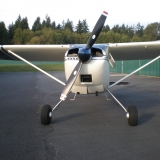
Cessna Skywagon -- accept no substitute!
Sun Nov 11, 2012 8:36 pm
Re: Stampede Pass AWOS - possible closure
hotrod150 wrote:While I don't want to see the Stampede Pass AWOS go away, do you really think one at Snoqualmie Pass wouldn't be as good? When I cross the Cascades in that area, I have always used Snoqualmie & have never used Stampede. Of course, I'm coming from the north sound area so I-90 & Snoqualmie Pass is usually a direct route for me. People in the south end of Seattle use it a lot I guess, more of a direct route to Auburn Crest etc.
Tell you the truth, I've looked for Stampede when coming back home northwest-bound along I-90 & haven't ever spotted where to turn due west. I guess there's a powerline marking the turn?
For me coming from the SW Stampede Pass is more direct then Snoqualmie. I think the biggest benefit to keeping the AWOS at Stampede is that the current location is at a higher elevation then Snoqualmie and the weather there is more representative of the rest of the Cascades. In my limited experience the weather over Snoqualmie always was a little different due to the lower elevation.
- fern_hopper offline
- Posts: 503
- Joined: Wed May 07, 2008 4:42 pm
- Location: Wahkiakum County
Sun Nov 11, 2012 8:43 pm
Re: Stampede Pass AWOS - possible closure
Splitting the traffic through 2 passes in the mid Cascades is SAFER, particularly when ceilings are tight. Stampede Pass pictures and recordings give the confidence to us pilots to use that route in marginal weather.
More head-on traffic in one pass will obviously be more dangerous.
lc
More head-on traffic in one pass will obviously be more dangerous.
lc
Humor may not make the world go around, but it certainly cheers up the process...
With clothing, the opposite of NOMEX is polypro (polypropylene cloth and fleece).
Success has many fathers...... Failure is an orphan.
With clothing, the opposite of NOMEX is polypro (polypropylene cloth and fleece).
Success has many fathers...... Failure is an orphan.
Tue Nov 13, 2012 10:34 am
Re: Stampede Pass AWOS - possible closure
I wish some of our Colorado AWOS stations would get repaired. Many of them have been out of service for years due to a big storm and their remote location.
- mountainmatt offline

- Posts: 2803
- Joined: Sat Apr 11, 2009 2:43 pm
- Location: Colorful Colorado
FlyingPoochProductions
FlyColorado.org
FlyColorado.org
Tue Nov 13, 2012 11:03 am
Re: Stampede Pass AWOS - possible closure
mountainmatt wrote:I wish some of our Colorado AWOS stations would get repaired. Many of them have been out of service for years due to a big storm and their remote location.
+1
Berthoud Pass being the most important (to me). It's not that remote up there - you can drive to the pass and walk up to the station. I can only imagine there is a budget problem or lack of motivation to fix it. I sent an email to CDOT asking - and got no response. Another winter is here - not likely to get fixed now I imagine.
I think the more mountain AWOS the better. I don't think it will significantly affect traffic patterns whether they are active or not but I do agree firmly that having access to the conditions improves safety.
- soyAnarchisto offline


- Posts: 1975
- Joined: Fri Aug 19, 2011 1:23 pm
- Location: Boulder, CO
- Aircraft: 1955 Cessna 180
Tue Nov 13, 2012 9:10 pm
Re: Stampede Pass AWOS - possible closure
http://www.lepore.ca/aerobatics/stamp6.pdf
Made it through on this route times when I've felt like a fly banging on a window. Stevens, nope. Snoquolmie, nope. Stampede had the power lines up into cloud but this little dogleg just south of it let me through. Homeboys gave me a hard time for taking so long to figure it out - seems common local knowledge.
Frankly I could give a rat's about the AWOS. Wx changes too fast, it's local and you'll get through on another route nearby. What I really want is webcams on the mountain passes giving me real time. Try call up FSS and ask them to bring up a couple webcams - sorry, can't do that. Then you're no good to me.
Made it through on this route times when I've felt like a fly banging on a window. Stevens, nope. Snoquolmie, nope. Stampede had the power lines up into cloud but this little dogleg just south of it let me through. Homeboys gave me a hard time for taking so long to figure it out - seems common local knowledge.
Frankly I could give a rat's about the AWOS. Wx changes too fast, it's local and you'll get through on another route nearby. What I really want is webcams on the mountain passes giving me real time. Try call up FSS and ask them to bring up a couple webcams - sorry, can't do that. Then you're no good to me.
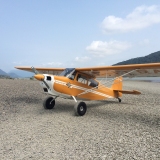
'74 7GCBC, 26" ABW, Aera 660 feeding G5 and FC-10 FF.
Tue Nov 13, 2012 10:50 pm
Re: Stampede Pass AWOS - possible closure
AWOS around here are updated every minute - don't get much more real-time than that. They are uploaded to METAR every hour for offline reporting but broadcast over the radio real time. This includes the mountain AWOS stations I believe.
- soyAnarchisto offline
- Posts: 1975
- Joined: Fri Aug 19, 2011 1:23 pm
- Location: Boulder, CO
- Aircraft: 1955 Cessna 180
DISPLAY OPTIONS
Who is online
Users browsing this forum: No registered users and 2 guests
Latest Features
-
Live to Tell
A Minnesota pilot is surprised to learn that the sudden asymmetric drag of an out-of-rig ski can…Read More -
Creators
Working in some of the Yukon's most beautiful and remote environments, photographer Simon Blakesley captures aircraft in…Read More -
Aircraft Ownership and Maintenance
Upgrading to big tires can make a huge difference in backcountry performance, but with those gains come…Read More -
Tales from Yesteryear
In this tale from bush flying yesteryear, Don Cogger signs up to help Atlee Dodge Jr recovery…Read More


Latest Knowledge Base
-
Destinations
A regional guide with ideas for winter camping destinations in California, Nevada, New Mexico, and Arizona.Read More -
Aircraft
Finding an affordable aircraft that can handle the backcountry for $80K or less? A challenge for sure, but with the…Read More -
Aircraft
01.29.2018 - Zane - Updated tire diameter graphic to add 8.50x10 Guide to tires for use in the backcountry and off-airport landing…Read More -
Pilots
12.22.2013 - Initial article format Operating aircraft on skis and negotiating a snow-covered landscape is an entirely unique skillset and environment.…Read More


