In 1963 at Jefferson County Airport in Denver Ken Hoffman soloed me in a Kensair 90 hp SuperCub that had been ground looped seven times. No, the insurance company didn't own it each time. Whether partly or completely destroyed, it was rebuilt by Kensair. Labor was cheap, every A&P knew tube and fabric which also was cheap, and liability insurance was sufficient. With this economic background, Ken still was able to solo me quickly in six hours because he was comfortable letting me learn by doing.
I am a dinosaur. I still believe the student is more important than the airplane even though the cost of fabric work is much more expensive, even when inflation is factored in.
We instructors don't always tell you that at the time we take the controls we are making a static reactive correction to a ground loop in progress. That means we can stop the rotation but that we cannot go back to runway heading. Doing so would cause a ground loop in the opposite direction. That means that we are going to bump into or over whatever is out there. That means, if we are too fast, there is going to be damage.
This traumatic learning curve is less so if it happens in an ugly airplane. At the risk of being unethical, ugly airplanes can be insured for nearly the same hull value as pretty airplanes because of the price of repairs.
Finally, in the light of such high repair costs and such long down times today, there is the more common solution: the instructor stays dynamic/proactive on the controls. This generally, but not always, saves the airplane from damage. This also makes learning by watching take a long time.
As instructors, we should let the student know all this before beginning training.
Static reactive/old instructors/TW dogs
Sun Jun 26, 2016 9:33 am
- contactflying offline
- Posts: 4972
- Joined: Wed Apr 03, 2013 7:36 pm
- Location: Aurora, Missouri 2H2
Download my free "https://tinyurl.com/Safe-Maneuvering" e-book.
Sun Jun 26, 2016 10:21 am
Re: Static reactive/old instructors/TW dogs
My primary shared your philosophy. By the Grace, WE never bent any metal, but he did with others. He would be half- asleep knuckle deep in nostril maintenance, but held a sixth-sense to wake up and pull the finger out at just the right moment.
Sun Jun 26, 2016 10:25 am
Re: Static reactive/old instructors/TW dogs
Zombie method of being spring loaded to the on.
- contactflying offline
- Posts: 4972
- Joined: Wed Apr 03, 2013 7:36 pm
- Location: Aurora, Missouri 2H2
Download my free "https://tinyurl.com/Safe-Maneuvering" e-book.

Sun Jun 26, 2016 11:15 am
Re: Static reactive/old instructors/TW dogs
contactflying wrote:In 1963 at Jefferson County Airport in Denver Ken Hoffman soloed me in a Kensair 90 hp SuperCub that had been ground looped seven times. No, the insurance company didn't own it each time. Whether partly or completely destroyed, it was rebuilt by Kensair. Labor was cheap, every A&P knew tube and fabric which also was cheap, and liability insurance was sufficient. With this economic background, Ken still was able to solo me quickly in six hours because he was comfortable letting me learn by doing.
I am a dinosaur. I still believe the student is more important than the airplane even though the cost of fabric work is much more expensive, even when inflation is factored in.
We instructors don't always tell you that at the time we take the controls we are making a static reactive correction to a ground loop in progress. That means we can stop the rotation but that we cannot go back to runway heading. Doing so would cause a ground loop in the opposite direction. That means that we are going to bump into or over whatever is out there. That means, if we are too fast, there is going to be damage.
This traumatic learning curve is less so if it happens in an ugly airplane. At the risk of being unethical, ugly airplanes can be insured for nearly the same hull value as pretty airplanes because of the price of repairs.
Finally, in the light of such high repair costs and such long down times today, there is the more common solution: the instructor stays dynamic/proactive on the controls. This generally, but not always, saves the airplane from damage. This also makes learning by watching take a long time.
As instructors, we should let the student know all this before beginning training.
Which also explains why Cubs, Champs, 140/170 Cessnas, etc make such great trainers. The period of time between it becoming apparent to the instructor that something undesirable is about to happen and the point in time where intervention cannot fix the problem is relatively long in these slow, basic airplanes.
It also explains why checking out a pilot with no prior tailwheel experience in a Cessna 185, a Pitts, etc is difficult and sometimes more exciting than desired. Things happen faster, and the instructor has less time to wait and allow the student to recognize the problem and initiate the fix. As a result, the student may feel like the instructor is "on the controls" all the time......which may in fact be the case.
The instructor, on the other hand, may be wondering what a repair job on those wings or a new gearbox will cost.
This also explains why MOST relatively low time tailwheel types aren't the best tailwheel instructors. Not that the high timer is more courageous, or even that he's a better stick. Rather it's because he has a better handle on just how far he can let the student get crossed up before it can't be fixed, hence he stays off the controls more and gives the student time to recognize the problem himself.
If the instructor won't give the student time to recognize the start of a swerve, or ??? the student will quickly become discouraged and will take forever to get up to speed.
Choose your instructor well, and hang on to the good ones.
MTV


Sun Jun 26, 2016 11:18 am
Re: Static reactive/old instructors/TW dogs
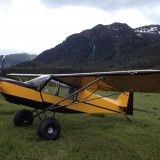
That's a great picture Zane. You are an artist with a camera.
- contactflying offline
- Posts: 4972
- Joined: Wed Apr 03, 2013 7:36 pm
- Location: Aurora, Missouri 2H2
Download my free "https://tinyurl.com/Safe-Maneuvering" e-book.
Sun Jun 26, 2016 1:46 pm
Re: Static reactive/old instructors/TW dogs
contactflying wrote:That's a great picture Zane. You are an artist with a camera.
Thanks, but it's just a photo I found in Google image search. Hopefully the photographer won't mind.
I'm just poking fun.
http://www.nbc.com/saturday-night-live/ ... ies/n10165
- Zzz offline


- Posts: 2855
- Joined: Fri Oct 08, 2004 11:09 pm
- Location: northern
- Aircraft: Swiveling desk chair
Half a century spent proving “it is better to be thought a fool than to open your mouth and remove all doubt.”
Sun Jun 26, 2016 2:40 pm
Re: Static reactive/old instructors/TW dogs
Kind of a catch 22 now. Many of the airplanes that are great for training are either gone or cost prohibitive. The super cub I learned in would be an 85k airplane now, not many guys near retirement willing to take that risk in today's environment.
While maybe not ideal, planes like a pacer or a wood wing 7eca may be the only ones left that fit the cost/risk equation. Lastly, like MTV pointed out though....an instructor has to have enough confidence to give the student "enough rope." Easier said than done in a plane like a pacer.
Bill
While maybe not ideal, planes like a pacer or a wood wing 7eca may be the only ones left that fit the cost/risk equation. Lastly, like MTV pointed out though....an instructor has to have enough confidence to give the student "enough rope." Easier said than done in a plane like a pacer.
Bill
- fiftynineSC offline
- Posts: 390
- Joined: Mon Dec 07, 2009 11:41 am
- Location: Frisco
- Aircraft: Cessna 185F
Sun Jun 26, 2016 3:59 pm
Re: Static reactive/old instructors/TW dogs
The light, low powered airplanes are good because you can land slow enough that no damage occurs after just a short roll. CallAir is a great single seat Ag trainer because of the very wide gear.
- contactflying offline
- Posts: 4972
- Joined: Wed Apr 03, 2013 7:36 pm
- Location: Aurora, Missouri 2H2
Download my free "https://tinyurl.com/Safe-Maneuvering" e-book.
Sun Jun 26, 2016 10:32 pm
Re: Static reactive/old instructors/TW dogs
I was born in 1963, not too far from Jefferson Country Airport. The very first introduction to GA happened at that airport for me when my dad took me to see a Colt a friend of his was rebuilding. I was probably about 10 or so and was completely amazed that it would be possible to disasemble and then reassemble such a complex machine!  Even after becoming an A&P airplanes still amaze me.
I wish you had been with me this winter Jim when I landed my 170 for the first time on my airstrip I finally had finished. I had very little tailwheel time, very little of it in a 170 and had just a handful of landings on skis. The wind was blowing and gusting pretty good and I probably should have done things a little different but lessons need to be learned the hard way sometimes.
Here is my version of "Contact Flying"
https://www.youtube.com/watch?v=ZHzOBXhLgYY
Even after becoming an A&P airplanes still amaze me.I wish you had been with me this winter Jim when I landed my 170 for the first time on my airstrip I finally had finished. I had very little tailwheel time, very little of it in a 170 and had just a handful of landings on skis. The wind was blowing and gusting pretty good and I probably should have done things a little different but lessons need to be learned the hard way sometimes.
Here is my version of "Contact Flying"
https://www.youtube.com/watch?v=ZHzOBXhLgYY

Mon Jun 27, 2016 8:56 am
Re: Static reactive/old instructors/TW dogs
SkyLarkin,
Good slow approach, which helped. The way to deal with wind is good throttle and rudder usage. The slope down seemed well maintained, which mean the throttle usage was good. The wing wagging could have been mostly just wind. The aileron, however, except to bank into any crosswind, will mess with your longitudinal alignment. Use rudder only to maintain longitudinal alignment. Use aileron to hold the wing level or bank into the wind and then leave it alone.
A good drill is to get off and into low ground effect and then move the airplane to the left side of the runway with rudder while holding the wing level with aileron. Next move the airplane to the right side of the runway with rudder while holding the wing level with aileron. Repeat as many time as safe down the runway before climbing out.
Like the side slip into the crosswind, this is a rub your tummy while patting your head drill as opposed to a coordination drill like Dutch Rolls. When strong gusting winds are straight down the runway or in no wind conditions, pilots make the most longitudinal alignment errors: they try to fly the airplane down the centerline with coordinated aileron and rudder.
Also be sure the imagined centerline is between your legs. Hard to do in snow, but you have to put it there with your mind and then keep it between your legs with rudder.
Good job, keep flying,
Jim
Good slow approach, which helped. The way to deal with wind is good throttle and rudder usage. The slope down seemed well maintained, which mean the throttle usage was good. The wing wagging could have been mostly just wind. The aileron, however, except to bank into any crosswind, will mess with your longitudinal alignment. Use rudder only to maintain longitudinal alignment. Use aileron to hold the wing level or bank into the wind and then leave it alone.
A good drill is to get off and into low ground effect and then move the airplane to the left side of the runway with rudder while holding the wing level with aileron. Next move the airplane to the right side of the runway with rudder while holding the wing level with aileron. Repeat as many time as safe down the runway before climbing out.
Like the side slip into the crosswind, this is a rub your tummy while patting your head drill as opposed to a coordination drill like Dutch Rolls. When strong gusting winds are straight down the runway or in no wind conditions, pilots make the most longitudinal alignment errors: they try to fly the airplane down the centerline with coordinated aileron and rudder.
Also be sure the imagined centerline is between your legs. Hard to do in snow, but you have to put it there with your mind and then keep it between your legs with rudder.
Good job, keep flying,
Jim
- contactflying offline
- Posts: 4972
- Joined: Wed Apr 03, 2013 7:36 pm
- Location: Aurora, Missouri 2H2
Download my free "https://tinyurl.com/Safe-Maneuvering" e-book.
Sat Aug 27, 2016 12:39 pm
Re: Static reactive/old instructors/TW dogs
mtv wrote:
Which also explains why Cubs, Champs, 140/170 Cessnas, etc make such great trainers. The period of time between it becoming apparent to the instructor that something undesirable is about to happen and the point in time where intervention cannot fix the problem is relatively long in these slow, basic airplanes.
It also explains why checking out a pilot with no prior tailwheel experience in a Cessna 185, a Pitts, etc is difficult and sometimes more exciting than desired. Things happen faster, and the instructor has less time to wait and allow the student to recognize the problem and initiate the fix. As a result, the student may feel like the instructor is "on the controls" all the time......which may in fact be the case.
The instructor, on the other hand, may be wondering what a repair job on those wings or a new gearbox will cost.
This also explains why MOST relatively low time tailwheel types aren't the best tailwheel instructors. Not that the high timer is more courageous, or even that he's a better stick. Rather it's because he has a better handle on just how far he can let the student get crossed up before it can't be fixed, hence he stays off the controls more and gives the student time to recognize the problem himself.
If the instructor won't give the student time to recognize the start of a swerve, or ??? the student will quickly become discouraged and will take forever to get up to speed.
Choose your instructor well, and hang on to the good ones.
MTV
YES!
I love teaching in a Stearman....you can let the thing get almost sideways, let the student fight it for awhile, then finally rescue things. In a T6...not so much. So much mass that by the time it gets started, if you haven’t already started to correct, it’s gone.
It’s knowing how far you can let it go, before you take it, and letting the student develop the “muscle memory”....if you grab it too soon, they never get it.
I teach anyone I care about (kids, etc.) in the slowest thing I can find...cub, champ, etc., for all the reasons you said.
SB
- Southern Boy offline
- Posts: 92
- Joined: Wed Jun 29, 2011 6:11 am
- Location: Locust Grove
- Aircraft: L-19
T-6
DISPLAY OPTIONS
Who is online
Users browsing this forum: No registered users and 4 guests
Latest Features
-
Live to Tell
A Minnesota pilot is surprised to learn that the sudden asymmetric drag of an out-of-rig ski can…Read More -
Creators
Working in some of the Yukon's most beautiful and remote environments, photographer Simon Blakesley captures aircraft in…Read More -
Aircraft Ownership and Maintenance
Upgrading to big tires can make a huge difference in backcountry performance, but with those gains come…Read More -
Tales from Yesteryear
In this tale from bush flying yesteryear, Don Cogger signs up to help Atlee Dodge Jr recovery…Read More


Latest Knowledge Base
-
Destinations
A regional guide with ideas for winter camping destinations in California, Nevada, New Mexico, and Arizona.Read More -
Aircraft
Finding an affordable aircraft that can handle the backcountry for $80K or less? A challenge for sure, but with the…Read More -
Aircraft
01.29.2018 - Zane - Updated tire diameter graphic to add 8.50x10 Guide to tires for use in the backcountry and off-airport landing…Read More -
Pilots
12.22.2013 - Initial article format Operating aircraft on skis and negotiating a snow-covered landscape is an entirely unique skillset and environment.…Read More


