Strut cuff
Thu Jun 25, 2015 10:36 pm
Strut cuff
See lots of older 180s w/out strut cuffs. A friend of mine had to remove them on one side to do a small little fix. Guess he flew it around n said in now flew almost a full bubble out. Put them back on (actually the new split version) n bubble back to the center. Can't say how much it is in actual seed, but betting its measureable. Thought id sthrow that out there if anyone would care to trade a little weight for speed
- SKYLANEDAVE offline
- Posts: 38
- Joined: Thu Jan 29, 2015 9:22 am
- Location: Yuba City
- Aircraft: Cessna 182A
Thu Jun 25, 2015 11:17 pm
Re: Strut cuff
Good tip Dave - I am repainting mine tomorrow! 

Fri Jun 26, 2015 6:35 am
Re: Strut cuff
SKYLANEDAVE wrote:...A friend of mine... flew it around n said in now flew almost a full bubble out. Put them back on (actually the new split version) n bubble back to the center.
Sorry... but I call BS.
- Bigrenna offline


- Posts: 2358
- Joined: Sun Sep 25, 2011 4:02 pm
- Location: New England
- Aircraft: C180H / C170B
www.bushwagoneast.com
Fri Jun 26, 2015 8:50 am
Re: Strut cuff
I'm not so sure that he isn't correct Mr. Hren. There appears to be the possibility of some drag associated with the cuff and how it attaches.

Further flight tests might be needed to know for sure.
Further flight tests might be needed to know for sure.
Fri Jun 26, 2015 9:33 am
Re: Strut cuff
akgreg wrote:I'm not so sure that he isn't correct Mr. Hren. There appears to be the possibility of some drag associated with the cuff and how it attaches.
Further flight tests might be needed to know for sure.
HA
Thanks, now I need to find a towel and clean the coffee from my keyboard!!
- Easy Riser offline
- Posts: 78
- Joined: Sat Oct 04, 2014 5:39 am
- Location: Selman
- Aircraft: Rans S7
'67 Cessna 180 the African Queen
Fri Jun 26, 2015 9:44 am
Re: Strut cuff
My 1953 model 180 doesn't have strut cuffs, at the wing end or at the fuselage end. A guy at my airport just replaced the cuffs on his 180, and gave me his old ones which are actually in pretty good shape. I'm not convinced they would make a helluva lot of different on airspeed or fuel burn. Also don't think they add much to the looks- esp since the white cuffs don't match my off-white airplane. In any event, installing those cuffs is not very high at all on my to-do list. In fact, I'd be tempted to sell 'em if someone wanted to buy 'em.
Cessna Skywagon -- accept no substitute!
Fri Jun 26, 2015 10:04 am
Re: Strut cuff
I don't find them particularly attractive either, will also add that the plane didn't have the standard strut seals n no doubt that caused more than normal drag. No idea what it relates to speed wise, but It was almost a full bubble, at sixty all the way to one fortyfive. By know means definitive, but absolutely true in this case. YMMV
- SKYLANEDAVE offline
- Posts: 38
- Joined: Thu Jan 29, 2015 9:22 am
- Location: Yuba City
- Aircraft: Cessna 182A
Fri Jun 26, 2015 10:17 am
Re: Strut cuff
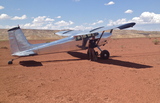
Just replaced mine n like the way they look. These are the Stene split cuffs, fine product!

Fri Jun 26, 2015 2:00 pm
Re: Strut cuff
SKYLANEDAVE wrote:I don't find them particularly attractive either, will also add that the plane didn't have the standard strut seals n no doubt that caused more than normal drag. No idea what it relates to speed wise, but It was almost a full bubble, at sixty all the way to one fortyfive. By know means definitive, but absolutely true in this case. YMMV
I'm with bigrenna on this one. Tell him to check his rudder trim

- Jeredp offline
- Posts: 625
- Joined: Fri Apr 20, 2012 10:31 am
- Location: WA
- FindMeSpot URL: http://share.findmespot.com/shared/face ... 7NYN40QT2I
- Aircraft: Cessna 172
Fri Jun 26, 2015 7:54 pm
Re: Strut cuff
Actually guys, as ridiculous as it sounds, there is a scientific explanation to the anomaly of aircraft adverse yaw when a strut cuff is removed from one side of the plane but not the other. It is called the Coriolis effect.
Although the general public most associates the Coriolis effect with snipers, thanks to the movie “Shooter”, those of us who hunt are even more aware of the Coriolis effect. Before I go on I know there are some who grew up in a cave that are asking “What the hell is the Coriolis effect?”.
Google defines it as “an effect whereby a mass moving in a rotating system experiences a force (the Coriolis effect) acting perpendicular to the direction of motion and to the axis of rotation. On the earth, the effect tends to deflect moving objects to the right in the northern hemisphere and to the left in the southern and is important in the formation of cyclonic weather systems.”
By coincidence I’m currently writing a paper for the Scientific Aircraft Physics Society where I postulate that in addition to the well accepted definition I’ve listed above, there is also a much simpler phenomenon at play here. It was as a hunter that I first experienced this new phenomenon that I believe is actually an extension of the Coriolis effect. I have encountered this experience for many years so have ample scientific evidence to back up my hypothesis.
I’ve hunted both north and south of the equator so have been able to prove this beyond any reasonable doubt. Let me give you an example from both hemispheres. On a hunt years ago right here in Texas, in the northern hemisphere, I took a shot at a mouflon sheep at just 50 yards. I fully expected to hit the animal but much to my surprise I missed to the right. A quick check of my ballistic tables told me there was no way the Coriolis effect, as currently defined by the scientific community, could have had that big a role at such close yardage. I was, to say the least, puzzled.
A year or so later found myself hunting in the Southern Hemisphere, in Argentina actually, with a good friend who took a hundred yard shot at a Red Stag and missed, to the left. Again I checked my ballistic tables, and knowing what an excellent shot my friend is, because he told me so, he couldn’t have missed unless some external force was at play. You guessed it, the Coriolis effect. But again it just didn’t make sense that this alone could have that big an impact at only 100 yards. Clearly some further scientific study was called for. Then it came to me in a moment of brilliant stupification. Not only was the bullet’s trajectory being altered by the Coriolis effect, but, in both these cases, the turning of the earth was moving the animal the opposite direction of the bullets altered path! A clear and plausible explanation of the missed shots!
“So what does this have to do with an airplane’s cuff removal causing adverse yaw?” you ask. I was just getting to that. Again, in the northern hemisphere, an object moving through the air will be deflected to the right by the Coriolis effect. We’ve been taught to attribute this drift to a wind factor, and in point of truth that sometimes is the overriding cause. SkylaneDave was unaware of this but his friend removed the right side cuff, thereby increasing drag on the right side strut which caused an almost imperceptible yaw to the right. However, combined with the Coriolis effect the effect was doubled which manifested itself by the pilot being a full bubble out. Oops, sorry, Freudian slip, the airplane was a full bubble out.
This event is rarely experienced by bush pilots as they generally fly in or near ground effect where the atmosphere, when in close proximity to the surface of the earth, experiences a drag coefficient of sufficient magnitude that it counters the Coriolis effect. Easy to accomplish since the airplane is not in contact with the earth so is not rotating with the earth. I should note here that taildragger Ground Loops, which have long been thought to be the result of inattentiveness on the pilots part, are actually triggered by the Coriolis effect in conjunction with the turning of the earth. This explanation is further proved out by the nose draggers inability to land straight.
P-factor of course plays a role in all of this but I don’t really have time to go into that now.
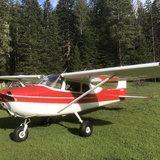
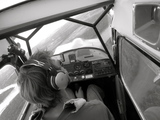
Fortunately for all of us there is a brilliant ornithologist, who also fancies himself an aircraft designer, who realized that birds don’t seem to be affected by this phenomenon. After years of dedicated research and experimentation in an undisclosed location, and a couple of minutes in a makeshift wind tunnel, he has come upon a solution for a problem that never really existed. One of my operatives, at great risk to bodily harm for himself and his family, managed to take photographs of the prototype just today. I don’t believe that to be coincidental, do you?
Through tremendous generosity and selflessness, I unveil to you, here, now, these pictures. (Nobel Peace Prize?)


Although the general public most associates the Coriolis effect with snipers, thanks to the movie “Shooter”, those of us who hunt are even more aware of the Coriolis effect. Before I go on I know there are some who grew up in a cave that are asking “What the hell is the Coriolis effect?”.
Google defines it as “an effect whereby a mass moving in a rotating system experiences a force (the Coriolis effect) acting perpendicular to the direction of motion and to the axis of rotation. On the earth, the effect tends to deflect moving objects to the right in the northern hemisphere and to the left in the southern and is important in the formation of cyclonic weather systems.”
By coincidence I’m currently writing a paper for the Scientific Aircraft Physics Society where I postulate that in addition to the well accepted definition I’ve listed above, there is also a much simpler phenomenon at play here. It was as a hunter that I first experienced this new phenomenon that I believe is actually an extension of the Coriolis effect. I have encountered this experience for many years so have ample scientific evidence to back up my hypothesis.
I’ve hunted both north and south of the equator so have been able to prove this beyond any reasonable doubt. Let me give you an example from both hemispheres. On a hunt years ago right here in Texas, in the northern hemisphere, I took a shot at a mouflon sheep at just 50 yards. I fully expected to hit the animal but much to my surprise I missed to the right. A quick check of my ballistic tables told me there was no way the Coriolis effect, as currently defined by the scientific community, could have had that big a role at such close yardage. I was, to say the least, puzzled.
A year or so later found myself hunting in the Southern Hemisphere, in Argentina actually, with a good friend who took a hundred yard shot at a Red Stag and missed, to the left. Again I checked my ballistic tables, and knowing what an excellent shot my friend is, because he told me so, he couldn’t have missed unless some external force was at play. You guessed it, the Coriolis effect. But again it just didn’t make sense that this alone could have that big an impact at only 100 yards. Clearly some further scientific study was called for. Then it came to me in a moment of brilliant stupification. Not only was the bullet’s trajectory being altered by the Coriolis effect, but, in both these cases, the turning of the earth was moving the animal the opposite direction of the bullets altered path! A clear and plausible explanation of the missed shots!
“So what does this have to do with an airplane’s cuff removal causing adverse yaw?” you ask. I was just getting to that. Again, in the northern hemisphere, an object moving through the air will be deflected to the right by the Coriolis effect. We’ve been taught to attribute this drift to a wind factor, and in point of truth that sometimes is the overriding cause. SkylaneDave was unaware of this but his friend removed the right side cuff, thereby increasing drag on the right side strut which caused an almost imperceptible yaw to the right. However, combined with the Coriolis effect the effect was doubled which manifested itself by the pilot being a full bubble out. Oops, sorry, Freudian slip, the airplane was a full bubble out.
This event is rarely experienced by bush pilots as they generally fly in or near ground effect where the atmosphere, when in close proximity to the surface of the earth, experiences a drag coefficient of sufficient magnitude that it counters the Coriolis effect. Easy to accomplish since the airplane is not in contact with the earth so is not rotating with the earth. I should note here that taildragger Ground Loops, which have long been thought to be the result of inattentiveness on the pilots part, are actually triggered by the Coriolis effect in conjunction with the turning of the earth. This explanation is further proved out by the nose draggers inability to land straight.
P-factor of course plays a role in all of this but I don’t really have time to go into that now.
Fortunately for all of us there is a brilliant ornithologist, who also fancies himself an aircraft designer, who realized that birds don’t seem to be affected by this phenomenon. After years of dedicated research and experimentation in an undisclosed location, and a couple of minutes in a makeshift wind tunnel, he has come upon a solution for a problem that never really existed. One of my operatives, at great risk to bodily harm for himself and his family, managed to take photographs of the prototype just today. I don’t believe that to be coincidental, do you?
Through tremendous generosity and selflessness, I unveil to you, here, now, these pictures. (Nobel Peace Prize?)
- Barnstormer offline
- Posts: 2700
- Joined: Sun Oct 14, 2012 7:42 am
- Location: Alaska
- Aircraft: C185
Fri Jun 26, 2015 8:17 pm
Re: Strut cuff
Barnstormer wrote:Actually guys, as ridiculous as it sounds, there is a scientific explanation to the anomaly of aircraft adverse yaw when a strut cuff is removed from one side of the plane but not the other. It is called the Coriolis effect.
Although the general public most associates the Coriolis effect with snipers, thanks to the movie “Shooter”, those of us who hunt are even more aware of the Coriolis effect. Before I go on I know there are some who grew up in a cave that are asking “What the hell is the Coriolis effect?”.
Google defines it as “an effect whereby a mass moving in a rotating system experiences a force (the Coriolis effect) acting perpendicular to the direction of motion and to the axis of rotation. On the earth, the effect tends to deflect moving objects to the right in the northern hemisphere and to the left in the southern and is important in the formation of cyclonic weather systems.”
By coincidence I’m currently writing a paper for the Scientific Aircraft Physics Society where I postulate that in addition to the well accepted definition I’ve listed above, there is also a much simpler phenomenon at play here. It was as a hunter that I first experienced this new phenomenon that I believe is actually an extension of the Coriolis effect. I have encountered this experience for many years so have ample scientific evidence to back up my hypothesis.
I’ve hunted both north and south of the equator so have been able to prove this beyond any reasonable doubt. Let me give you an example from both hemispheres. On a hunt years ago right here in Texas, in the northern hemisphere, I took a shot at a mouflon sheep at just 50 yards. I fully expected to hit the animal but much to my surprise I missed to the right. A quick check of my ballistic tables told me there was no way the Coriolis effect, as currently defined by the scientific community, could have had that big a role at such close yardage. I was, to say the least, puzzled.
A year or so later found myself hunting in the Southern Hemisphere, in Argentina actually, with a good friend who took a hundred yard shot at a Red Stag and missed, to the left. Again I checked my ballistic tables, and knowing what an excellent shot my friend is, because he told me so, he couldn’t have missed unless some external force was at play. You guessed it, the Coriolis effect. But again it just didn’t make sense that this alone could have that big an impact at only 100 yards. Clearly some further scientific study was called for. Then it came to me in a moment of brilliant stupification. Not only was the bullet’s trajectory being altered by the Coriolis effect, but, in both these cases, the turning of the earth was moving the animal the opposite direction of the bullets altered path! A clear and plausible explanation of the missed shots!
“So what does this have to do with an airplane’s cuff removal causing adverse yaw?” you ask. I was just getting to that. Again, in the northern hemisphere, an object moving through the air will be deflected to the right by the Coriolis effect. We’ve been taught to attribute this drift to a wind factor, and in point of truth that sometimes is the overriding cause. SkylaneDave was unaware of this but his friend removed the right side cuff, thereby increasing drag on the right side strut which caused an almost imperceptible yaw to the right. However, combined with the Coriolis effect the effect was doubled which manifested itself by the pilot being a full bubble out. Oops, sorry, Freudian slip, the airplane was a full bubble out.
This event is rarely experienced by bush pilots as they generally fly in or near ground effect where the atmosphere, when in close proximity to the surface of the earth, experiences a drag coefficient of sufficient magnitude that it counters the Coriolis effect. Easy to accomplish since the airplane is not in contact with the earth so is not rotating with the earth. I should note here that taildragger Ground Loops, which have long been thought to be the result of inattentiveness on the pilots part, are actually triggered by the Coriolis effect in conjunction with the turning of the earth. This explanation is further proved out by the nose draggers inability to land straight.
P-factor of course plays a role in all of this but I don’t really have time to go into that now.
Fortunately for all of us there is a brilliant ornithologist, who also fancies himself an aircraft designer, who realized that birds don’t seem to be affected by this phenomenon. After years of dedicated research and experimentation in an undisclosed location, and a couple of minutes in a makeshift wind tunnel, he has come upon a solution for a problem that never really existed. One of my operatives, at great risk to bodily harm for himself and his family, managed to take photographs of the prototype just today. I don’t believe that to be coincidental, do you?
Through tremendous generosity and selflessness, I unveil to you, here, now, these pictures. (Nobel Peace Prize?)
Thank you for the very scientific explanation Phil!
Fri Jun 26, 2015 9:48 pm
Re: Strut cuff
LOL, and you guys thought I'd made it up!
- SKYLANEDAVE offline
- Posts: 38
- Joined: Thu Jan 29, 2015 9:22 am
- Location: Yuba City
- Aircraft: Cessna 182A
Fri Jun 26, 2015 10:07 pm
Re: Strut cuff
Barnstormer wrote:

I call bullshit!
 This poor allergic plane was obviously stung by a swarm of bees...
 - CapnMike offline

- Posts: 842
- Joined: Wed Mar 05, 2014 11:25 am
- Location: Kamas, Utah and Sandpoint, Idaho
"If my wings should fail me Lord, please meet me with another pair" - Led Zeppelin
"It's all going in my report..." - CapnMike
"It's all going in my report..." - CapnMike
Fri Jun 26, 2015 10:24 pm
Re: Strut cuff
Yup, thats an advanced case of wing cancer
- SkylaneSam offline
- Posts: 144
- Joined: Thu Oct 06, 2011 7:38 pm
- Location: Puget Sound & Idaho
Fri Jun 26, 2015 10:54 pm
Re: Strut cuff
So Mr. Barnstormer,
Do you also have to be a member of the Mensa Society in order to be one of the SAPS that you are writing the paper for? All of these big words makes my head hurt.
Do you also have to be a member of the Mensa Society in order to be one of the SAPS that you are writing the paper for? All of these big words makes my head hurt.
Sat Jun 27, 2015 7:40 am
Re: Strut cuff
I thought the only thing the coriolis effect did was determine which way the water in the toilet bowl swirled on it's way down.
Cessna Skywagon -- accept no substitute!
Sat Jun 27, 2015 7:41 am
Re: Strut cuff
Skalywag wrote:Just replaced mine n like the way they look. These are the Stene split cuffs, fine product!
You gonna polish them to match the airplane?

Cessna Skywagon -- accept no substitute!
Sun Jun 28, 2015 7:54 am
Re: Strut cuff
hotrod180 wrote:..... In fact, I'd be tempted to sell 'em if someone wanted to buy 'em.
Posted them for sale on the marketplace forum.
Cessna Skywagon -- accept no substitute!
DISPLAY OPTIONS
Who is online
Users browsing this forum: No registered users and 7 guests
Latest Features
-
-
Featured Bush Planes
As one of the undisputed legends of bush flying, the Cessna 180 hauls a…Read More -
Aircraft Ownership and Maintenance
9 modification mistakes aircraft owners make when trying to "bush out" their birds—why some…Read More -
Live to Tell
A Minnesota pilot is surprised to learn that the sudden asymmetric drag of an…Read More


Latest Knowledge Base
-
Destinations
Canada offers some of the most spectacular backcountry flying on the continent. Here's what you need to know before you go.Read More -
Safety and Survival
Hope that you never have to use your survival vest but knowing you have it and knowing how to use…Read More -
Destinations
A regional guide with ideas for winter camping destinations in California, Nevada, New Mexico, and Arizona.Read More -
Aircraft
Finding an affordable aircraft that can handle the backcountry for $80K or less? A challenge for sure, but with the…Read More