I too am looking for ampibs for my 180J.
I talked with PK and their 3000’s are not STC’d for the 180.
Talk floats with me (C-180)
Wed Aug 02, 2023 9:18 am
Wed Aug 02, 2023 11:42 am
Re: Talk floats with me (C-180)
Ive been happy with my 2790s, but I’m not filling all the seats, they also seem to preform well in the air
If I was going to put on a different float I’d go aerocets
If I was going to put on a different float I’d go aerocets
- NineThreeKilo offline
- Retired
- Posts: 1678
- Joined: Thu Dec 31, 2009 8:16 pm
- Location: _
Thu Aug 03, 2023 6:59 am
Re: Talk floats with me (C-180)
An old adage is appropriate here, "the definition of insanity is repeating the same process and expecting different results". Amphibious floats deteriorate the performance and load hauling capability of nearly every piston powered aircraft they are attached; to a level that one could argue it a safety issue. There, I said it. I can hear the sound of sucking chest wounds already. Instead of investing money in hungry amphibious floats (acquisition, maintenance and insurance), we went the route of having different aircraft for different specialty missions. This is a philosophy of having a special (and correct) tool for a specific task. Not appropriate for everyone but just another option which works great for us. Using this approach results in each aircraft maintaining its designed operating performance for which you most likely purchased it for in the first place.
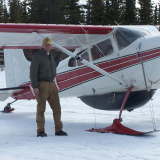
I bought my first set of skis for our 180 from Airglas in Anchorage back in 1994. Landes 3000's. When they came out with the Hydraulic GLH, I revisited them to "upgrade" to be able to push back into the hangar vice winching and rollers to get the 180 back inside when on the 3000's which was over half the year in North Pole, AK. I believe it was Wes who told me, "Unless you absolutely require them, don't do it", here he is selling these skis and his honesty, character and reasons ring true today. The performance degradation of employing amphibs on the 180 is more severe in comparison to the hydraulic wheel ski.
I was fortunate and blessed to fly the F-16 among other aircraft during my USAF career and no matter how much power an aircraft has, hang enough weight and add enough drag and they ALL lose capability, even the F-16. Bolt on initiatives adding weight and drag in an attempt to make an aircraft into something it is not typically result in disappointment with regard to performance. A lesson even the DOD often forgets. Another cliche' comes to mind; there is no free lunch.
I bought my first set of skis for our 180 from Airglas in Anchorage back in 1994. Landes 3000's. When they came out with the Hydraulic GLH, I revisited them to "upgrade" to be able to push back into the hangar vice winching and rollers to get the 180 back inside when on the 3000's which was over half the year in North Pole, AK. I believe it was Wes who told me, "Unless you absolutely require them, don't do it", here he is selling these skis and his honesty, character and reasons ring true today. The performance degradation of employing amphibs on the 180 is more severe in comparison to the hydraulic wheel ski.
I was fortunate and blessed to fly the F-16 among other aircraft during my USAF career and no matter how much power an aircraft has, hang enough weight and add enough drag and they ALL lose capability, even the F-16. Bolt on initiatives adding weight and drag in an attempt to make an aircraft into something it is not typically result in disappointment with regard to performance. A lesson even the DOD often forgets. Another cliche' comes to mind; there is no free lunch.
Thu Aug 03, 2023 8:45 am
Re: Talk floats with me (C-180)
TR wrote:Instead of investing money in hungry amphibious floats (acquisition, maintenance and insurance), we went the route of having different aircraft for different specialty missions.
I decided it was much cheaper to buy a house in a part of the country with ample water for straight floats.


Thu Aug 03, 2023 3:01 pm
Re: Talk floats with me (C-180)
Zzz wrote:TR wrote:Instead of investing money in hungry amphibious floats (acquisition, maintenance and insurance), we went the route of having different aircraft for different specialty missions.
I decided it was much cheaper to buy a house in a part of the country with ample water for straight floats.
That's ironic as we did the same. Another excellent option! There are usually many courses of action to solve a problem, another great reason for problem solving minded folks to contribute to the dialog on this site.
Fri Aug 04, 2023 7:44 am
Re: Talk floats with me (C-180)
Having amphibs for years, and also flying a amphib for a living for a while, the mission profile for the work plane as well as my personal plane could not be accomplished with straight floats
Plus
Being able to have the plane live in a hangar
Being able to land at a airport for maintenance
Being able to land at a airport for fuel
Being able to shoot an approach and land if the weather sucks
Maintenance wise my amphibs haven’t had any more issues than normal wheel stuff like tires and brakes on occasion, the weight is a factor but any plane could always weigh less, for me the limitations of straight floats limit me more then the extra weight of the amphibs
Just depends on the mission
Plus
Being able to have the plane live in a hangar
Being able to land at a airport for maintenance
Being able to land at a airport for fuel
Being able to shoot an approach and land if the weather sucks
Maintenance wise my amphibs haven’t had any more issues than normal wheel stuff like tires and brakes on occasion, the weight is a factor but any plane could always weigh less, for me the limitations of straight floats limit me more then the extra weight of the amphibs
Just depends on the mission
- NineThreeKilo offline
- Retired
- Posts: 1678
- Joined: Thu Dec 31, 2009 8:16 pm
- Location: _
DISPLAY OPTIONS
Who is online
Users browsing this forum: No registered users and 1 guest
Latest Features
-
-
Featured Bush Planes
As one of the undisputed legends of bush flying, the Cessna 180 hauls a…Read More -
Aircraft Ownership and Maintenance
9 modification mistakes aircraft owners make when trying to "bush out" their birds—why some…Read More -
Live to Tell
A Minnesota pilot is surprised to learn that the sudden asymmetric drag of an…Read More




Latest Knowledge Base
-
Destinations
Canada offers some of the most spectacular backcountry flying on the continent. Here's what you need to know before you go.Read More -
Safety and Survival
Hope that you never have to use your survival vest but knowing you have it and knowing how to use…Read More -
Destinations
A regional guide with ideas for winter camping destinations in California, Nevada, New Mexico, and Arizona.Read More -
Aircraft
Finding an affordable aircraft that can handle the backcountry for $80K or less? A challenge for sure, but with the…Read More



