I fly a C-150, and am still learning (about 50 hours). It's got a row of rivets down the center of the cowl. If I lean over into the center of the cockpit and look down that row it seems to me that it should be pointing right where I'm flying.
But...to make it do that I have to apply right rudder. No big deal, yaw is to be expected. The thing is, when I think I'm flying straight the ball is no longer in the middle. When the ball is in the middle it feels and looks like I'm crabbing.
Can this come from the rudder trim, is the turn coordinator out, or am I imagining the whole thing?
Turn Coordinator Question
Wed May 18, 2011 11:18 pm


Wed May 18, 2011 11:49 pm
Re: Turn Coordinator Question
I felt the same way in a 172 and would be interested in comments on this as well.

Thu May 19, 2011 10:12 am
Re: Turn Coordinator Question
If you look under the top cowl that line of rivets is probably holding an angle aluminum piece called a stiffener. Learn to keep the plane straight, center the ball, look out the windshield and reference the horizon and ignore the rivet line. If you center the ball and take your feet of the rudder pedals and the ball goes outside the lines than you've got either rigging or trim issues.
- Glidergeek offline

- Posts: 1937
- Joined: Sat Sep 06, 2008 8:02 pm
- Location: Hesperia
- Aircraft: 1968 P206C
DG 400
Thu May 19, 2011 2:05 pm
Re: Turn Coordinator Question
The ball doesn't lie....except in a spin.
MTV
MTV


Thu May 19, 2011 2:53 pm
Re: Turn Coordinator Question
My 150 does the same thing. Go up and reduce power and basically "coast" while loosing altitude and keeping the wings level and on the same heading. Feet off the pedals. The faster the better. The ball should be in the center in that attitude. On mine it is off a little to one side too. Maybe I am flawed in my thinking but it seems like if the plane has no prop wash and your going in a straight line the ball should be in the center. If it's not, the gauge is probably installed a little tilted or your plane is bent. Mine sits off to one side on the ground too. Guess I could fix it someday. Not a big deal, just keep the ball where you get the best speed.
- Jaerl offline
- Posts: 1423
- Joined: Mon Sep 01, 2008 4:59 am
- Location: Utah
- FindMeSpot URL: http://share.findmespot.com/shared/face ... Q0xkBgMvPi
Thu May 19, 2011 3:19 pm
Re: Turn Coordinator Question
Glidergeek:
Can the rudder trim tab be the culprit?
Can the rudder trim tab be the culprit?
Thu May 19, 2011 3:21 pm
Re: Turn Coordinator Question
Hey Rob, I checked out your galleries and looks like you have some beautiful country to fly in. What elevation are you flying out of. Looks like some pretty high peaks for a mighty 150/152 and not a lot of landing places. 
- Jaerl offline
- Posts: 1423
- Joined: Mon Sep 01, 2008 4:59 am
- Location: Utah
- FindMeSpot URL: http://share.findmespot.com/shared/face ... Q0xkBgMvPi
Thu May 19, 2011 4:54 pm
Re: Turn Coordinator Question
Take off from 11' ASL (CYPK). Around here the elevation goes straight up from the beach unless you're in the valley of the Fraser or Pitt Rivers. Lots of blueberry and cranberry fields for dry or wet forced landings. Mountains close by start at 2000 and then climb from there. Baker, just across the line in Wa. is about 13000' or so.
That said, most of the real estate in the coastal part of this province goes up and down. It's a great argument for floats!
On sunny days the scenery is awesome though.
That said, most of the real estate in the coastal part of this province goes up and down. It's a great argument for floats!
On sunny days the scenery is awesome though.
Thu May 19, 2011 7:33 pm
Re: Turn Coordinator Question
uncle_rob wrote:I fly a C-150, and am still learning (about 50 hours). It's got a row of rivets down the center of the cowl. If I lean over into the center of the cockpit and look down that row it seems to me that it should be pointing right where I'm flying.
But...to make it do that I have to apply right rudder. No big deal, yaw is to be expected. The thing is, when I think I'm flying straight the ball is no longer in the middle. When the ball is in the middle it feels and looks like I'm crabbing.
Can this come from the rudder trim, is the turn coordinator out, or am I imagining the whole thing?
Rob,
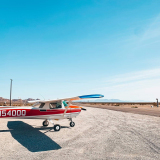
Nice little commuter you have there. I learned to fly between 2 C-150L 1972/1973. I had similar problems getting adjusted to different sight pictures because the seat height is not adjustable and between the 1972 and 1973 model the seat position changed. It's hard to tell from your description if it is a matter of perspective from your seat or if the aircraft is out of rig. Best probably to bring up to your flight instructor or aviation mentor. The row of rivets is a poor indicator of coordinated flight. Center the ball in level and mid power flight, on a no wind day or into the prevailing winds. You may find that the rudder trim tab needs adjusting. I would not recommend fooling with it, unless under the supervision of a A&P who knows how to rig an airplane well. If excess rudder is needed to center, then you may have a rigging problem. Despite what many may think. The C-150 needs a little rudder to keep the ball centered, but not heavy feet. Just a light pressure. I would scan the turn coordinator for the input needed for coordinated flight. I do think once you grow to know the feeling of coordinated flight, you will instinctively apply rudder pressure as needed. The horizon and relation to the cowling as well as other references will become natural markers for you. With 50 hours, it just is going to feel like things are clumsy and as you encounter different flight conditions outside flight training, you will develop your bond with the aircraft and have a better feel for what is right and what is out of the normal. unless you are staring out the side window, while flying straight ( crab ) you probably are over stating the issue and you will be just fine. Here is an old picture of mine, of the 72' L model, with rivet row down the cowling.

- lownslow79 offline
- Posts: 272
- Joined: Tue Jan 06, 2009 1:18 pm
- Location: Las Vegas
- FindMeSpot URL: www.share.garmin.com/brian79
- Aircraft: 72' Cessna 150L
Thu May 19, 2011 8:47 pm
Re: Turn Coordinator Question
Checking the TC to see if it's mounted level: check the airplane for level while parked with a 4' level across the top door jams, level it if necesary (jack up one side, shims/blocks under the wheels, or however), then check to see if the turn ball is centered. You can also check airplane for level by measuring wingtips height off the ground.
The ball should be centered in level cruise flight, will need right rudder for climbs & (maybe) left rudder for power-off descents. You can tweak the rudder trim tab as required until the ball behaves properly. You may end up with the ball centered but a crooked-flying airplane if there is another rigging problem causing the yaw.
The ball should be centered in level cruise flight, will need right rudder for climbs & (maybe) left rudder for power-off descents. You can tweak the rudder trim tab as required until the ball behaves properly. You may end up with the ball centered but a crooked-flying airplane if there is another rigging problem causing the yaw.

Cessna Skywagon -- accept no substitute!
Thu May 19, 2011 11:43 pm
Re: Turn Coordinator Question
hotrod150 wrote:Checking the TC to see if it's mounted level: check the airplane for level while parked with a 4' level across the top door jams, level it if necesary (jack up one side, shims/blocks under the wheels, or however), then check to see if the turn ball is centered. You can also check airplane for level by measuring wingtips height off the ground.
The ball should be centered in level cruise flight, will need right rudder for climbs & (maybe) left rudder for power-off descents. You can tweak the rudder trim tab as required until the ball behaves properly. You may end up with the ball centered but a crooked-flying airplane if there is another rigging problem causing the yaw.
Ya, what hotrod150 said above. Or you could let air out of the high side tire until level, like he said above, then measure at the tips to the ground and see if you've got a straight
 airplane. Find a mechanic that really knows rigging and check the cables to see if all is tight.
- Glidergeek offline
- Posts: 1937
- Joined: Sat Sep 06, 2008 8:02 pm
- Location: Hesperia
- Aircraft: 1968 P206C
DG 400
Fri May 20, 2011 4:19 am
Re: Turn Coordinator Question
The ideal way to make sure your airplane is flying straight is to do the power off glide test as mentioned by someone else. This is the old-school "free flight model airplane" method, and believe it or not it is by far the best method. When you complete this method, you can go from idle to full power and back four or five times and the airplane will keep going in a straight line.
Get about 5000 feet over your home airport, or some large abandoned military field, and shut the engine off completely, down to a stopped propeller. See if it glides straight. See if it glides wings level. See if it stalls straight with no power. For goodness sake use common sense when you do this, be someplace where you can land easily if you have trouble starting!
Then fix whatever has caused the airplane to not fly straight in a dead glide. Wing washout/twist (on double strut airplanes) or eccentric bushing on Cessnas and single strut airplanes. Control rigging. Little bent metal tab adjustments... Whatever.
Then verify you fixed it by making another glide test. Once the airplane glides straight, then it will be a fairly straightforward task to adjust the engine thrust line (up/down and right/left) to compensate for the torque and thrust issues.
Unfortunately, some airplane designers cheated and built in some offset in the vertical fin. That makes it so you will never get the airplane to fly straight at more than one speed/power setting. That completely renders the *correct) method I just mentioned ineffective. The Taylorcraft and I think the Cub has fin offset, I believe the Cessna does not.
Get about 5000 feet over your home airport, or some large abandoned military field, and shut the engine off completely, down to a stopped propeller. See if it glides straight. See if it glides wings level. See if it stalls straight with no power. For goodness sake use common sense when you do this, be someplace where you can land easily if you have trouble starting!
Then fix whatever has caused the airplane to not fly straight in a dead glide. Wing washout/twist (on double strut airplanes) or eccentric bushing on Cessnas and single strut airplanes. Control rigging. Little bent metal tab adjustments... Whatever.
Then verify you fixed it by making another glide test. Once the airplane glides straight, then it will be a fairly straightforward task to adjust the engine thrust line (up/down and right/left) to compensate for the torque and thrust issues.
Unfortunately, some airplane designers cheated and built in some offset in the vertical fin. That makes it so you will never get the airplane to fly straight at more than one speed/power setting. That completely renders the *correct) method I just mentioned ineffective. The Taylorcraft and I think the Cub has fin offset, I believe the Cessna does not.

.
Fri May 20, 2011 5:10 pm
Re: Turn Coordinator Question
uncle_rob wrote:I fly a C-150, and am still learning (about 50 hours). It's got a row of rivets down the center of the cowl. If I lean over into the center of the cockpit and look down that row it seems to me that it should be pointing right where I'm flying.
But...to make it do that I have to apply right rudder. No big deal, yaw is to be expected. The thing is, when I think I'm flying straight the ball is no longer in the middle. When the ball is in the middle it feels and looks like I'm crabbing.
Can this come from the rudder trim, is the turn coordinator out, or am I imagining the whole thing?
What that row of rivets.....
....is really good for is making perfect steep turns without ever once looking inside the airplane! I forget which seat one needs to be in for the proper turning perspective. Been a long time since I was an active flight instructor in C-150s. Any how turning one way in a 45 degree bank....keep the row of rivet right on the horizon. Turning the opposite way....keep the curve of the engine cowling right on the horizon. You won't gain or loose a foot.
It you sit in the other seat then the rivets and cowling reference are swapped for direction of turn. Seem to remember that it is the cowling going clockwise and the rivets going counterclockwise in the left seat. But not sure. One way or the other.
Try it. You will be amazed.
From the days before GPS, glass cockpits and magic stuff....when pilots were taught to fly by looking outside.
Bob
Living the Dream
Fri May 20, 2011 5:37 pm
Re: Turn Coordinator Question
Looking at the horizon and flying to a point in the distance is helpful. As mentioned sight picture is skewed since you are sitting off to the left. Landing a Tail draggar with side by side seats straight is a must or a Ground loop will happen. One tip I got was to place a piece of red tape down the dash & the out side cowl from your nose & or your crotch while sitting in the left seat as an sighting line. The middle of the prop rivets may be center but not when you are sitting to the left. As said the ball doesn't lie. Always count on your instruments. It is your perception that has to be trained. If you line up the red line that is now centered to you with a point on the horizon you will be straight! When landing line up the red line with the center line and the airplane will be straight.
I'd try this before cutting your engine then if all this fails it could be your rigging.
I'd try this before cutting your engine then if all this fails it could be your rigging.
Last edited by Green Hornet on Fri May 20, 2011 10:27 pm, edited 1 time in total.
- Green Hornet offline

- Posts: 527
- Joined: Tue Apr 08, 2008 1:47 pm
- Location: No Where Land, USA
AKA SOJORRN
1997 Maule-M7-235C
I am a leaf on the wind watch how I soar! Hoban "Wash" Washburne, Firefly/Serenity
WOC SPOT
1997 Maule-M7-235C
I am a leaf on the wind watch how I soar! Hoban "Wash" Washburne, Firefly/Serenity
WOC SPOT
Fri May 20, 2011 10:17 pm
Re: Turn Coordinator Question
Stand in front of the plane and see if the row of rivetts points to the vertical stabilizer.
Airspeed, Altitude, Brains. You need 2 of the 3!
The Oldtech
The Oldtech
Sat May 21, 2011 12:22 am
Re: Turn Coordinator Question
I really have to disagree with EZflap. It's not advisable to even suggest to a low time pilot to go and shut off the engine to try to get into a glide and troubleshoot the problem. It is either a perspective problem or a rigging problem. Both of which can be fixed and find solutions on the ground with the help of a experienced aviation mentor or flight instructor/A&P. On top of that, Wind and P-factor will have effects on any observations. The suggested methods have no have no logic, as applied to the fundamental aerodynamics of which this guys just learned and we all should be aware of.
The C-150 has the left wing mounted at a slightly higher angle than the right. also the rudder is slightly offset. The rudder tab is there to tweak and make adjustments to yaw. as yo can imagine a 30+ yr old C-150 is most likely not going to be a "straight" flying bird after years of abuse from students.
Get someone to help you troubleshoot the issue from the ground. If you find that it is the rigging or rudder tab, then thats the time you go and fly and make minor adjustments. Only after you have found that it is not a perspective problem from the low time student pilots point of view.
The C-150 has the left wing mounted at a slightly higher angle than the right. also the rudder is slightly offset. The rudder tab is there to tweak and make adjustments to yaw. as yo can imagine a 30+ yr old C-150 is most likely not going to be a "straight" flying bird after years of abuse from students.
Get someone to help you troubleshoot the issue from the ground. If you find that it is the rigging or rudder tab, then thats the time you go and fly and make minor adjustments. Only after you have found that it is not a perspective problem from the low time student pilots point of view.
- lownslow79 offline
- Posts: 272
- Joined: Tue Jan 06, 2009 1:18 pm
- Location: Las Vegas
- FindMeSpot URL: www.share.garmin.com/brian79
- Aircraft: 72' Cessna 150L
Sat May 21, 2011 11:00 am
Re: Turn Coordinator Question
lownslow79 wrote:I really have to disagree with EZflap. It's not advisable to even suggest to a low time pilot to go and shut off the engine to try to get into a glide and troubleshoot the problem. It is either a perspective problem or a rigging problem. Both of which can be fixed and find solutions on the ground with the help of a experienced aviation mentor or flight instructor/A&P. On top of that, Wind and P-factor will have effects on any observations. The suggested methods have no have no logic, as applied to the fundamental aerodynamics of which this guys just learned and we all should be aware of.
The C-150 has the left wing mounted at a slightly higher angle than the right. also the rudder is slightly offset. The rudder tab is there to tweak and make adjustments to yaw. as yo can imagine a 30+ yr old C-150 is most likely not going to be a "straight" flying bird after years of abuse from students.
Get someone to help you troubleshoot the issue from the ground. If you find that it is the rigging or rudder tab, then thats the time you go and fly and make minor adjustments. Only after you have found that it is not a perspective problem from the low time student pilots point of view.
I agree with the gliding test not being first thing to attempt for a low time pilot. Considering a low time pilot my bet is on perspective issue! When I transitioned from a Tandem seat Tail Dragger to a side by side I had a hell of a time with perspective in regards to straight. That is why I passed on the red tape suggestion. It worked for me and it is a quick simple guide to apply.
- Green Hornet offline
- Posts: 527
- Joined: Tue Apr 08, 2008 1:47 pm
- Location: No Where Land, USA
AKA SOJORRN
1997 Maule-M7-235C
I am a leaf on the wind watch how I soar! Hoban "Wash" Washburne, Firefly/Serenity
WOC SPOT
1997 Maule-M7-235C
I am a leaf on the wind watch how I soar! Hoban "Wash" Washburne, Firefly/Serenity
WOC SPOT
Sat May 21, 2011 11:10 am
Re: Turn Coordinator Question
Before you go measuring wing tips and placing a level across the acft make sure the ground is level. It seldom is.
Find a concrete pad to work on. They usually have been leveled during their construction.
The use of an electronic level is also advised. You can zero it on the datam mark and use it to check the instrument installation.
The ball is the correct guide, not the row of rivets.
If you want to try something use a piece of string attached to either the fwd or aft rivet in the row and see which way it points when the row of rivets points fwd.
Find a concrete pad to work on. They usually have been leveled during their construction.
The use of an electronic level is also advised. You can zero it on the datam mark and use it to check the instrument installation.
The ball is the correct guide, not the row of rivets.
If you want to try something use a piece of string attached to either the fwd or aft rivet in the row and see which way it points when the row of rivets points fwd.
Silly Billy Charters and Tours
Valdez, Ak.
Valdez, Ak.
Sun May 22, 2011 8:42 am
Re: Turn Coordinator Question
Easy to check for the airplane flying a straight line-- fly along a straight highway or a section line on a perfectly calm day. Cruise power, hands & feet off-- check for straight tracking & ball in center. In fact, for rigging purposes, who cares if it's tracking straight over the ground? Check for the ball being centered and/or the wings being level. Tweak rudder trim and/or wing attach eccentrics as required for quick fix. You can also tweak the trailing edge of Cessna ailerons (between the corrugations) for trimming bank attitude if you max out the eccentrics & still need a little more correction.
Cessna Skywagon -- accept no substitute!
Sun May 22, 2011 10:35 pm
Re: Turn Coordinator Question
Adding a trim tab to the ailerons (or tweaking between the corrugations) will simply move the center of where the control yoke wants to fly.
The gliding test is admittedly not something for an average low time student pilot to do without someone else in the airplane who is experienced. Sorry, I was thinking about student pilots in the old days when they taught that sort of stuff. I'll retract that suggestion with an apology for the oversight.
However, I have to stand by the underlying point that the truly correct way to trim an airplane out is to adjust the airframe so it flies straight without power, and then take out the engine effects (torque, P-factor etc.) by adjusting the engine - not by tweaking the airframe. If you adjust the airframe to trim out anything other than an airframe problem, then you can only have it in trim at some speed or power level.
The gliding test is admittedly not something for an average low time student pilot to do without someone else in the airplane who is experienced. Sorry, I was thinking about student pilots in the old days when they taught that sort of stuff. I'll retract that suggestion with an apology for the oversight.
However, I have to stand by the underlying point that the truly correct way to trim an airplane out is to adjust the airframe so it flies straight without power, and then take out the engine effects (torque, P-factor etc.) by adjusting the engine - not by tweaking the airframe. If you adjust the airframe to trim out anything other than an airframe problem, then you can only have it in trim at some speed or power level.
.
DISPLAY OPTIONS
Who is online
Users browsing this forum: No registered users and 2 guests
Latest Features
-
Live to Tell
A Minnesota pilot is surprised to learn that the sudden asymmetric drag of an out-of-rig ski can…Read More -
Creators
Working in some of the Yukon's most beautiful and remote environments, photographer Simon Blakesley captures aircraft in…Read More -
Aircraft Ownership and Maintenance
Upgrading to big tires can make a huge difference in backcountry performance, but with those gains come…Read More -
Tales from Yesteryear
In this tale from bush flying yesteryear, Don Cogger signs up to help Atlee Dodge Jr recovery…Read More


Latest Knowledge Base
-
Destinations
A regional guide with ideas for winter camping destinations in California, Nevada, New Mexico, and Arizona.Read More -
Aircraft
Finding an affordable aircraft that can handle the backcountry for $80K or less? A challenge for sure, but with the…Read More -
Aircraft
01.29.2018 - Zane - Updated tire diameter graphic to add 8.50x10 Guide to tires for use in the backcountry and off-airport landing…Read More -
Pilots
12.22.2013 - Initial article format Operating aircraft on skis and negotiating a snow-covered landscape is an entirely unique skillset and environment.…Read More


