Weird oil temp issue
Wed Nov 16, 2016 12:13 pm
Re: Weird oil temp issue
If he had cracked rings, wouldn't that also create some other obvious telltale signs... blowing oil out the breather, differences in CHT and EGT on that cylinder, fouled plugs, etc. etc. ?

.
Wed Nov 16, 2016 12:20 pm
Re: Weird oil temp issue
After shutdown, if you stick a thermometer in the oil pan does that temp match what your panel mounted gage tells you?
I think the real question is whether the oil is really that hot, or if the reading is faulty. I'd install a second oil temp gage and compare the two, if that's an option.
good luck!
I think the real question is whether the oil is really that hot, or if the reading is faulty. I'd install a second oil temp gage and compare the two, if that's an option.
good luck!


Wed Nov 16, 2016 12:55 pm
Weird oil temp issue
EZFlap wrote:If he had cracked rings, wouldn't that also create some other obvious telltale signs... blowing oil out the breather, differences in CHT and EGT on that cylinder, fouled plugs, etc. etc. ?
I was actually logging back in to ask MTV if that engine had a lot of stuff coming out of the breather tube. Mine rests in a baby bottle and the level hasn't changed since I've owned the plane - just a small amount of liquid in the bottle.
Hammer wrote:After shutdown, if you stick a thermometer in the oil pan does that temp match what your panel mounted gage tells you?
I think the real question is whether the oil is really that hot, or if the reading is faulty. I'd install a second oil temp gage and compare the two, if that's an option.
good luck!
Thanks Hammer!
I haven't stuck a thermometer in the pan, but I've hit it, the oil cooler, the oil filter, and the oil filter adapter right after shut down with an IR thermometer a few times and they corroborate the gauge. Did the same with my CHT probes out of curiosity, and those indications are accurate as well. The top of the oil cooler cools down pretty rapidly, which I'm assuming is the oil flowing back into the sump after the engine is shut down.
- CamTom12 offline

- Posts: 3705
- Joined: Sun Jul 08, 2012 1:08 pm
- Location: Huntsville
- FindMeSpot URL: https://share.delorme.com/camtom12
- Aircraft: Ruppe Racer
Experimental Pacer
home hand jam "wizard"
Thu Nov 17, 2016 8:50 am
Re: Weird oil temp issue
EZFlap wrote:If he had cracked rings, wouldn't that also create some other obvious telltale signs... blowing oil out the breather, differences in CHT and EGT on that cylinder, fouled plugs, etc. etc. ?
My engine ran fine, about the only indication there was anything out of whack was high oil temps, and this was in Alaska. After the engine was overhauled it became apparent the engine wasn't making much power before, but that's hard to evaluate without a before and after.
There may have been some excess oil out the breather, but that too is all relative, and mine wasn't "excessive" prior to overhaul.
Frankly, I doubt this is what's going on here, but an automotive compression tester is relatively cheap, and can be a handy diagnostic tool. Frankly, based on my experience, I don't pay any attention to differential compression....it can be pretty misleading for diagnosing problems....like most stuff, it's just another indicator.
MTV


Thu Nov 17, 2016 12:06 pm
Re: Weird oil temp issue
mtv wrote:My engine ran fine, about the only indication there was anything out of whack was high oil temps, and this was in Alaska. After the engine was overhauled it became apparent the engine wasn't making much power before, but that's hard to evaluate without a before and after.
There may have been some excess oil out the breather, but that too is all relative, and mine wasn't "excessive" prior to overhaul.
Frankly, I doubt this is what's going on here, but an automotive compression tester is relatively cheap, and can be a handy diagnostic tool. Frankly, based on my experience, I don't pay any attention to differential compression....it can be pretty misleading for diagnosing problems....like most stuff, it's just another indicator.
MTV
Good to know. I'm going to get one when I get home, you've sold me!
- CamTom12 offline
- Posts: 3705
- Joined: Sun Jul 08, 2012 1:08 pm
- Location: Huntsville
- FindMeSpot URL: https://share.delorme.com/camtom12
- Aircraft: Ruppe Racer
Experimental Pacer
home hand jam "wizard"
Thu Nov 17, 2016 2:03 pm
Re: Weird oil temp issue
I recall when MTV had the oil temp/blowby problem and the suggested switch to the auto style compression tester. I've since combined both leak down data from my mechanic with my auto tester. The leak down method is more operator skill oriented but can help source the leaks better via their detection.
There's lots of suggestions here and elsewhere regarding potential sources of elevated oil temps...various cooler, plumbing, seal, oil control/bypass valves so won't dupe that.
My experience is that piston blowby, bearing fit and shell rotation issues, and leaking exhaust valve guides can be problematic. Oil coking inside the valve covers can be due to excessive valve guide blowby. Similarly piston leaks darken oil quickly like the valve problem and can result in increased crankcase pressures and excessive breather flow. Once piston rings coke up and stick it's fix time. The prior owner of my C-85 had high temps and found it was due to bad crank bearings that an overhaul corrected.
I did have a PA-18A with a clogging oil cooler that only an engine overhaul later fixed (bad cam). The coolers are great oil filters.
Hope it gets resolved.
GAP
There's lots of suggestions here and elsewhere regarding potential sources of elevated oil temps...various cooler, plumbing, seal, oil control/bypass valves so won't dupe that.
My experience is that piston blowby, bearing fit and shell rotation issues, and leaking exhaust valve guides can be problematic. Oil coking inside the valve covers can be due to excessive valve guide blowby. Similarly piston leaks darken oil quickly like the valve problem and can result in increased crankcase pressures and excessive breather flow. Once piston rings coke up and stick it's fix time. The prior owner of my C-85 had high temps and found it was due to bad crank bearings that an overhaul corrected.
I did have a PA-18A with a clogging oil cooler that only an engine overhaul later fixed (bad cam). The coolers are great oil filters.
Hope it gets resolved.
GAP
Mon Feb 20, 2017 6:42 pm
Re: Weird oil temp issue
Well, I fell way behind on the suggestions everyone gave me here. I still have yet to do an automotive compression test, but I'm going to knock that out after work on wednesday.
Today I had some time at the hangar and some help from a friend, so I fabbed up a new cowl exit to see if I could help in the airflow department in case that was the problem. I went down this path because many folks have suggested that my cowl exit area wasn't large enough to vacate the lower cowl area and that airflow was likely my problem.
Here's how the plane came:
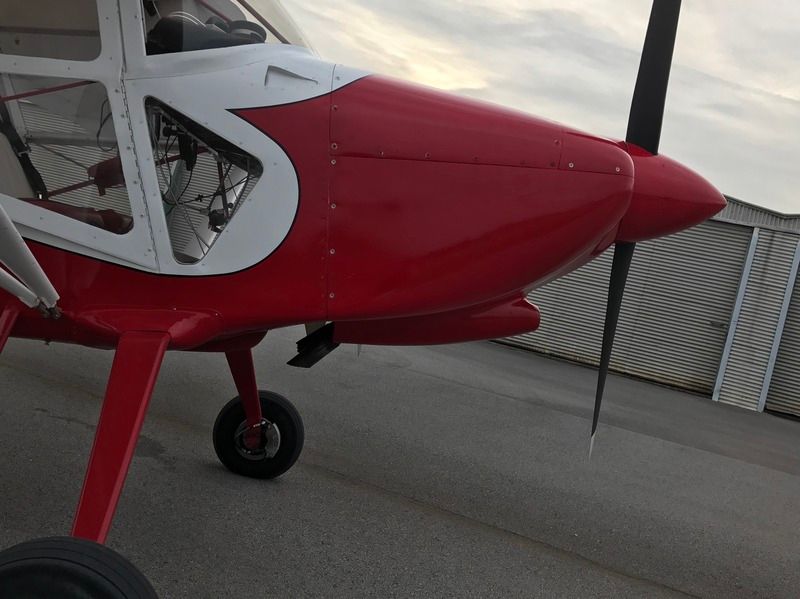
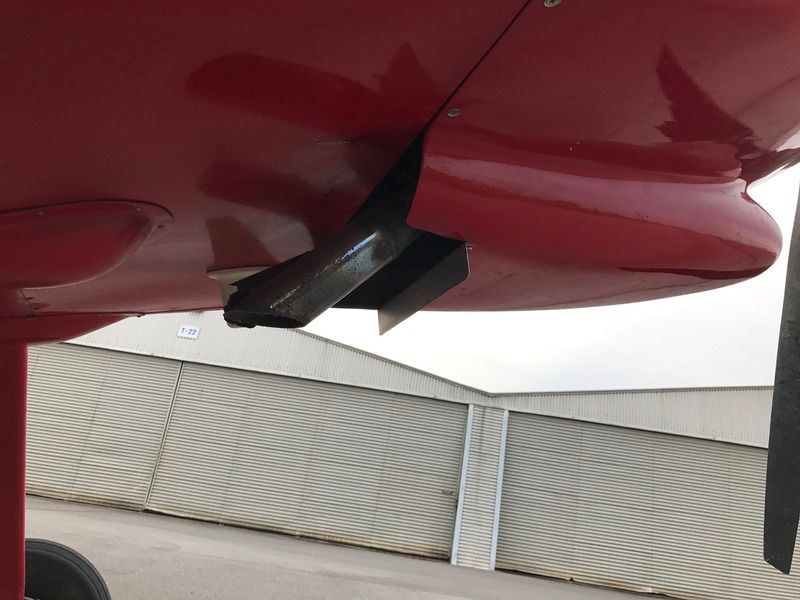
And here's what I made:
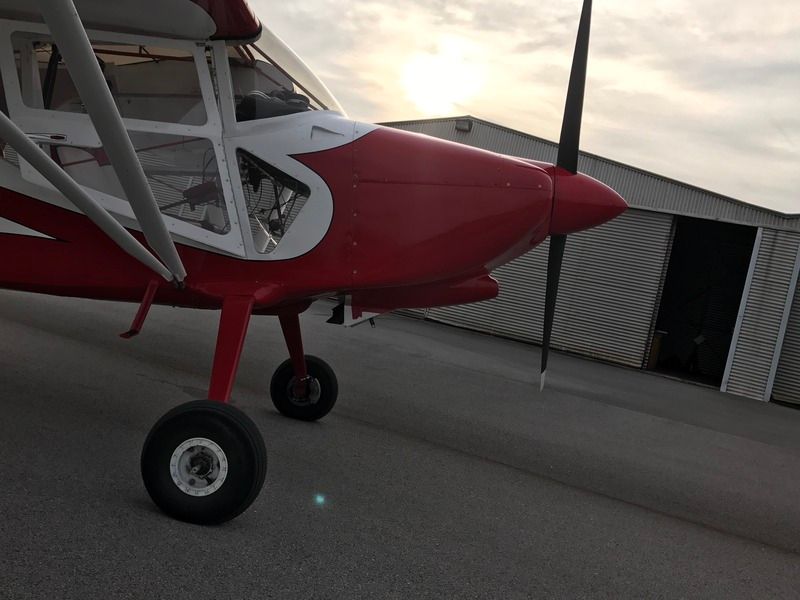
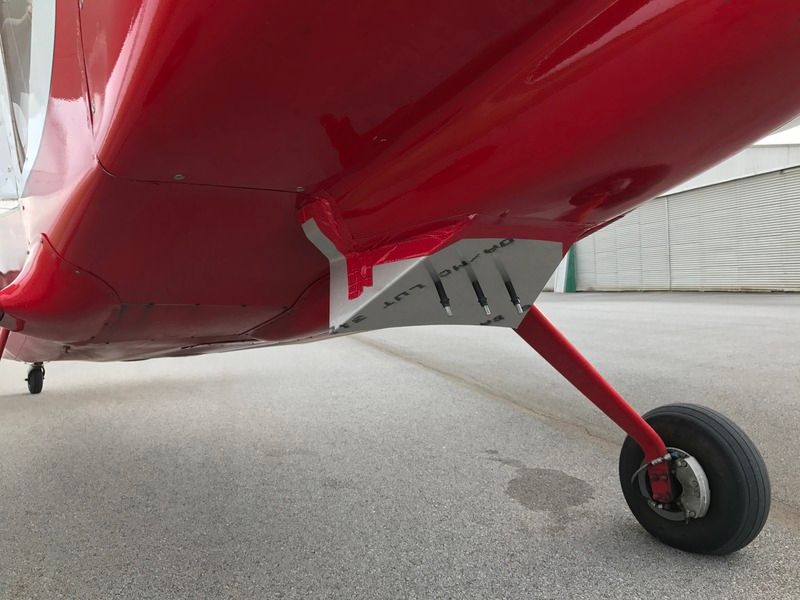
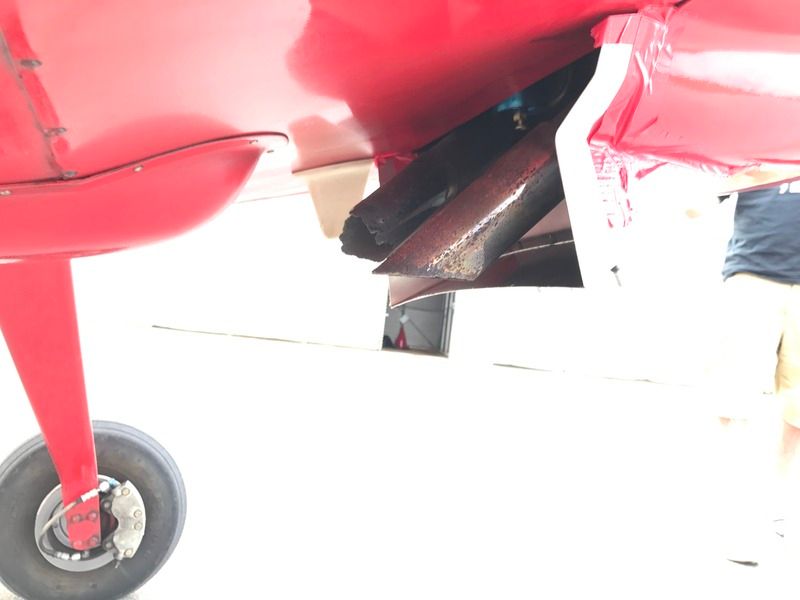

The before/after was change in ~0.35 inH20 difference between each side of the baffles. This had a measurable difference in temps, at ~10-15 deg across the board for CHT and oil temp. Without had CHTs between 320-350 and OT of 195, with the mod had CHTs between 305-335 and OT of 185.
Both scenarios flown at 135 mph, 2400 RPM, leaned for cruise, 65 deg F OAT, and a difference (high pressure to low pressure sides of the baffles) of 3.85 inH2O before and 4.2 inH2O after the mod.
Even though improving the air flow improved the cooling, I shouldn't be hanging near 185-195 deg F oil temps in these conditions. Especially while CHTs are so close to 300 deg in 65 deg F OATs. Back to troubleshooting the oil system. Next step is an automotive compression test (I have the tool). Pending the good results of that I'll be due an oil change, so I'm going to get new hoses, send my oil cooler off for a flush, and send my oil filter adapter to somebody to check the vernatherm seat.
More to follow!
Today I had some time at the hangar and some help from a friend, so I fabbed up a new cowl exit to see if I could help in the airflow department in case that was the problem. I went down this path because many folks have suggested that my cowl exit area wasn't large enough to vacate the lower cowl area and that airflow was likely my problem.
Here's how the plane came:
And here's what I made:
The before/after was change in ~0.35 inH20 difference between each side of the baffles. This had a measurable difference in temps, at ~10-15 deg across the board for CHT and oil temp. Without had CHTs between 320-350 and OT of 195, with the mod had CHTs between 305-335 and OT of 185.
Both scenarios flown at 135 mph, 2400 RPM, leaned for cruise, 65 deg F OAT, and a difference (high pressure to low pressure sides of the baffles) of 3.85 inH2O before and 4.2 inH2O after the mod.
Even though improving the air flow improved the cooling, I shouldn't be hanging near 185-195 deg F oil temps in these conditions. Especially while CHTs are so close to 300 deg in 65 deg F OATs. Back to troubleshooting the oil system. Next step is an automotive compression test (I have the tool). Pending the good results of that I'll be due an oil change, so I'm going to get new hoses, send my oil cooler off for a flush, and send my oil filter adapter to somebody to check the vernatherm seat.
More to follow!
- CamTom12 offline
- Posts: 3705
- Joined: Sun Jul 08, 2012 1:08 pm
- Location: Huntsville
- FindMeSpot URL: https://share.delorme.com/camtom12
- Aircraft: Ruppe Racer
Experimental Pacer
home hand jam "wizard"
Sat Feb 25, 2017 3:59 pm
Weird oil temp issue
I re-installed my new semi-temporary cowling exit (cleaned it up and made it look much nicer this time) and did some other clean-up items. Unfortunately I forgot my compression tester so I didn't get that done. Maybe tomorrow if I have some spare time to run back out there!
Sent from my iPhone using Tapatalk Pro
Sent from my iPhone using Tapatalk Pro
- CamTom12 offline
- Posts: 3705
- Joined: Sun Jul 08, 2012 1:08 pm
- Location: Huntsville
- FindMeSpot URL: https://share.delorme.com/camtom12
- Aircraft: Ruppe Racer
Experimental Pacer
home hand jam "wizard"
Sat Feb 25, 2017 10:22 pm
Re: Weird oil temp issue
Cam,
When it gets warmer you will know for sure what oil temperature you will run. Don't let red line cause you to do anything rash. It will run there and not hurt the engine.
The O-540 I had so much trouble with didn't cause the plugs to fire wrong until well above red line. 240 I think on the old Piper temperature and oil pressure gauge. I was trying to get as many loads sprayed before heat of day. I just kept pushing it.
Pawnee has the venturi bend all the way across the bottom of the cowl like yours was. They ran red line in the heat of day. The cowl flaps on CallAir was safety wired full open and ran red line. But they were mostly high time junkers. I don't remember many of my Tri-Pacers running red line. One with high time O-320 did. The little Continentals were high time and ran red line.
Hang in there.
Contact
When it gets warmer you will know for sure what oil temperature you will run. Don't let red line cause you to do anything rash. It will run there and not hurt the engine.
The O-540 I had so much trouble with didn't cause the plugs to fire wrong until well above red line. 240 I think on the old Piper temperature and oil pressure gauge. I was trying to get as many loads sprayed before heat of day. I just kept pushing it.
Pawnee has the venturi bend all the way across the bottom of the cowl like yours was. They ran red line in the heat of day. The cowl flaps on CallAir was safety wired full open and ran red line. But they were mostly high time junkers. I don't remember many of my Tri-Pacers running red line. One with high time O-320 did. The little Continentals were high time and ran red line.
Hang in there.
Contact
- contactflying offline
- Posts: 4972
- Joined: Wed Apr 03, 2013 7:36 pm
- Location: Aurora, Missouri 2H2
Download my free "https://tinyurl.com/Safe-Maneuvering" e-book.
Sun Feb 26, 2017 7:41 am
Re: Weird oil temp issue
CamTom12 wrote:Well, I fell way behind on the suggestions everyone gave me here. I still have yet to do an automotive compression test, but I'm going to knock that out after work on wednesday.
Today I had some time at the hangar and some help from a friend, so I fabbed up a new cowl exit to see if I could help in the airflow department in case that was the problem. I went down this path because many folks have suggested that my cowl exit area wasn't large enough to vacate the lower cowl area and that airflow was likely my problem.
Here's how the plane came:
And here's what I made:
The before/after was change in ~0.35 inH20 difference between each side of the baffles. This had a measurable difference in temps, at ~10-15 deg across the board for CHT and oil temp. Without had CHTs between 320-350 and OT of 195, with the mod had CHTs between 305-335 and OT of 185.
Both scenarios flown at 135 mph, 2400 RPM, leaned for cruise, 65 deg F OAT, and a difference (high pressure to low pressure sides of the baffles) of 3.85 inH2O before and 4.2 inH2O after the mod.
Even though improving the air flow improved the cooling, I shouldn't be hanging near 185-195 deg F oil temps in these conditions. Especially while CHTs are so close to 300 deg in 65 deg F OATs. Back to troubleshooting the oil system. Next step is an automotive compression test (I have the tool). Pending the good results of that I'll be due an oil change, so I'm going to get new hoses, send my oil cooler off for a flush, and send my oil filter adapter to somebody to check the vernatherm seat.
More to follow!
I'm glad you at least used color coordinated duct tape on that addition.....

Hope that does the trick.....looks pretty good.
MTV
Sun Feb 26, 2017 10:05 am
Re: Weird oil temp issue
mtv wrote:I'm glad you at least used color coordinated duct tape on that addition.....
Hope that does the trick.....looks pretty good.
MTV
Thanks! If I keep my mullet long enough it covers my redneck pretty well
The re-installed version loses the clecos and I also pulled the plastic and cleaned the markings off the sheetmetal the best I could with what I had on hand (gas from a sump
). I cleaned the tape application up pretty good too, almost doesn't look strapped on now!I'll get some pictures of the clean install later. I'm about this () close to convincing myself I need to go fly a straight line today and see if any of the other little clean up things I did helped out as far as pressure differential. OAT is still very cool today so it won't stress the cooling system yet.
If only this yard would mow itself.
- CamTom12 offline
- Posts: 3705
- Joined: Sun Jul 08, 2012 1:08 pm
- Location: Huntsville
- FindMeSpot URL: https://share.delorme.com/camtom12
- Aircraft: Ruppe Racer
Experimental Pacer
home hand jam "wizard"
Sat Mar 04, 2017 6:25 pm
Re: Weird oil temp issue
I had some time this afternoon so I went to the hangar! After I realized I forgot my compression tester again I decided to go flying for some more data:
Segment 1:
5,500 ft (30.45)
134 mph IAS
38 deg F OAT
2350 RPM
CHTs: 284, 308, 315, 314
OT: 185 deg F
Delta P: 4.2
Segment 2:
3,500 ft (30.44)
135 mph IAS
51 deg F OAT
2450 RPM
CHTs: 295, 325, 325, 324
OT: 185 deg F
Delta P: 4.2
Segment 3:
4,500 ft (30.43)
135 mph IAS
46 deg F OAT
2450 RPM
CHTs: 304, 317, 331, 325
OT: 185 deg F
Delta P: 4.2
Looks like the old vernatherm is doing its job now. CHTs are super cool... I'm curious what other cowl designs really see for delta pressures. Lycoming wants 5 inches of water difference between the top and bottom of the baffles, but I'm having a hard enough time keeping the CHTs up at 4.2 inH2O!
I'm going to leave my sheetmetal duct on there for a while, but when I feel ready for another challenge I'm going to try glassing it in permanently!
Segment 1:
5,500 ft (30.45)
134 mph IAS
38 deg F OAT
2350 RPM
CHTs: 284, 308, 315, 314
OT: 185 deg F
Delta P: 4.2
Segment 2:
3,500 ft (30.44)
135 mph IAS
51 deg F OAT
2450 RPM
CHTs: 295, 325, 325, 324
OT: 185 deg F
Delta P: 4.2
Segment 3:
4,500 ft (30.43)
135 mph IAS
46 deg F OAT
2450 RPM
CHTs: 304, 317, 331, 325
OT: 185 deg F
Delta P: 4.2
Looks like the old vernatherm is doing its job now. CHTs are super cool... I'm curious what other cowl designs really see for delta pressures. Lycoming wants 5 inches of water difference between the top and bottom of the baffles, but I'm having a hard enough time keeping the CHTs up at 4.2 inH2O!
I'm going to leave my sheetmetal duct on there for a while, but when I feel ready for another challenge I'm going to try glassing it in permanently!
- CamTom12 offline
- Posts: 3705
- Joined: Sun Jul 08, 2012 1:08 pm
- Location: Huntsville
- FindMeSpot URL: https://share.delorme.com/camtom12
- Aircraft: Ruppe Racer
Experimental Pacer
home hand jam "wizard"
Sun Mar 19, 2017 11:03 am
Re: Weird oil temp issue
Had another fun flying day. I still haven't done the automotive compression test, but this time was because the OAT appeared warmer and I thought it'd be more fun to enjoy the day and get a good data set instead of spending the day in the hangar.
Segment 1:
2,650 ft (30.15)
132 mph IAS
59 deg F OAT
2250 RPM
CHTs: 297, 314, 325, 320
OT: 190 deg F
Delta P: 3.4
Segment 2:
3,000 ft (30.14)
110 mph IAS
53 deg F OAT
2000 RPM
CHTs: 293, 307, 319, 316
OT: 181 deg F
Delta P: 3.0
Segment 3:
2,000 ft (30.15)
120 mph IAS
61 deg F OAT
2100 RPM
CHTs: 297, 312, 324, 320
OT: 189 deg F
Delta P: 3.3
Still looking ok. Super cool CHTs still. Oil temps well within limits, OAT is still very cool. I'm looking forward to seeing what they do with warmer OATs. Plus its been really nice to just fly the damn plane, haha!
Segment 1:
2,650 ft (30.15)
132 mph IAS
59 deg F OAT
2250 RPM
CHTs: 297, 314, 325, 320
OT: 190 deg F
Delta P: 3.4
Segment 2:
3,000 ft (30.14)
110 mph IAS
53 deg F OAT
2000 RPM
CHTs: 293, 307, 319, 316
OT: 181 deg F
Delta P: 3.0
Segment 3:
2,000 ft (30.15)
120 mph IAS
61 deg F OAT
2100 RPM
CHTs: 297, 312, 324, 320
OT: 189 deg F
Delta P: 3.3
Still looking ok. Super cool CHTs still. Oil temps well within limits, OAT is still very cool. I'm looking forward to seeing what they do with warmer OATs. Plus its been really nice to just fly the damn plane, haha!
- CamTom12 offline
- Posts: 3705
- Joined: Sun Jul 08, 2012 1:08 pm
- Location: Huntsville
- FindMeSpot URL: https://share.delorme.com/camtom12
- Aircraft: Ruppe Racer
Experimental Pacer
home hand jam "wizard"
Sun Mar 19, 2017 7:26 pm
Re: Weird oil temp issue
Is your engine stock or does it have higher compressions? If it has higher comps, your CHTs will run cooler then stock. This is because it's more efficient.


Sun Mar 19, 2017 8:32 pm
Re: Weird oil temp issue
A1Skinner wrote:Is your engine stock or does it have higher compressions? If it has higher comps, your CHTs will run cooler then stock. This is because it's more efficient.
It's got lycoming 160hp pistons in there. CHTs used to mirror other O-320-160s I know about, only with higher oil temps than them. Now after a ton of cowling/baffle work, I have much cooler CHTs and still warmer oil temps than the other O-320-160s that I know of. We'll see how it all works out this summer... Fingers crossed for reasonable oil temperatures!
On a side note, I recently heard of putting O-360 pistons in an O-320, I guess it gives ~175hp or so? I'd never heard of that before, but someone got it STC'd on Mooney 201s apparently. Kind of a neat idea.
- CamTom12 offline
- Posts: 3705
- Joined: Sun Jul 08, 2012 1:08 pm
- Location: Huntsville
- FindMeSpot URL: https://share.delorme.com/camtom12
- Aircraft: Ruppe Racer
Experimental Pacer
home hand jam "wizard"
Sun Mar 19, 2017 8:33 pm
Re: Weird oil temp issue
CamTom12 wrote:A1Skinner wrote:Is your engine stock or does it have higher compressions? If it has higher comps, your CHTs will run cooler then stock. This is because it's more efficient.
It's got lycoming 160hp pistons in there. CHTs used to mirror other O-320-160s I know about, only with higher oil temps than them. Now after a ton of cowling/baffle work, I have much cooler CHTs and still warmer oil temps than the other O-320-160s that I know of. We'll see how it all works out this summer... Fingers crossed for reasonable oil temperatures!
On a side note, I recently heard of putting O-360 pistons in an O-320, I guess it gives ~175hp or so? I'd never heard of that before, but someone got it STC'd on Mooney 201s apparently. Kind of a neat idea.
Right on. I'm hoping for Ya!
Man, 175hp would be sweet! Definitely worth researching I'd say...
Sun May 21, 2017 11:49 pm
Re: Weird oil temp issue
Did some maintenance today, pulled and cleaned all the plugs and reinstalled them in the same cylinders, but swapped bottoms and tops. I also did an automotive compression test (cold, I ran out of time to do it hot as well - 122, 120, 125, 123). After that I buttoned it all up and went flying for about an hour to top off the tanks for this upcoming weekend and to warm the oil before I changed it.
Some spark plug images:
#2 bottom
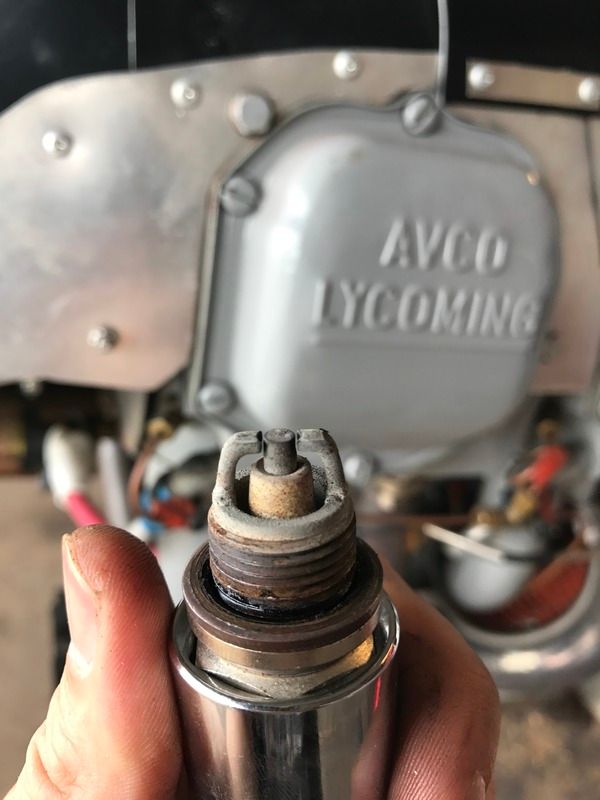
#4 top
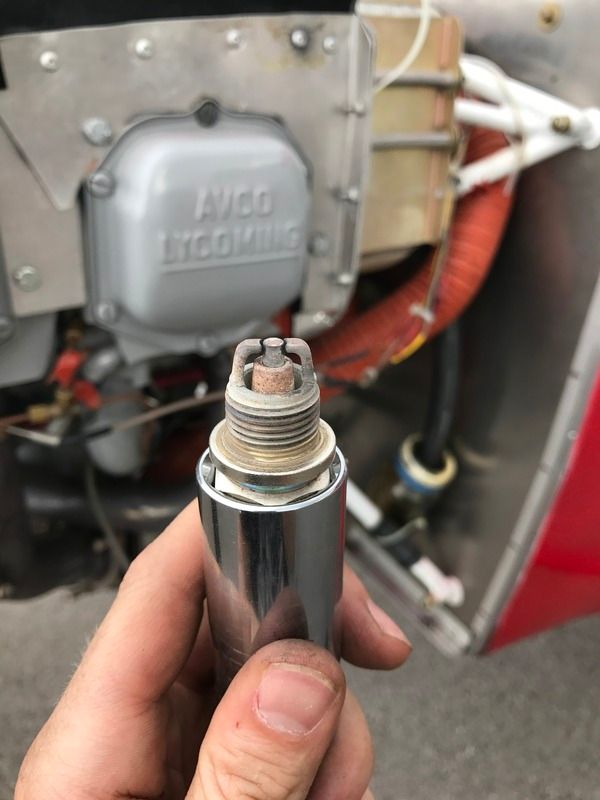
#1 bottom
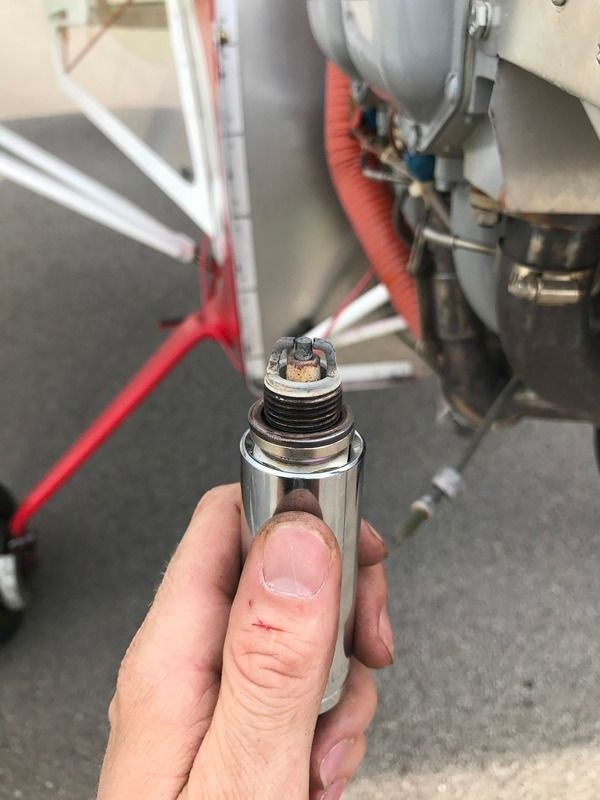
#3 bottom
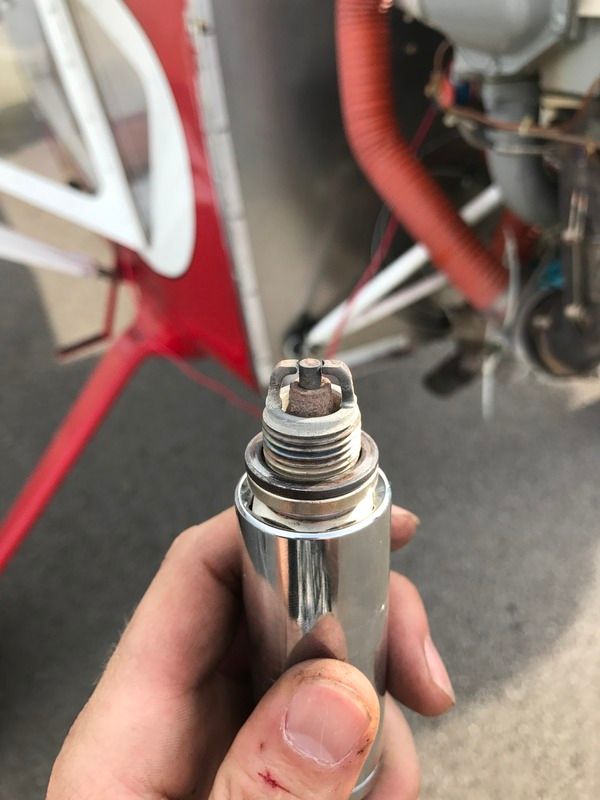
I tried to look at the valves but I couldn't get a good angle through the spark plug holes with the non-articulating head on my boroscope. I might try to borrow one from work one of these days just to see how they look.
Just for completeness I pulled the viscosity valve plug and ran a magnet down there - returned nothing. I did this before the flight, and didn't think to look in there after the oil had all been drained. I had also meant to pull the oil filter adapter on this oil change and see if there was anything funky going on with the gasket, but I forgot to order a new one and couldn't get to that.
But I did try to use my boroscope to look in the oil filter adapter while I changed the filter and came up with these:
Vernatherm! This is from the left-most hole in the area the filter covers as viewed from the back of the engine.
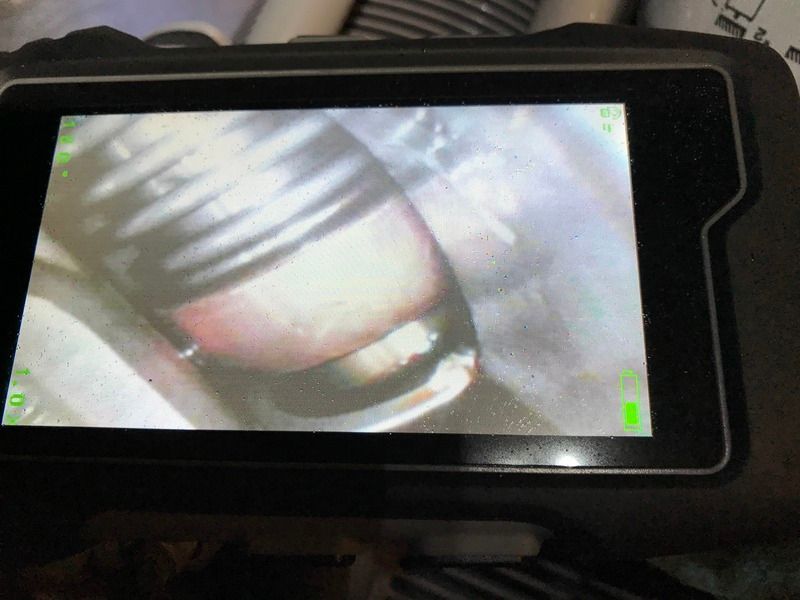
The thing on the left appears to be the pressure relief valve. Second pic is the same area, just moved to a slightly better angle to see the thing. Also, should any of this be . This is from inside the part that the filter actually screws into.
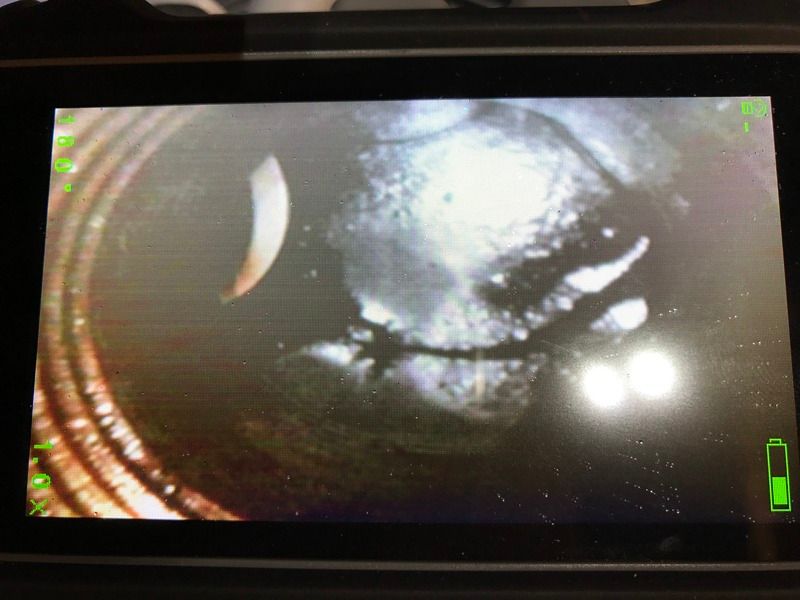
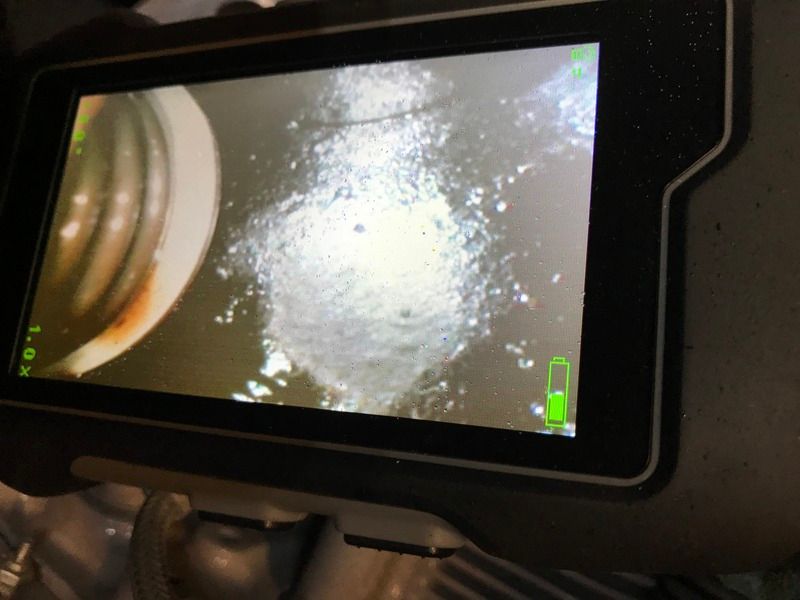
I think this is the face of the pressure relief valve. This is from the right-most hole in the area the filter covers as viewed from the back of the engine.
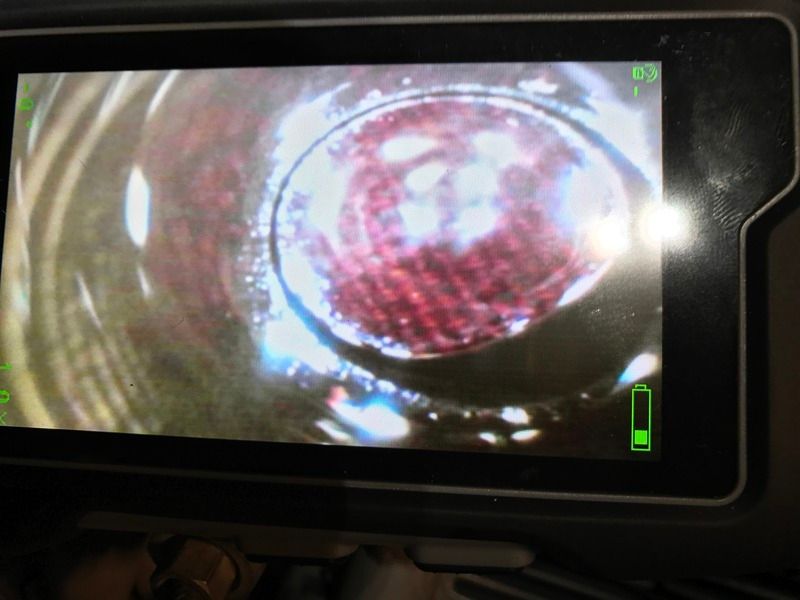
Anyways, I changed the oil and took a sample that'll go out to Blackstone Labs tomorrow morning. Then I added some MMO to the fuel and buttoned it all up for the night.
Some data points from my oil warm-up flight:
Segment 1:
2,400 ft (30.05)
139 mph IAS
70 deg F OAT
2475 RPM
CHTs: 320, 333, 345, 338
EGTs: 1305, 1334, 1301, 1364
OT: 200 deg F
Delta P: 4.1
Segment 2:
1,800 ft (30.05)
138 mph IAS
73 deg F OAT
2400 RPM
CHTs: 326, 341, 354, 345
EGTs: 1313, 1346, 1310, 1368
OT: 210 deg F
Delta P: 4.1
I did notice that my EGTs on #2 and #4 were oscillating up and down about 5-8 degrees. I don't usually watch them, so I don't know if this is normal. It ran the same as it always has - very well except higher oil temps that I would expect.
Some spark plug images:
#2 bottom
#4 top
#1 bottom
#3 bottom
I tried to look at the valves but I couldn't get a good angle through the spark plug holes with the non-articulating head on my boroscope. I might try to borrow one from work one of these days just to see how they look.
Just for completeness I pulled the viscosity valve plug and ran a magnet down there - returned nothing. I did this before the flight, and didn't think to look in there after the oil had all been drained. I had also meant to pull the oil filter adapter on this oil change and see if there was anything funky going on with the gasket, but I forgot to order a new one and couldn't get to that.
But I did try to use my boroscope to look in the oil filter adapter while I changed the filter and came up with these:
Vernatherm! This is from the left-most hole in the area the filter covers as viewed from the back of the engine.
The thing on the left appears to be the pressure relief valve. Second pic is the same area, just moved to a slightly better angle to see the thing. Also, should any of this be . This is from inside the part that the filter actually screws into.
I think this is the face of the pressure relief valve. This is from the right-most hole in the area the filter covers as viewed from the back of the engine.
Anyways, I changed the oil and took a sample that'll go out to Blackstone Labs tomorrow morning. Then I added some MMO to the fuel and buttoned it all up for the night.
Some data points from my oil warm-up flight:
Segment 1:
2,400 ft (30.05)
139 mph IAS
70 deg F OAT
2475 RPM
CHTs: 320, 333, 345, 338
EGTs: 1305, 1334, 1301, 1364
OT: 200 deg F
Delta P: 4.1
Segment 2:
1,800 ft (30.05)
138 mph IAS
73 deg F OAT
2400 RPM
CHTs: 326, 341, 354, 345
EGTs: 1313, 1346, 1310, 1368
OT: 210 deg F
Delta P: 4.1
I did notice that my EGTs on #2 and #4 were oscillating up and down about 5-8 degrees. I don't usually watch them, so I don't know if this is normal. It ran the same as it always has - very well except higher oil temps that I would expect.
- CamTom12 offline
- Posts: 3705
- Joined: Sun Jul 08, 2012 1:08 pm
- Location: Huntsville
- FindMeSpot URL: https://share.delorme.com/camtom12
- Aircraft: Ruppe Racer
Experimental Pacer
home hand jam "wizard"
Mon May 22, 2017 11:07 am
Re: Weird oil temp issue
Cam,
I have run fairly high time O-540 engines, on spray planes, oil temp 240 in those and some higher outside temps all summer long. The rule, don't go over, seems to work.
I have run fairly high time O-540 engines, on spray planes, oil temp 240 in those and some higher outside temps all summer long. The rule, don't go over, seems to work.
- contactflying offline
- Posts: 4972
- Joined: Wed Apr 03, 2013 7:36 pm
- Location: Aurora, Missouri 2H2
Download my free "https://tinyurl.com/Safe-Maneuvering" e-book.
Mon May 22, 2017 1:17 pm
Re: Weird oil temp issue
I wouldn't have a warm fuzzy about a cowling mod solving the problem. If oil temps were steady good, then shifted to steady high, something changed with the engine. Operating the engine with oil temps in the upper end of the arc isn't a problem if you know the reason for it; high ambient temps, extended operation at high weights, etc.. But a shift in normal operating temps without a corresponding change in known operating conditions is a warning flag. Something not talked about much in this thread is your oil pressure relief valve or the filter bypass valve. I'm not familiar with your oil system schematic but I'd look at the oil pressure relief valve if it's located so that it can bypass the oil cooler, or the filter bypass valve as well. You had mentioned high oil temps & a 20 psi pressure drop; a pressure relief or bypass valve stuck open (or a weak spring) will do that for you.
When you're doing a standard compression check on your motor listen to where the air's going. If you hear air coming from your exhaust stack you've got an exhaust valve problem, from the carb is your intake valves, and if you have air going through the breather time to check your rings and pistons. But if the engine isn't blowing oil out the breather or burning it (your plugs weren't oil fouled) I'd suspect a relief or bypass valve. It sounds like you've looked at everything else.
When you're doing a standard compression check on your motor listen to where the air's going. If you hear air coming from your exhaust stack you've got an exhaust valve problem, from the carb is your intake valves, and if you have air going through the breather time to check your rings and pistons. But if the engine isn't blowing oil out the breather or burning it (your plugs weren't oil fouled) I'd suspect a relief or bypass valve. It sounds like you've looked at everything else.
- Railchummer offline
- Posts: 43
- Joined: Wed Mar 22, 2017 3:26 pm
- Location: Eatonville
- Aircraft: Stinson 108-1
Mon May 22, 2017 4:10 pm
Re: Weird oil temp issue
Railchummer wrote:I wouldn't have a warm fuzzy about a cowling mod solving the problem. If oil temps were steady good, then shifted to steady high, something changed with the engine. Operating the engine with oil temps in the upper end of the arc isn't a problem if you know the reason for it; high ambient temps, extended operation at high weights, etc.. But a shift in normal operating temps without a corresponding change in known operating conditions is a warning flag. Something not talked about much in this thread is your oil pressure relief valve or the filter bypass valve. I'm not familiar with your oil system schematic but I'd look at the oil pressure relief valve if it's located so that it can bypass the oil cooler, or the filter bypass valve as well. You had mentioned high oil temps & a 20 psi pressure drop; a pressure relief or bypass valve stuck open (or a weak spring) will do that for you.
When you're doing a standard compression check on your motor listen to where the air's going. If you hear air coming from your exhaust stack you've got an exhaust valve problem, from the carb is your intake valves, and if you have air going through the breather time to check your rings and pistons. But if the engine isn't blowing oil out the breather or burning it (your plugs weren't oil fouled) I'd suspect a relief or bypass valve. It sounds like you've looked at everything else.
Thanks for the input!
Oil temps have always been high, as long as I've owned it. Not an issue in AK, but in AL summers it's kept me nervous. The cowling mod, baffle work, and new oil cooler have all contributed to bringing the temps to a more manageable level in the summer, but I'm still interested in a fix.
When I saw oil pressure drop, it was a steady decrease that was inversely proportional to the oil temp rise, which made me think that it was just reduced viscosity due to the elevated temps (both still in the green though).
I hadn't thought about a bypass being the problem, but there is one that's built into the oil filter adapter. I have some boroscope dots of mine above and here's a picture of the backside of one.
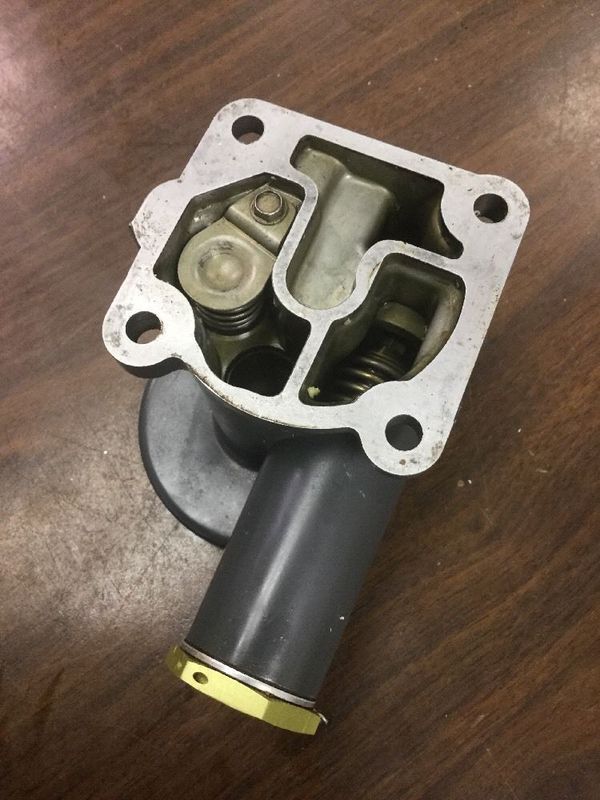
To my knowledge, that's the only bypass valve in the Lycoming system with a vernatherm installed. Not sure how I'd test that though, and it's not a user serviceable part so I'd basically need a new (or known-good borrowed) oil filter adapter to verify. I'll definitely keep that in mind.
I burned or blew about 3 qts of oil in the last 50 hours. I don't have much in the breather bottle but I noticed my dipstick tube is loose and there's a bunch of oil on the case around it while I was in there for the oil change, so I think that's where it's been going.
My condition inspection is due in June so we'll be doing a differential test then and I'll keep my ears open. Last year and all previous checks have been between 72-78/80 though. Not sure what that means here.
MTV, are the numbers I got on the auto compression check good values? Should I do it hot? Are there concerns with removing/replacing spark plugs in a hot aluminum head?
- CamTom12 offline
- Posts: 3705
- Joined: Sun Jul 08, 2012 1:08 pm
- Location: Huntsville
- FindMeSpot URL: https://share.delorme.com/camtom12
- Aircraft: Ruppe Racer
Experimental Pacer
home hand jam "wizard"
DISPLAY OPTIONS
Who is online
Users browsing this forum: No registered users and 1 guest
Latest Features
-
Live to Tell
A Minnesota pilot is surprised to learn that the sudden asymmetric drag of an out-of-rig ski can…Read More -
Creators
Working in some of the Yukon's most beautiful and remote environments, photographer Simon Blakesley captures aircraft in…Read More -
Aircraft Ownership and Maintenance
Upgrading to big tires can make a huge difference in backcountry performance, but with those gains come…Read More -
Tales from Yesteryear
In this tale from bush flying yesteryear, Don Cogger signs up to help Atlee Dodge Jr recovery…Read More


Latest Knowledge Base
-
Destinations
A regional guide with ideas for winter camping destinations in California, Nevada, New Mexico, and Arizona.Read More -
Aircraft
Finding an affordable aircraft that can handle the backcountry for $80K or less? A challenge for sure, but with the…Read More -
Aircraft
01.29.2018 - Zane - Updated tire diameter graphic to add 8.50x10 Guide to tires for use in the backcountry and off-airport landing…Read More -
Pilots
12.22.2013 - Initial article format Operating aircraft on skis and negotiating a snow-covered landscape is an entirely unique skillset and environment.…Read More


