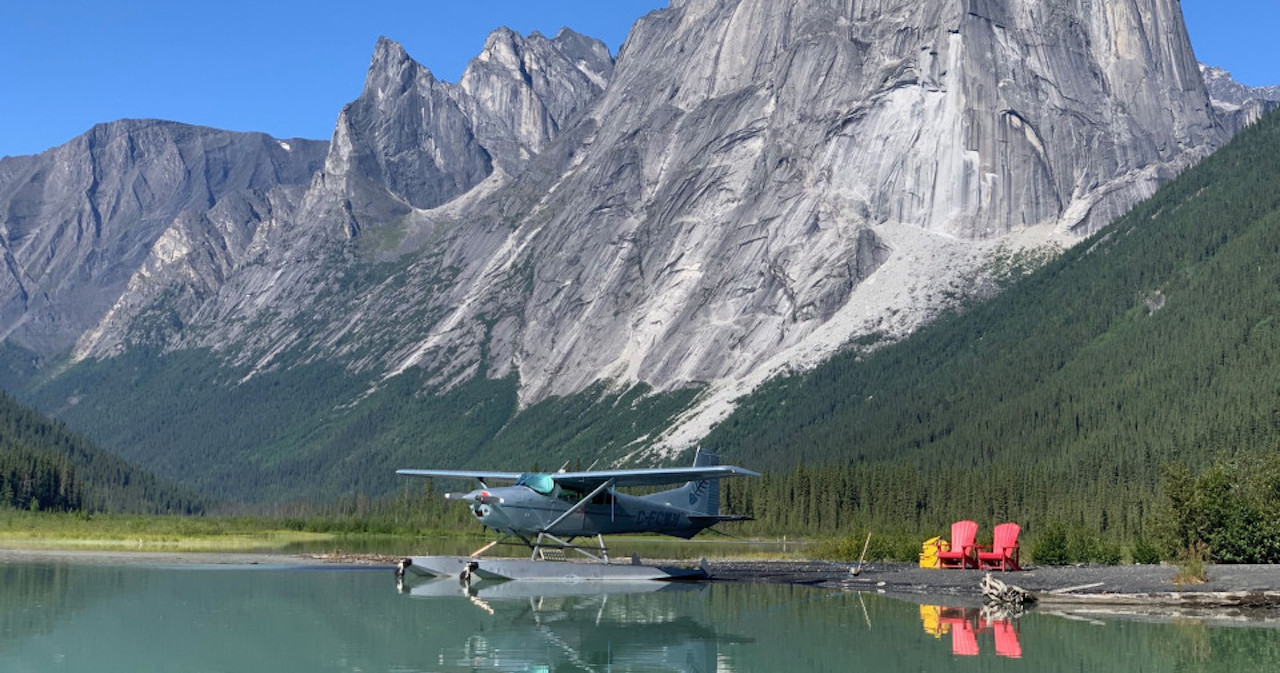
Winds/Turbulence and Light Aircraft in the Mountains?
Tue Aug 05, 2014 2:48 pm
Winds/Turbulence and Light Aircraft in the Mountains?
I'm fairly new to the mountain flying thing, and reading here I've noticed that a lot of you guys/girls are flying fairly light aircraft, even LSA's. I get that the lighter types can have excellent takeoff/landing performance, but I've been reluctant to take an LSA into the mountains because they can in my experience be fairly sporty in gusty winds and turbulence (which can of course be plentiful in mountain environments). The heavier 172's/182's I fly seem much more stable to me up there. But obviously you guys are doing backcountry stuff in light planes very successfully ... so I'm very curious, how do you guys handle the winds and turbulence in the more sensitive, lighter aircraft? Is it not as bad as I'm thinking?
- Tomahawk49 offline
- Posts: 20
- Joined: Sat Aug 02, 2014 4:07 pm
- Location: Seattle
- Aircraft: C172D 180hp / C177B
Tue Aug 05, 2014 3:04 pm
Re: Winds/Turbulence and Light Aircraft in the Mountains?
My S6 weighs just under 700lbs. Slightly more *ahem* with me in it. I just make it a point to have it on the ground by lunch time. I don't like turbulence because I'm lazy. Can I handle it? Sure. Do I want to? Nope. As I said... lazy.
Tue Aug 05, 2014 3:10 pm
Re: Winds/Turbulence and Light Aircraft in the Mountains?
Flying LSAs in the mountains on a windy day used to be a real quick way of putting friends off flying with me...
I learned to stay at home on those windy days, back when I was renting an LSA, or if I did go - I stayed as far as possible from the mountain valleys.
I learned to stay at home on those windy days, back when I was renting an LSA, or if I did go - I stayed as far as possible from the mountain valleys.

Tue Aug 05, 2014 4:29 pm
Re: Winds/Turbulence and Light Aircraft in the Mountains?
At 2pm in the mountains on a hot and windy day, you're gonna have a bad time whether you're in a 700 lb machine or a 2700 lb machine. It's much more about prudence in selecting your operational window than it is the weight of the aircraft.

Tue Aug 05, 2014 4:37 pm
Re: Winds/Turbulence and Light Aircraft in the Mountains?
Got caught on an IFR flight, over the Cascades in, seriously, 70 knot winds. The 172 was about 250K pounds too light. I agree with the others, it's all about timing.
- flyingzebra offline

- Posts: 479
- Joined: Sat Jan 24, 2009 4:53 am
- Location: Northwest Washington state
- Aircraft: Cessna Skylane 182 N3440S, Aviat Husky N2918L
Tue Aug 05, 2014 5:21 pm
Re: Winds/Turbulence and Light Aircraft in the Mountains?
MTV can give more accurate particulars on the control standards that have to be met, or don't have to be met, by Light Sport Aircraft. I have found some Light Sport Aircraft to handle poorly and would not recommend flying them in hot, high, and windy conditions. On the other hand, I have flown almost all older manufactured 65-90 hp Continental powered airplanes and 135-150 hp Lycoming powered airplanes in the Rocky Mountains in the heat of the day.
The reason I have flown well controlled airplanes in the afternoon in the mountains is that I flew them to my National Guard unit in Santa Fe from the Gallup area for flight training at least three times per month. I also taught mountain flying in these airplanes. I instructed out of Flagstaff, AZ and Monte Vista, CO in those airplanes.
With most 65-150 hp airplanes, cross country flights generally involve flying a long dogleg to stay in large river valleys or crossing 9,000-11,000 feet passes. Many of these low powered airplanes will not engine climb across these high passes in the cool of the day with enough fuel reserve to make the fuel stop beyond the pass, especially flying from east to west. The power of heat produced thermal and wind energy far exceeds even the engine power in much larger airplanes. With a summer diurnal rate commonly of forty degrees, 3,000 updrafts and vast oregraphic (hydraulic) wind over uneven terrain energy is available, if managed properly. For these reasons I used and taught the use of natural energy over engine energy.
A low powered airplane is much like a motorized glider. Much more lift is available from nature than from the small engine. For a detailed lesson on the management of ground effect, gravity, thermal lift, and oregraphic lift in the mountains, send your email address to [email protected] and I will return an email with "Safe Maneuvering Flight Techniques" attached. As Zane so often says, you need to find a mountain instructor to fly this stuff with you. Many, like the FAA, teach only avoidance rather than management of natural energy in the mountains. That is the safer route. There are also instructors who teach this stuff for those who have to go there (spray, medivac, fire fighter, pipeline and powerline patrol, etc.) and those who just wish to acquire these techniques and skills. For those who are there for whatever reason, avoidance is not an option.
The reason I have flown well controlled airplanes in the afternoon in the mountains is that I flew them to my National Guard unit in Santa Fe from the Gallup area for flight training at least three times per month. I also taught mountain flying in these airplanes. I instructed out of Flagstaff, AZ and Monte Vista, CO in those airplanes.
With most 65-150 hp airplanes, cross country flights generally involve flying a long dogleg to stay in large river valleys or crossing 9,000-11,000 feet passes. Many of these low powered airplanes will not engine climb across these high passes in the cool of the day with enough fuel reserve to make the fuel stop beyond the pass, especially flying from east to west. The power of heat produced thermal and wind energy far exceeds even the engine power in much larger airplanes. With a summer diurnal rate commonly of forty degrees, 3,000 updrafts and vast oregraphic (hydraulic) wind over uneven terrain energy is available, if managed properly. For these reasons I used and taught the use of natural energy over engine energy.
A low powered airplane is much like a motorized glider. Much more lift is available from nature than from the small engine. For a detailed lesson on the management of ground effect, gravity, thermal lift, and oregraphic lift in the mountains, send your email address to [email protected] and I will return an email with "Safe Maneuvering Flight Techniques" attached. As Zane so often says, you need to find a mountain instructor to fly this stuff with you. Many, like the FAA, teach only avoidance rather than management of natural energy in the mountains. That is the safer route. There are also instructors who teach this stuff for those who have to go there (spray, medivac, fire fighter, pipeline and powerline patrol, etc.) and those who just wish to acquire these techniques and skills. For those who are there for whatever reason, avoidance is not an option.
- contactflying offline
- Posts: 4972
- Joined: Wed Apr 03, 2013 7:36 pm
- Location: Aurora, Missouri 2H2
Download my free "https://tinyurl.com/Safe-Maneuvering" e-book.
DISPLAY OPTIONS
Who is online
Users browsing this forum: No registered users and 19 guests
Latest Features
-
-
Featured Bush Planes
As one of the undisputed legends of bush flying, the Cessna 180 hauls a…Read More -
Aircraft Ownership and Maintenance
9 modification mistakes aircraft owners make when trying to "bush out" their birds—why some…Read More -
Live to Tell
A Minnesota pilot is surprised to learn that the sudden asymmetric drag of an…Read More


Latest Knowledge Base
-
Destinations
Canada offers some of the most spectacular backcountry flying on the continent. Here's what you need to know before you go.Read More -
Safety and Survival
Hope that you never have to use your survival vest but knowing you have it and knowing how to use…Read More -
Destinations
A regional guide with ideas for winter camping destinations in California, Nevada, New Mexico, and Arizona.Read More -
Aircraft
Finding an affordable aircraft that can handle the backcountry for $80K or less? A challenge for sure, but with the…Read More