Hey guys,
How's it going? I am 27 and about to start training in a J3 Cub next month (I have never flown before). I will probably buy the Cub to build lots of tailwheel time. However, my dream is to do some flying for the NPS or USFS out in the backcountry area, but I'm not sure how realistic I can do this since I am hard of hearing (I did pass the medical, though that's another story). I do have trouble with high frequencies (thus a problem with understand speech on radios) and I think this will be a big problem.
I'm wondering if anyone here currently flies for the USFS, NPS, etc and whether they can tell me if there's a huge reliance on radios for these kinds of jobs?
Also, I talked to someone at Yellowstone Airport in Montana and I may go there as a lineman to build some flying time in that area.
Oh yea, this forum looks cool! I love all the photos some of you have posted! Thanks for making this resource available.
Working for USFS or NPS as a pilot?
Mon Feb 25, 2008 12:02 pm
Mon Feb 25, 2008 12:12 pm
Do you use hearing aids? If not, and you passed the medical, you should be fine. You can crank those radios in your headset with a good intercom.
- Zzz offline


- Posts: 2855
- Joined: Fri Oct 08, 2004 11:09 pm
- Location: northern
- Aircraft: Swiveling desk chair
Half a century spent proving “it is better to be thought a fool than to open your mouth and remove all doubt.”
Mon Feb 25, 2008 12:17 pm
1SeventyZ wrote:Do you use hearing aids? If not, and you passed the medical, you should be fine. You can crank those radios in your headset with a good intercom.
I don't. But maybe I should. I have trouble with speech on movies, but I do OK with the phone. I guess if it's right into my ear, then I should be good to go. I'll find out for sure next month when training starts.
Mon Feb 25, 2008 2:48 pm
Re: Working for USFS or NPS as a pilot?
TexasNick wrote:Hey guys,
How's it going? I am 27 and about to start training in a J3 Cub next month (I have never flown before). I will probably buy the Cub to build lots of tailwheel time. However, my dream is to do some flying for the NPS or USFS out in the backcountry area, but I'm not sure how realistic I can do this since I am hard of hearing (I did pass the medical, though that's another story). I do have trouble with high frequencies (thus a problem with understand speech on radios) and I think this will be a big problem.
I'm wondering if anyone here currently flies for the USFS, NPS, etc and whether they can tell me if there's a huge reliance on radios for these kinds of jobs?
Also, I talked to someone at Yellowstone Airport in Montana and I may go there as a lineman to build some flying time in that area.
Oh yea, this forum looks cool! I love all the photos some of you have posted! Thanks for making this resource available.
Most federal jobs I've seen want Part 135 minumins. 1500TT, Instrument rated, Commercial as a start. Good luck.
C ya, Bub
Robert "Bub" Wright, aka Skylane, passed away in November of 2011. He was a beloved community member and will be missed.
Mon Feb 25, 2008 2:56 pm
All Forest Service Pilot positions fall under GS 2181 job series, which requires 1500 PIC, plus a bunch of other requirements, Comm/Instrument, night time, actual instrument time, etc, etc.
DOI uses quite a few dual function pilots, folks such as Wildlife Biologist/Pilot, Ranger/Pilot, etc. Those positions only require 500 PIC to start, plus commercial/instrument and some other required minimums, depending on the job.
NPS is in DOI. So is the USFWS.
One impediment that your hearing might cause is doing radio telemetry work, which requires reasonable hearing acuity. It's hard to predict whether it would be an issue, though without actually going out and doing some telemetry work. My hearing is pretty bad, but I'm still a pretty good telemetry pilot.
MTV
DOI uses quite a few dual function pilots, folks such as Wildlife Biologist/Pilot, Ranger/Pilot, etc. Those positions only require 500 PIC to start, plus commercial/instrument and some other required minimums, depending on the job.
NPS is in DOI. So is the USFWS.
One impediment that your hearing might cause is doing radio telemetry work, which requires reasonable hearing acuity. It's hard to predict whether it would be an issue, though without actually going out and doing some telemetry work. My hearing is pretty bad, but I'm still a pretty good telemetry pilot.
MTV


Mon Feb 25, 2008 5:00 pm
mtv wrote:One impediment that your hearing might cause is doing radio telemetry work, which requires reasonable hearing acuity.
MTV
Apparently "reasonable hearing acuity" is also a requirement to be a good husband. At least that's what I've been told on more than one occasion...

- retired user offline
- Posts: 710
- Joined: Sat Oct 01, 2005 7:07 am
Mon Feb 25, 2008 5:02 pm

- Student BCP offline
- Posts: 334
- Joined: Mon Oct 08, 2007 6:50 pm
- Location: Eagle River
- Aircraft: PA 22/20
Mon Feb 25, 2008 6:11 pm
TEXAS NICK
If I were you, I would never talk or write about a hearing problem. As long as you pass your FAA physical you are good to go. The FAA sets the minimum standards and we never disagree with the FAAs wisdom.
Any alleged hearing problem is best kept to one's self. TURN UP THE VOLUME.
GOOD LUCK
flyer
If I were you, I would never talk or write about a hearing problem. As long as you pass your FAA physical you are good to go. The FAA sets the minimum standards and we never disagree with the FAAs wisdom.
Any alleged hearing problem is best kept to one's self. TURN UP THE VOLUME.
GOOD LUCK
flyer
Mon Feb 25, 2008 7:02 pm
Job opening.
http://jobsearch.usajobs.gov/getjob.asp ... search.asp
Duties
MAJOR DUTIES:
Top
As an Airplane Pilot for the National Park Service (NPS), you will be responsible for flying and maintaining two aircraft: a Cessna-185 and an Aviat Husky A1-B. Your primary function will be to transport staff around Gates of the Arctic National Park and Preserve for the purpose of protecting the resources found within, but you may also be tasked with other missions, including but not limited to low-level survey work, search and rescue, wildfire management, law enforcement, and emergency medical operations. Flying is primarily done on floats landing on remote lakes and rivers in the Brooks Range, and pilots can expect to log 200 - 225 hours of flying per year depending on the weather and your missions.
Qualifications
QUALIFICATIONS REQUIRED:
In order to be qualified for this position, you must meet the following four requirements:
1. Possess a current Commercial Pilot’s Certificate, Single-engine land and sea, with Instrument Rating or appropriate military rating
- AND -
2. Meet the flight time requirements by either :
A. I possess at least 1500 hours of total flight time, which includes at least 250 hours of flight time where I was Pilot-In-Command, at least 75 hours of night flying time, AND at least 100 hours of flying time within the last 12 months. In addition, I have at least 75 hours of instrument flight time. At least 75 of these hours were logged in actual instrument weather.
- OR -
B. I possess at least 1125 hours of total flight time, which includes at least 250 hours of flight time where I was Pilot-In-Command, at least 50 hours of night flying time, AND at least 50 hours of flight time within the last 12 months. In addition, I have at least 75 hours of instrument flight time. At least 75 of these hours were logged in actual instrument weather. (Applicable to inservice placement only.)
- AND -
3. Possess a current first or second-class medical certificate in accordance with FAA regulations
- AND -
4. Have one year of experience equivalent to the GS-11 level in the Federal service flying single or twin-engine airplanes over unfavorable terrain (e.g., mountains, forest, or deserts) with responsibility for operating from confined or isolated areas primarily under visual flight conditions.
http://jobsearch.usajobs.gov/getjob.asp ... search.asp
Duties
MAJOR DUTIES:
Top
As an Airplane Pilot for the National Park Service (NPS), you will be responsible for flying and maintaining two aircraft: a Cessna-185 and an Aviat Husky A1-B. Your primary function will be to transport staff around Gates of the Arctic National Park and Preserve for the purpose of protecting the resources found within, but you may also be tasked with other missions, including but not limited to low-level survey work, search and rescue, wildfire management, law enforcement, and emergency medical operations. Flying is primarily done on floats landing on remote lakes and rivers in the Brooks Range, and pilots can expect to log 200 - 225 hours of flying per year depending on the weather and your missions.
Qualifications
QUALIFICATIONS REQUIRED:
In order to be qualified for this position, you must meet the following four requirements:
1. Possess a current Commercial Pilot’s Certificate, Single-engine land and sea, with Instrument Rating or appropriate military rating
- AND -
2. Meet the flight time requirements by either :
A. I possess at least 1500 hours of total flight time, which includes at least 250 hours of flight time where I was Pilot-In-Command, at least 75 hours of night flying time, AND at least 100 hours of flying time within the last 12 months. In addition, I have at least 75 hours of instrument flight time. At least 75 of these hours were logged in actual instrument weather.
- OR -
B. I possess at least 1125 hours of total flight time, which includes at least 250 hours of flight time where I was Pilot-In-Command, at least 50 hours of night flying time, AND at least 50 hours of flight time within the last 12 months. In addition, I have at least 75 hours of instrument flight time. At least 75 of these hours were logged in actual instrument weather. (Applicable to inservice placement only.)
- AND -
3. Possess a current first or second-class medical certificate in accordance with FAA regulations
- AND -
4. Have one year of experience equivalent to the GS-11 level in the Federal service flying single or twin-engine airplanes over unfavorable terrain (e.g., mountains, forest, or deserts) with responsibility for operating from confined or isolated areas primarily under visual flight conditions.
Mon Feb 25, 2008 7:41 pm
Funny that the job prerequisites don't include an A&P or similar, if the job description does include maintaining the aircraft.
Nick, never admit to a hearing problem, just tell the other person to "quit mumbling and speak up (dammit!)".
Good luck with your flying career.
Eric
Nick, never admit to a hearing problem, just tell the other person to "quit mumbling and speak up (dammit!)".
Good luck with your flying career.
Eric

Cessna Skywagon -- accept no substitute!
Mon Feb 25, 2008 8:07 pm
The "maintenance" described in that advertisement is actually things like changing oil, fueling the aircraft, cleaning windows, etc., not actual "maintenance".
DOI generally prohibits agency pilots from performing maintenance on its aircraft, even if they hold appropriate ratings, except in unusual circumstances.
MTV
DOI generally prohibits agency pilots from performing maintenance on its aircraft, even if they hold appropriate ratings, except in unusual circumstances.
MTV
Mon Feb 25, 2008 9:09 pm
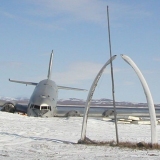
This is Bettles and some of the surrounding area in Gates of the Arctic. Not bad duty location if you can get it:


- denalipilot offline


- Posts: 2789
- Joined: Mon Oct 15, 2007 4:53 pm
- Location: Denali
- Aircraft: C-170B+
Mon Feb 25, 2008 9:24 pm
My wife says I have Selective hearing acuity.N6EA wrote:mtv wrote:One impediment that your hearing might cause is doing radio telemetry work, which requires reasonable hearing acuity.
MTV
Apparently "reasonable hearing acuity" is also a requirement to be a good husband. At least that's what I've been told on more than one occasion...

Mon Feb 25, 2008 9:30 pm

Mon Feb 25, 2008 10:35 pm
I will echo what MTV said.
It isn't a bad goal to work for. But like many jobs with the NPS or USFS (or USFWS) it can be romanticized beyond what it really is.
If you just want to be a pilot and nothing else, you may not like it. Many pilots who are not also rangers, biologists etc. soon leave. There is a significant amount of red tape and management responsibility that comes with being a pilot for the feds, and you fly a desk as much as a plane.
Most (but not all) jobs with the NPS are in Alaska. Most of the USFS jobs are in the lower 48. USFWS? Probably about even.
The vast majority of flying for all three agencies is performed by contractors (unfortunately in my mind.)
If you come with other skills i.e. are a collateral duty pilot you can start with 500 hours PIC, a CSEL, instrument rating and a 2nd class medical and a few other things. The NPS sometimes puts people in a training program with 200 PIC but that is uncommon and is usually only offered to existing employees already at a duty station where pilots are needed.
It isn't a bad goal to work for. But like many jobs with the NPS or USFS (or USFWS) it can be romanticized beyond what it really is.
If you just want to be a pilot and nothing else, you may not like it. Many pilots who are not also rangers, biologists etc. soon leave. There is a significant amount of red tape and management responsibility that comes with being a pilot for the feds, and you fly a desk as much as a plane.
Most (but not all) jobs with the NPS are in Alaska. Most of the USFS jobs are in the lower 48. USFWS? Probably about even.
The vast majority of flying for all three agencies is performed by contractors (unfortunately in my mind.)
If you come with other skills i.e. are a collateral duty pilot you can start with 500 hours PIC, a CSEL, instrument rating and a 2nd class medical and a few other things. The NPS sometimes puts people in a training program with 200 PIC but that is uncommon and is usually only offered to existing employees already at a duty station where pilots are needed.
Last edited by onceAndFutr_alaskaflyer on Tue Feb 26, 2008 6:14 am, edited 1 time in total.
- onceAndFutr_alaskaflyer offline
- Posts: 1319
- Joined: Sun Apr 23, 2006 4:23 pm
- Location: Keweenaw Peninsula, Michigan and Carson Valley, Nevada
Mon Feb 25, 2008 11:06 pm
Tito wrote:If you are building time for a job like that be sure to mix it up. Night, instrument, cross country etc. Not just tailwheel. 75 hours of actual IFR is pretty hard to get if you dont fly for a living.
Tito,
I was thinking the same thing. I actually meet all the rest of the qualifications with the exception of actual IFR. I thought my 18 hours of actual seemed like a lot. I know a couple of hours on the dials w/o an a/p seems like an eternity, at least to me... I only did that once when I lost a shear pin in an a/p servo in turbulence. Takes a while to build actual if your just shooting the occasional approach. Heck, I can't even stay IFR current these days.
- retired user offline
- Posts: 710
- Joined: Sat Oct 01, 2005 7:07 am
Mon Feb 25, 2008 11:17 pm
GumpAir wrote:Tito wrote: 75 hours of actual IFR is pretty hard to get if you dont fly for a living.
Figure on hand-flying that much IFR a month if you do fly for a living up there....
Gump
Or more if you fly in new england or the midwest.
I wonder just how much actual IFR the fish police fly in AK a year? In the Husky or C185 that is.
Job requirements pretty much look like the ATP requirements.
DISPLAY OPTIONS
Who is online
Users browsing this forum: No registered users and 7 guests
Latest Features
-
Live to Tell
A Minnesota pilot is surprised to learn that the sudden asymmetric drag of an out-of-rig ski can…Read More -
Creators
Working in some of the Yukon's most beautiful and remote environments, photographer Simon Blakesley captures aircraft in…Read More -
Aircraft Ownership and Maintenance
Upgrading to big tires can make a huge difference in backcountry performance, but with those gains come…Read More -
Tales from Yesteryear
In this tale from bush flying yesteryear, Don Cogger signs up to help Atlee Dodge Jr recovery…Read More


Latest Knowledge Base
-
Destinations
A regional guide with ideas for winter camping destinations in California, Nevada, New Mexico, and Arizona.Read More -
Aircraft
Finding an affordable aircraft that can handle the backcountry for $80K or less? A challenge for sure, but with the…Read More -
Aircraft
01.29.2018 - Zane - Updated tire diameter graphic to add 8.50x10 Guide to tires for use in the backcountry and off-airport landing…Read More -
Pilots
12.22.2013 - Initial article format Operating aircraft on skis and negotiating a snow-covered landscape is an entirely unique skillset and environment.…Read More


