From the lakes of Ontario to the mountain corridors of British Columbia and the Yukon, there are few places in the world that even come close to Canada's beautiful expanse. For many pilots based in the US, information about flying in Canada is often a mere sidebar of an Alaska trip planning conversation. And yet others enjoy going to Canada just to be in Canada.
While it's very similar to US aviation, a proper briefing on the operational differences is recommended, a few of which can catch US pilots off guard. This guide runs through the main ones: customs, equipment, flight planning, radio and airspace, medical certification, fuel, and firearms. There's a ton more information a US pilot should seek out before heading north, especially if hunting, fishing, etc...or looking for acceptable coffee (I'm still not sold on Timmy's...revoke my future visas now), but this guide will be constrained to aviation topics.
Customs and Border Crossing
You'll need to be prepared for Canada customs before you leave and ideally a CANPASS Air membership.
CANPASS
CANPASS Air is Canada's pre-clearance program for private aircraft. Here's how it works depending on your situation:
If pilot and all passengers are CANPASS members: Call CBSA at least two hours before landing to get a clearance number. You're still required to land at a CANPASS-designated airport — CBSA can send an agent regardless of membership status — but if no agent is present, you're cleared and on your way.
If pilot not enrolled, or any passenger is not a member: Call CBSA at least two hours before landing, land at a designated customs airport, and call again on arrival. Clearance is typically handled by phone, but an agent may be present. You won't receive a clearance number until you've called after landing.
Enrollment requires a paper application mailed to a CBSA processing center, a $40 CAD non-refundable fee per adult applicant, and a background check. Plan on 4-6 weeks of processing time. Membership is valid for 5 years. Every person on board must be a CANPASS member for the pre-departure clearance number process to apply.
What The Community Says
"We crossed at SweetGrass, and it was a complete non-event. With all procedures in place we landed, called in on the phone, got cleared, watered the bushes and were in the air within fifteen minutes."
If you're not a CANPASS member, you'll need to land at a designated customs airport and clear in person. Hours vary—some airports only have customs on weekdays. Check the Canada Flight Supplement for airports on your route and call ahead before you commit to a stop.
Insurance
Canadian Aviation Regulations require proof of liability insurance on board for all aircraft operating in Canadian airspace, including US-registered aircraft. Most US aircraft policies include Canadian coverage, but confirm with your insurer before you go and carry a copy of your proof of insurance in the aircraft. You'll need it if you get ramp-checked by Transport Canada.
On the US side, file an eAPIS passenger manifest at least one hour before departing for Canada, and again before returning home. Everyone on board needs a passport number listed, including minors. If you're traveling with a child and only one parent is present, carry a notarized letter from the absent parent stating consent for the trip as Canadian border officers can and do ask for this. For additional information go to AOPA eAPIS FAQ. You'll also need an annual US CBP user fee decal on the aircraft to re-enter the US. Keep the receipt if the physical sticker hasn't arrived yet.
Customs checklist
CANPASS enrolled? — Call CBSA at least 2 hours before landing. Have your clearance number ready.
Not enrolled? — Confirm customs is available at your destination on your arrival day and time.
eAPIS filed — outbound before leaving the US, inbound before returning. Passport numbers for everyone on board. For more information go to AOPA eAPIS FAQ
Proof of liability insurance — required by Canadian regs for all aircraft in Canadian airspace. Confirm your US policy covers Canada and carry the proof document on board.
Passports — for all passengers, including minors.
Aircraft documents — registration, airworthiness certificate, pilot certificate.
Equipment Requirements
Canada requires a fire extinguisher, a first aid kit, and survival equipment on board any power-driven aircraft operating in Canadian airspace.
Fire Extinguisher
Carry a hand-held fire extinguisher in the cockpit, accessible to the crew (CARS 602.60). A serviceable dry-chemical or CO2 unit satisfies this. For commercial air carriers operating aircraft with 60 or more seats, Halon 1211 extinguishers are required under CARS 705.93.
First Aid Kit
CARS 602.60 also requires a first aid kit on board. For GA operations, the regulation doesn't specify what needs to be included. That level of detail applies to Canadian commercial operators. As a practical guide, Transport Canada's Type A aviation kit standard covers the basics: antiseptic swabs, adhesive bandages, triangular bandages, sterile gauze dressings, gloves, scissors, adhesive tape, and a foil blanket. Check expiration dates before you go.
Survival Equipment
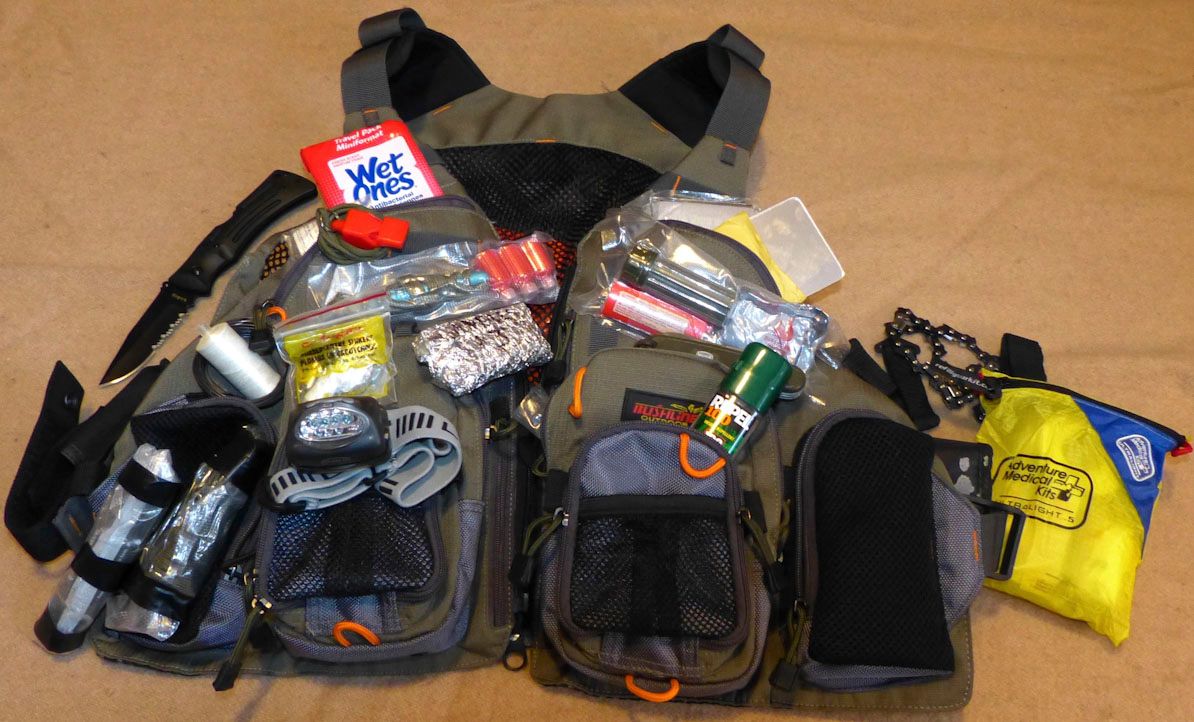
CARS 602.61 requires survival equipment sufficient for the area, season, and climate: means to start a fire, provide shelter, purify water, and signal rescuers. Determine what you'll need based on where you're flying. The BCP Survival Vest article is a good starting point if you're building or reviewing your kit.
As of November 25, 2025, foreign GA aircraft operating in Canada must carry an ELT capable of transmitting on both 121.5 MHz and 406 MHz. If you're still flying with a 121.5-only unit, you're no longer compliant in Canadian airspace. There's another option: a PLB that transmits on 406 MHz and holds a Cospas-Sarsat Class 1 or Class 2 Type Approval Certificate satisfies the requirement in place of an ELT. Either way, check the label on your unit. It will tell you which frequencies it transmits on. Details are in Transport Canada's TP15048 guide.
Regulation Reference
The equipment requirements that apply to US GA pilots transiting Canada are primarily in CARS 602.60 and 602.61—the general operating rules, roughly equivalent to FAR Part 91. Requirements cited from CARS 705 or 604 apply to Canadian commercial and private operators. The full CARs are published at laws-lois.justice.gc.ca.
Canada requires a flight plan or flight itinerary for most operations. The process is similar to the US, but a few details are specific to Canadian airspace.
Flight Plans and Flight Itineraries
A standard VFR or IFR flight plan works the same as it does at home—open before departure, close on arrival. A flight itinerary is a Canadian option that doesn't exist in the same form in the US: you leave your planned route and ETA with a friend, family member, or FBO, who contacts authorities if you don't check in on time. Either satisfies the requirement for most GA operations.
Overflight of Canada
Routing through Canadian airspace between two US destinations, say Haines to McCarthy via Kluane, still requires a filed flight plan. CARS 602.73 is clear: no pilot-in-command shall operate between Canada and a foreign state without one. File with US Flight Service before departure via 1800wxbrief.com or by calling 1-800-WX-BRIEF. Use the ICAO flight plan format, which the FAA now requires for all cross-border flights. If your EFB supports Canadian flight plan filing, confirm it was actually filed before you cross. Don't assume it happened automatically. Some EFBs, including ForeFlight, require an additional Canadian subscription to file Canadian flight plans. Check before you go.
What The Community Says
"Most problems I see are pilots crossing the border without an active flight plan, assuming Foreflight opened it for them. If you don't receive a discreet border-crossing transponder code from ATC before you cross there should be alarm bells going off in your head."
Close your flight plan on arrival by radio with a tower, Flight Information Centre (FIC), or Community Aerodrome Radio Station (CARS), or by calling 1-866-WX-BRIEF. If you specified a Search and Rescue Action Initiation Time (SRAIT), search and rescue action begins at that time. If you didn't, it starts within one hour of your last reported ETA.
Radar coverage and ATC services thin out quickly north of the major corridors, so you can't count on the same in-flight weather access you're used to at home. Before departure, use Nav Canada's Collaborative Flight Planning Services (CFPS) for Canadian graphical area forecasts, PIREPs, and NOTAMs, and the Environment Canada weather portal for surface weather. ForeFlight and Garmin Pilot both support Canadian weather data with their Canadian subscriptions. On the Alaska corridor, 126.7 MHz carries active pilot reports and you'll hear more useful real-time weather from other pilots in the area than from any ground-based service.
Nav Canada Service Charges
To fly in Canada, pilots pay Nav Canada for its air navigation services. Foreign-registered GA aircraft are billed quarterly in Canadian dollars to the aircraft's registered address. Payment can be made by credit card. Use Nav Canada's fee calculator to estimate your charges before your trip.
Radio and Airspace
Canadian airspace works on the same basic structure as the US, with a few procedural differences worth knowing before you're airborne.
Mandatory Frequencies
Canada uses Mandatory Frequencies (MF) at certain non-towered airports, marked ‘M’ on VFR charts and ‘MF’ in the Canada Flight Supplement (CFS). At an MF airport, calls in and out of the zone are required regardless of whether anyone is monitoring. Check the CFS for every airport on your route before departure.
En-Route Position Reporting
The advisory frequency at uncontrolled airports in Canada is 123.2 MHz, the equivalent of 122.9 in the US. En route position reports across Canada are made on 126.7 MHz when not in contact with ATC.
Transponder
A transponder code unique to your flight is required before crossing the border. If you’re on flight following, confirm with the controller that your current squawk code is good for the border crossing. If not, call US Flight Service at 1-800-WX-BRIEF before departure. Radio reception at low altitudes can make it difficult to raise them once you’re airborne. See the BCP forum thread on Canadian airspace overflight for more discussion on border-crossing procedures.
ADS-B
ADS-B Out is not currently required for GA operations in Canadian Class C, D, and E airspace, but the mandate is coming. Canada's system is space-based—built on the Aireon satellite network—and it requires 1090ES with an antenna capable of transmitting upward toward satellites, not just downward toward ground stations. If your aircraft is equipped with a 978 MHz UAT system (common in US-compliant GA), that equipment won't satisfy Canadian requirements when the mandate rolls out. Pilots planning to fly in Canada regularly should be looking at 1090ES transponders that support antenna diversity. Nav Canada's ADS-B performance requirements page has the current details.
If you fly under BasicMed in the US, you'll need a valid FAA medical certificate before crossing into Canada. Transport Canada does not recognize BasicMed — a third class medical certificate or higher is required to operate a US-registered aircraft in Canadian airspace. If your medical has lapsed and you've been flying under BasicMed at home, sort this out well before your trip. FAA medical certificates can take time to obtain depending on your health history and the availability of an Aviation Medical Examiner in your area.
Note that US student pilot, recreational pilot, and sport pilot certificates are also not valid in Canada. A private pilot certificate or higher is required.
Fuel Planning
Fuel availability in the Canadian north requires more planning than most US pilots are used to. Don't assume an airport on the chart has 100LL available on demand.
And don't forget—Canada uses the metric system; fuel is measured in liters, not gallons. If you're doing the mental calculations at the pump, do a quick conversion so you're pumping the correct number of liters into your tanks to correspond with your US gallon-based flight planning. You don't want to end up like the Gimli Glider.
Call Ahead
Many remote Canadian airports have limited fuel hours and require a call-out fee for after-hours service—$50 to $100 Canadian or more is common. Some are self-serve; some require a call to bring someone out. The Canada Flight Supplement lists fuel availability by airport, but it changes. Check NOTAMs and call the airport directly before you go.
100LL is generally more expensive in Canada than in the US, and prices at remote destinations can run significantly higher than at airports near cities. 100ll.ca maintains a current list of Canadian fuel prices by airport.
Range Planning
In summer, wildfire smoke can shut down VFR flying across large parts of Canada. Add firesmoke.ca to your preflight routine for Canadian smoke forecasts. Standard weather tools don't always capture smoke well. The BCP Hazards of Wildfire Smoke article covers the health effects, visibility impacts, and flight decision-making.
Flying to Alaska Through Canada
BCP member Ted Waltman maintains fly2ak.com, a planning resource for pilots flying the Alaska corridor, with customs details and frequently asked questions specific to flying through Canada on your way to Alaska.
Firearms
Canada's gun laws are more restrictive than the US, and a mistake can mean being turned back or having your firearm confiscated.
What's Allowed
Non-restricted firearms, most hunting rifles and shotguns, can enter Canada for hunting or sporting purposes. Restricted firearms, including handguns and many semi-automatic rifles, generally cannot be imported by non-residents. Prohibited firearms cannot come in at all. Check the RCMP firearms page and the CBSA import guidance for your specific firearm before you pack.
Non-Resident Firearm Declaration
Before you arrive at customs if you're bringing an eligible firearm, complete RCMP form 5589. It will be your temporary license and registration in Canada, so have it ready when you land.
Magazine Capacity
Canada limits centerfire semi-automatic rifle magazines to five rounds and handgun magazines to ten. Magazines over those limits cannot enter Canada even if the firearm is otherwise legal. This catches US hunters off guard more than almost anything else on this list. Check your magazines before you pack.
Storage and Transport
Firearms must be transported unloaded in a locked hard-sided case. Have the case and lock in place before you cross the border.
Restricted radiotelephone operator's permit. Technically, Canadian regulations require the pilot to hold a restricted radiotelephone operator's permit and the aircraft to carry a radio station license when operating in Canadian airspace. In practice, these are rarely if ever requested from US pilots at customs or on a ramp check, but they are on the books. The pilot permit is a one-time, lifetime FCC credential with no exam required. Apply online through the FCC's ULS license manager and select "RR – Restricted Operator." AOPA's Canada travel page walks you through how to do this.
ArriveCAN is no longer required. It was mandatory during and after COVID but was discontinued in October 2022, so you don't need the app.
Backcountry advisory frequency is 123.2 MHz. En-route position reports go out on 126.7 MHz.
VFR over-the-top requires a separate Canadian rating. It's not automatic for US PPL holders the way instrument privileges work at home. Canadian commercial pilots get the VFR OTT rating automatically, but if you hold a US private certificate only, you don't have the equivalent privilege in Canada. The rules are in CARS 602.116. If you're planning an OTT flight, confirm your eligibility before you go.
Landing in a national park requires an Aircraft Access Permit. Transport Canada recommends a minimum of 2,000 ft AGL over national parks and historic sites, and landing in a national park requires an Aircraft Access Permit. Wildlife harassment rules apply to aircraft as well. If your route takes you through Kluane, Nahanni, or other national park airspace, review the specific rules at Parks Canada's aircraft page before you go.
ForeFlight users: The Canadian data subscription includes the CFS and Canadian VFR charts in the app, which is the simplest way to have current airport information without buying the paper publication separately.
Nav Canada invoices come by mail, billed quarterly in Canadian dollars to your aircraft's registered address. Although it's required, it's not a large amount for most GA trips. Use Nav Canada's fee calculator to estimate your charges before your trip. More on Nav Canada services at navcanada.ca.
121.5-only ELTs are no longer compliant in Canadian airspace as of November 2025
Flight planning
Flight plan or itinerary required per CARS 602.73; overflight of Canada still requires a filed plan—file via 1800wxbrief.com
Don't assume your EFB filed it—no transponder code means no active flight plan
Nav Canada charges
Payment of Nav Canada service charges is required for all flights in Canadian airspace—billed quarterly in Canadian dollars to your aircraft's registered address
Use Nav Canada's fee calculator to estimate your charges before you go
Semi-auto rifle magazines limited to 5 rounds—check yours before you pack
Plan your trip to Canada
Where do you want to go? Share your plans with the community. Get inspiration, ideas, or tips from other pilots. Start a thread.
Recommended Reading*
Flight of the Red Beaver: A Yukon Bush Pilot Adventure (Larry Whitesitt, 2010) — A US pilot, Whitesitt logged over 4,000 hours flying de Havilland Beavers across the Yukon, Northwest Territories, and British Columbia. Close calls, a crash in a ski plane on a frozen lake, grizzly bear encounters, and the fulfillment of a boyhood dream to go north and live off the land.
Flying to Extremes: Memories of a Northern Bush Pilot (Dominique Prinet, 2012) — Prinet flew floats in the Canadian Arctic and Northwest Territories out of Yellowknife in the late 1960s and early 70s. The stories range from close calls to outright disasters across some of the most remote flying terrain on the planet. The best chapters include "Crashing Through the Ice","Sinking with a Floatplane in the Arctic Ocean", and "Gold, Dead Bodies, and Airplane Crashes in the Nahanni River".Through his photos, he captures the people and places along the way. Read three previously unpublished stories on BCP.
*The above links are affiliate links. Backcountrypilot.org may earn a small commission if you purchase through them, at no extra cost to you.
This guide reflects our best understanding of applicable regulations and procedures. Regulations change—verify requirements with Transport Canada, CBSA, and other relevant authorities before your trip. Nothing here constitutes legal or regulatory advice.
Add your knowledge! The Knowledge Base is a dynamic, active project and depends on information submitted by knowledgeable pilots, mechanics, and aircraft owners. If you have a specific addition, suggestion, or change for the article, you can comment below and even attach files. If you have an idea for a new article, please email [email protected].
This is a living article in the Knowledge Base. If you have feedback on the accuracy or legitimacy of this entry, or would like to add more information, join the discussion below or email knowledge@backcountrypilot.org to volunteer your input. Suggestions and changes will be incorporated readily.
While this knowledge base is a compilation of information from various sources, some official in nature, it is not a recognized or acredited source of aviation training information, and thus should be considered entertainment. Please consult a FAA-certificated flight instructor or mechanic prior to putting any information found here into practice.
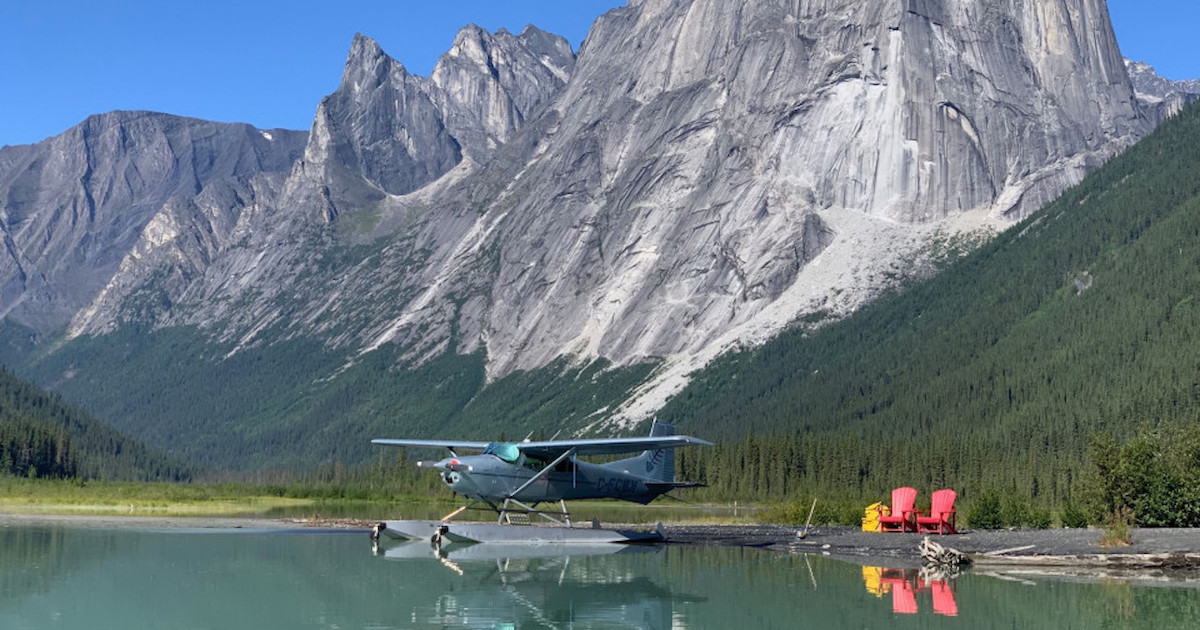 Photo by @Boreal1



Comments (2)