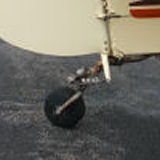
Regarding a future electric Bush Plane vs just motor glider, maybe some pilots just need a 2 hour flight endurance plus some "reserve" . If endurance and power requirements are modest, maybe an electric Rans S7S might be feasible.
I am in the greater Washington, DC area and some folks just commute 20 miles a day in their car, and for them an electric car with a 100 mile range works just fine. If batteries can spin an electric motor for three hours at full blast on a 1320 lb. LSA, then maybe that electric Bush Plane is not that far off.
Now cover those wings, fuse top, and horizontal stab with a high efficiency photo voltaic layer. Also, after you have landed on that gravel bed, maybe a small pop out auxiliary wind generator could be deployed on the ground to also recharge the batteries, Finally, maybe as an emergency reserve, a very high efficiency additional small onboard fuel cell type battery could provide an extra 15 minutes of SOS power in a crunch, or in case of a primary battery failure.
A possible Hybrid approach may also be in the cards, at least in the transition as battery efficiencies continue to evolve.
 Motor head: The new plane is the first to have a hybrid drivetrain
 Details are in the article below.
This article :
http://www.technologyreview.com/news/516576/once-a-joke-battery-powered-airplanes-are-nearing-reality/ notes:
Once a Joke, Battery-Powered Airplanes Are Nearing Reality.
Two things have changed. The amount of energy that batteries can store is steadily improving, and this looks likely to continue as they’re developed for use in portable electronics and electric vehicles, Bradley says. Meanwhile, the technologies needed to integrate batteries and electric motors with conventional engines are getting smaller, lighter, and more efficient. Siemens demonstrated an earlier version of its hybrid airplane in 2011, but it was too heavy to be practical. For the new plane, Siemens decreased the weight of the electric motor, power electronics, and gears by 100 kilograms to bring its cargo and passenger capacity up to the level of similarly sized small planes.
In airplanes, a hybrid electric design improves efficiency mainly by making it possible to use a relatively small gas-powered engine designed to run at its most efficient at cruising speeds. The battery and electric motor provide the extra power needed for takeoff and ascent. The batteries also make it possible to recover energy during descent much the way hybrid cars capture energy during braking (propellers spin a generator). And, as batteries improve, they will provide more and more of the energy on board.
Electric motors confer other advantages. They can be mounted in unusual places on an airplane, which can be used to improve aerodynamics. They can also be steered: angled upward, for example, during takeoff to get a plane off the ground faster. In flight, the motor could be pointed left or right to steer the plane, eliminating the need for a rudder. These design changes, together with the efficiency of the hybrid propulsion, could help decrease fuel consumption by half, he says (see “‘Hybrid Wing’ Uses Half the Fuel of a Standard Airplane”).
Some Additional links on
Fuel Cells :
http://en.wikipedia.org/wiki/Fuel_cell#Airplanesand
http://www.cleantechinvestor.com/portal/fuel-cells/5382-fuel-cells-in-aircraft.html


 Maybe the FAA could even add a few pounds to the 1320 lb. LSA limit much like they adjust for planes with floats. That might help to encourage development and sales. A full EAB electric would be cool too. Tesla Aircraft Corporation…hmmm … now that sounds interesting.
 we dare ya...double dare ya. One thing for sure...no electric starter needed...