Any backcountry aircraft with fowler flaps?
Fri Jun 26, 2015 2:30 am
Re: Any backcountry aircraft with fowler flaps?
Doesn't the bird dog have fouler flaps? Or are they slotted too?

tricycles are for little girls
Fri Jun 26, 2015 3:33 am
Re: Any backcountry aircraft with fowler flaps?
Wow - thanks very much everyone for all the useful information and suggestions! This really is a great group.
Usually if I ask a question from left field, and people tell me where to get off
Lots to think about!
We have just been having a long conversation about the potential benefits, and possible drawbacks...
Some of the downsides include:
We worried that the slow airspeeds of a STOL plane, would mean there isn't enough energy in the airflow to re-energize the boundary layer and keep the airflow attached over the back of the flap, to create that extra lift. So it was great to hear that the Cub slotted flap design does makes a noticeable difference, even at very slow Cub airspeeds! Concern allayed, thank you Tradecraft! We were also wondering about increased control effectiveness, we thought it would improve theoretically - again - thanks for adding weight to the discussion!
Thanks for your suggestions too SoggyC, we were also thinking of hiding some tiny VGs on the L/E of the flap. I think that would help extract every last pound of lift from the system, as well as helping with boundary layer control as discussed above.
Our only concern was making the stall too aggressive and sudden...?
One of the greatest things about the Bearhawk, is it's not "holding on too tight", so when it stalls - the top of the CL curve is pretty flat - plain English - nothing happens, you can fly it stalled, you can use the ailerons. The plane keeps on going. My pushing it closer to the ragged edge, it will become more dangerous in the stall. There's not much can be done about that, if we want more performance.
We have worked out all the major geometric issues. So mechanically, this upgrade is very possible with our existing wing.
The question truly is this - do you think the benefits will pay off:
Usually if I ask a question from left field, and people tell me where to get off
Lots to think about!
We have just been having a long conversation about the potential benefits, and possible drawbacks...
Some of the downsides include:
- Heavier
- Possible loss of airspeed in cruise
- Electric flaps
- Aesthetically less attractive
- More complex
- More aggressive stall characteristics
We worried that the slow airspeeds of a STOL plane, would mean there isn't enough energy in the airflow to re-energize the boundary layer and keep the airflow attached over the back of the flap, to create that extra lift. So it was great to hear that the Cub slotted flap design does makes a noticeable difference, even at very slow Cub airspeeds! Concern allayed, thank you Tradecraft!
We were also wondering about increased control effectiveness, we thought it would improve theoretically - again - thanks for adding weight to the discussion!Thanks for your suggestions too SoggyC, we were also thinking of hiding some tiny VGs on the L/E of the flap. I think that would help extract every last pound of lift from the system, as well as helping with boundary layer control as discussed above.
Our only concern was making the stall too aggressive and sudden...?
One of the greatest things about the Bearhawk, is it's not "holding on too tight", so when it stalls - the top of the CL curve is pretty flat - plain English - nothing happens, you can fly it stalled, you can use the ailerons. The plane keeps on going. My pushing it closer to the ragged edge, it will become more dangerous in the stall. There's not much can be done about that, if we want more performance.
We have worked out all the major geometric issues. So mechanically, this upgrade is very possible with our existing wing.
The question truly is this - do you think the benefits will pay off:
- Primarily - lower deck angle, slightly lower stall speed - these are the main things we want
- Secondary - much lower stall speed, increased elevator authority - nice to have
- Tertiary - added custom-factor

Fri Jun 26, 2015 8:36 am
Re: Any backcountry aircraft with fowler flaps?
Battson wrote:I think the mechanical engineering side of the calculations would be very straightforward (load, stress/strain, etc.). It's the aerodynamic calculations which I don't put any weight in.There's not many personally available computational engines around for a 3D flow model which work without a huge amount of validation (the old BS in, BS out theory). Sure you can do it for 2D sections, but the assumptions you are forced to make throw the benefits we're talking about here into the margin for error.

Some of us have (and use) good CFD codes at home.
But you can ballpark many of the basic results of flap performance on a napkin to get an idea of your potential gains. For example, using the graphs you provided, the plain and Fowler flap data show a 33% and 83% increase in Clmax respectively, compared to a clean wing. If the flapped portion of the wing area is 50%, then the reduction in stall speed for the plain and Fowler designs is roughly 8% and 16% respectively.
To use a familiar example, a Cessna 182 has a flap span of roughly 46%, a clean stall speed of 67, and a dirty stall speed of 60 (a reduction of about 10%). This means the overall Clmax of an entire wing is roughly 25% higher with the flaps down, and the flapped section of the wing has a Clmax about 54% higher than the unflapped portion.Changing to some fancy Fowler flap design with the same flap span with the performance on your graph would drop the dirty stall speed down to 57, an improvement of only three mph over the present Cessna design. Increasing the flapped span of course affects the stall speeds. If a Cessna had full span Fowlers with the performance of the data you gave, the new stall speed would be approximately 50 mph, for example. The Wren 460, for example, used double slotted flaps on the full span, changed the airfoil at the front to allow it to stall at a higher angle of attack (increasing Clmax even more), and a canard to help with pitch which also reducing the tail down load by nearly 200 lbs according to the developer. These measures made a plane that weighed so much it was a 2 person plane and slowed it down by a lot even with a big engine, but it could be landed down in the mid to upper 30's (mph). I got to fly in one about 30 years ago, and it was impressive for what it was.
Fri Jun 26, 2015 8:55 am
Re: Any backcountry aircraft with fowler flaps?
Don't let the electric flap option be the deal breaker. Air Tractors have them, and they are deployed on every turn. I think they get decent service life even with so much action.
Fri Jun 26, 2015 9:40 am
Re: Any backcountry aircraft with fowler flaps?
May be late to the game, but the Cessna semi-fowlers aside, I think the Porter, and the PC12 have Fowlers or "double slotted" fowlers. I could be wrong. Also, looking at the flaps in person on the Caravan....they look pretty "Fowlerish" to me.
- fiftynineSC offline
- Posts: 390
- Joined: Mon Dec 07, 2009 11:41 am
- Location: Frisco
- Aircraft: Cessna 185F
Fri Jun 26, 2015 10:39 am
Re: Any backcountry aircraft with fowler flaps?
I'm not sure you'd see that much difference in the aggressiveness of the stall with Fowler flaps over more conventional flap designs.
One issue, however, with driving down the stall speed is that you may have to make your ailerons more effective. That can be done, of course, but to do so generally means a significant wing re-design. As an airplane stall speed slows, there is less flow over the ailerons, and at some point you may run into flow separation over the ailerons. Note that the Breeden's "Glacier Cub" has slats, Keller flaps, and spoilers to augment roll authority at slow speeds.
Finally, talk to Wayne Mackey about a set of his slats. Those things allow the Cub wing to be driven to 27 degrees AOA.....amazing. Of course, this results in a very high deck angle, which can be improved upon with very effective flaps. In other words, sticking a set of Wayne's slats on the LE of your wing will likely eliminate any worries over stall characteristics. And the slats just "stick on" with almost no wing modification.
MTV
One issue, however, with driving down the stall speed is that you may have to make your ailerons more effective. That can be done, of course, but to do so generally means a significant wing re-design. As an airplane stall speed slows, there is less flow over the ailerons, and at some point you may run into flow separation over the ailerons. Note that the Breeden's "Glacier Cub" has slats, Keller flaps, and spoilers to augment roll authority at slow speeds.
Finally, talk to Wayne Mackey about a set of his slats. Those things allow the Cub wing to be driven to 27 degrees AOA.....amazing. Of course, this results in a very high deck angle, which can be improved upon with very effective flaps. In other words, sticking a set of Wayne's slats on the LE of your wing will likely eliminate any worries over stall characteristics. And the slats just "stick on" with almost no wing modification.
MTV

Fri Jun 26, 2015 1:05 pm
Re: Any backcountry aircraft with fowler flaps?
The Helio Courier has 74% span single slotted fowler flaps. Here is a link to a discussion of the "Vortex Flap" mod on the Helio.
http://flyhelio.com/smf/index.php?topic=257.0
http://flyhelio.com/smf/index.php?topic=257.0

Fri Jun 26, 2015 3:01 pm
Re: Any backcountry aircraft with fowler flaps?
Check out the testing that De Havilland did with the DH 3 "Batwing" flap mod...now that's some serious Fowler flap action!
- northernguy offline


- Posts: 98
- Joined: Sat Oct 06, 2012 1:09 pm
- Location: Anahim Lake & Prince George
Fri Jun 26, 2015 5:06 pm
Re: Any backcountry aircraft with fowler flaps?
lesuther wrote:But you can ballpark many of the basic results of flap performance on a napkin to get an idea of your potential gains. For example, using the graphs you provided, the plain and Fowler flap data show a 33% and 83% increase in Clmax respectively, compared to a clean wing. If the flapped portion of the wing area is 50%, then the reduction in stall speed for the plain and Fowler designs is roughly 8% and 16% respectively.
Yeah exactly - the increases in CLmax is what I would ideally like to validate, on the freshly flapped wing I could be building.
In our case, the Bear is stalling at 33-34kts right now. If we had the wing the graphs are based upon, we could shave 8% (3kts) off that with a fowler design. But of course our wing is different.
Fri Jun 26, 2015 5:32 pm
Re: Any backcountry aircraft with fowler flaps?
mtv wrote:I'm not sure you'd see that much difference in the aggressiveness of the stall with Fowler flaps over more conventional flap designs.
One issue, however, with driving down the stall speed is that you may have to make your ailerons more effective. That can be done, of course, but to do so generally means a significant wing re-design. As an airplane stall speed slows, there is less flow over the ailerons, and at some point you may run into flow separation over the ailerons. Note that the Breeden's "Glacier Cub" has slats, Keller flaps, and spoilers to augment roll authority at slow speeds.
Finally, talk to Wayne Mackey about a set of his slats. Those things allow the Cub wing to be driven to 27 degrees AOA.....amazing. Of course, this results in a very high deck angle, which can be improved upon with very effective flaps. In other words, sticking a set of Wayne's slats on the LE of your wing will likely eliminate any worries over stall characteristics. And the slats just "stick on" with almost no wing modification.
MTV
I hope it won't make the stall more aggressive. Right now we can fly very close to the stall because it's so docile. The only problem is the nose angle is quite high.
Fortunately, the ailerons on the BH are already overpowered at pretty much any airspeed, so hopefully no re-design should be necessary.
I definitely agree that leading edge slats create a lot of extra lift. If all we wanted was lower stall speed, and cruise performance was no issue... But as you say, trouble is it's lifting the front of the wing, so it would exaggerate one of the main issues we are trying to improve. But a few more knots off the stall would be pretty nice too!
Fri Jun 26, 2015 5:34 pm
Re: Any backcountry aircraft with fowler flaps?
northernguy wrote:Check out the testing that De Havilland did with the DH 3 "Batwing" flap mod...now that's some serious Fowler flap action!
 Flaps much? hahaha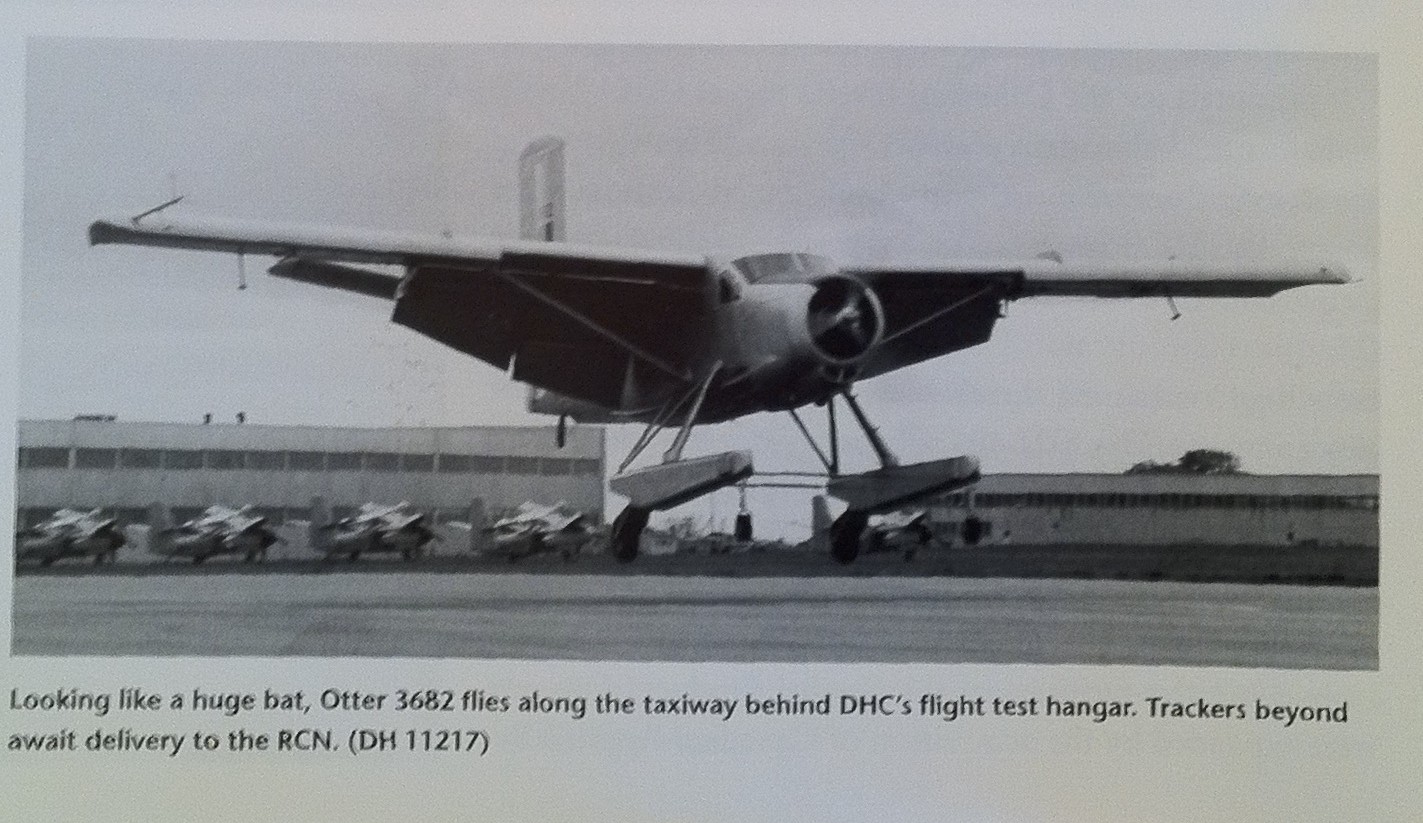
Fri Jun 26, 2015 7:25 pm
Re: Any backcountry aircraft with fowler flaps?
^^^Thanks! I couldn't figure out how to post a photo. I'm not too bright...as I'm sure you guys have figured out 
Check out the cuffed leading edge too....
Check out the cuffed leading edge too....
- northernguy offline
- Posts: 98
- Joined: Sat Oct 06, 2012 1:09 pm
- Location: Anahim Lake & Prince George
Fri Jun 26, 2015 8:07 pm
Re: Any backcountry aircraft with fowler flaps?
If you're looking for other homebuilt aircrafts to base your design for tracks and linkages, the glasair sportsman has fowler flaps. I believe the dream aircraft tundra also has fowler flaps, but was unable to find pictures. Some thought would have to be put in concerning the rotational force on the rear spar, being that the fowler flap has a longer moment.


- FarmerFranck offline
- Posts: 29
- Joined: Sat May 14, 2011 7:23 am
- Location: North Bay, ON
- Aircraft: Bushcaddy R80
Mon Jul 20, 2015 12:10 am
Re: Any backcountry aircraft with fowler flaps?
So my literature review and other research has come up with a few points, basically confirming the information posted above:
> Fowler flaps work by a nozzle action, accelerating air through a gap to create suction and keep airflow attached to the flap's upper surface. The shape of the slot pocket matters.
> Aerodynamically, the height of the slot is very important. A height 2% or 2.3% of chord creates much more lift than larger or smaller slots, with or without L/E slats respectively.
> As the flap extends, the further aft the flap can travel the more lift it can generate. Retaining that 2.3% slot as it travels is important.
> Maintenance-wise, fowler flaps create a considerably larger bending moment on the rear spar and this can cause maintenance issues over the longer term, in aircraft such as Cessna.
> Fowler flaps work by a nozzle action, accelerating air through a gap to create suction and keep airflow attached to the flap's upper surface. The shape of the slot pocket matters.
> Aerodynamically, the height of the slot is very important. A height 2% or 2.3% of chord creates much more lift than larger or smaller slots, with or without L/E slats respectively.
> As the flap extends, the further aft the flap can travel the more lift it can generate. Retaining that 2.3% slot as it travels is important.
> Maintenance-wise, fowler flaps create a considerably larger bending moment on the rear spar and this can cause maintenance issues over the longer term, in aircraft such as Cessna.
Tue Jul 21, 2015 8:59 am
Re: Any backcountry aircraft with fowler flaps?
I've seen where guys extend the wing on a Pacer, increase the flap span, move the ailerons outboard, and put on a short squared tip. Looks like a pretty good idea to me. Also seen where flap deployment is increased- - for example, it's 40 degrees on a 170 or 180 vs 60 degrees on the L19. Has anyone modified a Piper (supercub or pacer) flap by increasing the length of the dropped hinges? Look at a Husky flap hinge design compared to a supercub, and you'll see what I mean-- it gives some fowler action (down AND back) to the basic hinged flap design, like the Cessna barn doors, but no tracks & rollers to mess with.
Cessna Skywagon -- accept no substitute!
Thu Dec 31, 2015 7:44 pm
Re: Any backcountry aircraft with fowler flaps?
I thought fowler flaps had slots.I was probably wrong.
Doesn’t the Found Bush Hawk have fowler flaps?
Doesn’t the Found Bush Hawk have fowler flaps?
- MountainFlyerN22 offline
- Posts: 80
- Joined: Fri Nov 20, 2015 12:23 am
- Location: Catskill
Thu Dec 31, 2015 8:29 pm
Re: Any backcountry aircraft with fowler flaps?
Sounds like your main issue is nose high attitude at stall. The Cessna 180 doesn't stall nose-high, (power off/low) so maybe the semi-fowler is all you need?


Sat Jan 02, 2016 7:55 pm
Re: Any backcountry aircraft with fowler flaps?
I'll have to defer to the people here who have flown them extensively for the final word, but I believe I recall the deHavilland STOL aircraft (Beaver, Otter, etc) have the true double slotted flaps that were mentioned. They may have some semi-Fowler action as well, I don't know.
Battson, making your Bearhawk into a (true) Fowler flapped airplane looks like a moderate amount of effort. You would need to offset the flap hinge quite a ways down from the wing lower surface (like an airliner flap hinge), but by doing it that way you could achieve the Fowler action with only a "plain" pinned hinge and no complicated tracks and rollers. The trick would be to design a "cove" or recess in the lower skin forward of the hinge line, where the forward portion of the flap would rest in cruise flight. Basically like the drawing you posted. By using this design technique, there will be enough flap area in front of the hinge line to completely fill the gap created when the flap is at its most rearward position.
Battson, making your Bearhawk into a (true) Fowler flapped airplane looks like a moderate amount of effort. You would need to offset the flap hinge quite a ways down from the wing lower surface (like an airliner flap hinge), but by doing it that way you could achieve the Fowler action with only a "plain" pinned hinge and no complicated tracks and rollers. The trick would be to design a "cove" or recess in the lower skin forward of the hinge line, where the forward portion of the flap would rest in cruise flight. Basically like the drawing you posted. By using this design technique, there will be enough flap area in front of the hinge line to completely fill the gap created when the flap is at its most rearward position.

.
Sun Jan 03, 2016 9:28 am
Re: Any backcountry aircraft with fowler flaps?
EZFlap wrote:....Battson, making your Bearhawk into a (true) Fowler flapped airplane looks like a moderate amount of effort. You would need to offset the flap hinge quite a ways down from the wing lower surface (like an airliner flap hinge), but by doing it that way you could achieve the Fowler action with only a "plain" pinned hinge and no complicated tracks and rollers. ....
That part sound easy, why is the redesign of the flap cove necessary? Dropping the hinge points would configure it like a Cessna barndoor flap, rotating down and back when deployed, and that sure works good on a Cessna. Not exactly sure what a true "fowler flap" is, because I've heard those Cessna flaps referred to as a fowler or a semi-fowler design.
Last edited by hotrod180 on Mon Jan 04, 2016 12:03 pm, edited 1 time in total.
Cessna Skywagon -- accept no substitute!
Mon Jan 04, 2016 11:59 am
Re: Any backcountry aircraft with fowler flaps?
Check out this video of the Sherpa flaps. Jump to 2:15
Adding a track may not be too difficult and running a reinforcement strap up to the main spar could relieve some of the stress placed on the rear spar.
Adding a track may not be too difficult and running a reinforcement strap up to the main spar could relieve some of the stress placed on the rear spar.

DISPLAY OPTIONS
Who is online
Users browsing this forum: No registered users and 1 guest
Latest Features
-
-
Featured Bush Planes
As one of the undisputed legends of bush flying, the Cessna 180 hauls a…Read More -
Aircraft Ownership and Maintenance
9 modification mistakes aircraft owners make when trying to "bush out" their birds—why some…Read More -
Live to Tell
A Minnesota pilot is surprised to learn that the sudden asymmetric drag of an…Read More



Latest Knowledge Base
-
Destinations
Canada offers some of the most spectacular backcountry flying on the continent. Here's what you need to know before you go.Read More -
Safety and Survival
Hope that you never have to use your survival vest but knowing you have it and knowing how to use…Read More -
Destinations
A regional guide with ideas for winter camping destinations in California, Nevada, New Mexico, and Arizona.Read More -
Aircraft
Finding an affordable aircraft that can handle the backcountry for $80K or less? A challenge for sure, but with the…Read More