motoadve started a good discussion about tricycle gear takeoff, but we all got bogged down in the mud and never answered his question: "Tricycle gear, what is the your technique for short field takeoffs." The basic low ground effect takeoff is the most efficient takeoff on any surface with either tricycle or tail wheel airplane.
So to answer motoadve's question, I use the basic low ground effect takeoff on all takeoffs except ITO.
Until off the ground, this is the old soft field takeoff procedure. Because the center of gravity is in front of the main gear, the nose wheel is heavy. Also, any mitigation of the forward movement of the main wheels levers extra weight onto the nose wheel. There is some mechanical friction mitigation of the forward movement of the main wheels on any surface. This wheel barrow effect must be dealt with initially with full back stick and full prop blast on the elevator. Still a problem in snow, grass, mud, etc., but that is the best we can do. A safety feature, in a muddy condition like in motoadve's video, is that we will know pretty soon if we can't get off. If the nose gear does not come up out of the mud, we will not get off. We can stop right there.
Like Cary said, the common error with this soft field as a short field technique is that once off, we allow the nose wheel to come way off in a very high pitch attitude. This high pitch attitude mitigates acceleration dramatically. We need to keep the nose wheel just off or rolling without either aircraft weight or any lever action pressure from the friction on the mains.
Now that we have the nose wheel just off and have accelerated enough, we want to use the elevator again to pitch up and get the mains off. Anything on the surface (nose wheel, mains, skids, skis, floats, anything) will lengthen the takeoff run. The design of the airplane is to fly, not move mechanically on the ground or sail in the water. Yes popping the flaps rather than using the elevator will work, but both flap and back on the elevator work best. If we pop the flaps, we want to do it early. If it doesn't pop right up, we need to use elevator as well. We will be wobbly but we need to get the mains off as soon as possible. We're not going for pretty, we are going for the free, extra ground effect kinetic energy.
A very common error, at the point where the mains come off, is to allow the airplane to climb out of low ground effect and get mushy. To get comfortable with pushing hard to get the nose level quickly, in low ground effect, I have students get comfortable with gross dynamic for/aft control wheel movement first. Too often pilots go for the "hover button" first and are just too dammed late. Push the stick forward hard. If you don't like what you get, pull it back. Etc., etc.
The most common error is to go to a high pitch attitude at Vx or Vy airspeed, on a instrument inside the cockpit where our eyes should not be, as now appropriate in the PTS. At least the FAA now admits that we need to accelerate in ground effect. Every extra second we can stay in low ground effect is extra, free kinetic energy of pressure airspeed that can be traded for altitude WHEN NEEDED AT THE OBSTRUCTION.
If the departure path is curved and we don't yet have enough airspeed to safely climb up to clear the down wing in the turn, we can make the wings level rudder turn. Cross controlled? Yes. Creates more parasite drag? Yes. Works safely? Yes.
The tremendous lift, speed, maneuverability, advantage of the free, extra kinetic energy of ground effect is almost unknown in aviation outside of crop dusting. Crop dusters have millions of hours operating overgross because of this free, extra energy. On takeoff, we need to get it as quick as possible and keep it as long as possible.
Best normal/short/soft takeoff
Fri Oct 02, 2015 9:17 am
- contactflying offline
- Posts: 4972
- Joined: Wed Apr 03, 2013 7:36 pm
- Location: Aurora, Missouri 2H2
Download my free "https://tinyurl.com/Safe-Maneuvering" e-book.
Fri Oct 02, 2015 9:31 am
Re: Best normal/short/soft takeoff
Contact so you recommend to stay in ground effect for as long as possible?
Also why is better the turn with rudder than with ailerons?
Also why is better the turn with rudder than with ailerons?
Fri Oct 02, 2015 10:25 am
Re: Best normal/short/soft takeoff
Yes. Stay in low ground effect until you can't stand looking up at the obstructions. I have never had an Ag student hit anything on the way out. I have had some try to jerk it out and bleed energy, but I have never had one wait too long and then try to jerk it out. I have never had to take the controls because of that situation. People, not just pilots, just won't go there.
When we do pull up, we need to be smooth. Any curved flight creates a load, but jerking the controls creates parasite drag before the flying surfaces can adjust to the new relative wind.
Yes. The rudder turn in low ground effect is more efficient. We have taken off from a short field, meybe also soft or bad surface. Staying in low ground effect is safer than trying to climb when we have insufficient kinetic energy of pressure airspeed and insufficient engine energy. The 182 in your video had a very powerful engine, but conditions were bad and he got off very close to the place where he had to turn. He had ample power available, but had he not, he would have had to let the nose go down to prevent stall. He also had some altitude, so no real problem. The problem comes when we don't have the engine power, potential gravity thrust of altitude, or extra airspeed developed from staying in low ground effect. The punishment for giving up this free ground effect acceleration is that we now have to accept controlled flight into terrain or stall and fall into terrain, which is worse.
First practice on a long uncontrolled runway. Descend, with cruise power, to 3'-5' above an approach corner of the runway. Now push the rudder pretty hard, while keeping the wing level with ailerons, toward the other runway edge. Neutralize controls. When about to fly over that runway edge, push the rudder the other way, while keeping the wing level with ailerons. Repeat all the way down the runway and then depart. If there is a crop duster around, have him ride with you as he is very familiar with this technique.
Finally, if the departure path involves quite a bit more turn that the 182 made in the video, use an energy management turn to follow the departure path. Because you are slower than cruise, the wings level zoom up to achieve potential gravity thrust to use in the turn, will be limited. However, it will give enough vertical space to put the down wing into and it will provide enough gravity thrust to prevent stall in the turn.
MTV is right. Outside of crop dusting, patrol work, bush work, firefighting, etc., we don't have to go there. Be careful. Wear good harness and helmet.
When we do pull up, we need to be smooth. Any curved flight creates a load, but jerking the controls creates parasite drag before the flying surfaces can adjust to the new relative wind.
Yes. The rudder turn in low ground effect is more efficient. We have taken off from a short field, meybe also soft or bad surface. Staying in low ground effect is safer than trying to climb when we have insufficient kinetic energy of pressure airspeed and insufficient engine energy. The 182 in your video had a very powerful engine, but conditions were bad and he got off very close to the place where he had to turn. He had ample power available, but had he not, he would have had to let the nose go down to prevent stall. He also had some altitude, so no real problem. The problem comes when we don't have the engine power, potential gravity thrust of altitude, or extra airspeed developed from staying in low ground effect. The punishment for giving up this free ground effect acceleration is that we now have to accept controlled flight into terrain or stall and fall into terrain, which is worse.
First practice on a long uncontrolled runway. Descend, with cruise power, to 3'-5' above an approach corner of the runway. Now push the rudder pretty hard, while keeping the wing level with ailerons, toward the other runway edge. Neutralize controls. When about to fly over that runway edge, push the rudder the other way, while keeping the wing level with ailerons. Repeat all the way down the runway and then depart. If there is a crop duster around, have him ride with you as he is very familiar with this technique.
Finally, if the departure path involves quite a bit more turn that the 182 made in the video, use an energy management turn to follow the departure path. Because you are slower than cruise, the wings level zoom up to achieve potential gravity thrust to use in the turn, will be limited. However, it will give enough vertical space to put the down wing into and it will provide enough gravity thrust to prevent stall in the turn.
MTV is right. Outside of crop dusting, patrol work, bush work, firefighting, etc., we don't have to go there. Be careful. Wear good harness and helmet.
- contactflying offline
- Posts: 4972
- Joined: Wed Apr 03, 2013 7:36 pm
- Location: Aurora, Missouri 2H2
Download my free "https://tinyurl.com/Safe-Maneuvering" e-book.
Fri Oct 02, 2015 6:21 pm
Re: Best normal/short/soft takeoff
I don't have a ton of soft field experience, but I like to practice a lot.
I get the aircraft off the ground as fast as possible and accelerate about 10 ft off the runway while bleeding flaps off to my climb speed, then initiating a climb. I don't see a need to start climbing at Vy or Vx if you have the room to accelerate to a higher climb speed. I climb out at 100 mph right now since my baffles need work, so I stay low until then.
I get the aircraft off the ground as fast as possible and accelerate about 10 ft off the runway while bleeding flaps off to my climb speed, then initiating a climb. I don't see a need to start climbing at Vy or Vx if you have the room to accelerate to a higher climb speed. I climb out at 100 mph right now since my baffles need work, so I stay low until then.
- CamTom12 offline

- Posts: 3705
- Joined: Sun Jul 08, 2012 1:08 pm
- Location: Huntsville
- FindMeSpot URL: https://share.delorme.com/camtom12
- Aircraft: Ruppe Racer
Experimental Pacer
home hand jam "wizard"
Fri Oct 02, 2015 6:52 pm
Re: Best normal/short/soft takeoff
Unless there is a fence to go over, we crop dusters stay in ground effect until we get to the field. Working the field, low (six inches is best) ground effect gives 235 hp Pawnees and Callairs the extra kinetic energy of pressure airspeed to zoom climb up to make the 180 degree turn back to the next swath fifty feet upwind doable. Once the hopper load gets below fifty gallons, that turn is made in 16 seconds.
The reason all the light 65 hp airplanes could operate out of short, unimproved fields was ground effect. Everybody used to learn that way. They had to.
The reason all the light 65 hp airplanes could operate out of short, unimproved fields was ground effect. Everybody used to learn that way. They had to.
- contactflying offline
- Posts: 4972
- Joined: Wed Apr 03, 2013 7:36 pm
- Location: Aurora, Missouri 2H2
Download my free "https://tinyurl.com/Safe-Maneuvering" e-book.
Fri Oct 02, 2015 7:06 pm
Re: Best normal/short/soft takeoff
CamTom12 wrote:I don't have a ton of soft field experience, but I like to practice a lot.
I get the aircraft off the ground as fast as possible and accelerate about 10 ft off the runway while bleeding flaps off to my climb speed, then initiating a climb. I don't see a need to start climbing at Vy or Vx if you have the room to accelerate to a higher climb speed. I climb out at 100 mph right now since my baffles need work, so I stay low until then.
Vy and Vx are only useful for FAA flight demonstrations at gross weight standard temperature and standard pressure. Past that, they can get you killed.
Staying in ground effect as long as possible is just smart flying. It's free lift and free speed.
Imagine an engine failure at 200 feet and Vy. Better get that nose over before stalling (not likely) and dive bomb whatever is in front of you.
That same engine failure in ground effect: put the wheels back on the ground and hit the brakes. OR you might have enough airspeed to do a crop duster turn back to the runway.
Fri Oct 02, 2015 7:23 pm
Re: Best normal/short/soft takeoff
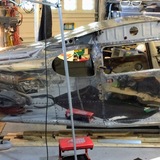
The "FAA Form 337" take-off:
Flying the notorious Western Pacifc with extended tankage...getting ready to cover 2500 NM or more...
I was told ferry pilots in Honolulu say "Do not stay in ground effect for long...". See if the aircraft will climb as soon as possible after rotation and still accelerating. If it can't leave ground effect (about Vy), land! Do not keep flying ground effect until the end of the runway. The runway is freeking hot and ocean is cold in contrast on most days. It will be noticed by a loss of lift.
Ferry pilots, in Hawaii, fly notoriously overloaded and some pilots leave the Islands and never are heard from again. Especially going to the Western Pacific. Our runway is 13,000' feet usable (8R), it was constructed for the Space Shuttle (God Rest It's Soul).
Caution:
Opinion only. Not any advice intended, simply entertaining secondhand information.
Flying the notorious Western Pacifc with extended tankage...getting ready to cover 2500 NM or more...
I was told ferry pilots in Honolulu say "Do not stay in ground effect for long...". See if the aircraft will climb as soon as possible after rotation and still accelerating. If it can't leave ground effect (about Vy), land! Do not keep flying ground effect until the end of the runway. The runway is freeking hot and ocean is cold in contrast on most days. It will be noticed by a loss of lift.
Ferry pilots, in Hawaii, fly notoriously overloaded and some pilots leave the Islands and never are heard from again. Especially going to the Western Pacific. Our runway is 13,000' feet usable (8R), it was constructed for the Space Shuttle (God Rest It's Soul).
Caution:
Opinion only. Not any advice intended, simply entertaining secondhand information.

CFII, MEI, CFISES, ATPME, IA/AP, RPPL, Ski&Amphib ops, RHC mechanic cert, RHC SC— 3000TT
Fri Oct 02, 2015 8:46 pm
Re: Best normal/short/soft takeoff
Bagarre wrote:
Vy and Vx are only useful for FAA flight demonstrations at gross weight standard temperature and standard pressure. Past that, they can get you killed.
Not to be argumentative, but I think there may be situations where knowing these speeds (and better yet, the proper AOA for best rate and best angle especially) could save your life.

Sat Oct 03, 2015 7:29 am
Re: Best normal/short/soft takeoff
Both of you are right. The POH will cause many pilots to not go. Ground effect makes it possible to fly an overloaded aircraft.
I see too many takeoffs, in lightly loaded aircraft, in conditions that make the aircraft act like it is heavily loaded. But, having done the math and thinking they are not limited, they take off normally and climb quickly through ground effect and decelerate to behind the power curve flight. Even without the engine failure Bagarre mentioned, they have a problem here. The only way to go up now is to push forward on the stick. That seldom happens. Yes; most of the time they clear the obstacle with the airplane almost stalled. Too many times, however, they pull back more and mush in or stall.
I use and teach use of the basic low ground effect takeoff as the normal takeoff because we don't always know what is coming and this technique best prepares us for whatever. The basic low ground effect takeoff has saved me grief more than just with my one engine failure on takeoff. The extra energy of spraying in ground effect has helped me on six engine failures. Ground effect has allowed me to make rudder turns to get a loaded spray plane between the trees on many crooked approach and departure paths to unimproved spray strips.
The basic low ground effect takeoff is something that one can avoid learning and generally not suffer from not being able to use the technique. Actually, unless used as a usual practice, it probably won't be there when one needs it. The PTS now requires acceleration in ground effect until Vx or Vy as appropriate. Hopefully that will make this very safe and useful technique more common.
I see too many takeoffs, in lightly loaded aircraft, in conditions that make the aircraft act like it is heavily loaded. But, having done the math and thinking they are not limited, they take off normally and climb quickly through ground effect and decelerate to behind the power curve flight. Even without the engine failure Bagarre mentioned, they have a problem here. The only way to go up now is to push forward on the stick. That seldom happens. Yes; most of the time they clear the obstacle with the airplane almost stalled. Too many times, however, they pull back more and mush in or stall.
I use and teach use of the basic low ground effect takeoff as the normal takeoff because we don't always know what is coming and this technique best prepares us for whatever. The basic low ground effect takeoff has saved me grief more than just with my one engine failure on takeoff. The extra energy of spraying in ground effect has helped me on six engine failures. Ground effect has allowed me to make rudder turns to get a loaded spray plane between the trees on many crooked approach and departure paths to unimproved spray strips.
The basic low ground effect takeoff is something that one can avoid learning and generally not suffer from not being able to use the technique. Actually, unless used as a usual practice, it probably won't be there when one needs it. The PTS now requires acceleration in ground effect until Vx or Vy as appropriate. Hopefully that will make this very safe and useful technique more common.
- contactflying offline
- Posts: 4972
- Joined: Wed Apr 03, 2013 7:36 pm
- Location: Aurora, Missouri 2H2
Download my free "https://tinyurl.com/Safe-Maneuvering" e-book.
Sat Oct 03, 2015 9:30 am
Re: Best normal/short/soft takeoff
Squash wrote:Bagarre wrote:
Vy and Vx are only useful for FAA flight demonstrations at gross weight standard temperature and standard pressure. Past that, they can get you killed.
Not to be argumentative, but I think there may be situations where knowing these speeds (and better yet, the proper AOA for best rate and best angle especially) could save your life.
The proper AOA would be a much more useful measurement. Because Vy and Vx are only meaningful on a Standard day, I think theyre more likely to do harm when life really depends on it.
They should have required AOAs instead of ASIs in little airplanes.
Sat Oct 03, 2015 9:36 am
Re: Best normal/short/soft takeoff
Agree with Bagarre about the potential for the book numbers to get somebody in over their head. But I don't really agree on aoa indicators. Just another distraction.
- Troy Hamon offline
- Posts: 915
- Joined: Tue Apr 06, 2010 8:27 am
- Location: King Salmon
- FindMeSpot URL: http://share.findmespot.com/shared/face ... 04iX0FXjV2
- Aircraft: Piper PA-22
Sat Oct 03, 2015 9:50 am
Re: Best normal/short/soft takeoff
Just another opine and worth the $.02 you paid, but if you are LOOKING at anything inside of the cockpit when you are trying to get your Ass out of a tight spot depending on Ground Affect, you are already SCREWED!!
Look outside, Your SEAT should be telling you all you need to know about what you aircraft is doing!!
I'm talking about BC aircraft, not off of an airport with a Jet or Turbine, or a Twin.
Just my HO!
Look outside, Your SEAT should be telling you all you need to know about what you aircraft is doing!!
I'm talking about BC aircraft, not off of an airport with a Jet or Turbine, or a Twin.
Just my HO!
- M6RV6 offline
- Posts: 2313
- Joined: Mon Feb 25, 2008 5:52 pm
- Location: Rice Wa. 82WN Magee Creek AERODROME
- FindMeSpot URL: http://share.findmespot.com/shared/face ... sWKXuhKlg2
Have as much Fun as is Safe, and Keep SMILIN! GT,
Sat Oct 03, 2015 10:54 am
Re: Best normal/short/soft takeoff
My comment was to say that AOA is far more important than airspeed. Not that we should be staring at it on takeoff.
Sat Oct 03, 2015 11:15 am
Re: Best normal/short/soft takeoff
Bagarre wrote:My comment was to say that AOA is far more important than airspeed. Not that we should be staring at it on takeoff.
I agree. Airspeed is a full step removed from what we want to know in a high performance situation like obstacle take-offs, and that's the performance of the wing.
- CamTom12 offline
- Posts: 3705
- Joined: Sun Jul 08, 2012 1:08 pm
- Location: Huntsville
- FindMeSpot URL: https://share.delorme.com/camtom12
- Aircraft: Ruppe Racer
Experimental Pacer
home hand jam "wizard"
Sat Oct 03, 2015 11:23 am
Re: Best normal/short/soft takeoff
Bagarre wrote:My comment was to say that AOA is far more important than airspeed. Not that we should be staring at it on takeoff.
My mistake!!
It is what makes things work! no matter what you are looking at!! Agreed!
- M6RV6 offline
- Posts: 2313
- Joined: Mon Feb 25, 2008 5:52 pm
- Location: Rice Wa. 82WN Magee Creek AERODROME
- FindMeSpot URL: http://share.findmespot.com/shared/face ... sWKXuhKlg2
Have as much Fun as is Safe, and Keep SMILIN! GT,
Sat Oct 03, 2015 11:25 am
Re: Best normal/short/soft takeoff
Troy Hamon wrote:But I don't really agree on aoa indicators. Just another distraction.
For sure I am not looking at this stuff during roll out, but its unfortunate that these statements are still popping up. How can you not "agree" on AOA's? This is like saying one doesn't "agree" with computers. I take it you don't have one installed nor flown with one?
My AOA is just in the periphery of my field of view. I never look at it per se, but it sure does give me valuable info every moment im running slow or steep. They are an amazing piece of technology indeed. No matter how experienced or great a "seat of the pants" pilot one is, that data will make you better. Like any tool, just learn how to incorporate it in your flow.
- Bigrenna offline


- Posts: 2358
- Joined: Sun Sep 25, 2011 4:02 pm
- Location: New England
- Aircraft: C180H / C170B
www.bushwagoneast.com
Sat Oct 03, 2015 11:32 am
Best normal/short/soft takeoff
I have to agree with M6RV6: Whether airspeed or AOA indicator, you're missing the boat if you're eyeballing that stuff in a real short takeoff off-airport. I think it's something that has to be felt with your senses and stick feedback, which then allows you to keep your eyes outside and avoid plowing over bushes or sticks.
Grab one of those rubber instrument covers or a piece of duct tape and cover your airspeed indicator and go practice in a safe open environment to really feel the aircraft start to fly, without distraction on the panel. I liken it to getting started on a wakeboard or waterski.
To be honest though, I have yet to fly with one of these new AOAIs.
Grab one of those rubber instrument covers or a piece of duct tape and cover your airspeed indicator and go practice in a safe open environment to really feel the aircraft start to fly, without distraction on the panel. I liken it to getting started on a wakeboard or waterski.
To be honest though, I have yet to fly with one of these new AOAIs.

Sat Oct 03, 2015 11:48 am
Re: Best normal/short/soft takeoff
I must be really old. I don't "agree" with computers. Speaking of computers; Zane, you need to add a body language app to this thing. Oh! I missed the little yellow faces on the side. I probably wouldn't know how to use the body language app either.https://www.backcountrypilot.org/commun ... 6&t=18019#
- contactflying offline
- Posts: 4972
- Joined: Wed Apr 03, 2013 7:36 pm
- Location: Aurora, Missouri 2H2
Download my free "https://tinyurl.com/Safe-Maneuvering" e-book.
Sat Oct 03, 2015 11:49 am

- contactflying offline
- Posts: 4972
- Joined: Wed Apr 03, 2013 7:36 pm
- Location: Aurora, Missouri 2H2
Download my free "https://tinyurl.com/Safe-Maneuvering" e-book.
Sat Oct 03, 2015 12:04 pm
Re: Best normal/short/soft takeoff
contactflying wrote:I must be really old. I don't "agree" with computers. Speaking of computers; Zane, you need to add a body language app to this thing. Oh! I missed the little yellow faces on the side. I probably wouldn't know how to use the body language app either.https://www.backcountrypilot.org/commun ... 6&t=18019#
Luddite...

- Bigrenna offline
- Posts: 2358
- Joined: Sun Sep 25, 2011 4:02 pm
- Location: New England
- Aircraft: C180H / C170B
www.bushwagoneast.com
DISPLAY OPTIONS
Who is online
Users browsing this forum: No registered users and 3 guests
Latest Features
-
-
Featured Bush Planes
As one of the undisputed legends of bush flying, the Cessna 180 hauls a…Read More -
Aircraft Ownership and Maintenance
9 modification mistakes aircraft owners make when trying to "bush out" their birds—why some…Read More -
Live to Tell
A Minnesota pilot is surprised to learn that the sudden asymmetric drag of an…Read More


Latest Knowledge Base
-
Destinations
Canada offers some of the most spectacular backcountry flying on the continent. Here's what you need to know before you go.Read More -
Safety and Survival
Hope that you never have to use your survival vest but knowing you have it and knowing how to use…Read More -
Destinations
A regional guide with ideas for winter camping destinations in California, Nevada, New Mexico, and Arizona.Read More -
Aircraft
Finding an affordable aircraft that can handle the backcountry for $80K or less? A challenge for sure, but with the…Read More