
Backcountry Pilot • Carbon Monoxide Detectors - PPM

Carbon Monoxide Detectors - PPM

Lycoming, Continental, Hartzell, McCauley, or any broad spectrum drive system component used on multiple type.
17 postsPage 1 of 1

Carbon Monoxide Detectors - PPM

I have traditionally used the ASA colormetric CO detectors and have never seen a black dot in 12+ years flying my C180. My plane has been down for a few months getting an avionics upgrade. I have flown it about 6-7 hours since it has been back from the shop and the other day had a moderate headache after flying. I decided to buy a digital CO detector from CO experts. It is an ultrasensitive unit and the upper limit warning is set for 50 ppm. The photo below was taken in cruise flight running 23/2400 RPM. The ASA is nice and orange but the digital CO sensor is reading high (above 50 ppm) I obviously have a problem. Curiously, when I lowered the power setting the CO level dropped and at 18/2200 - I saw zero ppm - the second photo. It was also zero on the ground and during the run-up. I had the ACORN exhaust placed about 2 years ago. I was asymptomatic during and after the flight. What level should it read? I assume zero but I would suspect a small amount of CO is acceptable in these old birds. I unfortunately do not know what the peak level is due to the sensitivity of my CO detector - but I don't think it was too much higher because lower power settings would lead to it decreasing - 18/2200 was zero. The heater does not appear to be working as well since the avionics upgrade. Where should I start looking for the leak? Was I flying with a leak all along and just didn't have a sensitive detector? The ASA cards are worthless in my opinion. They likely only turn black when you are close to losing consciousness. I am mad at myself that I took this long to check this out with a digital sensor.

Image

Image
Dog is my Copilot offline
User avatar
Posts: 433
Joined: Thu Apr 12, 2018 11:38 am
Location: Portland
Aircraft: 1958 Cessna 180A

Re: Carbon Monoxide Detectors - PPM

I’m Ok with mine at 5 or less. It’s higher on the climb out. Your exhaust may be fine. You need to look at door seals, firewall leaks, etc. It could be coming out the end of the stack and into the cabin.

Try opening up wing root vents and see if the concentration goes down when you pressurize with a bit of ram air. The effect is to force air out any cabin leaks to prevent ingress of exhaust, but it’s not a solid line between cabin leaks and exhaust. You’ll also reduce the flow out of the heater vent by pressurizing the cabin.

You can also get a passenger to move the detector to the heat ducts, and around the edges of doors and windows to see if and where readings rise.
Pinecone offline
User avatar
Posts: 996
Joined: Thu Jun 11, 2015 6:37 pm
Location: Airdrie
Aircraft: Cessna A185F

Re: Carbon Monoxide Detectors - PPM

Do not forget the vent towards the back where everyone puts their pull handles. In the original design, there where issues with CO levels and it was flowing along the bottom of the fuselage and then back into the cabin recirculating back up to the front of the cabin. Thus they added the vent for pressurization/venting and decrease in CO flow along the fuselage and back into the cabin.
I do not know if I said it correctly in terms of physics/ engineering but I do know that is the purpose of that vent.
gypsy
gypsywagon offline
User avatar
Posts: 124
Joined: Thu Jan 25, 2018 7:26 am
Location: Little Rock
Aircraft: Cessna 185D

Re: Carbon Monoxide Detectors - PPM

-0-
Last edited by dogpilot on Wed Aug 05, 2020 11:37 pm, edited 1 time in total.
dogpilot offline
Took ball and went home
Posts: 902
Joined: Sun Feb 19, 2012 10:20 pm
Aircraft: Cessna 206H Amphib, Caravan 675 Amphib

Re: Carbon Monoxide Detectors - PPM

Seems like the heater is the most logical place to check for contamination. Obviously not the only place it can get in, but it's the most obvious pathway.

My industrial CO detector has pre-set alarms at 35 and 200 ppm. Seems like quite a variance... It's never gone off so I haven't read the literature for a while and can't explain the two settings.

One nice thing about the CLIP is that if it does go off there's both an audible and vibratory alarm. I attach it to the shoulder strap at my clavicle so it's close to my ears, and even if I don't hear it I'll feel it.

Image
Hammer offline
KB and Supporter
User avatar
Posts: 2094
Joined: Mon Jan 08, 2007 9:15 am
Location: 742 Evergreen Terrace

Re: Carbon Monoxide Detectors - PPM

Hammer;

The concentrations for the alarms are the OSHA limits for CO from 1989.

"1989 OSHA PEL: 35 ppm (40 mg/m3) TWA, 200 ppm (229 mg/m3) CEILING"

The 35 ppm Time Weighted Average (TWA) is a limit that a worker would be safe in for an 8 hour working day below the 35 ppm level. If the TWA is exceeded there are limitations on time and the limitations change depending on how much above the TWA the peak was and how long.

Ceiling is the concentration that you should remove your self from the environment A short-term exposure limit is one that addresses the average exposure over a 15-30 minute period of maximum exposure during a single work shift. A ceiling limit is one that may not be exceeded for any time, and is applied to irritants and other materials that have immediate effects.

If you so not get to the alarm you are under the concentration that the TWA was determined for the gas. One question is how long has it been since that detector has been calibrated or bump tested? The accuracy may be off if it has been some time.
soaringhiggy offline
User avatar
Posts: 711
Joined: Tue Dec 13, 2005 8:22 pm
Location: Kimberly, ID
48 Stinson 108-3

Re: Carbon Monoxide Detectors - PPM

soaringhiggy wrote:Hammer;

The concentrations for the alarms are the OSHA limits for CO from 1989.

"1989 OSHA PEL: 35 ppm (40 mg/m3) TWA, 200 ppm (229 mg/m3) CEILING"

The 35 ppm Time Weighted Average (TWA) is a limit that a worker would be safe in for an 8 hour working day below the 35 ppm level. If the TWA is exceeded there are limitations on time and the limitations change depending on how much above the TWA the peak was and how long.

Ceiling is the concentration that you should remove your self from the environment A short-term exposure limit is one that addresses the average exposure over a 15-30 minute period of maximum exposure during a single work shift. A ceiling limit is one that may not be exceeded for any time, and is applied to irritants and other materials that have immediate effects.

If you so not get to the alarm you are under the concentration that the TWA was determined for the gas. One question is how long has it been since that detector has been calibrated or bump tested? The accuracy may be off if it has been some time.


Thanks soaringhiggy, that makes good sense. Off topic, I wonder what the CO exposure is for a pack-a-day smoker?

The CLIP Single Gas Detector I have is good for 24 months' usage from the date of activation (you pull a tab when you receive it, activating the battery and starting the clock), and an air-tight "hibernation case" gives another 12 months of useful...er...usefulness...not to exceed 36 months of total atmosphere exposure. Then I guess you toss it in the dumpster and buy a new one. Roughly $33.33 per year for the average pilot, with no calibration needed in normal circumstances.

I agree that those "dots" are only helpful to first responders who find your bright red corpse and can then focus their investigation based on the fact that once one those dots turns black, only bacteria and viruses could have survived the CO-rich atmosphere.

But at least they're cheap!
Last edited by Hammer on Mon Feb 24, 2020 9:34 am, edited 1 time in total.
Hammer offline
KB and Supporter
User avatar
Posts: 2094
Joined: Mon Jan 08, 2007 9:15 am
Location: 742 Evergreen Terrace

Re: Carbon Monoxide Detectors - PPM

hammer;

no prob,

errrrr... aviation cheap, ya!
soaringhiggy offline
User avatar
Posts: 711
Joined: Tue Dec 13, 2005 8:22 pm
Location: Kimberly, ID
48 Stinson 108-3

Re: Carbon Monoxide Detectors - PPM

hmmm...

smokers, non-pressurized air frames smokers need not apply.
soaringhiggy offline
User avatar
Posts: 711
Joined: Tue Dec 13, 2005 8:22 pm
Location: Kimberly, ID
48 Stinson 108-3

Re: Carbon Monoxide Detectors - PPM

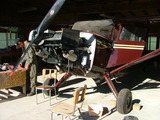
I inspected the airframe today and found this vented inspection cover shown in the picture below with the opposite orientation - having the intake vents pointed forward. I turned the inspection cover back into the correct orientation. My CO levels dropped significantly. The CO detector read between 20-35 ppm during high cruise flight today - zero at low power settings. I am guessing I had some type of leak before the avionics work and this inspection cover was placed in the wrong orientation causing the more severe CO problem. I am hoping it won't be too hard to find the other source of the CO problem. My IA said it could also be the seals on the baggage door. They are worn really bad. The back seat is out along with the extended baggage compartment because the avionics shop found a some damage to the elevator cable. Not sure how that effects the venting inside the cabin.

Image


Of note - this article listed below shows the average smoker has levels ranged from 3-99 ppm - with 74% above 10 ppm. So I guess running between 20-35 - is sort of like smoking a half pack per day.
Dog is my Copilot offline
User avatar
Posts: 433
Joined: Thu Apr 12, 2018 11:38 am
Location: Portland
Aircraft: 1958 Cessna 180A

Re: Carbon Monoxide Detectors - PPM

I recently listened to a podcast with Dan Bass retelling his story. He experienced carbon monoxide poisoning and lost consciousness while airborne. It’s a good listen.
https://www.aopa.org/training-and-safet ... ent-photos

It inspired me to finally get a digital detector as well. You are right. The little cards are worthless.
There are studies of the lower concentrations of CO exposure. The whole smoker thing is addressed in these studies as well. From what I gather you don’t want to be exposed to CO of any ppm. Concentrations of 10-30ppm of CO for as little as an hour have been shown to effect people.

I chose this little detector. I like it’s little mount tray and it reads fast. You can’t hear the alarm at all while flying is the down side. https://www.amazon.com/dp/B076S6KBP2/re ... uEb3TB1D25

My first flight with my 180 the detector was in the mid 30’s. Even with the heat off it stayed the same. I didn’t have any door seal at the time. The new door seals and gear leg seals cut it in half. Mainly the door seal on the pilot side. The rest was getting in the belly panels and the tail section.
ABE3BEF5-DEF2-4FA2-99DE-D3EE0154D67B.jpeg
PAMR MX offline
User avatar
Posts: 469
Joined: Thu May 08, 2014 10:28 pm
Location: Merrill Field

Re: Carbon Monoxide Detectors - PPM

Dog is my Copilot wrote:I inspected the airframe today and found this vented inspection cover shown in the picture below with the opposite orientation - having the intake vents pointed forward. I turned the inspection cover back into the correct orientation....


Hey Josh, don't recall ever seeing one of those on a 180-- at least, not an early model.
I have seen a scoop-ish sort of thing on later models that I believe were designed to pressurize the tailcone,
to prevent CO intrusion, but I think they're up on top. Dunno if there is anything that goes on the bottom.

By any chance, you don't have a vented aft cabin bulkhead cover, do you?
I recall somebody talking about a mod like that which was supposed to increase effective cabin heat
by allowing more airflow through the cabin.
Seems like there'd have to be an outlet in the tailcone somewhere to get that airflow.
hotrod180 offline
Supporter
User avatar
Posts: 10534
Joined: Wed Jan 26, 2005 11:47 pm
Location: Port Townsend, WA
Cessna Skywagon -- accept no substitute!

Re: Carbon Monoxide Detectors - PPM

I had the vents shown below placed about 3 years ago - along with the precise airflow vents. The tailcone vent is part of the kit. It improved the airflow significantly. How it affects my CO is uncertain since I have been using the ASA - death detectors for years thinking I was safe.


https://www.aircraftspruce.com/catalog/ ... lowkit.php
Dog is my Copilot offline
User avatar
Posts: 433
Joined: Thu Apr 12, 2018 11:38 am
Location: Portland
Aircraft: 1958 Cessna 180A

Re: Carbon Monoxide Detectors - PPM

Yeah, that's the mod I was talking about.
Did it seem to increase the cabin heat / airflow as clained?
hotrod180 offline
Supporter
User avatar
Posts: 10534
Joined: Wed Jan 26, 2005 11:47 pm
Location: Port Townsend, WA
Cessna Skywagon -- accept no substitute!

Re: Carbon Monoxide Detectors - PPM

I put the precise airflow vents in at the same time so it is hard to know for sure - but I am overall very happy with the system - especially the precise vents. I added the Sportsman kit right after I bought the airplane and that mod seemed to reduce some of the cabin ventilation - especially during descents and at high airspeeds. The heater seems to draw more heat after the venting. When the vent was improperly oriented after the avionics upgrade - it made me think the heater wasn't working as well - but with correct orientation it is working better now. I am going to put a regular inspection cover over the tail on my next flight and see if the CO issue resolves. I am guessing the leak is from the another source.


Josh
Dog is my Copilot offline
User avatar
Posts: 433
Joined: Thu Apr 12, 2018 11:38 am
Location: Portland
Aircraft: 1958 Cessna 180A

Re: Carbon Monoxide Detectors - PPM

I know the OSHA limits are what your posted above, but long term low level CO is pretty bad for you.

Google for low level CO exposure and take a peek.

My 182 has a guardian, but you can buy really accurate co monitors like one of you posted above for 100 bucks and why not?

My 182 reads zero always, unless I open a window on the ground when there is a tailwind.

I like zero.
SloRoam offline
User avatar
Posts: 35
Joined: Wed Dec 12, 2018 12:53 pm
Location: Ellensburg
Aircraft: Cessna 182 K

Re: Carbon Monoxide Detectors - PPM

I use a Sensorcon CO detector and have never seen higher than 2ppm in my 170.

On the other hand, the T210 I used to own had a big CO problem on takeoff and climb. Took us a long time to find all the leaks. Lower aft corner of the RH door leaked a bit, but most leaks were in and around the RH gear well, where there were gaps in the skin overlaps. Silicone caulk took care of them. When we pulled all the interior panels we found that the fiberglass insulation stuffed in the RH aft doorpost was completely coated with white exhaust residue. The exhaust was being sucked up into the cabin, through the doorpost, and then into the cabin.
DaveF offline
User avatar
Posts: 57
Joined: Tue Aug 10, 2010 8:06 am
Location: Colorado
'54 170B O-360, MT

DISPLAY OPTIONS

17 postsPage 1 of 1

Who is online

Users browsing this forum: No registered users and 0 guests

Latest Features

Latest Knowledge Base