I was encouraged by Jim Dulin to join this forum and post some videos I have made regarding some of the concepts that he talks about in his book "contact flying". So, without further ado, here are some links to the videos I made. I hop you find them useful.
"brisk walk approach" one marginal, one pretty good: https://www.youtube.com/watch?v=ps3EhzjYqFU
no load turns: https://www.youtube.com/watch?v=oYwMlc9phEc
"zoom" reserve build up by taking off (and staying) in ground effect: https://www.youtube.com/watch?v=TajG07DkCVM
Contact flying videos
Mon Mar 20, 2017 5:01 am
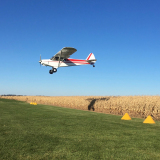
Mon Mar 20, 2017 7:31 am
Re: Contact flying videos
Thanks for posting these videos. Your contribution is much appreciated. I have been practicing these maneuvers in my 182.
I will have some questions a bit later that I hope you can answer. Thanks again.
Tom
KCMA
I will have some questions a bit later that I hope you can answer. Thanks again.
Tom
KCMA
Mon Mar 20, 2017 8:00 am
Re: Contact flying videos
KSYNpilot wrote:I was encouraged by Jim Dulin to join this forum and post some videos I have made regarding some of the concepts that he talks about in his book "contact flying". So, without further ado, here are some links to the videos I made. I hop you find them useful.
"brisk walk approach" one marginal, one pretty good:
no load turns:
"zoom" reserve build up by taking off (and staying) in ground effect:
Nice work! Good to see some better quality video.
A couple things I shoot for doing this stuff:
Apparent Rate Landing: I feel like I've nailed it when I arrive at my aiming point in three point attitude with no need for a flair, just minor power adjustment to control your descent and roll it on.
Energy Management Turns: Remember to let the nose come back up as you complete the turn and trade your excess airspeed in for altitude.
Mon Mar 20, 2017 12:44 pm
Re: Contact flying videos
Good job. Like CFOT said on the energy management turn, we want to trade the airspeed build up as we roll onto target for altitude. We generally return to original cruise altitude with that zoom. Of course there is diminishing returns so only two or three gun runs could be made on the same target before a break off would be required as both airspeed and altitude diminished. With single turn to target, not a problem.
As CFOT mentioned, we will eventually get to where no round out is needed at the bottom of the apparent brisk walk rate of closure approach. If you watch a bird land he slows down a lot at the end requiring pitch up and power (flaps wings a lot. ) We know we have gotten down as slow as possible if we don't have to cut power until touchdown. Nice green grass without a brown touchdown spot makes picking up the increase in apparent rate of closure, on short final, tougher.
On the takeoff notice the continuous for/aft dynamic stick movement, when up in low ground effect. This is excellent and brackets the too high too low for just right altitude. There is no "hover button " or perfect control position. Control is dynamic not static. Flying is more art than science.
Again good job and much appreciated.
As CFOT mentioned, we will eventually get to where no round out is needed at the bottom of the apparent brisk walk rate of closure approach. If you watch a bird land he slows down a lot at the end requiring pitch up and power (flaps wings a lot. ) We know we have gotten down as slow as possible if we don't have to cut power until touchdown. Nice green grass without a brown touchdown spot makes picking up the increase in apparent rate of closure, on short final, tougher.
On the takeoff notice the continuous for/aft dynamic stick movement, when up in low ground effect. This is excellent and brackets the too high too low for just right altitude. There is no "hover button " or perfect control position. Control is dynamic not static. Flying is more art than science.
Again good job and much appreciated.
- contactflying offline
- Posts: 4972
- Joined: Wed Apr 03, 2013 7:36 pm
- Location: Aurora, Missouri 2H2
Download my free "https://tinyurl.com/Safe-Maneuvering" e-book.
Tue Mar 21, 2017 7:06 am
Re: Contact flying videos
That last video looks a lot like Stanton MN. I took some tail wheel training there in that sport cub. Nice video!
Sent from my SM-G930V using Tapatalk
Sent from my SM-G930V using Tapatalk


Tue Mar 21, 2017 8:11 am
Re: Contact flying videos
Well, I guess I'll be the turd in the punch bowl......All that first video illustrated to me is that someone needs to learn how to slow down prior to landing. And not use half the county at treetop level to get down to the touchdown. Also left a lot of runway behind.
Second video: How are 30 degree heading change "energy management turns" useful in "the real world"?
The takeoff video was fine to illustrate the use of ground effect in takeoff.
MTV
Second video: How are 30 degree heading change "energy management turns" useful in "the real world"?
The takeoff video was fine to illustrate the use of ground effect in takeoff.
MTV


Tue Mar 21, 2017 10:42 am
Re: Contact flying videos
Good vids! Nice to be a fly in the cockpit with others flying for a change. Do some more.
For practice set up some 200-400-600-800 ft markers and work towards takeoff and landing within those limits. Maybe more for larger heavier aircraft.
I've done those turns when the passenger is woozy and doesn't like G loads in a steep bank. Even used a bit more rudder than for coordinated flight to ease the upset.
Gary
For practice set up some 200-400-600-800 ft markers and work towards takeoff and landing within those limits. Maybe more for larger heavier aircraft.
I've done those turns when the passenger is woozy and doesn't like G loads in a steep bank. Even used a bit more rudder than for coordinated flight to ease the upset.
Gary
Tue Mar 21, 2017 11:27 am
Re: Contact flying videos
mtv wrote:Well, I guess I'll be the turd in the punch bowl......All that first video illustrated to me is that someone needs to learn how to slow down prior to landing. And not use half the county at treetop level to get down to the touchdown. Also left a lot of runway behind.
That was my thought as I watched the first landing in that video, but I believe it is the second landing on that video that is illustrative of Jim's "brisk walk" technique. Much slower approach with continuous deceleration right to the touch-down. And no "behind the power curve" stuff. Room for improvement? Probably, but a decent job...
mtv wrote:Second video: How are 30 degree heading change "energy management turns" useful in "the real world"?
I had the same question, but considered that the point of the video was to demonstrate the technique, not necessarily show a real-world application.

Tue Mar 21, 2017 1:09 pm
Re: Contact flying videos
JP256 wrote:mtv wrote:Well, I guess I'll be the turd in the punch bowl......All that first video illustrated to me is that someone needs to learn how to slow down prior to landing. And not use half the county at treetop level to get down to the touchdown. Also left a lot of runway behind.
That was my thought as I watched the first landing in that video, but I believe it is the second landing on that video that is illustrative of Jim's "brisk walk" technique. Much slower approach with continuous deceleration right to the touch-down. And no "behind the power curve" stuff. Room for improvement? Probably, but a decent job...
He second landing ate up a huge segment of runway, and still land d with he tail high, meaning too fast.mtv wrote:Second video: How are 30 degree heading change "energy management turns" useful in "the real world"?
I had the same question, but considered that the point of the video was to demonstrate the technique, not necessarily show a real-world application.
That was my point: There was no demonstration of the technique. Anybody can turn 30 degrees.
And I repeat, where in the "backcountry" can you fly a super low, flat landing approach like those.....surely not in central Idaho. Approaching that flat is just poor practice, in my opinion.
MTV
Tue Mar 21, 2017 1:26 pm
Re: Contact flying videos
The apparent brisk walk rate of closure approach works, and is obviously used by many , for steep approaches as well.
The energy management turn is safer and more comfortable, at one g, for any contact flying turn to target. An example of thousands of iterations is in 3500 miles of pipeline weekly. Lots of shallow, medium, and steep energy management, one g, comfortable, good observation turns. Yes his was steeper than necessary for that amount of turn but the technique was fine.
High G flat turns make a bigger impression on passengers' tummies. You have to be there. It doesn't look possible but the energy management turn feels fine and gets the job done quickly before getting a wing down into something.
The energy management turn is safer and more comfortable, at one g, for any contact flying turn to target. An example of thousands of iterations is in 3500 miles of pipeline weekly. Lots of shallow, medium, and steep energy management, one g, comfortable, good observation turns. Yes his was steeper than necessary for that amount of turn but the technique was fine.
High G flat turns make a bigger impression on passengers' tummies. You have to be there. It doesn't look possible but the energy management turn feels fine and gets the job done quickly before getting a wing down into something.
- contactflying offline
- Posts: 4972
- Joined: Wed Apr 03, 2013 7:36 pm
- Location: Aurora, Missouri 2H2
Download my free "https://tinyurl.com/Safe-Maneuvering" e-book.
Tue Mar 21, 2017 2:09 pm
Re: Contact flying videos
contactflying wrote:The apparent brisk walk rate of closure approach works, and is obviously used by many , for steep approaches as well.
The energy management turn is safer and more comfortable, at one g, for any contact flying turn to target. An example of thousands of iterations is in 3500 miles of pipeline weekly. Lots of shallow, medium, and steep energy management, one g, comfortable, good observation turns. Yes his was steeper than necessary for that amount of turn but the technique was fine.
High G flat turns make a bigger impression on passengers' tummies. You have to be there. It doesn't look possible but the energy management turn feels fine and gets the job done quickly before getting a wing down into something.
Jim,
I don't fly pipelines. I fly in steep terrain. Terrain doesn't always permit one to descend in a turn.
And I wasn't critiquing the techniques, but rather the demonstrations.
MTV
Tue Mar 21, 2017 2:10 pm
Re: Contact flying videos
The landings were nice, but not what I'd call "as slow as possible." The second one was flat and slower, but still not as slow as I think one needs to be in many backcountry environments.
I may have missed the point of the video, but the first one seems awfully hot (fast) for a cub. Seemed to have a ton of energy left and at high DA would eat up most if not all the mid-length runways in the mountains judging by the cones going by. Sorry if that comes off as too harsh.
59JC
I may have missed the point of the video, but the first one seems awfully hot (fast) for a cub. Seemed to have a ton of energy left and at high DA would eat up most if not all the mid-length runways in the mountains judging by the cones going by. Sorry if that comes off as too harsh.
59JC
- fiftynineSC offline
- Posts: 390
- Joined: Mon Dec 07, 2009 11:41 am
- Location: Frisco
- Aircraft: Cessna 185F
Tue Mar 21, 2017 3:24 pm
Re: Contact flying videos
Thanks Mike. He's just getting started with my techniques and has glider tow and acrobatic experience. Energy management is only as steep, rapid, and aggressive as necessary. Looks kinda acrobatic but we are just trying to get the turn in the horizontal and vertical space available, especially in the mountains.
The only high altitude justification for energy maneuverability would be comfort (same quality of turn at less g) and perhaps need to get inside an enemy's OODA loop. At low altitude it makes crop dusting, patrolling, and every what some of these guys are doing safer and in some cases doable. Some of the above is not necessary. As long as we want to feed our people and put fuel in their tanks, however, some is.
The problem with mountains, in most of the low powered airplanes I flew in the heat of day, is that most was low. High is safest, but when low is required energy management is safest.
The only high altitude justification for energy maneuverability would be comfort (same quality of turn at less g) and perhaps need to get inside an enemy's OODA loop. At low altitude it makes crop dusting, patrolling, and every what some of these guys are doing safer and in some cases doable. Some of the above is not necessary. As long as we want to feed our people and put fuel in their tanks, however, some is.
The problem with mountains, in most of the low powered airplanes I flew in the heat of day, is that most was low. High is safest, but when low is required energy management is safest.
- contactflying offline
- Posts: 4972
- Joined: Wed Apr 03, 2013 7:36 pm
- Location: Aurora, Missouri 2H2
Download my free "https://tinyurl.com/Safe-Maneuvering" e-book.
Tue Mar 21, 2017 5:26 pm
Re: Contact flying videos
Thanks again for the videos. I noticed that the landing technique also was successfully tried with a C182T. I fly a C182Q with a Peterson nose canard mod and fuel injection 260 HP. The canard gives me a lower stall speed and a lower body angle vis a vis a normal 182Q (which I also owned in a partnership at one time). The other aspect that I noticed is that in slow flight at both 20 and 40 flaps, the plane is very solid; it doesn't get squirrely like my normal 182 did.
I have tried all of Jim's maneuvers. With regard to the energy management turn, I have done both 90 and 180s and believe in the technique. After scaring myself once, I think that it is better to practice on 90s before doing 180s.
I am not familiar with the Cub but when I study your video on the turn, it's not clear what brings you out of the turn -- wings level. Either there is a good delay here or some magic is happening?
When you do a an AROCA in the 182 do you use full flaps? How much power do you have in when you touch down? Are you pretty much adding power the whole way on final?
From Google Earth, it looks like you are doing about a 1/4 mi. pattern. How high are you when turning final? I usually practice at my home base KCMA or KSZP and have to fly an 800 and 600 ft. pattern respectively. Thanks again for your efforts.
Blue skies,
Tom
I have tried all of Jim's maneuvers. With regard to the energy management turn, I have done both 90 and 180s and believe in the technique. After scaring myself once, I think that it is better to practice on 90s before doing 180s.
I am not familiar with the Cub but when I study your video on the turn, it's not clear what brings you out of the turn -- wings level. Either there is a good delay here or some magic is happening?
When you do a an AROCA in the 182 do you use full flaps? How much power do you have in when you touch down? Are you pretty much adding power the whole way on final?
From Google Earth, it looks like you are doing about a 1/4 mi. pattern. How high are you when turning final? I usually practice at my home base KCMA or KSZP and have to fly an 800 and 600 ft. pattern respectively. Thanks again for your efforts.
Blue skies,
Tom
Tue Mar 21, 2017 6:46 pm
Re: Contact flying videos
Tom,
The pattern distance and altitude doesn't change the apparent speed up in rate of closure the last three or four hundred feet and the last quarter mile on final. Everything prior appears to be a brisk walk so use what you like. The whole technique involves preventing that apparent speed up on short final that happens when we continue the approach without slowing up. The drag it in has already slowed up a half mile out and pretty high. They don't want to slow more but it is not necessary to slow up way high and way out.
When we have either drug it in from way out or slowed down on short final by not allowing the apparent rate to speed up, we will be using flaps, power, and increasing pitch attitude to arrive at the desired touchdown spot at or below OGE stall speed (we are in low ground effect. ) We will know we did perfectly when we don't have to pull power until touchdown. Rather than bounce, we use enough power to touch down softly. If that extra power sends us beyond the desired touchdown spot, we allowed the apparent rate of closure to speed up on short final.
Heavy airplanes like your 182 require considerable power to arrest descent at this slow airspeed. Without considerable headwind say above 20, less than full flaps will require a very uncomfortable high pitch attitude that will limit judging the brisk walk rate of closure over the left front cowl. We need to see the desired touchdown spot at the critical short final point where the apparent rate of closure begins to speed up.
The pattern distance and altitude doesn't change the apparent speed up in rate of closure the last three or four hundred feet and the last quarter mile on final. Everything prior appears to be a brisk walk so use what you like. The whole technique involves preventing that apparent speed up on short final that happens when we continue the approach without slowing up. The drag it in has already slowed up a half mile out and pretty high. They don't want to slow more but it is not necessary to slow up way high and way out.
When we have either drug it in from way out or slowed down on short final by not allowing the apparent rate to speed up, we will be using flaps, power, and increasing pitch attitude to arrive at the desired touchdown spot at or below OGE stall speed (we are in low ground effect. ) We will know we did perfectly when we don't have to pull power until touchdown. Rather than bounce, we use enough power to touch down softly. If that extra power sends us beyond the desired touchdown spot, we allowed the apparent rate of closure to speed up on short final.
Heavy airplanes like your 182 require considerable power to arrest descent at this slow airspeed. Without considerable headwind say above 20, less than full flaps will require a very uncomfortable high pitch attitude that will limit judging the brisk walk rate of closure over the left front cowl. We need to see the desired touchdown spot at the critical short final point where the apparent rate of closure begins to speed up.
- contactflying offline
- Posts: 4972
- Joined: Wed Apr 03, 2013 7:36 pm
- Location: Aurora, Missouri 2H2
Download my free "https://tinyurl.com/Safe-Maneuvering" e-book.
Wed Mar 22, 2017 9:43 am
Re: Contact flying videos
Sorry for all the asphalt, but the white stripe is a good reference for the apparent rate of closure. Probably could have slowed it down more and had a bit more power in right at the end to eliminate the little flare, but hopefully this makes a good comparison. Feel free to criticize...I think the discussion is good.
Wed Mar 22, 2017 11:24 am
Re: Contact flying videos
Not trying to be a wise guy but which white stripe? There are lots of them...
Do you progress re your target/focus from white stripe to the numbers to other white stripes as you move along?
Thanks for any clarification.
Blue skies,
Tom
Do you progress re your target/focus from white stripe to the numbers to other white stripes as you move along?
Thanks for any clarification.
Blue skies,
Tom
Wed Mar 22, 2017 11:42 am
Re: Contact flying videos
TommyN wrote:Not trying to be a wise guy but which white stripe? There are lots of them...
Do you progress re your target/focus from white stripe to the numbers to other white stripes as you move along?
Thanks for any clarification.
Blue skies,
Tom
Ha Ha, good point. Watch the tip of the first white centerline stripe come at me. When it looks like its starting to come at me faster, I slow down.
Pick your spot, and try to stay with it. The idea is to be at landing attitude and as slow as the plane will let you as your spot disappears under the nose.
Wed Mar 22, 2017 12:03 pm
Re: Contact flying videos
Yes CFOT, that was a good one and good comparison. The OP , I keep forgetting to note his call sign before starting my post, didn't have a real good rate of closure reference and I haven't had a chance to fly with him as with you. I am encouraged that others are giving it a shot.
I was also encouraged by motoadve's old stall series I hadn't seen in fifty years. The power line patrol pilot they used as a bad example,I think, of maneuvering flight actually executed a safe energy management turn. Lots of us have been doing what I selfishly call my safe maneuvering flight techniques for years. While officialdom promotes safety generally, some misses good techniques only because they deal with areas deemed taboo. Safe Maneuvering Flight Techniques are appropriate in some areas and make it possible for misfits, who possibility shouldn't be there, to at least do it more efficiently and safely.
Tom,
Our target is the exact spot we intend to touch down on rather than fly over, as in a round out and hold off. We use the numbers or any exact, fixed point for brisk walk rate of closure reference. We keep this reference until it goes under the cowl while peripherally looking on down the runway and forward hemisphere for horizontal reference.
Don't sweat the questions. I hope I haven't done all this stuff as a lost art.And that doesn't mean that cross reference with MTV, Cary, Doug Lumgair, and many other conservative instructors is not wise. Ol Contact has certainly screwed up from time to time.
I was also encouraged by motoadve's old stall series I hadn't seen in fifty years. The power line patrol pilot they used as a bad example,I think, of maneuvering flight actually executed a safe energy management turn. Lots of us have been doing what I selfishly call my safe maneuvering flight techniques for years. While officialdom promotes safety generally, some misses good techniques only because they deal with areas deemed taboo. Safe Maneuvering Flight Techniques are appropriate in some areas and make it possible for misfits, who possibility shouldn't be there, to at least do it more efficiently and safely.
Tom,
Our target is the exact spot we intend to touch down on rather than fly over, as in a round out and hold off. We use the numbers or any exact, fixed point for brisk walk rate of closure reference. We keep this reference until it goes under the cowl while peripherally looking on down the runway and forward hemisphere for horizontal reference.
Don't sweat the questions. I hope I haven't done all this stuff as a lost art.And that doesn't mean that cross reference with MTV, Cary, Doug Lumgair, and many other conservative instructors is not wise. Ol Contact has certainly screwed up from time to time.
- contactflying offline
- Posts: 4972
- Joined: Wed Apr 03, 2013 7:36 pm
- Location: Aurora, Missouri 2H2
Download my free "https://tinyurl.com/Safe-Maneuvering" e-book.
Wed Mar 22, 2017 1:00 pm
Re: Contact flying videos
Contact correct me if Im wrong but you refer to a power on ,no flare landing , correct?
When you refer to brisk walk rate of closure
When you refer to brisk walk rate of closure
DISPLAY OPTIONS
Who is online
Users browsing this forum: No registered users and 8 guests
Latest Features
-
-
Featured Bush Planes
As one of the undisputed legends of bush flying, the Cessna 180 hauls a…Read More -
Aircraft Ownership and Maintenance
9 modification mistakes aircraft owners make when trying to "bush out" their birds—why some…Read More -
Live to Tell
A Minnesota pilot is surprised to learn that the sudden asymmetric drag of an…Read More




Latest Knowledge Base
-
Destinations
Canada offers some of the most spectacular backcountry flying on the continent. Here's what you need to know before you go.Read More -
Safety and Survival
Hope that you never have to use your survival vest but knowing you have it and knowing how to use…Read More -
Destinations
A regional guide with ideas for winter camping destinations in California, Nevada, New Mexico, and Arizona.Read More -
Aircraft
Finding an affordable aircraft that can handle the backcountry for $80K or less? A challenge for sure, but with the…Read More



