Hole Guacamole!! What a lot of advice. Mostly useful, mostly accurate, and it sounds like Mr. JC has a good attitude about the whole thing.
I DO NOT advocate the Crab to a slip kind of approach, even in a tri-gear airplane. There's just too much going on at the very last second: Judge your height, flare when appropriate, hold it straight, and oh, yeah--try to transition to that perfect wing low attitude which will control the drift, WITH NO PRACTICE on final.
I like to put the wing low on 1/2 mile final, and hold it there.
Oh, yeah--I'd also point out that there is ABSOLUTELY NO DIFFERENCE in proper technique to approach in a crosswind in a tri gear airplane compared to a tailwheel airplane. It just has to be more precise in a taildragger.
Here are a couple things that seem to buffalo new pilots in this regard:
The earth's interaction with the wind creates some friction. This changes the wind direction AND velocity between a few hundred feet and the surface. The same control inputs WILL NOT work in the flare as worked at 200 feet.
To make this even more significant, as someone mentioned earlier, as you slow the airplane, it will take larger control inputs to accomplish the same aerodynamic result.
In other words, the control inputs you have to use ARE VERY DYNAMIC. FLY THE AIRPLANE, and use the control inputs required to make it do what you want it to do.
Here are the three requirements for a good crosswind approach in a nutshell
1) You MUST be ON the extended runway centerline. Look at the FAR end of the runway, and use some reference on the airplane as a "gun sight" to help you align PERFECTLY with the centerline. If you aren't PERFECTLY aligned with the extended centerline on 1/4 mile final--go around. It doesn't hurt to put a grease pencil mark on the windshield in front of you as a reference point to align with. This task is accomplished with a wing low, induced by aileron input.
2) The airplane's lengthwise axis MUST be aligned with the centerline of the runway. This is accomplished with RUDDER, after you've got the side drift controlled as above.
3) The airplane MUST be GOING the direction it's lengthwise axis is POINTED.
Focus on those things as you cruise down final, and keep your vision waaaaaayyyyyy off in the distance, the far end of the runway or FURTHER, and as long as everything is as above, flare at your normal height, and DO NOT change all those control inputs you have in.
The biggest error I see with students is that as soon as they start the flare, they neutralize all the controls. You will then start to drift, and induce side loads.
Have fun--it is not rocket science. THis is perhaps the single hardest maneuver to master when learning to fly. Be patient, and it'll come.
MTV
Crosswind Landings


Fri Dec 14, 2007 6:22 pm
mtv wrote: ....................
Focus on those things as you cruise down final, and keep your vision waaaaaayyyyyy off in the distance, the far end of the runway or FURTHER, and as long as everything is as above, flare at your normal height, and DO NOT change all those control inputs you have in. .........
MTV
Do not, I repeat do NOT lose track of your altitude above the ground. You do have to pay attention to altitude while keeping your vision waaaay off in the distance-- don't fly her right into the ground due to "alignment" tunnel vision. Kinda keep one eye waaay out there, to keep your runway alignment good, and one eye right in front of the airplane, to judge when to flare.
Eric

Cessna Skywagon -- accept no substitute!
Fri Dec 14, 2007 6:43 pm

- Idaho SuperCub offline
- Posts: 141
- Joined: Sun Nov 19, 2006 3:46 pm
- Location: McCall, Idaho
"Certainty of death, small chance of success, what are we waiting for!"
Fri Dec 14, 2007 6:45 pm
Kinda keep one eye waaay out there, to keep your runway alignment good, and one eye right in front of the airplane, to judge when to flare.
Also keep one eye on your airspeed and keep one eye out of each side of the plane in case something jumps out from the trees...and everyone wonders why we look like this -------->

Seriously,
A lot of good advice here...nothing to add other than practice is what's it's gonna take. When you get to a point where you can fly a particular plane like it's an extension of your body you'll rarely reach a pucker factor 10
- Capt. Kirk offline

- Posts: 154
- Joined: Thu Jul 05, 2007 3:31 pm
- Location: Fairbanks, Alaska
1970 @#%&* M4 220C on Edo 2440
Fri Dec 14, 2007 8:40 pm
Cliff,
I beg to differ: You do not track the centerline using RUDDER, but rather you use wing low to track the centerline. The Rudder simply keeps the centerline of the airplane aligned with the centerline of the rudder.
This is a very common misconception of new pilots, and causes all sorts of confusion. If you're trying to track the centerline using the rudder, you are going to find trouble sooner or later.
MTV
I beg to differ: You do not track the centerline using RUDDER, but rather you use wing low to track the centerline. The Rudder simply keeps the centerline of the airplane aligned with the centerline of the rudder.
This is a very common misconception of new pilots, and causes all sorts of confusion. If you're trying to track the centerline using the rudder, you are going to find trouble sooner or later.
MTV

Fri Dec 14, 2007 10:45 pm
crosswind gear
Hey Zane did you ever try to really use the x-wind gear that was on your 170 ? We did, you have to land 3 point but the wheels clunked and then amed strate down the runway even though the nose is pointing in the weeds. Scares the shit out of your pasingers and every one else on the airport though.
tricycles are for little girls
Fri Dec 14, 2007 11:10 pm
Another thing that nowone has mentioned ( hopefully your instructor has) on a 170/172 NEVER use 40deg flap in a crosswind or any sideslip. they usedto have a placard about this but very few still do. Zanes 170 very nearly met its end that way when my dad owned it!
tricycles are for little girls
Sat Dec 15, 2007 12:11 am
C-
I did fly with them a few times, and they were really weird! Definitely a useful invention, and probably kept the bird out of the ditch many times. They were pretty old and beat though, so summer before last I just put new Clevelands on there with Airframes Inc hollow steel axles.
I have heard many stories about the tail blanking with slip/40 deg flaps...I think YELLOWMAULE has a story about that too...we may have a thread somewhere about it. Somebody dig that up.
Pretty funny to hear you and your dad talk about ol' Charley...
I did fly with them a few times, and they were really weird! Definitely a useful invention, and probably kept the bird out of the ditch many times. They were pretty old and beat though, so summer before last I just put new Clevelands on there with Airframes Inc hollow steel axles.
I have heard many stories about the tail blanking with slip/40 deg flaps...I think YELLOWMAULE has a story about that too...we may have a thread somewhere about it. Somebody dig that up.
Pretty funny to hear you and your dad talk about ol' Charley...
- Zzz offline


- Posts: 2855
- Joined: Fri Oct 08, 2004 11:09 pm
- Location: northern
- Aircraft: Swiveling desk chair
Half a century spent proving “it is better to be thought a fool than to open your mouth and remove all doubt.”
Sat Dec 15, 2007 7:53 am
ccurrie,
The reason a lot of Cessnas don't have a placard prohibiting slips with full flaps is two fold:
1) All the new Cessnas I believe have limited flap travel to 30--and boy does that suck.
2) THis was a liability thing with Cessna's legal beagles, and the admonition is "Slips with 40 degrees flaps deployed is not recommended" . That's different than if they'd stated that full flap slips are prohibited.
There has never been a real problem with slips and full flaps in a Cessna, other than the fact that it is possible (and maybe even a little easier--lots of drag) to stall the airplane in that configuration, and close to the ground, that will hurt.
It's also important to note that stalling the airplane close to the ground may hurt even if you AREN'T in a slip with full flaps.
I have performed MANY full flap slips in Cessnas over the years, and its' never been an issue. I've worked the airplane at altitude in this configuration, learned its characteristics, and I've NEVER been able to get the tail to turn loose. If the tail were actually to be blanked, the airplane would immediately pitch about 90 degrees nose down, and everyone would probably notice that, even the first time.
This is not what happens in these alleged "tail blanking" episodes you hear about through the grapevine. Those are just stalls, because the pilot wasn't flying the airplane.
It is also important to note that the Cessna verbiage in reference to full flap slips is, in every case I've seen it: "Slips with full flaps are not RECOMMENDED". I've never seen a Cessna with a placard or admonition in the AFM which prohibits slips with full flaps. Mine certainly does not, nor is such listed in the TCDS.
If they were to do that, they'd have to add a note in the AFM which prohibits crosswind landings with full flaps, and you'll never see that in a Cessna, either.
I've landed MANY Cessna aircraft in some serious crosswinds with full flaps. No sweat.
Fly the plane, and READ the TCDS and POH for the plane. If a placard isn't in there, it doesn't exist.
MTV
The reason a lot of Cessnas don't have a placard prohibiting slips with full flaps is two fold:
1) All the new Cessnas I believe have limited flap travel to 30--and boy does that suck.
2) THis was a liability thing with Cessna's legal beagles, and the admonition is "Slips with 40 degrees flaps deployed is not recommended" . That's different than if they'd stated that full flap slips are prohibited.
There has never been a real problem with slips and full flaps in a Cessna, other than the fact that it is possible (and maybe even a little easier--lots of drag) to stall the airplane in that configuration, and close to the ground, that will hurt.
It's also important to note that stalling the airplane close to the ground may hurt even if you AREN'T in a slip with full flaps.
I have performed MANY full flap slips in Cessnas over the years, and its' never been an issue. I've worked the airplane at altitude in this configuration, learned its characteristics, and I've NEVER been able to get the tail to turn loose. If the tail were actually to be blanked, the airplane would immediately pitch about 90 degrees nose down, and everyone would probably notice that, even the first time.
This is not what happens in these alleged "tail blanking" episodes you hear about through the grapevine. Those are just stalls, because the pilot wasn't flying the airplane.
It is also important to note that the Cessna verbiage in reference to full flap slips is, in every case I've seen it: "Slips with full flaps are not RECOMMENDED". I've never seen a Cessna with a placard or admonition in the AFM which prohibits slips with full flaps. Mine certainly does not, nor is such listed in the TCDS.
If they were to do that, they'd have to add a note in the AFM which prohibits crosswind landings with full flaps, and you'll never see that in a Cessna, either.
I've landed MANY Cessna aircraft in some serious crosswinds with full flaps. No sweat.
Fly the plane, and READ the TCDS and POH for the plane. If a placard isn't in there, it doesn't exist.
MTV
Sat Dec 15, 2007 8:57 am
X-wind training
Hi All, I've been teaching flying since the 70's and have seen and heard lots of discussion on this subject. Most of all the above is real good advice. I've found that many early pilots seem to build up a phobia about X-wind landings. I always point out that almost every land is a x-wind ldg to some extent. The tec. used on the "normal ldg" is the same! Just point the nose with your feet and hold the center line with your hands.
To teach this I will have the pilot fly down the rwy(a big one) and track the center line. Then the next pass have him put in rudder and then take it out and see how it causes the plane to slide with the wind in ref to the rwy. Then point the nose and fly the plane back and forth from side line of the rwy to the other to get the concept of the controls. Depending on exper. levels I may do all the power control to take out some of the work load. It's not critical to be super close to the rwy to teach this.
Another tec I like to teach is to fly the A/C on to the rwy with power. Combineing this to a X-wind one can fly the plane down stabilize it then land it. Of course rwy length and srounding terain must be concidered.
As always try this out with a instructor and/or
experienced safety pilot not another student who is also trying to figure it out.
hope this helps
To teach this I will have the pilot fly down the rwy(a big one) and track the center line. Then the next pass have him put in rudder and then take it out and see how it causes the plane to slide with the wind in ref to the rwy. Then point the nose and fly the plane back and forth from side line of the rwy to the other to get the concept of the controls. Depending on exper. levels I may do all the power control to take out some of the work load. It's not critical to be super close to the rwy to teach this.
Another tec I like to teach is to fly the A/C on to the rwy with power. Combineing this to a X-wind one can fly the plane down stabilize it then land it. Of course rwy length and srounding terain must be concidered.
As always try this out with a instructor and/or
experienced safety pilot not another student who is also trying to figure it out.
hope this helps
Sat Dec 15, 2007 8:59 am
mtv wrote:The Rudder simply keeps the centerline of the airplane aligned with the centerline of the rudder
Yep, I think we're talking about the same thing. Use the rudder, and your eyes, to keep the nose of the airplane lined up with the centerline. I find that this method is pretty easy for a new pilot, tricycle gear or conventional, to understand.
- Cliff Allen offline
- Posts: 6
- Joined: Mon Dec 10, 2007 10:30 am
- Location: Chestnut Hill, MA
Cliff Allen, ATP/CFII
Executive Flyers Aviation
Executive Flyers Aviation
Sat Dec 15, 2007 9:09 am
I like to apply power to the equation. If the wind is strong enough you will run out of rudder unless you wash some more air over it with the prop. If you use the slip method then you increase drag which naturally can be compensated for by power anyhow. Airspeed also helps rudder response, so a slightly higher approach speed can help.
Once I am out of rudder, that is pretty much it for me.
An extended slip during approach is nice but the drag will affect your glideslope. I am never consistant since every landing is different, but I typically crab until I feel that the remainder of the approach can handle the increased drag of the slip, then I slip. If I am at a more difficult field then I setup for a slip a bit earlier and focus on more important things.
Once I am out of rudder, that is pretty much it for me.
An extended slip during approach is nice but the drag will affect your glideslope. I am never consistant since every landing is different, but I typically crab until I feel that the remainder of the approach can handle the increased drag of the slip, then I slip. If I am at a more difficult field then I setup for a slip a bit earlier and focus on more important things.
- cowboypilot offline
- Posts: 13
- Joined: Thu Apr 05, 2007 9:15 pm
- Location: Phoenix,AZ
Hey, watch this...
Sat Dec 15, 2007 10:05 am
mtv wrote:I've landed MANY Cessna aircraft in some serious crosswinds with full flaps. No sweat.
Ditto...
When it's crappy, be it wind, visibility, runway surface, whatever, I want to go from flying to driving as soon as possible, and once driving, stopped and under control ASAP. For me that means full flaps especially when I'm in a heavy crosswind, and then dump the damn things to make the wing stop flying.
Gump

Sat Dec 15, 2007 10:46 am
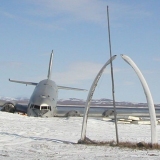
I was called out late one eveing to go look for a downed aircraft. I flew until almost 11:00 o'clock at night. I got a call from one of the other flyers telling me how he had some trouble landing because of the wind. It was a strong gusting cross wind. I think that was the strongest gusting cross wind I have ever tried to land in . We have a cross runway but it isn't lighted. I fought it all the way to the ground and we were both glad to get it on the ground. I found out the other pilot had dinged his prop on landing.
You are probably wondering why we flew after dark. Well, we found the wrecked, burned aircraft right away and we were trying to help the ground party find the scene. Bob
You are probably wondering why we flew after dark. Well, we found the wrecked, burned aircraft right away and we were trying to help the ground party find the scene. Bob
Sat Dec 15, 2007 7:45 pm
flaps
MTV
I dont know in the US but in Canada they were plackcarded I believe it was an ad it only applied to 170 172s 150 and 180 were not a problem. the time it happened to my dad he was about 150ft agl on final already sliping he was a little high so he pulled on another 10deg flap and it did exactly what you said it would pitched 90deg nose down ! luckily his hand was still on the lever so he droped back to 30 deg flap, and as fast as it hapined it fixed its self. seeing nothing but earth in the windscreen at150ft is not a good feeling to say the least! we have bolth tried to recreate the scenario ,at a safe altitude and could not do it, must be a very peticular set if circumstances but it can happen.
I dont know in the US but in Canada they were plackcarded I believe it was an ad it only applied to 170 172s 150 and 180 were not a problem. the time it happened to my dad he was about 150ft agl on final already sliping he was a little high so he pulled on another 10deg flap and it did exactly what you said it would pitched 90deg nose down ! luckily his hand was still on the lever so he droped back to 30 deg flap, and as fast as it hapined it fixed its self. seeing nothing but earth in the windscreen at150ft is not a good feeling to say the least! we have bolth tried to recreate the scenario ,at a safe altitude and could not do it, must be a very peticular set if circumstances but it can happen.
tricycles are for little girls
DISPLAY OPTIONS
Who is online
Users browsing this forum: No registered users and 2 guests
Latest Features
-
Live to Tell
A Minnesota pilot is surprised to learn that the sudden asymmetric drag of an out-of-rig ski can…Read More -
Creators
Working in some of the Yukon's most beautiful and remote environments, photographer Simon Blakesley captures aircraft in…Read More -
Aircraft Ownership and Maintenance
Upgrading to big tires can make a huge difference in backcountry performance, but with those gains come…Read More -
Tales from Yesteryear
In this tale from bush flying yesteryear, Don Cogger signs up to help Atlee Dodge Jr recovery…Read More


Latest Knowledge Base
-
Destinations
A regional guide with ideas for winter camping destinations in California, Nevada, New Mexico, and Arizona.Read More -
Aircraft
Finding an affordable aircraft that can handle the backcountry for $80K or less? A challenge for sure, but with the…Read More -
Aircraft
01.29.2018 - Zane - Updated tire diameter graphic to add 8.50x10 Guide to tires for use in the backcountry and off-airport landing…Read More -
Pilots
12.22.2013 - Initial article format Operating aircraft on skis and negotiating a snow-covered landscape is an entirely unique skillset and environment.…Read More


