MUCH cheaper and easier to installed an on-board backup battery inside the EFIS unit, most have an off the shelf solution.
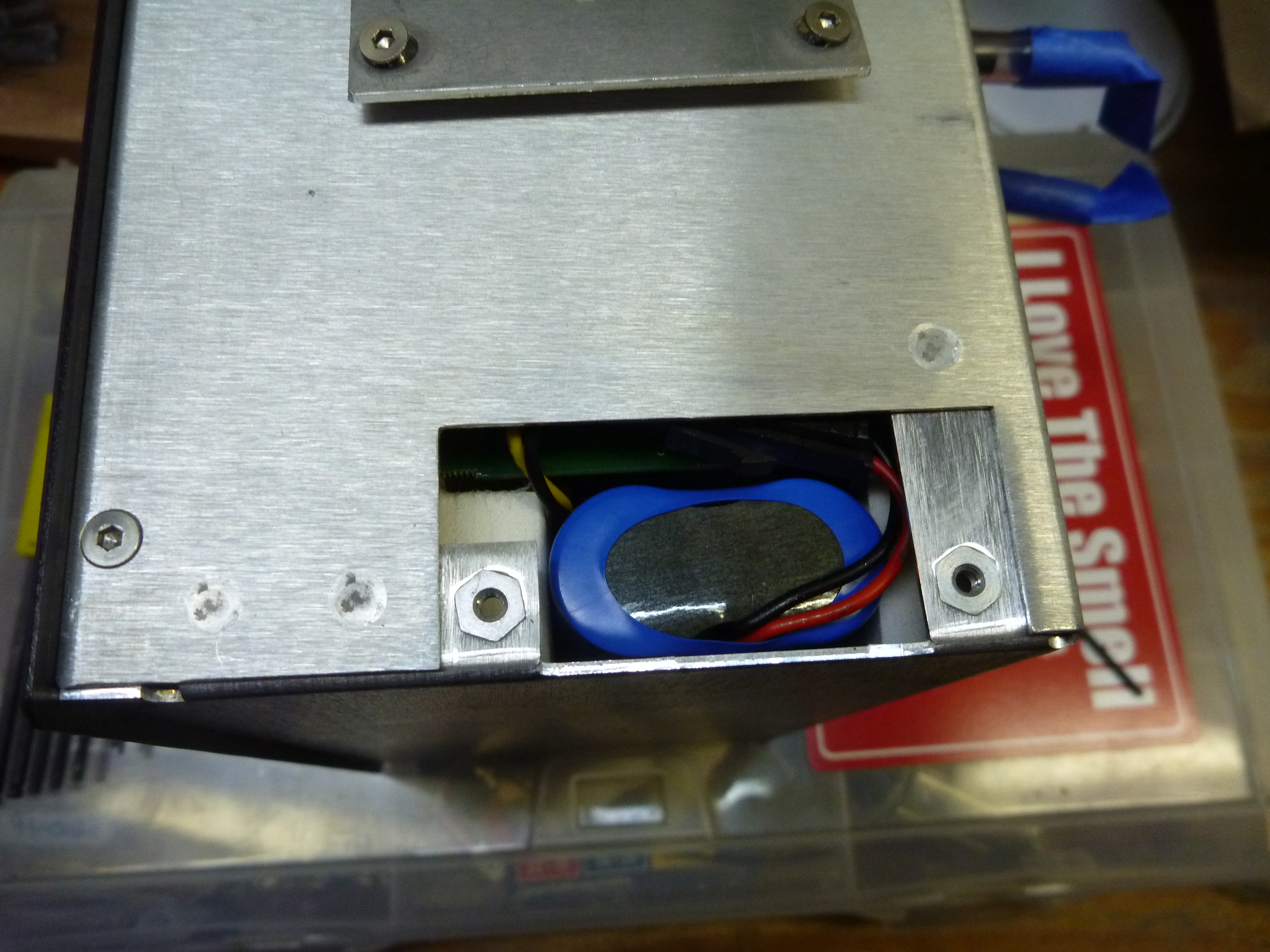
Or if you want more redundancy, get a separate little D2 pocket panel, or if you want it in panel, get a D10.


Cary wrote:How about this guy? It has attitude, slip/skid, airspeed, and altitude, with a built-in backup battery, and it all fits in the space of one 3" instrument. http://sandia.aero/product/sai-340-quattro/
Cary

hotrod180 wrote:That Scandia gizmo looks great..but costs $3600. Ouch! Requires hookup to pitot and static. But "certified" might be a game-changer -- always easier than a field approval. FA's have been problematic with the panel-mount Dynons due to the connection to the aircraft's pitot/static system.
Unfortunately, while Scandia says yes it's TSO'd and approved, it kinda sounds like they're saying you're on your own re actual installation approval.
Here's some excerpts from the Scandia webpage:
Q: Will the unit be TSO'd for all Airspeed, Altitude attitude and slip?
A: Yes it will.
Q: Will I be able to replace my vacuum system gyros?
A: Start a conversation with your shop as this is a basic question for all local FISDO to reply to. Your certified shop with have the correct path to ask the FAA.
Q: Can this unit replace my vacuum driven system in my aircraft?
A: Yes in Part 23 Aircraft please follow this link to the FAA AC 91-75:<br /><br /> <a href="http://www.faa.gov/documentLibrary/media/Advisory_Circular/AC91-75.pdf" target="_blank" rel="nofollow">http://www.faa.gov/documentLibrary/media/Advisory_Circular/AC91-75.pdf</a>
Q: Will I need a STC?
A: Ask your local shop to call upon the FAA FISDO for guidance and to reference AC91-75.
Q: What is the FAA other Guidance information I can reference?
A: FAA AC 20-181<br /><br /> <a href="http://www.faa.gov/documentLibrary/media/Advisory_Circular/AC_20-181.pdf" target="_blank" rel="nofollow">http://www.faa.gov/documentLibrary/media/Advisory_Circular/AC_20-181.pdf</a>
hotrod180 wrote:Unfortunately they chose to cram all that airspeed / altitude stuff into it, which not only increases the price but complicates things due to the pitot/static connection requirement. I wonder why they did that? If they had made it just a simple electronic attitude indicator, it would be a no-sweat installation. Trying to compete with Dynon's everything-in-one unstruements I guess.
hotrod180 wrote:Unfortunately they chose to cram all that airspeed / altitude stuff into it, which not only increases the price but complicates things due to the pitot/static connection requirement. I wonder why they did that? If they had made it just a simple electronic attitude indicator, it would be a no-sweat installation. Trying to compete with Dynon's everything-in-one unstruements I guess.
hotrod180 wrote:Unfortunately they chose to cram all that airspeed / altitude stuff into it, which not only increases the price but complicates things due to the pitot/static connection requirement. I wonder why they did that? If they had made it just a simple electronic attitude indicator, it would be a no-sweat installation. Trying to compete with Dynon's everything-in-one unstruements I guess.
Hammer wrote:.... I normally fly right seat, but all my flight instruments are on the left....
hotrod180 wrote:Hammer wrote:.... I normally fly right seat, but all my flight instruments are on the left....
I'm curious why you fly from the right seat. The people I know that do so 1) are helo pilots, 2) are a CFI, or 3) really like the left hand throttle /right hand stick thing.
Hammer wrote:hotrod180 wrote:Hammer wrote:.... I normally fly right seat, but all my flight instruments are on the left....
I'm curious why you fly from the right seat. The people I know that do so 1) are helo pilots, 2) are a CFI, or 3) really like the left hand throttle /right hand stick thing.
I learned to fly right seat when my wife was getting her license (damn near like learning to fly all over again). Since she only flys left seat I just keep flying right seat. It's more comfortable for me than the left seat at this point.
 About touch down he said a little left rudder, then with more authority, finally after I touched down I said you got it, as Shit I did not even think about not havin any brakes on the right side either!!
  Sure glad he can recover real well! got us back on the runway and everything!!

hotrod180 wrote:Unfortunately they chose to cram all that airspeed / altitude stuff into it, which not only increases the price but complicates things due to the pitot/static connection requirement. I wonder why they did that? If they had made it just a simple electronic attitude indicator, it would be a no-sweat installation. Trying to compete with Dynon's everything-in-one unstruements I guess.
whee wrote:I'm not sure about he backup system being electric. Doesn't seem robust enough.

Battson wrote:hotrod180 wrote:.... not only increases the price but complicates things due to the pitot/static connection requirement. .....
With respect, much is being made of that pitot / static plug in requirement.
It took me literally 5 minutes to install those connections. They literally could not be any simpler......
Battson wrote:whee wrote:I'm not sure about he backup system being electric. Doesn't seem robust enough.
From an engineering point of view, it's got to be more roust based on the statistics? - provided they are completely separate systems.
The chances of a complete failure occurring, in both (dual) independent systems, during flight, while physically in IMC, would have to be less than the chances of winning the lottery?

whee wrote:Battson wrote:whee wrote:I'm not sure about he backup system being electric. Doesn't seem robust enough.
From an engineering point of view, it's got to be more roust based on the statistics? - provided they are completely separate systems.
The chances of a complete failure occurring, in both (dual) independent systems, during flight, while physically in IMC, would have to be less than the chances of winning the lottery?
Agreed. However, with a single alternator the batteries can not be completely separate and that is my hesitation. My dad and I put over 500hrs on the T&B in the Luscombe with zero problems and it had an unknown amount of time on it when we put it back in the panel. I've been under the impression that the vacuum pump is the least reliable part in a vacuum system; I'd be using a venturi. But a GRT Mini-X with a small battery under the pilot seat could be a nice way to go. With simple circuitry I could protect the backup system from an alternator failure (voltage spike) and isolate it so it doesn't feed power back into the primary system.
Once again my dreams of having steam gauges in the plane are ruined
Users browsing this forum: No registered users and 1 guest