Forced Air Engine Pre-heaters
Mon Nov 18, 2019 9:50 am
Re: Forced Air Engine Pre-heaters
Another vote for a learned perspective from MTV; read, set, goooooooo
Mon Nov 18, 2019 10:14 am
Re: Forced Air Engine Pre-heaters
On The Fly wrote:I sent a 0-470 to Western Skyways for an overhaul about 8 years ago and they said the engine was rusty from leaving my Tanis plugged in all winter. They even sent me back a bag of rusty lifters for an example. It was really kind of hard to believe since the plane flew pretty often even through the winter. They said that kind of rust in an engine was common for guys like me who left their heaters on all the time. There was quite a bit of rust, and to this day its still a bit hard to believe.
I've since switched to a good engine blanket and a 100 watt light bulb incased in one of those old fashioned steel caged drop lights. I reach up through the cowl flap and hang it on the side of the engine. Outside my hangar it can be in the teens and my engine compartment will still be above 40F.
Thanks for sharing. This makes complete sense to me and why I don't want to use heat pads on the engine. I'd SWAG that sump heaters alone even worse than a complete Tanis or Reiff. Heating the air inside the cowl seems to be the only way to keep the engine warm all winter long without promoting corrosion. As has been said, a good insulated engine cover is critical to reducing the temperature swings that promote corrosion.
Two 100W bulbs in metal trouble lights hung inside the cowl seemed to work but it was barely into the low 30s that night. We'll see how it does when temperatures actually get cold.
I'd certainly be interested in reading MTVs experience and perspective on engine pre-heating.

Mon Nov 18, 2019 10:37 am
Re: Forced Air Engine Pre-heaters
+1 for the MTV perspective.
Threads on pre-heating, continuous heat, and variants on the theme are interesting. The comment offered a few posts ago about a bag of rusty lifters reminded me of a C185 based at KSFF. The owners told me that they USED TO keep a light bulb on top of the engine burning 24/7 in the winter. After a while (I didn't ask how long... one winter or ??) they discovered pitting on the inside of the engine. One owner told me he likes the new engine, but would have preferred to fly the old one to TBO and beyond.
Anyhow, I use a conservative approach to engine heat. I wrap blankets over and aound my cowl, install cowl plugs, and pre-heat my cockpit with a ceramic heater for an hour or so. FWIW, my gyros have never liked spinning up when chilled by Sub freezing temps. I also plug in my oil pan heater 1 to 4 hours before I fly (time based on how cold it is in my unheated hangar). Inconvenient, yes. Likely to start a hangar fire or result in internal rust? No. Works for me.
Threads on pre-heating, continuous heat, and variants on the theme are interesting. The comment offered a few posts ago about a bag of rusty lifters reminded me of a C185 based at KSFF. The owners told me that they USED TO keep a light bulb on top of the engine burning 24/7 in the winter. After a while (I didn't ask how long... one winter or ??) they discovered pitting on the inside of the engine. One owner told me he likes the new engine, but would have preferred to fly the old one to TBO and beyond.
Anyhow, I use a conservative approach to engine heat. I wrap blankets over and aound my cowl, install cowl plugs, and pre-heat my cockpit with a ceramic heater for an hour or so. FWIW, my gyros have never liked spinning up when chilled by Sub freezing temps. I also plug in my oil pan heater 1 to 4 hours before I fly (time based on how cold it is in my unheated hangar). Inconvenient, yes. Likely to start a hangar fire or result in internal rust? No. Works for me.
- PapernScissors offline
- Posts: 419
- Joined: Sun Mar 06, 2016 8:49 pm
- Location: Spokane
- Aircraft: Cessna 172
Mon Nov 18, 2019 11:20 am
Re: Forced Air Engine Pre-heaters
Reiff claims that with a oil and cylinder heater combination the interior of the engine dries out, though whether a drier engine at a higher temperature rusts more or less than a damper engine at a lower temperature is not addressed in their literature.
I'm in the habit of removing the oil cap and plugging my Reiff in after I shut down in order to cook as much moisture out of the case as I can, though I don't leave it on indefinitely.
My unproven theory is that there will always be enough moisture in a engine to rust things, and a warm engine is going to corrode faster than a frozen engine. So I opt not to keep my engine warm and accept a one or two-hour delay in the winter to heat the cold-soaked beast. I opted for a Reiff Turbo in addition to the ez-heat oil heating pad all ready installed, plus propane heat duckted into the cowling from a cook stove, so long as I'm there to monitor it.
No idea if that's the right way to do things or not, but aside from a delay before flying I don't see any downside.
I'm in the habit of removing the oil cap and plugging my Reiff in after I shut down in order to cook as much moisture out of the case as I can, though I don't leave it on indefinitely.
My unproven theory is that there will always be enough moisture in a engine to rust things, and a warm engine is going to corrode faster than a frozen engine. So I opt not to keep my engine warm and accept a one or two-hour delay in the winter to heat the cold-soaked beast. I opted for a Reiff Turbo in addition to the ez-heat oil heating pad all ready installed, plus propane heat duckted into the cowling from a cook stove, so long as I'm there to monitor it.
No idea if that's the right way to do things or not, but aside from a delay before flying I don't see any downside.


Mon Nov 18, 2019 12:02 pm
Re: Forced Air Engine Pre-heaters
I doubt that the corroded engine was caused by the Tanis system. I know they say they flew often, but obviously not enough. The warmer engine means warmer oil, which is thinner, therefore flows, eventually leaving nothing behind.
Even when I flew 135, we always went in early to preheat the engines before the days flights, we didn't leave them plugged in. And we flew at least every other day in the winter, often everyday. We would plug in before preflight, load up, and sit around bullshitting and drinking coffee until it was time to go. 1.5-2 hrs maybe.
I would recommend........
the expensive way..... High watt reiff/tanis, on a timer to go off 2 hrs before you plan to fly. You could setup a cell remote switch to call in to turn on or off. You can pick the cheaper, less watt versions and plug in longer.( this is what I have on one of my planes)
The cheaper way (but as good I think)...... EZ heat pad on a timer for 4 hrs prior. You can supplement this with a Zerostart (I have several and work good) or hair dryer to help warm up engine compartment. I've done this on most of the planes I've owned with great results. Don't use the cheaper auto parts pads, they aren't thermo controlled and will eventually cook the oil if left/forgotten for too long. MTV is right, the fans on the electric blower heaters will eventually start to go out. Not that I don't put them on timers, cause I do, but I test them often, and test them COLD.
There are many ways to skin a cat. Whatever method you choose, I would recommend leaving the engine cold, then start preheat for a few hours, then GO fly. If for some pressing reason you cant, unplug the heater and plan to go fly soon.
Even when I flew 135, we always went in early to preheat the engines before the days flights, we didn't leave them plugged in. And we flew at least every other day in the winter, often everyday. We would plug in before preflight, load up, and sit around bullshitting and drinking coffee until it was time to go. 1.5-2 hrs maybe.
I would recommend........
the expensive way..... High watt reiff/tanis, on a timer to go off 2 hrs before you plan to fly. You could setup a cell remote switch to call in to turn on or off. You can pick the cheaper, less watt versions and plug in longer.( this is what I have on one of my planes)
The cheaper way (but as good I think)...... EZ heat pad on a timer for 4 hrs prior. You can supplement this with a Zerostart (I have several and work good) or hair dryer to help warm up engine compartment. I've done this on most of the planes I've owned with great results. Don't use the cheaper auto parts pads, they aren't thermo controlled and will eventually cook the oil if left/forgotten for too long. MTV is right, the fans on the electric blower heaters will eventually start to go out. Not that I don't put them on timers, cause I do, but I test them often, and test them COLD.
There are many ways to skin a cat. Whatever method you choose, I would recommend leaving the engine cold, then start preheat for a few hours, then GO fly. If for some pressing reason you cant, unplug the heater and plan to go fly soon.
Mon Nov 18, 2019 12:26 pm
Re: Forced Air Engine Pre-heaters
I have a Quad Hornet that I use on my J-3 and a Reiff system that came installed on my 180 when I bought it.
I had trouble swallowing the price of the Hornet considering my dad always preheated the Cub with a blow drier connected to some dryer ducting. It seemed like it would be an over-the-top luxury. However, since I live 35 minutes from the airport I needed something that I could leave on at least overnight without fear of burning down the joint. The Hornet is a quality unit and is designed to run continuously. Even so, I try limit the amount of time I leave it unattended just as a risk reduction practice. I place it on top of one of the exhaust collectors and wrap the cowling with a mover's blanket, and it keeps the compartment at the advertised 70-degree mark even on very cold mornings. To me, a purpose-built unit like the Hornet is much more confidence-inspiring than a heat lamp.
When I bought the 180, I was cautioned to avoid continuous use of the Reiff for the condensation/rust reasons mentioned before. So, I bought a cell phone switch (https://switchboxcontrol.com/). I call to turn on the heater the night before flying, and the engine is heat-soaked when I arrive in the morning. It does a good job with just cowl plugs.
I had trouble swallowing the price of the Hornet considering my dad always preheated the Cub with a blow drier connected to some dryer ducting. It seemed like it would be an over-the-top luxury. However, since I live 35 minutes from the airport I needed something that I could leave on at least overnight without fear of burning down the joint. The Hornet is a quality unit and is designed to run continuously. Even so, I try limit the amount of time I leave it unattended just as a risk reduction practice. I place it on top of one of the exhaust collectors and wrap the cowling with a mover's blanket, and it keeps the compartment at the advertised 70-degree mark even on very cold mornings. To me, a purpose-built unit like the Hornet is much more confidence-inspiring than a heat lamp.
When I bought the 180, I was cautioned to avoid continuous use of the Reiff for the condensation/rust reasons mentioned before. So, I bought a cell phone switch (https://switchboxcontrol.com/). I call to turn on the heater the night before flying, and the engine is heat-soaked when I arrive in the morning. It does a good job with just cowl plugs.


Mon Nov 18, 2019 12:48 pm
Re: Forced Air Engine Pre-heaters
I’ve always been in the ‘leave it cold till you go flying’ camp but my situation is different now. The plane is in a tin hangar now so there’s no wing covers or snow or ice to clean off but is as cold and drafty an icebox, life is busier leaving less time for recreational flying and when I get a chance to go fly it pops up fairly last minute. This leaves the only real workable solution for me is to keep it warm all the time.
Couple examples:
Last Wednesday a friend called and wanted me to come checkout his plane the next morning. By the time I had determined I could go it was after 10pm. Luckily my dad wanted to go so he went to the airport at 5:30am and plugged in the heater we have stuck in the cowl. I showed up at 9 and the plane was still too cold to start. This delay meant I’d have to skip lunch with my friend and rush back after looking at his plane to make my other commitments. A cell switch would have been helpful this time.
Saturday I got a text from a friend at 7am. We had talked a while back about flying to a strip to then go on a bike ride and today was the day to make it happen. I had to be back by noon so there was no time to dilly-dally. The day before I had stuck two lights in the cowl and put a better blanket around it. When I got to the airport at 8 the engine was warm and ready to go.
Neither trip would have happened if I needed to go to the airport beforehand to plug in the plane.
Couple examples:
Last Wednesday a friend called and wanted me to come checkout his plane the next morning. By the time I had determined I could go it was after 10pm. Luckily my dad wanted to go so he went to the airport at 5:30am and plugged in the heater we have stuck in the cowl. I showed up at 9 and the plane was still too cold to start. This delay meant I’d have to skip lunch with my friend and rush back after looking at his plane to make my other commitments. A cell switch would have been helpful this time.
Saturday I got a text from a friend at 7am. We had talked a while back about flying to a strip to then go on a bike ride and today was the day to make it happen. I had to be back by noon so there was no time to dilly-dally. The day before I had stuck two lights in the cowl and put a better blanket around it. When I got to the airport at 8 the engine was warm and ready to go.
Neither trip would have happened if I needed to go to the airport beforehand to plug in the plane.
Mon Nov 18, 2019 4:09 pm
Re: Forced Air Engine Pre-heaters
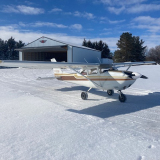
This is a milk house heater it keeps engine warm. I will add extension on it to reach new plane.
Mon Nov 18, 2019 8:30 pm
Re: Forced Air Engine Pre-heaters
Unfortunately I don't have 2 hours to plug in and wait each day before we depart. I'm flying an average of 8 flights per week this time of year, so the plane needs to stay warm. I realize Reiff and Tanis say that its fine to leave their products plugged in full time, however if you talk to some of these shops who are doing many overhauls per year, they will often concur on the topic of pre-heaters left on and rusty engines.
For the flying I'm doing, which is almost daily, heating the ambient air around the engine and avoiding the constant heating and cooling seems to be the better choice.
Ron
For the flying I'm doing, which is almost daily, heating the ambient air around the engine and avoiding the constant heating and cooling seems to be the better choice.
Ron
- On The Fly offline


- Posts: 199
- Joined: Wed Nov 01, 2017 4:56 pm
- Location: Hampton
- Aircraft: C`182K
Tue Nov 19, 2019 4:28 am
Re: Forced Air Engine Pre-heaters
Hammer wrote:Reiff claims that with a oil and cylinder heater combination the interior of the engine dries out, though whether a drier engine at a higher temperature rusts more or less than a damper engine at a lower temperature is not addressed in their literature.
My unproven theory is that there will always be enough moisture in a engine to rust things, and a warm engine is going to corrode faster than a frozen engine.
Corrosion is a chemical reaction, Chemical reactions happen faster at higher temperatures. Makes sense.
Tue Nov 19, 2019 7:42 am
Re: Forced Air Engine Pre-heaters
It does make sense. In the same breath, it makes sense that actually circulation air through the cowling would help dry things up rather then just blowing heat in or heating and not letting it out somewhere.StuBob wrote:Hammer wrote:Reiff claims that with a oil and cylinder heater combination the interior of the engine dries out, though whether a drier engine at a higher temperature rusts more or less than a damper engine at a lower temperature is not addressed in their literature.My unproven theory is that there will always be enough moisture in a engine to rust things, and a warm engine is going to corrode faster than a frozen engine.
Corrosion is a chemical reaction, Chemical reactions happen faster at higher temperatures. Makes sense.

Tue Nov 19, 2019 8:11 am
Re: Forced Air Engine Pre-heaters
https://www.bkmarineservices.com/produc ... box-heater
Neat package. Can use for more than just the airplane. The cost makes the Tanis seem more palatable.
He also makes a bigger one.
Neat package. Can use for more than just the airplane. The cost makes the Tanis seem more palatable.
He also makes a bigger one.

Tue Nov 19, 2019 8:14 am
Re: Forced Air Engine Pre-heaters
This is a quote from a corn drying with air article. Would be similar to having warm air in the whole engine compartment. Seems having the whole engine compartment heated all the time would be just like having the plane in a heated hangar.
If you heat air at 50 degrees and 50% relative humdity to 70°F, the relative humidity will drop to 25% and the air's water-holding capacity will increase. Heating the air allows it to carry away more moisture from the grain bin per cubic foot of airflow.
A rough rule of thumb is that adding 20°F to air reduces its relative humidity by half. The next 20°F increase drops the new value by half, the third 20° F rise drops that value by half.

Tue Nov 19, 2019 8:24 am
Re: Forced Air Engine Pre-heaters
A1Skinner wrote:It does make sense. In the same breath, it makes sense that actually circulation air through the cowling would help dry things up rather then just blowing heat in or heating and not letting it out somewhere.StuBob wrote:Hammer wrote:Reiff claims that with a oil and cylinder heater combination the interior of the engine dries out, though whether a drier engine at a higher temperature rusts more or less than a damper engine at a lower temperature is not addressed in their literature.My unproven theory is that there will always be enough moisture in a engine to rust things, and a warm engine is going to corrode faster than a frozen engine.
Corrosion is a chemical reaction, Chemical reactions happen faster at higher temperatures. Makes sense.
Other than removing the oil filler cap, I’m not sure how you can vent the moisture out of the engine. Doesn’t seem like air circulating in the cowling is going to have any effect on drying out the inside of the engine, but maybe.
I’ve thought of running a tube down the oil filler attached to an aquarium pump to circulate air through the engine, but I can see where it might do more harm than good without you knowing.
Tue Nov 19, 2019 8:26 am
Re: Forced Air Engine Pre-heaters
I’m a plug it in pretty much year around. Of course now days with the Rotax we don’t have to use the aircraft grade oil with its lack of protection properties.
My bud we built the S20 with kept a 180 Cherokee for 30 years plus. He was one of these guys who sends the oil in for analysis. He had better numbers leaving it plugged in and blanketed 24/7/365. In that time he did one overhaul due to nervousness of hitting TBO and flying over the water often times in the dark. Never touched a cylinder otherwise. We get 90-100” rain a year, so yes there is some humidity to deal with.
My bud we built the S20 with kept a 180 Cherokee for 30 years plus. He was one of these guys who sends the oil in for analysis. He had better numbers leaving it plugged in and blanketed 24/7/365. In that time he did one overhaul due to nervousness of hitting TBO and flying over the water often times in the dark. Never touched a cylinder otherwise. We get 90-100” rain a year, so yes there is some humidity to deal with.
Tue Nov 19, 2019 8:34 am
Re: Forced Air Engine Pre-heaters
Hammer wrote:
I’ve thought of running a tube down the oil filler attached to an aquarium pump to circulate air through the engine, but I can see where it might do more harm than good without you knowing.
They make a device specifically for this.
https://www.aircraftspruce.com/catalog/ ... kkey=61099
Uses the breather tube and circulates it through a desiccant. It's a little on the steep side for what it is, but far cheaper than an overhaul I guess.
- Zzz offline


- Posts: 2855
- Joined: Fri Oct 08, 2004 11:09 pm
- Location: northern
- Aircraft: Swiveling desk chair
Half a century spent proving “it is better to be thought a fool than to open your mouth and remove all doubt.”
Tue Nov 19, 2019 8:45 am
Re: Forced Air Engine Pre-heaters
I would call BS on any overhaul shop who claims corrosion from engine heaters. Really, folks? The outfit has absolutely no clue how the engine was treated, but the corrosion is from pre heating. I guess every engine in Texas or the rest of the south should be corroded too.
Look, moisture is your enemy. As Hammer accurately pointed out, blowing air into the engine compartment isn’t going to change what’s going on inside that engine. His idea of opening the oil dipstick is a good one, and about the only way you’re going to get moisture out of the engine internals.
And, yes, corrosion is accelerated by warmth. But, let’s go back to the Texas point...... Another point that a lot of you are missing is changing temperatures. Temperature changes aren’t necessarily good either. A quality engine heater will be thermostatically controlled, meaning even temps as long as the thing is plugged in.
There are some systems available which cycle air through your engine and then through desiccant, then back through the engine. My neighbor has one....kind of a Rube Goldberg system of hoses, jars, etc. if I flew more than twice a year, I’d park that thing in a corner and forget it.
Finally, we had a Cessna 185 parked outdoors in Fairbanks. The guy who was assigned that airplane never flew it in winter (or summer for that matter) but always kept the Tanis system plugged in all winter. For at least seven winters I know of. Airplane flew ~ 50 hours a year or less, all in summer.
That guy retired and that plane started getting used again. I put several hundred hours on it, at every 100 hour inspection expecting it to go away. But nope....that engine went to tbo. Our shop did the disassembly of the engine and said internals all looked clean.
Go figure.
MTV
Look, moisture is your enemy. As Hammer accurately pointed out, blowing air into the engine compartment isn’t going to change what’s going on inside that engine. His idea of opening the oil dipstick is a good one, and about the only way you’re going to get moisture out of the engine internals.
And, yes, corrosion is accelerated by warmth. But, let’s go back to the Texas point...... Another point that a lot of you are missing is changing temperatures. Temperature changes aren’t necessarily good either. A quality engine heater will be thermostatically controlled, meaning even temps as long as the thing is plugged in.
There are some systems available which cycle air through your engine and then through desiccant, then back through the engine. My neighbor has one....kind of a Rube Goldberg system of hoses, jars, etc. if I flew more than twice a year, I’d park that thing in a corner and forget it.
Finally, we had a Cessna 185 parked outdoors in Fairbanks. The guy who was assigned that airplane never flew it in winter (or summer for that matter) but always kept the Tanis system plugged in all winter. For at least seven winters I know of. Airplane flew ~ 50 hours a year or less, all in summer.
That guy retired and that plane started getting used again. I put several hundred hours on it, at every 100 hour inspection expecting it to go away. But nope....that engine went to tbo. Our shop did the disassembly of the engine and said internals all looked clean.
Go figure.
MTV


Tue Nov 19, 2019 8:52 am
Re: Forced Air Engine Pre-heaters
Zzz wrote:Hammer wrote:
I’ve thought of running a tube down the oil filler attached to an aquarium pump to circulate air through the engine, but I can see where it might do more harm than good without you knowing.
They make a device specifically for this.
https://www.aircraftspruce.com/catalog/ ... kkey=61099
Uses the breather tube and circulates it through a desiccant. It's a little on the steep side for what it is, but far cheaper than an overhaul I guess.
Interesting...given how cheap desiccant is it wouldn’t take much to make your own.
Tue Nov 19, 2019 9:28 am
Re: Forced Air Engine Pre-heaters
whee wrote:My hangar is cold and my blanket/nrs strap cover likely isn’t the best. A 150W bulb only got the CHTs to 35deg when left on over night and burned out after 3 uses.
Why isn't 35F enough? For example, Lycoming recommends pre-heating starting at 10F on most of their engines. They have a handful that they recommend 20F. I don't know of any that require pre-heating for temps any higher than that. So, wouldn't 35F be plenty?
- rw2 offline

- Posts: 1799
- Joined: Sat Dec 22, 2012 1:10 pm
- Location: San Miguel de Allende
- FindMeSpot URL: https://share.delorme.com/LaNaranjaDanzante
- Aircraft: Experimental Maule
Follow my Flying, Cooking and Camping adventures at RichWellner.com
Tue Nov 19, 2019 10:44 am
Re: Forced Air Engine Pre-heaters
If the relative humidity is say 25%, are you going to have corrosion starting? In a heated hangar, if you place a piece of bare steel, is it going to rust? The one place I could see a problem is when the propeller flange is in the cold while further in the crank is warm.
DISPLAY OPTIONS
Who is online
Users browsing this forum: No registered users and 0 guests
Latest Features
-
Live to Tell
A Minnesota pilot is surprised to learn that the sudden asymmetric drag of an out-of-rig ski can…Read More -
Creators
Working in some of the Yukon's most beautiful and remote environments, photographer Simon Blakesley captures aircraft in…Read More -
Aircraft Ownership and Maintenance
Upgrading to big tires can make a huge difference in backcountry performance, but with those gains come…Read More -
Tales from Yesteryear
In this tale from bush flying yesteryear, Don Cogger signs up to help Atlee Dodge Jr recovery…Read More


Latest Knowledge Base
-
Destinations
A regional guide with ideas for winter camping destinations in California, Nevada, New Mexico, and Arizona.Read More -
Aircraft
Finding an affordable aircraft that can handle the backcountry for $80K or less? A challenge for sure, but with the…Read More -
Aircraft
01.29.2018 - Zane - Updated tire diameter graphic to add 8.50x10 Guide to tires for use in the backcountry and off-airport landing…Read More -
Pilots
12.22.2013 - Initial article format Operating aircraft on skis and negotiating a snow-covered landscape is an entirely unique skillset and environment.…Read More


