So, perhaps a stupid question but... why couldn't I use two of these devices in my airplane, one to replace the regular battery, and the other for backup? Presumably the alternator (if working) should supply sufficient power for avionics etc. when it is running.
Greg
Jump starting in the bush.
Wed Dec 30, 2015 9:31 am
Wed Dec 30, 2015 10:46 am
Re: Jump starting in the bush.
Jumping back in here just to say thanks so much for all the really great information. Going over all the suggestions, I feel like I just took a class on "dealing with a low or dead battery when trying to start your plane." I knew I could count on you guys to educate me a bit on this subject. Another great thing about aviation, you just never stop learning. Thanks agains all! John
Wed Dec 30, 2015 11:40 am
Re: Jump starting in the bush.
I picked up one of these:
http://www.costco.com/Lithium-Jump-Star ... 30151.html
Figure if I keep it charged and in the plane it should work for one start.
TD
http://www.costco.com/Lithium-Jump-Star ... 30151.html
Figure if I keep it charged and in the plane it should work for one start.
TD
Wed Dec 30, 2015 12:38 pm
Re: Jump starting in the bush.
GregA wrote:So, perhaps a stupid question but... why couldn't I use two of these devices in my airplane, one to replace the regular battery, and the other for backup? Presumably the alternator (if working) should supply sufficient power for avionics etc. when it is running.
Greg
The simple answer is because that's not what these jump start batteries were designed for.
You may want to read the information on the Earthx web site to get an idea for the product development and engineering that has gone into making lithium batteries safe for full-time aircraft use:
http://earthxmotorsports.com/wp-content/uploads/2014/01/Aircraft.Brochure.2015.cropped.pdf
- blackrock offline
- Posts: 1576
- Joined: Tue Jan 29, 2008 6:54 pm
- Location: Elko, NV
- FindMeSpot URL: http://share.findmespot.com/shared/face ... BFmtASxjeV
- Aircraft: Bearhawk
Wed Dec 30, 2015 9:07 pm
Re: Jump starting in the bush.
WWhunter wrote:Waiting for a picture of the 'girlfriend' or it didn't happen!


- M6RV6 offline

- Posts: 2313
- Joined: Mon Feb 25, 2008 5:52 pm
- Location: Rice Wa. 82WN Magee Creek AERODROME
- FindMeSpot URL: http://share.findmespot.com/shared/face ... sWKXuhKlg2
Have as much Fun as is Safe, and Keep SMILIN! GT,
Wed Dec 30, 2015 9:20 pm
Re: Jump starting in the bush.
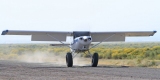
That is without a doubt the finest example of hand propping technique I've ever seen! 
- blackrock offline
- Posts: 1576
- Joined: Tue Jan 29, 2008 6:54 pm
- Location: Elko, NV
- FindMeSpot URL: http://share.findmespot.com/shared/face ... BFmtASxjeV
- Aircraft: Bearhawk
Wed Dec 30, 2015 11:15 pm
Re: Jump starting in the bush.
M6RV6 wrote:WWhunter wrote:Waiting for a picture of the 'girlfriend' or it didn't happen!
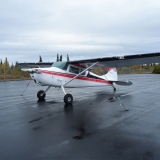
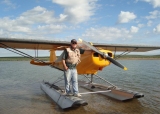
That's not a Beaver is it??


Thu Dec 31, 2015 8:21 am
Re: Jump starting in the bush.
Looks like a Cessna 190/195 to me.
- MountainFlyerN22 offline

- Posts: 80
- Joined: Fri Nov 20, 2015 12:23 am
- Location: Catskill
Thu Dec 31, 2015 8:53 am
Re: Jump starting in the bush.
No .... I'm pretty sure that's a beaver!
- NunavutPA-12 offline
- Posts: 123
- Joined: Sat Feb 22, 2014 8:52 pm
- Location: Kugluktuk
Thu Dec 31, 2015 9:20 am
Re: Jump starting in the bush.
MountainFlyerN22 wrote:Looks like a Cessna 190/195 to me.
Naw you guys are not paying attention, That is a Cessna 196, That is a 985 P&W that she is hand propping!
What's wrong with you guys? Not paying attention to details!!

- M6RV6 offline
- Posts: 2313
- Joined: Mon Feb 25, 2008 5:52 pm
- Location: Rice Wa. 82WN Magee Creek AERODROME
- FindMeSpot URL: http://share.findmespot.com/shared/face ... sWKXuhKlg2
Have as much Fun as is Safe, and Keep SMILIN! GT,
Fri Jan 01, 2016 5:48 pm
Re: Jump starting in the bush.
CamTom12 wrote:Alternators require a voltage to energize the field. Otherwise they won't work. If the battery is too low to supply this, you need an external power source to light off the alternator.
You need enough voltage to energize the master relay before anything gets to the alternator field. But, a battery may still have some juice left even if it won't trip the relay - jumping the relay with whatever metallic is handy may provide just enough to get the alternator started. Maybe.
- Geoffrey Thorpe offline

- Posts: 50
- Joined: Wed Feb 05, 2014 7:14 am
- Location: Trenton
Mon Jan 04, 2016 3:24 pm
Re: Jump starting in the bush.
Trimtab wrote:You need someone - your mech. - to show you how to tell if there is an impulse mag.
I thought it was as easy as turning the prop (ign off) and listening for the loud "click" of the impulse coupling releasing? Or is there more to it?

Mon Jan 04, 2016 3:54 pm
Re: Jump starting in the bush.
whynotfly wrote:I want to purchased one of these portable jump starting units to carry in my plane in case I find myself with a hard starting engine and a worn down battery in a remote spot. I'm not a real wiz when it comes to electrical topics so I thought I would ask you folks before I shell out $$ for something. Having done a little bit of searching it seems I have two basic type choices, the somewhat bulky ones you find at your neighborhood auto parts store and then the new lightweight lithium units. My plane is a 59 172 with a newer Lycoming 0360 A1A which uses an alternator verses the original generator. It is a 14 volt system. I am a little wary of the lithium type due to possible fire hazard. Are my worries valid? I am leaning towards getting one of the regular automotive type with 1000 amp available for jump starting (about $80-90 with weight of 18lbs) which I could carry in the baggage compartment. I would appreciate any input from those who have used these or carry one of these in their plane. Thank you in advance. John
The following applies more to people with a -540 or -550 engine, but FWIW:
I have been burnt by light weight batteries before, and learned a lot about them in the process. Basically, if it seems to good to be true, it probably is.
I think it's the pulse hot cranking amps PHCA, rather than the cold cranking amps CCA, which matters in these small power pack units. Let me explain - how many amps it can sustain at freezing temp for 30 seconds isn't the most relevant measure of performance with our large bore engines, it's the electrical in-rush in the first second which creates the largest drain on the power pack (battery or jumper). If it can't support that amperage, the power pack's voltage will collapse, and the prop stands still.
For example, take the Oddessy 680 model we know and love.
It's CCA rating is 170, easily matched.
It's PHCA rating is 520 amps for 5 seconds (wow!).
That is what starts a big engine, sustained pulse cranking power, but 520 is only *just* enough to start a -540 with very cold oil and high compressions.
If your power pack doesn't provide enough PHCA to turn over the engine past the first compression stroke, from a standing start, then the other 29 seconds of CCA are worthless to you (that's what CCA is, 30 seconds of current). Personally, I would strongly suggest doing a test start with any power pack you buy (if you didn't already) before lugging the thing around with you. If they don't post a PHCA or CCA number, be dubious until proven otherwise.
You can parallel a jumper pack over a partially flat battery (or a good battery) to get more juice out of the whole system. But it's worth being aware that unless both the jumper unit and your battery have the same impedance, one could get worked a LOT harder than the other. This could potentially damage an already weakened battery, particularly a high performance model like an Li-Ion which may not survive a deep cycle below 60% discharge.
Mon Jan 04, 2016 5:22 pm
Re: Jump starting in the bush.
Any one had any experience with the earthx battery's. The ETX 680 and 900 look to have significantly better numbers than the Odyssey PC 680 and a lot lighter.@ 4.1 lbs and 4.9 lbs?
Mon Jan 04, 2016 5:46 pm
Re: Jump starting in the bush.
My hangar partner, Hal has a smaller EarthX for his Bi Bore Rotax and is very happy with it. I plan to switch from a PC680 to a ETX900 for the O-540. I'm only holding off because I need to find out if the EarthX can survive on the front of the firewall, or if it needs to mounted on the back side, in the cabin. My thoughts are it might be too hot FWF but this isn't a good time of year to measure those temps. The wife's remote smoker thermometer is on the counter ready to go when it warms up a little. I think under 200F will be ok. Above that, I'll put it in the cabin but I really don't like that idea.
I see EarthX list PCA of 840 amps for 3 seconds at 25 C, and CCA of 400 amps for 3 seconds at 0 F. Not sure how that matches up exactly with Jon's numbers above but I'm willing to give it a try. Heck, shedding 10lbs with just a battery swap is huge!
I see EarthX list PCA of 840 amps for 3 seconds at 25 C, and CCA of 400 amps for 3 seconds at 0 F. Not sure how that matches up exactly with Jon's numbers above but I'm willing to give it a try. Heck, shedding 10lbs with just a battery swap is huge!
- blackrock offline
- Posts: 1576
- Joined: Tue Jan 29, 2008 6:54 pm
- Location: Elko, NV
- FindMeSpot URL: http://share.findmespot.com/shared/face ... BFmtASxjeV
- Aircraft: Bearhawk
Mon Jan 04, 2016 6:16 pm
Re: Jump starting in the bush.
blackrock wrote:I see EarthX list PCA of 840 amps for 3 seconds at 25 C, and CCA of 400 amps for 3 seconds at 0 F. Not sure how that matches up exactly with Jon's numbers above but I'm willing to give it a try. Heck, shedding 10lbs with just a battery swap is huge!
Those are some very impressive numbers for the EarthX, particularly the PCA.
Technically speaking, the definition of CCA requires a 30 second run at 0F (and maintaining >7.2V for a 12V application) to enable a standard comparison across batteries.
PHCA (PCA) has no formal definition I can find, and most suppliers seem to quote the pulse period and temperature for that test, if they've bothered completing it.
Tue Jan 05, 2016 10:48 am
Re: Jump starting in the bush.
M6RV6 wrote:MountainFlyerN22 wrote:Looks like a Cessna 190/195 to me.
Naw you guys are not paying attention, That is a Cessna 196, That is a 985 P&W that she is hand propping!
What's wrong with you guys? Not paying attention to details!!
I didn't even notice there was an airplane in the photo until the third look.
Cessna Skywagon -- accept no substitute!
Tue Jan 05, 2016 4:17 pm
Re: Jump starting in the bush.
blackrock wrote:My hangar partner, Hal has a smaller EarthX for his Bi Bore Rotax and is very happy with it. I plan to switch from a PC680 to a ETX900 for the O-540. I'm only holding off because I need to find out if the EarthX can survive on the front of the firewall, or if it needs to mounted on the back side, in the cabin. My thoughts are it might be too hot FWF but this isn't a good time of year to measure those temps. The wife's remote smoker thermometer is on the counter ready to go when it warms up a little. I think under 200F will be ok. Above that, I'll put it in the cabin but I really don't like that idea.
I see EarthX list PCA of 840 amps for 3 seconds at 25 C, and CCA of 400 amps for 3 seconds at 0 F. Not sure how that matches up exactly with Jon's numbers above but I'm willing to give it a try. Heck, shedding 10lbs with just a battery swap is huge!
Problem is, if you're discussing a certified aircraft, the Earth X batteries are not yet approved....no TSO, no PMA....good luck getting them approved.
MTV

Tue Jan 05, 2016 5:26 pm
Re: Jump starting in the bush.
mtv wrote:Problem is, if you're discussing a certified aircraft, the Earth X batteries are not yet approved....no TSO, no PMA....good luck getting them approved.
MTV
Yep, EarthX are for Experimental/AB only. I should have mentioned that in my post but got carried away... At least the PC680 variant, the SBS J-16 is a PMA battery and STC's are available for certain aircraft.
- blackrock offline
- Posts: 1576
- Joined: Tue Jan 29, 2008 6:54 pm
- Location: Elko, NV
- FindMeSpot URL: http://share.findmespot.com/shared/face ... BFmtASxjeV
- Aircraft: Bearhawk
DISPLAY OPTIONS
Who is online
Users browsing this forum: No registered users and 3 guests
Latest Features
-
Live to Tell
A Minnesota pilot is surprised to learn that the sudden asymmetric drag of an out-of-rig ski can…Read More -
Creators
Working in some of the Yukon's most beautiful and remote environments, photographer Simon Blakesley captures aircraft in…Read More -
Aircraft Ownership and Maintenance
Upgrading to big tires can make a huge difference in backcountry performance, but with those gains come…Read More -
Tales from Yesteryear
In this tale from bush flying yesteryear, Don Cogger signs up to help Atlee Dodge Jr recovery…Read More


Latest Knowledge Base
-
Destinations
A regional guide with ideas for winter camping destinations in California, Nevada, New Mexico, and Arizona.Read More -
Aircraft
Finding an affordable aircraft that can handle the backcountry for $80K or less? A challenge for sure, but with the…Read More -
Aircraft
01.29.2018 - Zane - Updated tire diameter graphic to add 8.50x10 Guide to tires for use in the backcountry and off-airport landing…Read More -
Pilots
12.22.2013 - Initial article format Operating aircraft on skis and negotiating a snow-covered landscape is an entirely unique skillset and environment.…Read More


