Love Rans, Kitfox, what do you do if you can't get MoGas?
Thu Jul 07, 2011 9:12 pm
Love Rans, Kitfox, what do you do if you can't get MoGas?
Heard great things about the Rotax 912 and am in the market for a smaller/cheaper plane. What do you do if you can't get MoGas? I am in Massachusetts and can't even find gas without ethanol at the pump. The wallet would love to have 4 gph on MoGas but it is not looking too good.
Thu Jul 07, 2011 9:37 pm
Re: Love Rans, Kitfox, what do you do if you can't get MoGas
They run just the same on 100LL and are approved for 10% ethanol. Not sure what your question is. As long as it's 91 Octane burn it!

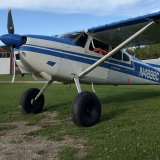
Experimental Avid Flyer STOL 582 Rotax
Thu Jul 07, 2011 9:58 pm
Re: Love Rans, Kitfox, what do you do if you can't get MoGas
I thought you were not supposed to put 100ll in the Rotax. No? And they are fine on 10%? Apparently I've got this all wrong then. Great.. Just need a hangar now.
Thu Jul 07, 2011 10:13 pm
Re: Love Rans, Kitfox, what do you do if you can't get MoGas
Yep, they will run just fine on autogas or 100LL. If you get a 100 HP rotax you need to run super unleaded, if you get the 80 horse motor then you can run regular unleaded. And yes, as has been stated up to 10% ethanol.
I'm loving my Rans S6.
I'm loving my Rans S6.

Fri Jul 08, 2011 6:35 am
Re: Love Rans, Kitfox, what do you do if you can't get MoGas
When run on more than 30% LL100 you are required to change plugs and oil at more frequent intervals.
tom
tom
- Savannah-Tom offline

- Posts: 891
- Joined: Mon Mar 06, 2006 3:26 pm
- Location: Corvallis, OR
Fri Jul 08, 2011 7:14 am
Re: Love Rans, Kitfox, what do you do if you can't get MoGas
ington6 wrote:Heard great things about the Rotax 912 and am in the market for a smaller/cheaper plane. What do you do if you can't get MoGas? I am in Massachusetts and can't even find gas without ethanol at the pump. The wallet would love to have 4 gph on MoGas but it is not looking too good.
91 Octane mogas is approved with up to 10% Ethanol and that is the preferred fuel unless of course you can find it without the ethanol. If using 100LL it is recommended to use Decalin which is a lead scavanger and change oil and plugs every 25 hours. With mogas, oil/plug changes are only every 50 hours and some will let their plugs go to 100 hours. Plugs for the Rotax are cheap, I change at 50.

Magnet
Fri Jul 08, 2011 7:57 pm
Re: Love Rans, Kitfox, what do you do if you can't get MoGas
Magnet wrote:ington6 wrote:Heard great things about the Rotax 912 and am in the market for a smaller/cheaper plane. What do you do if you can't get MoGas? I am in Massachusetts and can't even find gas without ethanol at the pump. The wallet would love to have 4 gph on MoGas but it is not looking too good.
91 Octane mogas is approved with up to 10% Ethanol and that is the preferred fuel unless of course you can find it without the ethanol. If using 100LL it is recommended to use Decalin which is a lead scavanger and change oil and plugs every 25 hours. With mogas, oil/plug changes are only every 50 hours and some will let their plugs go to 100 hours. Plugs for the Rotax are cheap, I change at 50.
I change my plugs every 300 to 400 hours, and they still look like new. Oil every 75 hrs, (and it uses NO oil between changes) sometimes less sometime more. The rare times I have to use 100LL (maybe 20 gallons in 700+ hrs on my "new" S-7S), I mix in a little of that Decalin stuff. 95% or more of what I burn is straight gas, no ethanol, but on a xc I think nothing of using 10%, especially if I am burning it up that day! 91 octane is the recommended fuel at sea level, those that never fly below 4 thousand feet can use the mid range stuff, and save a dime a gallon. You'll never read that in the Rotax literature, and most burn 91 octane no matter what. I just brought 55 gallons of mid range (85 octane), the next day 55 gallons of 91, all of it dumped into my 300 gallon bulk tank. If I get below 4500' I have other problems! My Subaru powered S-7 required premium at sea level up to 2,000', when my Soob engine man found I never fly below 4500' unless going elswhere, he told me to burn regular, the engine won't know the difference. Some like to burn premium in the trucks or cars, no matter what, it's a waste of money, I'd rather buy more gas!
- courierguy offline

- Posts: 4197
- Joined: Thu Mar 31, 2005 6:52 pm
- Location: Idaho
"Its easier to apologize then ask permission"
Tex McClatchy
Tex McClatchy
Fri Jul 08, 2011 9:25 pm
Re: Love Rans, Kitfox, what do you do if you can't get MoGas
You do have to be careful if you have an older Rans or Kitfox with the original fiberglass tanks. The ethanol fuels will attack the resins and clog fuel filters.

"In a world full of people, only a few want to fly"
Sat Jul 09, 2011 5:38 am
Re: Love Rans, Kitfox, what do you do if you can't get MoGas
This may be of interest to people with old fiberglass. This from a boat forum.
Expert's Answer
This is a bit surprising to me as ethanol is the rubbing alcohol we use at home and I know it will stay in a plastic bottle for years without causing any damage to the bottle. Also this table shows vinyl esters to be resistant to ethanol of 10% concentration and up to 150F degrees:
http://www.engineeringtoolbox.com/chemi ... d_785.html
I think epoxy based vinyl esters are your best bet for a fuel tank lining. Ashland has products called Hetron and Aropol that may be suitable for your needs.
Now since you mentioned UL1316 I know that Ashland introduced such a product 1 or 2 years ago. I will have to have a trip to a nearby town this afternoon but you can call Ashland or email them and get information about their products:
http://www.ashland.com/
If I am not mistaken it was a product called Aropol Q7022 but I know Ashland will provide much better info than I can.
Hope this helps better and have a great day!


Sat Jul 09, 2011 7:03 am
Re: Love Rans, Kitfox, what do you do if you can't get MoGas
Marty,
I don,t know where you found your 'expert'.........
BUT ethanol is 'drinking' alc, or also known as vodka.
Rubbing alc is ISOPROPYL alc, which will make you SICK+++.....
Ethanol sold for other than drinking (taxed) is 'denatured' by adding chemical to it
that is difficult to remove, but makes you temporarily sick.
Isopropyl alcohol is NOT ethanol!
Just a little chemistry.....
lc
I don,t know where you found your 'expert'.........
BUT ethanol is 'drinking' alc, or also known as vodka.
Rubbing alc is ISOPROPYL alc, which will make you SICK+++.....
Ethanol sold for other than drinking (taxed) is 'denatured' by adding chemical to it
that is difficult to remove, but makes you temporarily sick.
Isopropyl alcohol is NOT ethanol!
Just a little chemistry.....
lc
Humor may not make the world go around, but it certainly cheers up the process... 
With clothing, the opposite of NOMEX is polypro (polypropylene cloth and fleece).
Success has many fathers...... Failure is an orphan.
With clothing, the opposite of NOMEX is polypro (polypropylene cloth and fleece).
Success has many fathers...... Failure is an orphan.
Sat Jul 09, 2011 7:25 am
Re: Love Rans, Kitfox, what do you do if you can't get MoGas
Littlecub, the gist of my post was about vinyl ester and those products to modify existing old fiberglass tanks. But since you are more concerned about rubbing alcohol, here is some more info.
http://en.wikipedia.org/wiki/Rubbing_alcohol
Rubbing alcohol
From Wikipedia, the free encyclopedia
A bottle of isopropyl rubbing alcohol
"Surgical spirit" redirects here. For the sitcom, see Surgical Spirit (TV series).
Rubbing alcohol, USP / B.P. is a liquid prepared and used primarily for topical application. It is prepared from a special denatured alcohol solution and contains 97.5-100% by volume of pure, concentrated ethanol (ethyl alcohol) or isopropyl alcohol (isopropanol).[1] Individual manufacturers can use their own "formulation standards" in which the ethanol content usually ranges from 70-99% v/v.[2] In the UK the equivalent skin preparation is surgical spirit which is always based on an ethyl alcohol-methyl alcohol mixture.
The term "rubbing alcohol" has become a general non-specific term for either isopropyl alcohol (isopropanol) or ethyl alcohol (ethanol) rubbing-alcohol products. The confusion comes from the greater popularity of isopropyl rubbing alcohol, and as a result, individuals requesting "rubbing alcohol" generally expect and get an isopropyl alcohol product.
Legislation
In the United States, rubbing alcohol, USP and all preparations coming under the classification of Rubbing Alcohols must be manufactured in accordance with the requirements of the US Treasury Department, Bureau of Alcohol, Tobacco, and Firearms, using Formula 23-H (8 parts by volume of acetone, 1.5 parts by volume of methyl isobutyl ketone, and 100 parts by volume of ethyl alcohol). It contains 97.5-100% by volume of absolute ethyl alcohol, the rest consists of water and the denaturants, with or without color additives, and perfume oils. Rubbing Alcohol contains in each 100 mL not less than 355 mg of sucrose octaacetate or not less than 1.40 mg of denatonium benzoate. The preparation may be colored with one or more color additives. A suitable stabilizer may also be added.[6]
http://en.wikipedia.org/wiki/Rubbing_alcohol
Sat Jul 09, 2011 8:40 am
Re: Love Rans, Kitfox, what do you do if you can't get MoGas
Marty,
The 'rubbing' alc for decades has said 'Isopropyl Alcohol' over/or under the 'Rubbing Alcohol' title.
Evidently government (tax) subsidies of etanol have recently made ethanol enough cheaper than isopropyl that the producing/packaging companies have changed the definitions to suite their pocketbooks.
I stand corrected. Money changes everything, including definitions.
lc
PS How do farmers still posture as conservatives when they spend so much time at the government teat?? Just a rehetorical question/puzzle......
The 'rubbing' alc for decades has said 'Isopropyl Alcohol' over/or under the 'Rubbing Alcohol' title.
Evidently government (tax) subsidies of etanol have recently made ethanol enough cheaper than isopropyl that the producing/packaging companies have changed the definitions to suite their pocketbooks.
I stand corrected. Money changes everything, including definitions.
lc
PS How do farmers still posture as conservatives when they spend so much time at the government teat?? Just a rehetorical question/puzzle......
Humor may not make the world go around, but it certainly cheers up the process...
With clothing, the opposite of NOMEX is polypro (polypropylene cloth and fleece).
Success has many fathers...... Failure is an orphan.
With clothing, the opposite of NOMEX is polypro (polypropylene cloth and fleece).
Success has many fathers...... Failure is an orphan.
Sat Jul 09, 2011 9:43 am
Re: Love Rans, Kitfox, what do you do if you can't get MoGas
PS How do farmers still posture as conservatives when they spend so much time at the government teat?? Just a rehetorical question/puzzle......
Pretty complex question----I don't like gov't in everything anymore than you but.... How is a farmer supposed to deal with a gov't that says you can't export to some country because we have an embargo on them. There are many other complexities. Would it be better if we had a new batch of farmers every time the weather caused a crop failure? I still remember helping a friend when he was rebuilding his 180. His mother was visiting and said her deceased husband always wanted to be a farmer and asked how much I made every year. I said "I didn't know". She says you mean you don't know what you make for sure---I'd sure never do anything like that.
Sat Jul 09, 2011 9:54 am
Re: Love Rans, Kitfox, what do you do if you can't get MoGas
Littlecub, are you sure that it wasn't oil company ethanol in the rubbing form? I remember a few years ago a ship carrying ethanol from New York harbor sank off the coast of Virginia. It was industial ethanol and was headed to some Texas chemical company.
Ethanol may also be produced industrially from ethene (ethylene). Addition of water to the double bond converts ethene to ethanol:
C2H4 + H2O → CH3CH2OH
This is done in the presence of an acid which catalyzes the reaction, but is not consumed. The ethene is produced from petroleum by steam cracking.
About 5% of the ethanol produced in the world in 2003 was actually a petroleum product.[16] It is made by the catalytic hydration of ethylene with sulfuric acid as the catalyst. It can also be obtained via ethylene or acetylene, from calcium carbide, coal, oil gas, and other sources. Two million tons of petroleum-derived ethanol are produced annually. The principal suppliers are plants in the United States, Europe, and South Africa.[17] Petroleum derived ethanol (synthetic ethanol) is chemically identical to bio-ethanol and can be differentiated only by radiocarbon dating.[18]
Sat Jul 09, 2011 10:28 am
Re: Love Rans, Kitfox, what do you do if you can't get MoGas
At my field their are 5-6 912 and 912S planes, all run on mostly 91 octane mogas - collectively probably 3000hrs on all the motors with no issues. All the stations locally blend with ethanol. I have bought gas at the same station for all of the 350hrs I have put on my 912S and it has consistently 6% ethanol (I test it). As said, Rotax is approved for 10%.
I also have a fiberglass aux tank that is coated with the old Jefco sealant (Now owned by LineX brand I think) - a thixotropic gunk use for epoxy based tanks in marine applicaitons jsut for such purposes. The rest of my fuel system is primarily rubber with a couple small alum. sections.
Never had any detectable issue whatsoever. removed an aluminum peice recently as I changed my configuration a bit to accommodate a filter and better position my fuel flow transducer. It was pristine.
I only run maybe 10% or less Avgas overall, when I am on cross country. As said, if you run more than 30%, use semisynthetic oil (not full synthetic). The Rotax manual has clear recommendations.
Oil changes should be 25hrs if mostly avgas, but that might be excessive.
I change my plugs no less than every 200hrs and they are beautuful. and Cheap
I wouldn't worry at all about Ethanol, unless maybe you have the old vinylester FG tanks. If not - just fill it with mogas and fly!
You will love the 912(s). Its an awesome, efficient, reliable motor
I also have a fiberglass aux tank that is coated with the old Jefco sealant (Now owned by LineX brand I think) - a thixotropic gunk use for epoxy based tanks in marine applicaitons jsut for such purposes. The rest of my fuel system is primarily rubber with a couple small alum. sections.
Never had any detectable issue whatsoever. removed an aluminum peice recently as I changed my configuration a bit to accommodate a filter and better position my fuel flow transducer. It was pristine.
I only run maybe 10% or less Avgas overall, when I am on cross country. As said, if you run more than 30%, use semisynthetic oil (not full synthetic). The Rotax manual has clear recommendations.
Oil changes should be 25hrs if mostly avgas, but that might be excessive.
I change my plugs no less than every 200hrs and they are beautuful. and Cheap
I wouldn't worry at all about Ethanol, unless maybe you have the old vinylester FG tanks. If not - just fill it with mogas and fly!
You will love the 912(s). Its an awesome, efficient, reliable motor

2009 Rans S-7S Sold,
Folsom, CA
http://picasaweb.google.com/emmetw
http://oneechowhiskey.wordpress.com
https://vimeo.com/emflys/videos
Folsom, CA
http://picasaweb.google.com/emmetw
http://oneechowhiskey.wordpress.com
https://vimeo.com/emflys/videos
Sat Jul 09, 2011 11:25 am
Re: Love Rans, Kitfox, what do you do if you can't get MoGas
Marty,
I had to run to the store (Fred Meyer's-Oregon), and so I checked out their pharmacy section. The 'Rubbing Alcohol' is 70% isopropyl just like it has always been....
Admittedly this isn't the 'corn belt' and we might be a we bit behind wicapedia and politician's purchased intent......, but there it was.
I probably won't catch up to 'the times' anytime soon......
lc
I had to run to the store (Fred Meyer's-Oregon), and so I checked out their pharmacy section. The 'Rubbing Alcohol' is 70% isopropyl just like it has always been....
Admittedly this isn't the 'corn belt' and we might be a we bit behind wicapedia and politician's purchased intent......, but there it was.
I probably won't catch up to 'the times' anytime soon......
lc
Humor may not make the world go around, but it certainly cheers up the process...
With clothing, the opposite of NOMEX is polypro (polypropylene cloth and fleece).
Success has many fathers...... Failure is an orphan.
With clothing, the opposite of NOMEX is polypro (polypropylene cloth and fleece).
Success has many fathers...... Failure is an orphan.
DISPLAY OPTIONS
Who is online
Users browsing this forum: No registered users and 1 guest
Latest Features
-
-
Featured Bush Planes
As one of the undisputed legends of bush flying, the Cessna 180 hauls a…Read More -
Aircraft Ownership and Maintenance
9 modification mistakes aircraft owners make when trying to "bush out" their birds—why some…Read More -
Live to Tell
A Minnesota pilot is surprised to learn that the sudden asymmetric drag of an…Read More




Latest Knowledge Base
-
Destinations
Canada offers some of the most spectacular backcountry flying on the continent. Here's what you need to know before you go.Read More -
Safety and Survival
Hope that you never have to use your survival vest but knowing you have it and knowing how to use…Read More -
Destinations
A regional guide with ideas for winter camping destinations in California, Nevada, New Mexico, and Arizona.Read More -
Aircraft
Finding an affordable aircraft that can handle the backcountry for $80K or less? A challenge for sure, but with the…Read More



