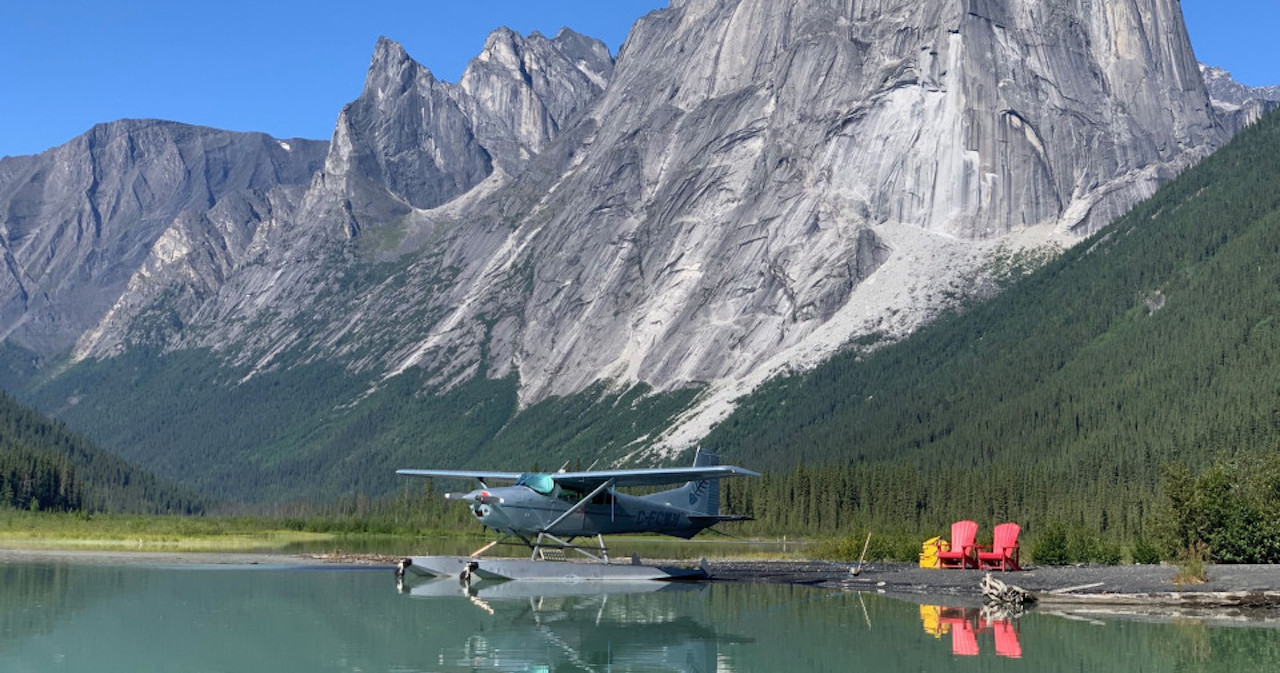
Great post Whee, I reckon more posts about flights that didn’t go to plan should be encouraged! We tend to always show the blue sky windless days. The reality is far from that if you fly regularly.
I got a real fright in mountain turbulence very early on in my flying career and it has made me extremely weary ever since - I have never struck turbulence like that again but it has given me huge respect for what wind can do to a small aircraft amongst large mountains!
Figuring out travel routes comes down to experience and being prepared to try different heights and routes under different conditions, no two days are the same. Some days I hug terrain and use to my advantage, other days I’m >2000’ above ridge tops.
As Battson pointed out, we get our fair share of turbulence down here with predominant westerly winds and steep mountain terrain lining up perfectly to give you a thrashing. It’s a case of choosing figuring it out, taking a thrashing or staying on the ground.
My lesson in Mountain Turbulence
Fri Feb 28, 2020 11:47 am
Tue Mar 24, 2020 12:13 pm
Re: My lesson in Mountain Turbulence
I apologize for not being responsive to this thread. I caught a bug the day I made the original post which put me out of action for over a week and I am finally getting caught up on stuff. Between being sick and this last flight I haven't had any desire to go flying but last night I fueled the plane and washed the windshield should I decide to go. Being around the plane brought this flight back to the front of my mind. I sincerely appreciate the ideas and thoughts.
I thought maybe I need to clarify that what I experienced on my way to MT wasn't just rough air; it was knock yourself out on the x-brace, rip your hands from the controls, pray the wings don't fall off rough. Several times during big up or down drafts I'd have plenty of time to think about what was going to happen if the plane came apart when the draft topped/bottomed out. It was truly terrifying. Flying in the mountains on a hot and/or windy summer afternoon sucks but is tolerable, it certainly isn't terrifying.
The point about maneuvering speed is a great one. I was thinking about where the "green arc" is on my BH and honestly have no idea. I slowed down to what I figured was slow enough but I am certainly going to figure out what the maneuvering speed is.
I thought maybe I need to clarify that what I experienced on my way to MT wasn't just rough air; it was knock yourself out on the x-brace, rip your hands from the controls, pray the wings don't fall off rough. Several times during big up or down drafts I'd have plenty of time to think about what was going to happen if the plane came apart when the draft topped/bottomed out. It was truly terrifying. Flying in the mountains on a hot and/or windy summer afternoon sucks but is tolerable, it certainly isn't terrifying.
The point about maneuvering speed is a great one. I was thinking about where the "green arc" is on my BH and honestly have no idea. I slowed down to what I figured was slow enough but I am certainly going to figure out what the maneuvering speed is.

Tue Mar 24, 2020 7:34 pm
Re: My lesson in Mountain Turbulence
Flying on the east side of the Lemhi's one day, very early in the morning, with no apparent wind and glass smooth air, I was putzing around and had already landed a few high up sites. Take off from the last one was normal, but as I got away from the ridge, headed down into the valley, I hit one giant bump that bounced my 35 mm Nikon camera off the skylight, from its usual resting place on the floorboards. No warning, no burble right before, just glass smooth, then WHAM, and glass smooth again. It felt like taxiing over a box car.
- courierguy offline

- Posts: 4197
- Joined: Thu Mar 31, 2005 6:52 pm
- Location: Idaho
"Its easier to apologize then ask permission"
Tex McClatchy
Tex McClatchy
Mon Apr 27, 2020 10:10 am
Re: My lesson in Mountain Turbulence
As I was reading your post, I could empathize with EXACTLY how you were feeling during that flight. I fly between Gooding and Salmon pretty regularly, which means navigating up over Trail Creek, through Challis, and down the river canyon to Salmon. More than once I've experienced serious turbulence in those areas. Envisioning the wind as flowing like water over the mountains really helps to predict where the turbulence might be better, I picked that trick up from a seminar with Dick Williams and Amy Hoover.
The worst turbulence I've ever experienced was over the Dalles in Oregon, holy cow was that nasty. Second to that was the descent into Rocky Mountain Metro last fall. The mountain wave trailing off the peaks there is something to behold.
I always check winds aloft, if the winds aloft at peak level are above 25knots, I fly low in the canyons and don't fly over any passes or not at all. On those days I'll go fly up the Lemhi. I have the winds aloft layer turned on in FF at all times.
Slowing down helps a ton, I was never taught to slow down to Va, but got into a habit of it just out of my intuition.
The worst turbulence I've ever experienced was over the Dalles in Oregon, holy cow was that nasty. Second to that was the descent into Rocky Mountain Metro last fall. The mountain wave trailing off the peaks there is something to behold.
I always check winds aloft, if the winds aloft at peak level are above 25knots, I fly low in the canyons and don't fly over any passes or not at all. On those days I'll go fly up the Lemhi. I have the winds aloft layer turned on in FF at all times.
Slowing down helps a ton, I was never taught to slow down to Va, but got into a habit of it just out of my intuition.

Mon Apr 27, 2020 11:03 am
Re: My lesson in Mountain Turbulence
whee wrote:
I thought maybe I need to clarify that what I experienced on my way to MT wasn't just rough air; it was knock yourself out on the x-brace, rip your hands from the controls, pray the wings don't fall off rough. Several times during big up or down drafts I'd have plenty of time to think about what was going to happen if the plane came apart when the draft topped/bottomed out. It was truly terrifying. Flying in the mountains on a hot and/or windy summer afternoon sucks but is tolerable, it certainly isn't terrifying.
The point about maneuvering speed is a great one. I was thinking about where the "green arc" is on my BH and honestly have no idea. I slowed down to what I figured was slow enough but I am certainly going to figure out what the maneuvering speed is.
Don't forget that in modern aircraft, maneuvering speed and turbulent penetration speed are often published and are different. For our legacy aircraft, we often only get Va, and many times not even that.
Remember that maneuvering speed relates to aircraft damage when full deflection to the controls are applied. However, damage can be inflicted by gusts rather than control inputs; and therefore, the turbulent penetration speed (Vb), which is lower than Va may need to be considered.
Whee's description of the "knock yourself out on the x-brace, rip your hands from the controls..." probably deserves a speed slower than Va. Vb would be appropriate in this situation.
There are numerous resources on the web for calculating Vb so I won't go through it here.
Lastly, it has been mentioned that Va changes with aircraft weight, and the same holds true for Vb.
Mon Apr 27, 2020 11:48 am
Re: My lesson in Mountain Turbulence
A couple points:
First, not everyone perceives, or responds to turbulence the same. Part of that is related to your experience. Once you've ricocheted your noggin off the roof a few times, you tend to really, really cinch up those lap belts. Still, the human body stretches more than you'd think. I took my instrument checkride in the LA basin during a Santa Ana wind event. I didn't want to go there, but scheduling an examiner wasn't easy, and when you got a date....you did it.
In short, we got the living hell pounded out of us as I rattled through a few instrument approaches, including one full approach and circle to land. Good news was, the examiner wasn't going to ding me for being a few feet off altitude. Finally, he sent me off the beach a bit for some air work. I was just completing the first steep turn when we hit one of those like Whee describes......I looked over and the examiner, who was a pretty big guy, was slammed up against the ceiling, almost to his shoulders, with his head pushed way to the side.
When he came down off the roof, he said "That's good, let's land this thing". I passed, but what a ride.
Second thing: There are times when staying relatively low (as in 1000 feet or so below the ridges) MAY be a better ride than above the ridges. This is true of Windy and Isabel Passes in the Alaska Range. On a windy day there, you may get light to moderate down in the passes, but above the ridges, even a couple thousand feet above, you'll get hammered.
But, if the wind's really howling, just stay away. And, go re-read Squash's discussion of Turbulent Air Penetration Speed....it's important. As he noted, the numbers given by the manufacturer are generally predicated on operation at maximum gross weight. As weight decreases, so does Va AND Vb. So, unless you routinely fly in the mountains at gross weight......
MTV
First, not everyone perceives, or responds to turbulence the same. Part of that is related to your experience. Once you've ricocheted your noggin off the roof a few times, you tend to really, really cinch up those lap belts. Still, the human body stretches more than you'd think. I took my instrument checkride in the LA basin during a Santa Ana wind event. I didn't want to go there, but scheduling an examiner wasn't easy, and when you got a date....you did it.
In short, we got the living hell pounded out of us as I rattled through a few instrument approaches, including one full approach and circle to land. Good news was, the examiner wasn't going to ding me for being a few feet off altitude. Finally, he sent me off the beach a bit for some air work. I was just completing the first steep turn when we hit one of those like Whee describes......I looked over and the examiner, who was a pretty big guy, was slammed up against the ceiling, almost to his shoulders, with his head pushed way to the side.
When he came down off the roof, he said "That's good, let's land this thing". I passed, but what a ride.
Second thing: There are times when staying relatively low (as in 1000 feet or so below the ridges) MAY be a better ride than above the ridges. This is true of Windy and Isabel Passes in the Alaska Range. On a windy day there, you may get light to moderate down in the passes, but above the ridges, even a couple thousand feet above, you'll get hammered.
But, if the wind's really howling, just stay away. And, go re-read Squash's discussion of Turbulent Air Penetration Speed....it's important. As he noted, the numbers given by the manufacturer are generally predicated on operation at maximum gross weight. As weight decreases, so does Va AND Vb. So, unless you routinely fly in the mountains at gross weight......
MTV


Mon Apr 27, 2020 4:07 pm
Re: My lesson in Mountain Turbulence
whee wrote:The point about maneuvering speed is a great one. I was thinking about where the "green arc" is on my BH and honestly have no idea. I slowed down to what I figured was slow enough but I am certainly going to figure out what the maneuvering speed is.
mtv wrote:A couple points:And, go re-read Squash's discussion of Turbulent Air Penetration Speed....it's important. As he noted, the numbers given by the manufacturer are generally predicated on operation at maximum gross weight. As weight decreases, so does Va AND Vb. So, unless you routinely fly in the mountains at gross weight......
MTV
I think this is important, also.
I have both those numbers custom-placarded next to my ASI. Gross it's like 97 KIAS and almost empty it's like 84 KIAS for the Bearhawk 4-place - so there's a big difference.
P.S. I routinely slow to the relevant speed, when I am getting my a5s handed to me by the weather conditions. It just becomes second nature eventually.
Mon Apr 27, 2020 7:10 pm
Re: My lesson in Mountain Turbulence
CParker wrote:As I was reading your post, I could empathize with EXACTLY how you were feeling during that flight. I fly between Gooding and Salmon pretty regularly, which means navigating up over Trail Creek, through Challis, and down the river canyon to Salmon. More than once I've experienced serious turbulence in those areas. Envisioning the wind as flowing like water over the mountains really helps to predict where the turbulence might be better, I picked that trick up from a seminar with Dick Williams and Amy Hoover.
The worst turbulence I've ever experienced was over the Dalles in Oregon, holy cow was that nasty. Second to that was the descent into Rocky Mountain Metro last fall. The mountain wave trailing off the peaks there is something to behold.
I always check winds aloft, if the winds aloft at peak level are above 25knots, I fly low in the canyons and don't fly over any passes or not at all. On those days I'll go fly up the Lemhi. I have the winds aloft layer turned on in FF at all times.
Slowing down helps a ton, I was never taught to slow down to Va, but got into a habit of it just out of my intuition.
The early morning smooth air is what lulled me into tugging on the tiger's tail. Like maybe 8, or 9 in the morning.....only after I got my ass kicked did I then notice the lenticulars building to the west. And I was already going slow! I am pretty (as in very) sure they were not evident when I entered the area, as an old hang glider pilot I am very aware of what they portent, both good and bad! I NEVER check winds aloft, that's cheating..... and makes too much sense.
 You know, us old farts really need to quit eyeballing it and take more advantage of the modern WX reporting tech that is currently available, just saying.
  It's still cheating....but so are GPS's, ELT's, etc. etc.
- courierguy offline
- Posts: 4197
- Joined: Thu Mar 31, 2005 6:52 pm
- Location: Idaho
"Its easier to apologize then ask permission"
Tex McClatchy
Tex McClatchy
Mon Apr 27, 2020 9:17 pm
Re: My lesson in Mountain Turbulence
Winds aloft used to be a WAG. Probably much better now. But when you have to go anyway, you are less likely to dwell on it.
- contactflying offline
- Posts: 4972
- Joined: Wed Apr 03, 2013 7:36 pm
- Location: Aurora, Missouri 2H2
Download my free "https://tinyurl.com/Safe-Maneuvering" e-book.
DISPLAY OPTIONS
Who is online
Users browsing this forum: No registered users and 9 guests
Latest Features
-
-
Featured Bush Planes
As one of the undisputed legends of bush flying, the Cessna 180 hauls a…Read More -
Aircraft Ownership and Maintenance
9 modification mistakes aircraft owners make when trying to "bush out" their birds—why some…Read More -
Live to Tell
A Minnesota pilot is surprised to learn that the sudden asymmetric drag of an…Read More


Latest Knowledge Base
-
Destinations
Canada offers some of the most spectacular backcountry flying on the continent. Here's what you need to know before you go.Read More -
Safety and Survival
Hope that you never have to use your survival vest but knowing you have it and knowing how to use…Read More -
Destinations
A regional guide with ideas for winter camping destinations in California, Nevada, New Mexico, and Arizona.Read More -
Aircraft
Finding an affordable aircraft that can handle the backcountry for $80K or less? A challenge for sure, but with the…Read More