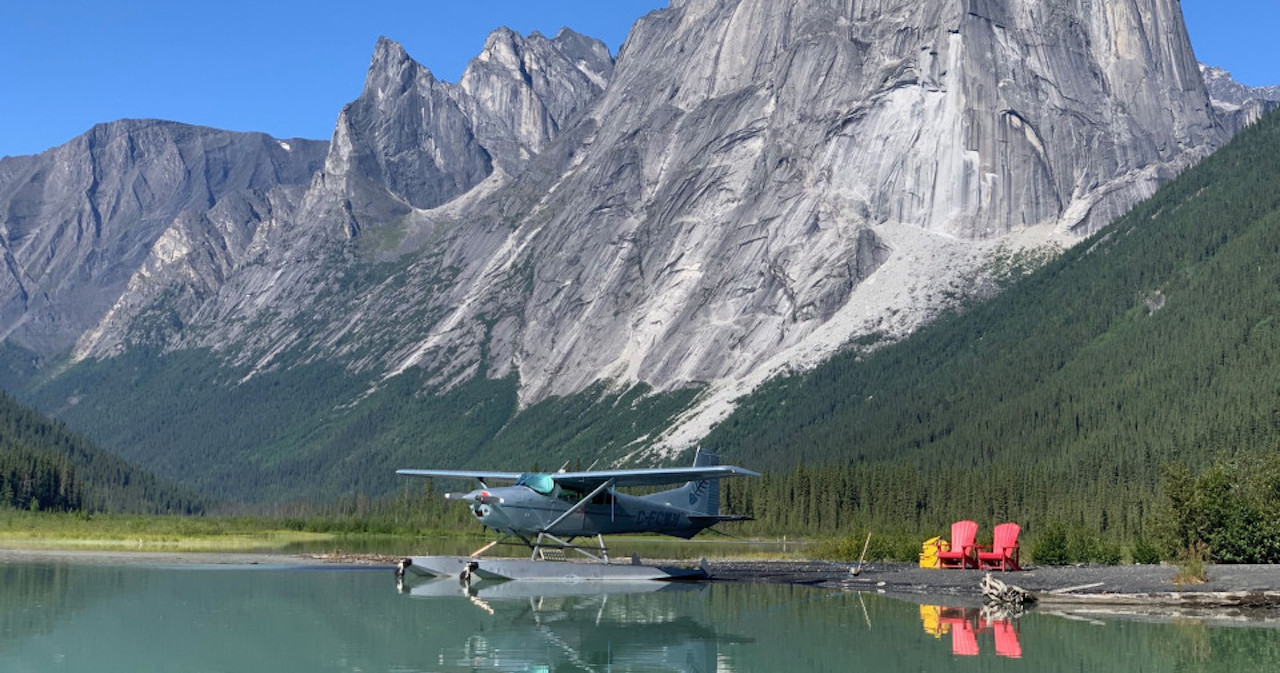
I use 40deg 95% of the time as well. If I have to go around I do whatever I have to to make it happen. Trim, releasing flaps, pushing hard forward on the yoke.....
Here is me landing my trusty steed at the stable. I don't remember the gusts and wind numbers that day but it was tricky. I used full flaps, slips, and sticking my tongue out the left side of my mouth to get it down. The winds were really tricky because of the trees and terrain. If you look in the beginning of the video you can see the wind laying the corn down.
This may be the landing that I am most proud of out of all of them. It was truly a matter of timing the gusts. Had I not got it down on this try I was giving up and going to the 7200' runway at KPKB.
https://youtu.be/aLHU1TKXPc8
Overcoming Cessna full flaps fear.
Wed Mar 29, 2017 2:54 pm
- Crzyivan13 offline
- Posts: 1811
- Joined: Sat Nov 24, 2012 9:50 pm
- Location: Ohio- OI27 Checkpoint Charlie
- FindMeSpot URL: https://share.delorme.com/EvanDavis
- Aircraft: 1957 Cessna 182A
Wed Mar 29, 2017 3:27 pm
Re: Overcoming Cessna full flaps fear.
Good job Crzyivan13. I love the tail wagging rudder only work to keep the wings level.
- contactflying offline
- Posts: 4972
- Joined: Wed Apr 03, 2013 7:36 pm
- Location: Aurora, Missouri 2H2
Download my free "https://tinyurl.com/Safe-Maneuvering" e-book.
Wed Mar 29, 2017 5:13 pm
Re: Overcoming Cessna full flaps fear.
The old joke says that there are a dozen ways to make a good landing, but nobody knows what they are. All of us who have flown for more than a few hours have our pet methods, some of which probably follow the OWTs and others which debunk them. Bearing in mind that I'm a pretty lousy and relatively inexperienced tailwheel pilot, I'll limit my comments to what I know, and that's high wing SE Cessnas of 100 and 200 series with tricycle gear.
I probably use 40 flaps most of the time--how much in percentage, I don't know. But flaps are there to be used, and with 40, a steeper approach without gaining airspeed is possible and my preference.
In relatively stiff crosswinds approaching the maximum demonstrated crosswind capability of the airplane, I limit the flaps to 10 or 20, depending on the strength of the wind, less flaps with higher crosswinds.
However, in extreme crosswinds (well above the maximum demonstrated crosswind capability), I don't use any flaps. My justification is that I have less rudder control due to some rudder blanking, and the flaps' barndoor effect also tends to add to the weather-vaning tendency. That's how I was taught, and that's what I taught. That means I'm coming in at a little faster airspeed than if I used 40 flaps, but actually not all that much. If the typical Cessna at gross stalls at 49 mph/43 knots with 40 flaps, and stalls at 57 mph/50 knots with 0 flaps, that means that instead of coming in at just under 65 mph/56 knots, I'll be coming in at just under 75 mph/65 knots. No control issues, and no danger of stalling. The day I learned how to land in extreme crosswinds, the winds were 25G30 straight down 21 at Laramie; we (my instructor and I) used 12 & 30 in a 1970 172, which as I recall had a 17 knot maximum demonstrated crosswind capability.
I agree that a full 40 flaps go around is a handful. I suspect that the trimmable tail of 180s and early 182s makes it slightly more of a handful than in later 182s, but I only have about 30 hours in an early (1958 I think) 182, and I really don't recall that it was that much worse. It's a lot easier in any model with a manual flap lever, as those first 20 flaps can be dumped really quickly. Electric flaps take a bit longer. Either way, the routine is the same: full power, push hard, dump 20 flaps, and retrim nose down, in that order. Of course, if there's electric trim, push the trim button along with pushing the yoke. By dumping the first 20 flaps right away before retrimming, the amount of retrimming isn't as necessary to take the pressure off the yoke--in other words, it's easier to push.
I also do not believe that less than full power is advisable, because getting a positive rate of climb going as soon as possible is the name of the game, regardless of the reason for going around.
Cessna has never prohibited full flap slips. There is a recommendation not to do it in the earlier flight manuals, but that's not the same as prohibiting it. There is some bobbling, especially with earlier models that have no or shorter dorsal fins, with 40 flaps. But it's entirely controllable, just a little disconcerting if the airplane is close to the ground and the pilot hadn't previously experienced it. I first experienced it on my initial CFI checkride on short final, because up until then, I'd never tried it, but the Inspector required me to do it--no biggie, or as I like to say, the airplane didn't fall out of the sky. In my airplane, which has 40 flaps and a manual lever, and a late model full dorsal fin, I've made "rudder to the stop" slips without the slightest hint of a bobble. But as a practical matter, I don't do slips to land, except as they're required at the end of an approach in a crosswind. Passengers don't like slips, and my observation is that if a pilot has to resort to a slip to get it down on time, the planning wasn't all that good anyway.
Of course, we're talking here about airplanes with flaps, but even those without flaps only take a little more planning to get down without slipping.
How all that fits in with doing wheel landings or tail low or 3 pointers, heck, I don't know. I'll leave that to Jim, or Mike, or Gump, or Greg, or anyone else who knows what they're doing in a tailwheel, because that's not me. It's been 36 years since I last did a wheel landing, in a Super Decathlon, and I was never sure whether it was going to be a wheel landing like I planned or an unplanned 3 pointer because it started to settle too soon as the airspeed declined.
So I would say to Brad or anyone else who is afraid of full 40 flap go arounds, get with an instructor and practice them. Start at an altitude high enough that if you screw it up and accidentally get into a trim stall, you'll be able to get out of it safely. After you've done a few of them, though, they'll no longer be the scary things that they are right now. Remember, power, push, flaps to 20, trim, always in that order. Practice makes perfect.
Cary
I probably use 40 flaps most of the time--how much in percentage, I don't know. But flaps are there to be used, and with 40, a steeper approach without gaining airspeed is possible and my preference.
In relatively stiff crosswinds approaching the maximum demonstrated crosswind capability of the airplane, I limit the flaps to 10 or 20, depending on the strength of the wind, less flaps with higher crosswinds.
However, in extreme crosswinds (well above the maximum demonstrated crosswind capability), I don't use any flaps. My justification is that I have less rudder control due to some rudder blanking, and the flaps' barndoor effect also tends to add to the weather-vaning tendency. That's how I was taught, and that's what I taught. That means I'm coming in at a little faster airspeed than if I used 40 flaps, but actually not all that much. If the typical Cessna at gross stalls at 49 mph/43 knots with 40 flaps, and stalls at 57 mph/50 knots with 0 flaps, that means that instead of coming in at just under 65 mph/56 knots, I'll be coming in at just under 75 mph/65 knots. No control issues, and no danger of stalling. The day I learned how to land in extreme crosswinds, the winds were 25G30 straight down 21 at Laramie; we (my instructor and I) used 12 & 30 in a 1970 172, which as I recall had a 17 knot maximum demonstrated crosswind capability.
I agree that a full 40 flaps go around is a handful. I suspect that the trimmable tail of 180s and early 182s makes it slightly more of a handful than in later 182s, but I only have about 30 hours in an early (1958 I think) 182, and I really don't recall that it was that much worse. It's a lot easier in any model with a manual flap lever, as those first 20 flaps can be dumped really quickly. Electric flaps take a bit longer. Either way, the routine is the same: full power, push hard, dump 20 flaps, and retrim nose down, in that order. Of course, if there's electric trim, push the trim button along with pushing the yoke. By dumping the first 20 flaps right away before retrimming, the amount of retrimming isn't as necessary to take the pressure off the yoke--in other words, it's easier to push.
I also do not believe that less than full power is advisable, because getting a positive rate of climb going as soon as possible is the name of the game, regardless of the reason for going around.
Cessna has never prohibited full flap slips. There is a recommendation not to do it in the earlier flight manuals, but that's not the same as prohibiting it. There is some bobbling, especially with earlier models that have no or shorter dorsal fins, with 40 flaps. But it's entirely controllable, just a little disconcerting if the airplane is close to the ground and the pilot hadn't previously experienced it. I first experienced it on my initial CFI checkride on short final, because up until then, I'd never tried it, but the Inspector required me to do it--no biggie, or as I like to say, the airplane didn't fall out of the sky. In my airplane, which has 40 flaps and a manual lever, and a late model full dorsal fin, I've made "rudder to the stop" slips without the slightest hint of a bobble. But as a practical matter, I don't do slips to land, except as they're required at the end of an approach in a crosswind. Passengers don't like slips, and my observation is that if a pilot has to resort to a slip to get it down on time, the planning wasn't all that good anyway.
Of course, we're talking here about airplanes with flaps, but even those without flaps only take a little more planning to get down without slipping.
How all that fits in with doing wheel landings or tail low or 3 pointers, heck, I don't know. I'll leave that to Jim, or Mike, or Gump, or Greg, or anyone else who knows what they're doing in a tailwheel, because that's not me. It's been 36 years since I last did a wheel landing, in a Super Decathlon, and I was never sure whether it was going to be a wheel landing like I planned or an unplanned 3 pointer because it started to settle too soon as the airspeed declined.
So I would say to Brad or anyone else who is afraid of full 40 flap go arounds, get with an instructor and practice them. Start at an altitude high enough that if you screw it up and accidentally get into a trim stall, you'll be able to get out of it safely. After you've done a few of them, though, they'll no longer be the scary things that they are right now. Remember, power, push, flaps to 20, trim, always in that order. Practice makes perfect.
Cary
"I have slipped the surly bonds of earth..., put out my hand and touched the face of God." J.G. Magee
Thu Mar 30, 2017 8:53 am
Re: Overcoming Cessna full flaps fear.
.
Last edited by glacier on Wed Feb 03, 2021 6:11 am, edited 1 time in total.
Thu Mar 30, 2017 11:58 am
Re: Overcoming Cessna full flaps fear.
Contrary to some posts here, Cessna DID prohibit full flap slips in certain models of airplanes. Also, any 180/185 equipped with wheel skis are prohibited from full flap slips.
And, trust me, the yoke forces in a 185 on a full power, full flap go around can be immense, assuming that the airplane was trimmed to fly hands off in a power off glide prior to the initiation of a go around.
This is ALWAYS part of a checkout in these airplanes, or it should be. I set the pilot up without letting them know what's coming. Set up for a high on final, full flaps, and idle power descent. Most folks will trim the airplane nose up, about to the limit. That's the perfect setup. Then announce a go around just prior to the flare. This is generally done with an empty airplane. Worst case scenario.
In that configuration, it's almost all the normal male can do to hold the forward pressure necessary with both hands. I've checked out a few women in the 185, and none of them could handle the forward pressure even with both hands. The average male can remove his right hand from the yoke for long enough to get the flap lever moved some, but in this worst case scenario, it's still tough. I checked out a young man who was a serious hockey player, and a weight lifter and it was a wake up call for him, and that was in a 180.
So, again, the trick is to avoid the problem, not try to deal with it after you've got yourself into that situation.
And, with different parameters, the forces are indeed less. But, carrying some nose down trim into the flare easily moderates this possibility, and helps your wheel landings to boot.
MTV
And, trust me, the yoke forces in a 185 on a full power, full flap go around can be immense, assuming that the airplane was trimmed to fly hands off in a power off glide prior to the initiation of a go around.
This is ALWAYS part of a checkout in these airplanes, or it should be. I set the pilot up without letting them know what's coming. Set up for a high on final, full flaps, and idle power descent. Most folks will trim the airplane nose up, about to the limit. That's the perfect setup. Then announce a go around just prior to the flare. This is generally done with an empty airplane. Worst case scenario.
In that configuration, it's almost all the normal male can do to hold the forward pressure necessary with both hands. I've checked out a few women in the 185, and none of them could handle the forward pressure even with both hands. The average male can remove his right hand from the yoke for long enough to get the flap lever moved some, but in this worst case scenario, it's still tough. I checked out a young man who was a serious hockey player, and a weight lifter and it was a wake up call for him, and that was in a 180.
So, again, the trick is to avoid the problem, not try to deal with it after you've got yourself into that situation.
And, with different parameters, the forces are indeed less. But, carrying some nose down trim into the flare easily moderates this possibility, and helps your wheel landings to boot.
MTV


Thu Mar 30, 2017 12:21 pm
Re: Overcoming Cessna full flaps fear.
Wow, what a scenario. And the 180/185 community just accepts this on a daily basis?
The known Cessna seat rail wear issue makes this even more scary. Pushing forward as hard as you can on the yoke (in the situation MTV describes) would be loading up the pins and seat rail holes quite a bit. If the pin slipped out of the hole during this type of go-around you'd be screwed pretty hard no matter how strong your arms are.
Mechanical complexity notwithstanding, this whole subject seems to make a pretty good case for an electric trim with a "coolie hat" switch on the yoke.
Since this is certainly not a new concern, has anyone else done anything along the lines of a rapid acting electric trim?
The known Cessna seat rail wear issue makes this even more scary. Pushing forward as hard as you can on the yoke (in the situation MTV describes) would be loading up the pins and seat rail holes quite a bit. If the pin slipped out of the hole during this type of go-around you'd be screwed pretty hard no matter how strong your arms are.
Mechanical complexity notwithstanding, this whole subject seems to make a pretty good case for an electric trim with a "coolie hat" switch on the yoke.
Since this is certainly not a new concern, has anyone else done anything along the lines of a rapid acting electric trim?
.
Thu Mar 30, 2017 1:22 pm
Re: Overcoming Cessna full flaps fear.
And, trust me, the yoke forces in a 185 on a full power, full flap go around can be immense, assuming that the airplane was trimmed to fly hands off in a power off glide prior to the initiation of a go around.
Oh they are. Big time. But if you're well aware of yoke forces when you need to make an immediate go-around in full flap/aft trim configuration, the steps from full throttle to Johnson Bar to trim wheel is maybe 2-3 seconds. The big push doesn't last long.
I had one, in my C180 completely empty, trim rolled full nose up and 40 flaps. Did a go-around for whatever reason, and as I dumped flaps to 20 and started rolling trim, the shear pin on the trim wheel shaft broke, and trim wouldn't budge. The pressure to hold nose down on the yoke was huge, and flaps from 0 to 40 didn't change that. It sucked until I wrestled the airplane to the ground.
And speaking for myself only, the key to driving the bigger single engine Cessnas around eight hours a day, day in day out, is to fly the airplane with the trim wheel in constant motion... I spent my days trying to fly with one finger. Two was being ham fisted.
Gump
Thu Mar 30, 2017 2:22 pm
Re: Overcoming Cessna full flaps fear.
mtv wrote:Contrary to some posts here, Cessna DID prohibit full flap slips in certain models of airplanes. Also, any 180/185 equipped with wheel skis are prohibited from full flap slips.
And, trust me, the yoke forces in a 185 on a full power, full flap go around can be immense, assuming that the airplane was trimmed to fly hands off in a power off glide prior to the initiation of a go around.
This is ALWAYS part of a checkout in these airplanes, or it should be. I set the pilot up without letting them know what's coming. Set up for a high on final, full flaps, and idle power descent. Most folks will trim the airplane nose up, about to the limit. That's the perfect setup. Then announce a go around just prior to the flare. This is generally done with an empty airplane. Worst case scenario.
In that configuration, it's almost all the normal male can do to hold the forward pressure necessary with both hands. I've checked out a few women in the 185, and none of them could handle the forward pressure even with both hands. The average male can remove his right hand from the yoke for long enough to get the flap lever moved some, but in this worst case scenario, it's still tough. I checked out a young man who was a serious hockey player, and a weight lifter and it was a wake up call for him, and that was in a 180.
So, again, the trick is to avoid the problem, not try to deal with it after you've got yourself into that situation.
And, with different parameters, the forces are indeed less. But, carrying some nose down trim into the flare easily moderates this possibility, and helps your wheel landings to boot.
MTV
Thanks this is exactly what I experienced whilst learning to fly my bird. Thus why I limited myself to 20 degrees and slipping.
until I had a better control of my new to me Big tailwheel airplane.
just avoid the problem.
I have to say that after reading all the posts I flew 3 landings yesterday all with 40 degrees flaps.
needless to say, Damn! them some ugly bouncy landings

well the first 2 were. third one it clicked or I got lucky as hell and
slicked the last one in.

either way more practice needed
Bradley
Thu Mar 30, 2017 2:37 pm
Re: Overcoming Cessna full flaps fear.
third one it clicked or I got lucky as hell and
slicked the last one in.
either way more practice needed
Bradley
It will click. Then it becomes a Zen thing as you become one with the C180!!!!
Walk on the ricepaper Grasshopper.

Gump
Thu Mar 30, 2017 5:30 pm
Re: Overcoming Cessna full flaps fear.
GumpAir wrote:And, trust me, the yoke forces in a 185 on a full power, full flap go around can be immense, assuming that the airplane was trimmed to fly hands off in a power off glide prior to the initiation of a go around.
Oh they are. Big time. But if you're well aware of yoke forces when you need to make an immediate go-around in full flap/aft trim configuration, the steps from full throttle to Johnson Bar to trim wheel is maybe 2-3 seconds. The big push doesn't last long.
I had one, in my C180 completely empty, trim rolled full nose up and 40 flaps. Did a go-around for whatever reason, and as I dumped flaps to 20 and started rolling trim, the shear pin on the trim wheel shaft broke, and trim wouldn't budge. The pressure to hold nose down on the yoke was huge, and flaps from 0 to 40 didn't change that. It sucked until I wrestled the airplane to the ground.
And speaking for myself only, the key to driving the bigger single engine Cessnas around eight hours a day, day in day out, is to fly the airplane with the trim wheel in constant motion... I spent my days trying to fly with one finger. Two was being ham fisted.
Gump
Yes, and of course, the reason why this should always be demonstrated in a checkout in my opinion, is so that you know about it, and it's not going to be a surprise.
The event is totally manageable, as long as you don't wait too long to respond. If it's a surprise, your response time may suffer.
One of the goals of a thorough checkout is to be exposed to the potentially ugly corners of the envelope.
MTV
Thu Mar 30, 2017 8:19 pm
Re: Overcoming Cessna full flaps fear.
Not wanting to start a flame war, Mike, and I can't address any airplane on skis or the limitations that might apply to them, but there are indeed several earlier SE Cessna AFMs which appear to prohibit full flap slips, but the placards that are required for those airplanes recommend against full flap slips, but don't prohibit them. As you know, placards trump POHs and AFMs.
Cary
Cary
"I have slipped the surly bonds of earth..., put out my hand and touched the face of God." J.G. Magee
Thu Mar 30, 2017 9:14 pm
Re: Overcoming Cessna full flaps fear.
Use them all 99% of the time. Furthermore, I feel that pulling near full flap will help on takeoff in soft mud, deep snow, or tall grass by getting you out of it sooner. My experience with this has always been at sea level and cool temps.
Always did the forward trim thing in the 180's and the 185 as MTV pointed out. Did plenty of full power full flap go arounds, as one will
when going off-road and pushing it a tad. Low DA exacerbates the phenomenon in my opinion because that engine is making all the rated power. The forward trim is the key to success.
Full forward on landing also makes the old small tail 206 behave itself with enough elevator when empty.
Always did the forward trim thing in the 180's and the 185 as MTV pointed out. Did plenty of full power full flap go arounds, as one will
when going off-road and pushing it a tad. Low DA exacerbates the phenomenon in my opinion because that engine is making all the rated power. The forward trim is the key to success.
Full forward on landing also makes the old small tail 206 behave itself with enough elevator when empty.
Fri Mar 31, 2017 5:10 am
Re: Overcoming Cessna full flaps fear.
mtv wrote:Ah, the infamous full flap go around. For Motoadve, it's important to understand the big difference between the later 182 and the 180/185: The trimmable stabilizer on the latter....a VERY powerful trim system.
But, so far at least, nobody seems to have found the "silver bullet" to deal with a full flap go around, so I'll offer the technique I figured out many moons ago:
First of all, it's important to understand why there is so much forward force required on a full flap go around. Again, it's that really powerful trim system.....and frankly, most of us are landing these things with a fairly far forward C of G. Which means to achieve a "Trimmed condition" on short final, with power back fairly far, you'll have a LOT of nose up trim rolled in to counter that C of G and the flap effects, etc. Now, you execute a go around, and YIKES!!! Most folks (except the Terminator) are going to be using both hands on the yoke, pushing like hell to keep the plane from pitching up and stalling.....not a great scenario. Turn loose with one hand to reduce power or roll in some nose down trim???? Sure, if your left arm is stronger than mine.....go for it. But, I don't like reduced power go arounds....mind you they can be just fine in certain circumstances, but what if there are trees out there, in the top of the windscreen?
So, here's my technique: On approach, with full flaps and power back a ways, I keep some nose down trim on the plane. Which means that I have to hold back pressure on the yoke....not huge amounts, but noticeable.
So, if I have to execute a go around, I push up full power, and because the trim is essentially set for level flight, I really don't have to do anything except push just a bit on the yoke. As the airplane reverses the downward movement, and actually levels in preparation for climb, I easily reach for the flap handle, and come back to 30, then 20 degrees of flap.
Simple solution. But, wait, there's more:
Many of us (except those super pilots out there) mere mortals have to work pretty hard to time the push on the yoke during a wheel landing in one of these airplanes. Why? That spring gear has a lot of spring to it, and just a tiny bit of downward vector at the touch is going to launch you back into the air.
So, back to the full flap approach technique: Some nose down trim, and thus, you're holding just a bit of back pressure (nose up) on the yoke. As you approach the surface, you flare to ALMOST the three point attitude, and hold it. Tail just a few inches off the surface. Which means you're holding just a bit MORE back pressure on the yoke.
There are two bits of good news here:
First, that tail low, almost three point attitude is going to get the airplane just about as slow as it's capable of landing.....as opposed to what a lot of folks call wheel landings, with the tail high, just rolling it on, whilst whistling along at 70.......Yow!! And, when it comes to landing, slower is good, in a whole bunch of ways, not the least of which the airplane is pretty much in a very low energy state, and therefore it is much less likely to bounce, and if it does, it will settle right back on.
Second, human nature suggests that what we all really want to do after a landing is to relax......tailwheel pilots know better than to try that one till the airplane is stopped......BUT: In the scenario I've described, the airplane is tail low, very low energy, thus less likely to bounce, and you're holding back pressure.....what you now want to do is to get the tail up, and thus "stick" the landing. And, all you have to do to initiate that process is to RELAX that back pressure.....and a half second or so later, apply some forward pressure to the yoke. And the airplane is on, the main wheels are stuck, the plane is pretty much done flying and bleeding energy rapidly, so now you stab and steer.
The beauty of this approach and landing is that it makes wheel landings very easy to pull off, because the timing of the push and the rate of descent at the touch are less critical.
Give this a try sometime, I think you'll like it.
As to big crosswinds, it depends on the surface, but on anything but pavement in a big and gusty crosswind, I'll be a full flaps, and three point the plane, stick it hard, and steer it, with ailerons full into the wind, and standing on the brakes.......It ain't pretty, but it gets er done.
MTV
Nice mtv! This is exactly what i had to do to start nailing the landings in my pponked 180. I was use to flying lighter tail wheel planes and a 182 where i would trim the plane to be no pressure, thus on the 180 seemed to take elevator effect away when trying to kill the decent before touchdown. Went flying with a 4000 hr skywagon pilot and our first landing as he slowed to 60 he rolled a bunch of nose down trim, boom landings were way easier. Now it feels like a heavy 206 on the yoke but i am completely use to it now.
I too use 40 flap 95% of the time, if on tar or gusty over 25 i only use 20-30.
- Slantbuggy offline
- Posts: 58
- Joined: Sun Apr 26, 2015 7:33 am
- Location: Bridgton
Fri Mar 31, 2017 7:54 am
Re: Overcoming Cessna full flaps fear.
Cary wrote:Not wanting to start a flame war, Mike, and I can't address any airplane on skis or the limitations that might apply to them, but there are indeed several earlier SE Cessna AFMs which appear to prohibit full flap slips, but the placards that are required for those airplanes recommend against full flap slips, but don't prohibit them. As you know, placards trump POHs and AFMs.
Cary
Cary,
Cessna was all over the board with reference to this issue of slips with flaps deployed. In the 180, for example, the earlier airplanes (pre 180 G and H models) don't have placards prohibiting slips with flaps extended. Starting with serial number 18052176 and on, a placard is required which states:
"Avoid sideslips with flaps extended". This is from the Type Certificate, which means it's required.
In the 185, which has the same wing, and at least very similar aerodynamics (in fact the latest model 180s have essentially the same fuselage and tail as well.) there is NO placard prohibiting slips with flaps extended, except the aforementioned one when skis, floats or amphibious floats are installed.
So, the A-185 F and the 180 K, possessing exactly the same aerodynamics, but with different power ratings, do not possess the same restrictions.
I assume that at some point, Cessna must have been sued after someone in a 180 had an issue. Maybe.
Now, root around in the 140, 170, 172, 177, 182 etc TCDS, flight manuals, etc, and you'll find similar apparent inconsistencies, some of which don't say "Avoid" slips with flaps extended, but something like "Slips with flaps extended not recommended" or such like.
The Cessna 206 also has no such limitations, at least the models I've flown. Generally speaking, if there are any restrictions, they appear in the later models. But, the inconsistency noted above between the 180 and 185 is pretty difficult to justify based on aerodynamics. Weight differences may also change the aerodynamics maybe??? But, more likely, liability......
MTV
Fri Mar 31, 2017 11:00 am
Re: Overcoming Cessna full flaps fear.
During my checkride in a 172, I threw in a slip with full flaps on the emergency landing approach. After we got on the ground the DPE questioned me on it. I told him "I know the POH doesn't recommend it, but you said we were on fire!". He said he couldn't disagree with that logic.
Fri Mar 31, 2017 8:31 pm
Re: Overcoming Cessna full flaps fear.
With a stock wing 185F I tended not to use full flaps especially on floats. 30 deg did better as there was less drag and it didn't really like to be flown slow near the stall (for me) at about Vso +10 mph with full flaps.
My employer installed a Sportsman cuff after the first engine runout and then I liked the full flaps better for the next two. Offered a better feel when slow is all I can say.
Come to think of it I really never trimmed for landing much. Just left it at or near cruise position. I guess I could pull more than push on landing especially with the wonky Cessna seat stop pins and rails letting go under body weight and pressure on the controls.
All history now and will never fly another.
Gary
My employer installed a Sportsman cuff after the first engine runout and then I liked the full flaps better for the next two. Offered a better feel when slow is all I can say.
Come to think of it I really never trimmed for landing much. Just left it at or near cruise position. I guess I could pull more than push on landing especially with the wonky Cessna seat stop pins and rails letting go under body weight and pressure on the controls.
All history now and will never fly another.
Gary
Sun Apr 02, 2017 7:05 am
Re: Overcoming Cessna full flaps fear.
mtv wrote:Cary wrote:Not wanting to start a flame war, Mike, and I can't address any airplane on skis or the limitations that might apply to them, but there are indeed several earlier SE Cessna AFMs which appear to prohibit full flap slips, but the placards that are required for those airplanes recommend against full flap slips, but don't prohibit them. As you know, placards trump POHs and AFMs.
Cary
Cary,
Cessna was all over the board with reference to this issue of slips with flaps deployed. In the 180, for example, the earlier airplanes (pre 180 G and H models) don't have placards prohibiting slips with flaps extended. Starting with serial number 18052176 and on, a placard is required which states:
"Avoid sideslips with flaps extended". This is from the Type Certificate, which means it's required.
In the 185, which has the same wing, and at least very similar aerodynamics (in fact the latest model 180s have essentially the same fuselage and tail as well.) there is NO placard prohibiting slips with flaps extended, except the aforementioned one when skis, floats or amphibious floats are installed.
So, the A-185 F and the 180 K, possessing exactly the same aerodynamics, but with different power ratings, do not possess the same restrictions.
I assume that at some point, Cessna must have been sued after someone in a 180 had an issue. Maybe.
Now, root around in the 140, 170, 172, 177, 182 etc TCDS, flight manuals, etc, and you'll find similar apparent inconsistencies, some of which don't say "Avoid" slips with flaps extended, but something like "Slips with flaps extended not recommended" or such like.
The Cessna 206 also has no such limitations, at least the models I've flown. Generally speaking, if there are any restrictions, they appear in the later models. But, the inconsistency noted above between the 180 and 185 is pretty difficult to justify based on aerodynamics. Weight differences may also change the aerodynamics maybe??? But, more likely, liability......
MTV
Exactly my point--"avoid" isn't the same as "prohibited". When the Inspector told me to do the full flaps slip to a landing during my CFI ride and I questioned it, he directed my attention to the placard on the doorpost, which said "avoid" (same wording is on the placard on my airplane). As I said, that's when I learned about the bobbling that can occur, but that it's controllable. Over the years, pretty much on my own I've learned that the bobbling is minimized or eliminated when the airplane has a full length dorsal fin, such as the newer Cessnas have and which was added to my airplane by the previous owner.
Cary
"I have slipped the surly bonds of earth..., put out my hand and touched the face of God." J.G. Magee
Sun Apr 02, 2017 8:38 am
Re: Overcoming Cessna full flaps fear.
The bobbling in Cessnas never bothered me but I found out about "avoid ," the government, and lawyers years ago. I was being sued by a squatter on Mrs Smith's ranch for killing three tomato plants and ruining his sex life. I had sprayed her forested land with 245-T, cleaned up and legal Agent Orange. The state Ag inspector found 0.0285 parts per million on the tomatoes. While handing me a citation for the drift of a product labelled "Avoid Drift," he told me he would be a witness for my insurance company and would testify that this amount of drift would not damage tomatoes in any way.
Cary knows that "avoid" can mean different things legally to different people and organizations.
Cary knows that "avoid" can mean different things legally to different people and organizations.
- contactflying offline
- Posts: 4972
- Joined: Wed Apr 03, 2013 7:36 pm
- Location: Aurora, Missouri 2H2
Download my free "https://tinyurl.com/Safe-Maneuvering" e-book.
Sun Apr 02, 2017 4:17 pm
Re: Overcoming Cessna full flaps fear.
contactflying wrote:The bobbling in Cessnas never bothered me but I found out about "avoid ," the government, and lawyers years ago. I was being sued by a squatter on Mrs Smith's ranch for killing three tomato plants and ruining his sex life. I had sprayed her forested land with 245-T, cleaned up and legal Agent Orange. The state Ag inspector found 0.0285 parts per million on the tomatoes. While handing me a citation for the drift of a product labelled "Avoid Drift," he told me he would be a witness for my insurance company and would testify that this amount of drift would not damage tomatoes in any way.
Cary knows that "avoid" can mean different things legally to different people and organizations.
My first "big" civil case after moving to Colorado was as local counsel sitting second chair in the defense of a helicopter spraying case. Plaintiff (who was by any measurement a total nut case) insisted that our evil pilot had intentionally or negligently sprayed directly onto her house, and that the highly poisonous chemicals had drifted into the open windows and had made her deathly ill with all kinds of horrible symptoms that could only be attributed to the chemicals.
This is actually a fun case to describe. The plaintiff's home was part of a minor subdivision carved from some farmland located southwest of Loveland, CO. The rest of the farmland was still being farmed by the original developer/farmer. As all the farmers in this area do every year, he had contracted with a spray outfit to kill the bugs before they damaged his crops. This particular year, he chose our client, because he knew the capabilities of a helicopter, and that it could cover the fields more accurately than a fixed wing spray plane could, taking into account the terrain, wires, trees, etc.
The reason he was so familiar with helicopters is that he was a highly decorated helicopter gunship pilot in Viet Nam! I don't now recall his awards, but they were substantial. But he was a quiet, unassuming man, who had never told his story to even his family, not unusual for those who fought there. He had told his attorney of his background, and that all came out when he testified.
Plaintiff's husband was a former Northwest Airlines pilot, who'd been grounded after falling from a ladder and incurring serious head injuries. I'm assuming he was not a nut case himself before the fall, but he was certainly an odd duck after the fall. Without a single minute of rotorcraft experience, he attempted in his deposition to describe all the illegalities of our pilot, specifically flying below 1000' above the highest obstacle within 2000' from the helicopter, flying dangerously close to residences, and of course dropping something from the helicopter that endangered people on the ground. Unfortunately their attorney, who knew nothing about aviation or federal aviation regulations, had bought into the husband's alleged expertise, so the only real aviation experts in the case were on our side of the case. I don't fault their attorney--he's a nice guy, very smart, but he didn't know what he didn't know, and like many folks, he had a great respect for a 20,000 hour airline pilot who spoke "aviationese" so well.
To counter his information that the area was a highly populated residential area, we had a 6' x 4' photo made up from an aerial shot of the area, which showed how sparsely the homes are separated from one another on this little subdivision.
Their "expert" was a "neuropsychologist". Neuropsychology at the time was not a very well respected branch of psychology. I don't know if it has reached a better level now, but at the time we were able to show how it was more like "pop science" than real science.
We hired a pair of real experts, one an absolutely gorgeous woman with a long history of toxicology expertise, Ph.D. level, and the other a very studious gentleman chemist, also a Ph.D. When our toxicologist testified at trial, however, she was dressed more like a plain jane school marm, complete with horn rimmed glasses, which disguised her beauty and made her look like someone who should be hidden somewhere in a laboratory--ultra believable. Our chemist always looked like a lab rat, who knew his science thoroughly and was also very convincing. The sum of their collective testimony was that the chemicals could be dumped via bucket on top of anyone, even new born babies, without any adverse effects other than they'd get wet.
I had taken the depositions of plaintiff's doctors. None of them substantiated that she was injured by the spraying. Both of them opined that she tended toward being overly dramatic about her ills as long as they had known her, a hypochondriac of sorts. Most importantly, while she had vociferously asserted that she was "not that old" during her own deposition, one of her doctors opined that each of her symptoms were typical of a woman well into the early stages of menopause.
Our pilot testified via video deposition (he had moved to Anchorage, so we had an attorney there take his deposition) that on the day of the "event", there was almost no wind, that he was doing the spraying at a very low altitude (I don't recall exactly, but I'm thinking 3'), and that at the end of each row, he would do a peddle turn to return for the next row. At the end of his taped testimony, a juror said that she didn't understand what a peddle turn was and wondered if there would be more testimony about that later in the trial. That evening, our clients had one of their pilots take a helicopter out to a field while they video-taped him doing runs at the same altitude and peddle turns, so the next day we then (with the cooperation of the attorney for the property owner) had the property owner describe the peddle turns as he and the jury observed the video. To do that, we had to show that he knew what he was talking about. That's when his testimony about his Viet Nam experience occurred, as he described the maneuvers needed to bring fixed guns onto a target as being the same sort of peddle turns.
The jury foreman was Tom Sutherland, who is famous in this area for his lengthy incarceration (longer than 6 years) in Beirut at the hands of Islamic Jihad extremists in Lebanon. Needless to say, it would be hard to persuade him that a little non-toxic chemical spraying would cause much suffering, compared to the suffering he had endured. The rest of the jury were ordinary folks, but as is typical of juries in this area, all college educated and relatively intelligent. Although the trial took more than a week, it took them just about half an hour to return a defense verdict. Plaintiff ran out of the courtroom, screaming that "nobody cares".
Later we filed a motion to recover some of the costs. We couldn't apply for attorney fees, but we'd spent a lot of money on our experts. As I recall, it was something like $86,000, and the motion was granted.
I've driven out to the area of this event several times over the last 20 years. One of the issues that we brought up at trial was that no one had notified our clients or the property owner that Plaintiff allegedly had toxic chemical sensitivity. The first time I drove out there after the trial, I saw several signs in front of their property saying "Do Not Spray" etc.--they hadn't been there before the trial.
It was one of the more fascinating cases I have had--lots of twists and turns, far more than what I've related here.
Cary
"I have slipped the surly bonds of earth..., put out my hand and touched the face of God." J.G. Magee
Sun Apr 02, 2017 4:59 pm
Re: Overcoming Cessna full flaps fear.
My case, the only drift liability case in my 20 or so years of spraying, ended anticlimactic. After the Ag inspector reported to all involved, plaintiffs failed to show at first hearing. Case was thrown out with prejudice (I think that was the term. ) Anyway drift liability insurance company said it was over.
- contactflying offline
- Posts: 4972
- Joined: Wed Apr 03, 2013 7:36 pm
- Location: Aurora, Missouri 2H2
Download my free "https://tinyurl.com/Safe-Maneuvering" e-book.
DISPLAY OPTIONS
Who is online
Users browsing this forum: No registered users and 4 guests
Latest Features
-
-
Featured Bush Planes
As one of the undisputed legends of bush flying, the Cessna 180 hauls a…Read More -
Aircraft Ownership and Maintenance
9 modification mistakes aircraft owners make when trying to "bush out" their birds—why some…Read More -
Live to Tell
A Minnesota pilot is surprised to learn that the sudden asymmetric drag of an…Read More


Latest Knowledge Base
-
Destinations
Canada offers some of the most spectacular backcountry flying on the continent. Here's what you need to know before you go.Read More -
Safety and Survival
Hope that you never have to use your survival vest but knowing you have it and knowing how to use…Read More -
Destinations
A regional guide with ideas for winter camping destinations in California, Nevada, New Mexico, and Arizona.Read More -
Aircraft
Finding an affordable aircraft that can handle the backcountry for $80K or less? A challenge for sure, but with the…Read More