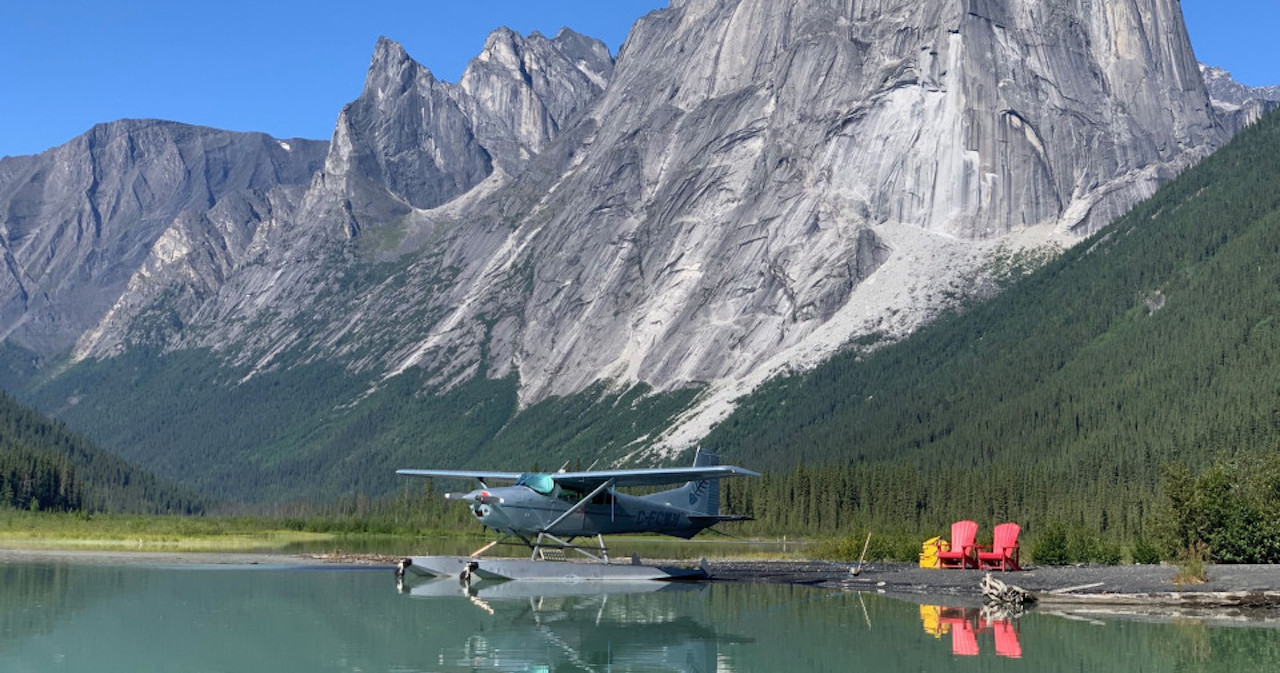
I've had my 180 for a while but I spend a lot of my time flying Point A to Point B to longish runways at lightish weights. I also tend to stick within the max recommended crosswind in the POH. But, I'd like to expand the envelope of my proficiency without wrecking my airplane. I'm looking for ideas on how to do that.
Flying with an experienced CFI is great but I have a hard time finding those guys in Arkansas. Who uses ballast to fly their plane close to max gross? What do you use?
Appreciate any tips y'all have!
Realistic Training
Wed Mar 14, 2018 5:43 pm

Wed Mar 14, 2018 6:13 pm
Re: Realistic Training
A runway is only as long as you choose to make it. Work on precision landing, to where you can touchdown (and stay down) within the length of your plane every time under any condition. Then shorten it up to 10 feet. Any runway will work for this drill.
Practice maneuvering slow flight, and practice practice practice. Learn the speed you can comfortably maneuver slow fly without ever looking at your instruments, then keep working to learn the speed your plane can comfortably maneuver slow fly. The slower you can safely go the smaller your turning radius will be- which can save you in the mountains. Keep the ball centered at all times and unload the wings if possible in the turns to reduce the chance of a stall/spin (without getting fast).
And fly up to the Red River and do ten thousand touch and goes and drags on the sand bars. Scout the area for wires and other gotchas before doing this anywhere.
Have fun!
Practice maneuvering slow flight, and practice practice practice. Learn the speed you can comfortably maneuver slow fly without ever looking at your instruments, then keep working to learn the speed your plane can comfortably maneuver slow fly. The slower you can safely go the smaller your turning radius will be- which can save you in the mountains. Keep the ball centered at all times and unload the wings if possible in the turns to reduce the chance of a stall/spin (without getting fast).
And fly up to the Red River and do ten thousand touch and goes and drags on the sand bars. Scout the area for wires and other gotchas before doing this anywhere.
Have fun!
- Barnstormer offline
- Posts: 2700
- Joined: Sun Oct 14, 2012 7:42 am
- Location: Alaska
- Aircraft: C185
Wed Mar 14, 2018 6:39 pm
Re: Realistic Training
Ballast: Feed sacks; its available everywhere, you can always feed it out afterwards (if you have animals) or donate it to an animal rescue organization. They're easy to strap down so they don't complicate your flight (oh, wait, I'm thinking about loading a Maule...  ). Some of your neighbors that are EAB home builders may have access to large quantities of lead shot (Local EAA chapter may help you find some, too).
I understand your frustration. Most local CFI's will only teach you to fly standardized published curriculum. Anything outside that they get iffy. Found that out with the Maule. Your Cessna POH has a lot of that information charted for you: i.e. how much runway at given weights and temperature you'll need. Most of your POH data will be on the conservative side which means no flap changes at various stages of roll out and no accounting for ground effect or other tricks. The POH charts are a great place to start getting the feel of the aircraft at heavier weights but if you're wanting to explore the feathered edge then some one like Patrick Romano is a great place to start. He and others host numerous STOL Clinics around the country and there may be one coming to your area. AOPA has included some STOL clinics at their fly-ins as well. NMPA has one coming up April 7th:
http://www.nmpilots.org/documents/FAA_WINGS_Seminars/Carrizozo_STOL_Announcement.pdf
NM not that far from AR in a 180.
Some good books: Sparky Imeson Mountain Flying Bible, got lots of good rules of thumb to help remember critical thresholds of performance, etc.
). Some of your neighbors that are EAB home builders may have access to large quantities of lead shot (Local EAA chapter may help you find some, too).I understand your frustration. Most local CFI's will only teach you to fly standardized published curriculum. Anything outside that they get iffy. Found that out with the Maule. Your Cessna POH has a lot of that information charted for you: i.e. how much runway at given weights and temperature you'll need. Most of your POH data will be on the conservative side which means no flap changes at various stages of roll out and no accounting for ground effect or other tricks. The POH charts are a great place to start getting the feel of the aircraft at heavier weights but if you're wanting to explore the feathered edge then some one like Patrick Romano is a great place to start. He and others host numerous STOL Clinics around the country and there may be one coming to your area. AOPA has included some STOL clinics at their fly-ins as well. NMPA has one coming up April 7th:
http://www.nmpilots.org/documents/FAA_WINGS_Seminars/Carrizozo_STOL_Announcement.pdf
NM not that far from AR in a 180.
Some good books: Sparky Imeson Mountain Flying Bible, got lots of good rules of thumb to help remember critical thresholds of performance, etc.
- DeltaRomeo offline

- Posts: 394
- Joined: Sun Oct 19, 2014 11:26 am
- Location: TX and NM
- Aircraft: M5 180C
Wed Mar 14, 2018 7:11 pm
Re: Realistic Training
I agree with Barnstormer. Fly your numbers. I also agree with the Red River. I use to ranch north of Paris Texas on the river and was great flying. I have a husky and a 180 and everything Barnstormer said is correct. You can practice for anything on runways that allow you to go over. We practice all the time and then push limits and fly the backcountry of Idaho and had landed everything we can find but Simmonds. They shut down the big 4 and it was on the list. Practice, practice but AOA gauge and a proper setup on approach is key
- Stolhunter offline
- Posts: 74
- Joined: Sat Mar 30, 2013 7:33 pm
- Location: Canadian Texas
Wed Mar 14, 2018 7:57 pm
Re: Realistic Training
Come up to 2H2 and I will fly with you. Or go out to Kingsley's at MO9 and fly with Slim in one of their 180s. I taught three of the four brothers to spray in 03. Slim is the best and safest, but they have lots of pilots and about 25 airplanes. They're farmers. They may not do everything the way you are used to.
- contactflying offline
- Posts: 4972
- Joined: Wed Apr 03, 2013 7:36 pm
- Location: Aurora, Missouri 2H2
Download my free "https://tinyurl.com/Safe-Maneuvering" e-book.
Wed Mar 14, 2018 8:27 pm
Re: Realistic Training
slowmover wrote:I've had my 180 for a while but I spend a lot of my time flying Point A to Point B to longish runways at lightish weights. I also tend to stick within the max recommended crosswind in the POH. But, I'd like to expand the envelope of my proficiency without wrecking my airplane. I'm looking for ideas on how to do that.
Flying with an experienced CFI is great but I have a hard time finding those guys in Arkansas. Who uses ballast to fly their plane close to max gross? What do you use?
Appreciate any tips y'all have!
I used 50lb bags of concrete pre-mix or mortar wrapped in poly or garbage bags to practice in the back seat of the Citabria. Cheap and kinda handy cause you know they're 50lbs each when changing things up.

Thu Mar 15, 2018 5:02 am
Re: Realistic Training
You could also use bags of sand for ballast.
If you want to adjust in less than 50 pound increments, take some old milk jugs and fill them up with water.
If you want to adjust in less than 50 pound increments, take some old milk jugs and fill them up with water.
Thu Mar 15, 2018 6:32 am
Re: Realistic Training
You guys are lucky; me, the dog, full tanks with a bit of kit and I'm there, MAX gross for my wings wish I had room to grow for practice.
Mapleflt
Mapleflt
Thu Mar 15, 2018 6:52 am
Re: Realistic Training
It sounds like you're reasonably comfortable in your airplane as is, but you want to expand your flying some.
I agree that flying with a good 180 experienced CFI is a great idea, but there are some things you can do yourself.
First, as Barnstormer noted, learn to fly the airplane precisely. That means EVERY landing is precisely where you want it, every time. If you're going to miss your spot, go around. To do that you have to be very comfortable with the landing configuration of your plane. Work on that at altitude. Lots of slow flight, with the stall horn blaring, including maneuvering at those speeds. It's not that you'll be flying a long final at that speed, but you need to feel where that bubble is.
When you land on a runway, pick a center stripe......not the whole center line....choose one stripe, and touch down on it, at minimum controllable speed. 10 K foot runway? Pick a spot close to your desired taxiway exit, and land there.
Now, find a grass runway somewhere and practice one wheel landings. Nice calm day, land the airplane nice and slow on the left main, and only the left main. Run down the runway on the left main, don't let anything else touch.....then lift off.
Now do the same on the right main. Then switch to pavement and do the same. Really long paved runway? Touch on the left main, with the left main right on the centerline, then pick the plane up, move over, and put the right main precisely on the centerline, then pick it up, and put the left down, etc. till you run out of runway, go around and do it again.
If you're not comfortable trying that yourself on grass first, get with a good instructor who'll work with you on it.
Once you can master touching precisely where you intend to touch, and you can touch and run that airplane down a line on one wheel, you'll have gotten pretty comfortable in your airplane.
Again, if you're not really pretty comfortable in your plane to start with, find an instructor who'll work with you to GET you comfortable.
As far as expanding your envelope, once you're comfortable in your plane, it's generally a matter of gradually taking on a little more at a time, then evaluating how that went, then push a little more, etc.
Flying with an instructor helps, but most of the expansion of your flying is likely to be done by yourself.
MTV
I agree that flying with a good 180 experienced CFI is a great idea, but there are some things you can do yourself.
First, as Barnstormer noted, learn to fly the airplane precisely. That means EVERY landing is precisely where you want it, every time. If you're going to miss your spot, go around. To do that you have to be very comfortable with the landing configuration of your plane. Work on that at altitude. Lots of slow flight, with the stall horn blaring, including maneuvering at those speeds. It's not that you'll be flying a long final at that speed, but you need to feel where that bubble is.
When you land on a runway, pick a center stripe......not the whole center line....choose one stripe, and touch down on it, at minimum controllable speed. 10 K foot runway? Pick a spot close to your desired taxiway exit, and land there.
Now, find a grass runway somewhere and practice one wheel landings. Nice calm day, land the airplane nice and slow on the left main, and only the left main. Run down the runway on the left main, don't let anything else touch.....then lift off.
Now do the same on the right main. Then switch to pavement and do the same. Really long paved runway? Touch on the left main, with the left main right on the centerline, then pick the plane up, move over, and put the right main precisely on the centerline, then pick it up, and put the left down, etc. till you run out of runway, go around and do it again.
If you're not comfortable trying that yourself on grass first, get with a good instructor who'll work with you on it.
Once you can master touching precisely where you intend to touch, and you can touch and run that airplane down a line on one wheel, you'll have gotten pretty comfortable in your airplane.
Again, if you're not really pretty comfortable in your plane to start with, find an instructor who'll work with you to GET you comfortable.
As far as expanding your envelope, once you're comfortable in your plane, it's generally a matter of gradually taking on a little more at a time, then evaluating how that went, then push a little more, etc.
Flying with an instructor helps, but most of the expansion of your flying is likely to be done by yourself.
MTV


Thu Mar 15, 2018 11:24 am
Re: Realistic Training
I appreciate the tips. There are some good nuggets in there and I agree that it's mostly on me. But, always looking to get a little better. I have aspirations of being more proficient than I am now.
My biggest fear is gusty crosswinds. I'm comfortable and reasonably proficient up to 12 kts (POH recommendation), but I know it is possible to do more. It's that whole concept of you're not always sure where the edge of your capabilities are until you're past the edge then it's too late.
Feed for ballast is a good idea. I'm not a farm kind of guy so I didn't think of that. I have thought about sand etc. but I have yet to see a leak-proof bag of sand and don't want that stuff working its way into every crevice after I spill a couple tablespoons of it. 200 lbs of ballast plus fuel management (88 gal) lets me practice across a 600 lb range of weights.
I also bought some beanbags. My thought is I land short, chuck it out, go do it again and then come back and measure/compare them all at once.
Keep em coming!
My biggest fear is gusty crosswinds. I'm comfortable and reasonably proficient up to 12 kts (POH recommendation), but I know it is possible to do more. It's that whole concept of you're not always sure where the edge of your capabilities are until you're past the edge then it's too late.
Feed for ballast is a good idea. I'm not a farm kind of guy so I didn't think of that. I have thought about sand etc. but I have yet to see a leak-proof bag of sand and don't want that stuff working its way into every crevice after I spill a couple tablespoons of it. 200 lbs of ballast plus fuel management (88 gal) lets me practice across a 600 lb range of weights.
I also bought some beanbags. My thought is I land short, chuck it out, go do it again and then come back and measure/compare them all at once.
Keep em coming!
Thu Mar 15, 2018 12:43 pm
Re: Realistic Training
A long time ago, I discovered something interesting. I was flying a lot, like 100 hours a month part of the year, and times when I was doing 100 hour rotations on the plane in 20 days. During those times, I was always in a hurry, and my landings would start getting sloppy. Not dangerous, just not "workmanlike".
A friend with a lot of flight time told me to go out and do some airwork, then try those landings again.
So, next time the plane came out of 100 hour, I needed to do a maintenance test flight anyhow, so off I went.
Steep turns (as in no joke, 60 degree turns, 360 each way, with no hesitation on the switch, and + or - 20 feet altitude, and right on heading on roll out.
Then, a full stall series, starting with no flap, no power, straight ahead, followed by every combination I could think of.....stall at each flap setting, power on and power off, then turning versions of all the above. Finished up with falling leaf stall, including 180 degree course reversals in the stall. Rudder only.
Then I did a chandelle to finish it up. Then back to the airport, and voila! My first landing was a squeaker. So, I did a few one wheel landings, and called it a day.
My landings and all my flying were MUCH better for the next month or so, and during the next maintenance test flight, I repeated the process....with the same result.
Sometimes our flying gets a little sloppy because we permit it to, for a variety of reasons. A tune up like this will usually knock some of the rust off, and your flying will "improve".
This is just a long version of what Barnstormer recommended, when he said go do some airwork, by the way, earlier in this thread.
Try it, you may find that your flying is better than you thought.
And, THEN try a little more wind.
MTV
A friend with a lot of flight time told me to go out and do some airwork, then try those landings again.
So, next time the plane came out of 100 hour, I needed to do a maintenance test flight anyhow, so off I went.
Steep turns (as in no joke, 60 degree turns, 360 each way, with no hesitation on the switch, and + or - 20 feet altitude, and right on heading on roll out.
Then, a full stall series, starting with no flap, no power, straight ahead, followed by every combination I could think of.....stall at each flap setting, power on and power off, then turning versions of all the above. Finished up with falling leaf stall, including 180 degree course reversals in the stall. Rudder only.
Then I did a chandelle to finish it up. Then back to the airport, and voila! My first landing was a squeaker. So, I did a few one wheel landings, and called it a day.
My landings and all my flying were MUCH better for the next month or so, and during the next maintenance test flight, I repeated the process....with the same result.
Sometimes our flying gets a little sloppy because we permit it to, for a variety of reasons. A tune up like this will usually knock some of the rust off, and your flying will "improve".
This is just a long version of what Barnstormer recommended, when he said go do some airwork, by the way, earlier in this thread.
Try it, you may find that your flying is better than you thought.
And, THEN try a little more wind.
MTV
Mon Mar 19, 2018 6:12 am
Re: Realistic Training
What MTV said... regular training flights. Good stuff!
gunny
gunny
Mon Mar 19, 2018 7:58 am
Re: Realistic Training
What MTV said. The air work is really important. Additionally, ground and low ground effect work can be very helpful. This is especially true in the confidence department. Hover taxi down a long runway has limited practical use, but gives a pilot knowledge that the airplane is very manageable at very slow speed with the help of low ground effect. Mostly just crop dusters hover taxi up to the very short paved section of spray strips in windy, wet conditions. It gives us confidence about landing short in any weather, however. The high, slow, steep approach is fine as well. Just less time in low ground effect. Hover taxi, however, lets us realise that with a little more power at the bottom we can go right into hover taxi to miss a bad spot without speeding up. Pilots don't like the wobbly controls and the need to go farther each way with dynamic proactive control movement, but the airplane really appreciates the safety and control of slow speed near the ground. We just can't get as slow, in control, and not mushing/stalling out of ground effect.
- contactflying offline
- Posts: 4972
- Joined: Wed Apr 03, 2013 7:36 pm
- Location: Aurora, Missouri 2H2
Download my free "https://tinyurl.com/Safe-Maneuvering" e-book.
Mon Mar 19, 2018 8:21 am
Re: Realistic Training
Every airplane I have flown responds to loss of power very similarly as gain in weight.....
Even the ag planes have a handle for 'reducing' your load if some bad juju presented itself, let alone the multitude of pilot induced uh-oh's that could show up during a training event. I would feel incredibly silly if the one time my air sheen had a hiccup was when it was stacked plumb full of concrete when it really didn't need to be to accomplish the task at hand.
Handled in this fashion you could simulate your 'gross weight engine out' scenario clear to touchdown and still salvage an uh oh, and should you have selected the single day she decides to flame out, you will have that much less REAL weight to try and figure out how to stop.
Take care, Rob
Even the ag planes have a handle for 'reducing' your load if some bad juju presented itself, let alone the multitude of pilot induced uh-oh's that could show up during a training event. I would feel incredibly silly if the one time my air sheen had a hiccup was when it was stacked plumb full of concrete when it really didn't need to be to accomplish the task at hand.
Handled in this fashion you could simulate your 'gross weight engine out' scenario clear to touchdown and still salvage an uh oh, and should you have selected the single day she decides to flame out, you will have that much less REAL weight to try and figure out how to stop.
Take care, Rob

Mon Mar 19, 2018 9:10 am
Re: Realistic Training
Barnstormer pretty much wrote what my training flights were for new pilots. Load them to gross with flats of water, cover the airspeed indicator, kill the stall horn, and do all the maneuvers. Slow flight.....a lot of slow flight....then more slow flight......slow flight up, slow flight down, slow flight turns, slow flight in turns with flaps....you get the idea. You will get to a point where you feel you are an expert in slow flight, that is when you get the bank a little steeper in the turns, or get it deeper in the rumble, do it in turbulence. The point is to get to know your particular airplane's flight characteristics really really well.
Then precision landings, I wanted them to put the left main in the centerline stripe at the beginning of the stripe and keep it within the stripe through the roll out. That is the precision we are talking about, because there will be a rock or log or something that you have to avoid and yet still make the landing.
In TW, the alternating wheel exercise over and over will help you with the crosswinds.
Have fun! that is the whole point of having a plane.
Then precision landings, I wanted them to put the left main in the centerline stripe at the beginning of the stripe and keep it within the stripe through the roll out. That is the precision we are talking about, because there will be a rock or log or something that you have to avoid and yet still make the landing.
In TW, the alternating wheel exercise over and over will help you with the crosswinds.
Have fun! that is the whole point of having a plane.
- Headoutdaplane offline
- Posts: 526
- Joined: Thu May 29, 2008 5:21 pm
- Location: Homer, AK
The winner is the person with the most stories when he dies, not the most gold.
www.belugaair.com
www.belugaair.com
Mon Mar 19, 2018 8:44 pm
Re: Realistic Training
This is some excellent advice! The next time I fly, I am going to practice some of this stuff.Headoutdaplane wrote:... Load them to gross with flats of water, cover the airspeed indicator, kill the stall horn, and do all the maneuvers. Slow flight.....a lot of slow flight....then more slow flight... The point is to get to know your particular airplane's flight characteristics really really well.
Then precision landings, I wanted them to put the left main in the centerline stripe at the beginning of the stripe and keep it within the stripe through the roll out. That is the precision we are talking about, because there will be a rock or log or something that you have to avoid and yet still make the landing.
In TW, the alternating wheel exercise over and over will help you with the crosswinds.
Have fun! that is the whole point of having a plane.
By alternating wheel exercise, do you mean to do a couple of left wing down (left quartering headwind) wheel landings then go do a couple of right wing down wheel landings (right quartering headwind) and then so on?
Mon Mar 19, 2018 9:27 pm
Re: Realistic Training
Fine tuning the very small dynamic proactive rudder movement needed to direct our course, cross country or down the centerline, at speed is good practice. We want to touch down as slow as possible, however. Fine tuning the grosser dynamic proactive rudder movement necessary in slow flight high, or to keep the wing level on short final down low is important landing practice. The really dangerous speed, for TW airplanes, is the moderate speed. To have more air over the controls, we may be lulled into touching down at this speed. We are now going to slow down on the mains or all three wheels in an airplane that would be happier still flying at that speed. Much damage can occur that would not happen in the air.
They are easy to drive fast, but we have to slow down sometime. They are safer flying fast and driving slow. But to drive slow, we have to slow down on short final.
They are easy to drive fast, but we have to slow down sometime. They are safer flying fast and driving slow. But to drive slow, we have to slow down on short final.
- contactflying offline
- Posts: 4972
- Joined: Wed Apr 03, 2013 7:36 pm
- Location: Aurora, Missouri 2H2
Download my free "https://tinyurl.com/Safe-Maneuvering" e-book.
Tue Mar 20, 2018 8:45 am
Re: Realistic Training
contactflying wrote:What MTV said. The air work is really important. Additionally, ground and low ground effect work can be very helpful. This is especially true in the confidence department. Hover taxi down a long runway has limited practical use, but gives a pilot knowledge that the airplane is very manageable at very slow speed with the help of low ground effect. Mostly just crop dusters hover taxi up to the very short paved section of spray strips in windy, wet conditions. It gives us confidence about landing short in any weather, however. The high, slow, steep approach is fine as well. Just less time in low ground effect. Hover taxi, however, lets us realise that with a little more power at the bottom we can go right into hover taxi to miss a bad spot without speeding up. Pilots don't like the wobbly controls and the need to go farther each way with dynamic proactive control movement, but the airplane really appreciates the safety and control of slow speed near the ground.
We just can't get as slow, in control, and not mushing/stalling out of ground effect.
Contact; understood everything you wrote except for the last sentence here. How about a 'for dummies' explanation? Thanks
Tommy
Tue Mar 20, 2018 11:01 am
Re: Realistic Training
Tommy,
The slow flight at altitude can teach us how to leave the ailerons, with their adverse yaw problems, alone. It teaches us that with the power necessary to maintain altitude, the rudder is the safe and effective way to level the wing. It teaches us that we need to use lots of rudder because, while still in the prop blast, it is not as effective as at higher speed. To make the ailerons effective, we have to go even faster.
What slow flight at altitude doesn't teach is the effectiveness of ground effect. And the instructor or pilot has to get the understanding across that we are doing this to prepare for the sloppiness of the rudder and elevator on landing and that the ailerons are going to hurt, not help. We can go ahead and stall, but the airspeed will be different and ground speed won't be apparent and the rate of closure won't be apparent.
On short final , the apparent rate of closure will speed up significantly. If we are not already feeling some sloppiness of control pressure, from slowing down, we are going to have to round out and we will descend from the resulting hold off only when the airspeed slows to the in low ground effect stall speed. In ground effect stall speed is much less than out of ground effect stall speed and the controls are much mushier. The place to practice slowing down, to mush or a bit faster only, is on short final. The place to practice the greatest mushyness is hover taxi on a long runway.
Using the apparent brisk walk rate of closure, relative wind noise, mushyness of controls, and relative buoyancy, and flying into greater and greater, lower and lower, ground effect, we can safely slow down on short final and touchdown softly and slowly on the numbers or where we wish as a standard practice. We can use pitch up to slow down while using power to maintain sink rate and also to slow sink rate and this way keep the wing, elevator, and rudder working well to a slow, soft touchdown we completely control.
While slow flight at altitude gives us a good feel for the greater control movement needed, it doesn't give us the landing sight picture and practice at the slower speed safely possible using a bit greater control movement as necessary.
On a mile of runway, three mush down stalls can be accomplished from hover taxi. We can learn the mushy control feel at in ground effect mush/stall speed.
Mush/stall is not a good place to be in an airplane, except for landing. That may be why Wolfgang called it the "stall down" approach . Of course that was from a maximum of six hundred feet pattern altitude. Hotrod 180's and Evanr42's slow and steep approach from a thousand feet is fine as well. Just have to hang out a bit longer.I
We need to go as fast as practicable on takeoff and as slow as practicable on landing.
The slow flight at altitude can teach us how to leave the ailerons, with their adverse yaw problems, alone. It teaches us that with the power necessary to maintain altitude, the rudder is the safe and effective way to level the wing. It teaches us that we need to use lots of rudder because, while still in the prop blast, it is not as effective as at higher speed. To make the ailerons effective, we have to go even faster.
What slow flight at altitude doesn't teach is the effectiveness of ground effect. And the instructor or pilot has to get the understanding across that we are doing this to prepare for the sloppiness of the rudder and elevator on landing and that the ailerons are going to hurt, not help. We can go ahead and stall, but the airspeed will be different and ground speed won't be apparent and the rate of closure won't be apparent.
On short final , the apparent rate of closure will speed up significantly. If we are not already feeling some sloppiness of control pressure, from slowing down, we are going to have to round out and we will descend from the resulting hold off only when the airspeed slows to the in low ground effect stall speed. In ground effect stall speed is much less than out of ground effect stall speed and the controls are much mushier. The place to practice slowing down, to mush or a bit faster only, is on short final. The place to practice the greatest mushyness is hover taxi on a long runway.
Using the apparent brisk walk rate of closure, relative wind noise, mushyness of controls, and relative buoyancy, and flying into greater and greater, lower and lower, ground effect, we can safely slow down on short final and touchdown softly and slowly on the numbers or where we wish as a standard practice. We can use pitch up to slow down while using power to maintain sink rate and also to slow sink rate and this way keep the wing, elevator, and rudder working well to a slow, soft touchdown we completely control.
While slow flight at altitude gives us a good feel for the greater control movement needed, it doesn't give us the landing sight picture and practice at the slower speed safely possible using a bit greater control movement as necessary.
On a mile of runway, three mush down stalls can be accomplished from hover taxi. We can learn the mushy control feel at in ground effect mush/stall speed.
Mush/stall is not a good place to be in an airplane, except for landing. That may be why Wolfgang called it the "stall down" approach . Of course that was from a maximum of six hundred feet pattern altitude. Hotrod 180's and Evanr42's slow and steep approach from a thousand feet is fine as well. Just have to hang out a bit longer.I
We need to go as fast as practicable on takeoff and as slow as practicable on landing.
- contactflying offline
- Posts: 4972
- Joined: Wed Apr 03, 2013 7:36 pm
- Location: Aurora, Missouri 2H2
Download my free "https://tinyurl.com/Safe-Maneuvering" e-book.
Tue Mar 20, 2018 11:54 am
Re: Realistic Training
Tommy,
I read your question again. At altitude, we are out of ground effect (OGE). At altitude we will stall at the airspeed in the POH for each configuration. We are too high for terrain situational awareness and apparent rate of closure will a brisk walk regardless of our airspeed. Controls will not get as mushy as at the slower airspeeds possible coming into ground effect and through low ground effect.
On short final we can observe the rapid speed up of the apparent rate of closure. If we slow down below 1.3 starting there we will rapidly get a faster rate of descent requiring more power and more elevator control movement and more rudder movement than at the higher slow flight airspeed at altitude. The speed difference is subtle but the distance of control movement for the same effect is significant.
Hover taxi is much slower than slow flight at altitude and than slowing on short final. A foot of dynamic proactive elevator control movement is not necessarily excessive. We quickly find a the necessary control movement however based on need. No worries if we go to high or low ground effect or touch down at such slow speed. You pick it up in a couple passes for about six landings on a long runway. The feeling of complete control is exhilarating.
I read your question again. At altitude, we are out of ground effect (OGE). At altitude we will stall at the airspeed in the POH for each configuration. We are too high for terrain situational awareness and apparent rate of closure will a brisk walk regardless of our airspeed. Controls will not get as mushy as at the slower airspeeds possible coming into ground effect and through low ground effect.
On short final we can observe the rapid speed up of the apparent rate of closure. If we slow down below 1.3 starting there we will rapidly get a faster rate of descent requiring more power and more elevator control movement and more rudder movement than at the higher slow flight airspeed at altitude. The speed difference is subtle but the distance of control movement for the same effect is significant.
Hover taxi is much slower than slow flight at altitude and than slowing on short final. A foot of dynamic proactive elevator control movement is not necessarily excessive. We quickly find a the necessary control movement however based on need. No worries if we go to high or low ground effect or touch down at such slow speed. You pick it up in a couple passes for about six landings on a long runway. The feeling of complete control is exhilarating.
- contactflying offline
- Posts: 4972
- Joined: Wed Apr 03, 2013 7:36 pm
- Location: Aurora, Missouri 2H2
Download my free "https://tinyurl.com/Safe-Maneuvering" e-book.
DISPLAY OPTIONS
Who is online
Users browsing this forum: No registered users and 1 guest
Latest Features
-
-
Featured Bush Planes
As one of the undisputed legends of bush flying, the Cessna 180 hauls a…Read More -
Aircraft Ownership and Maintenance
9 modification mistakes aircraft owners make when trying to "bush out" their birds—why some…Read More -
Live to Tell
A Minnesota pilot is surprised to learn that the sudden asymmetric drag of an…Read More


Latest Knowledge Base
-
Destinations
Canada offers some of the most spectacular backcountry flying on the continent. Here's what you need to know before you go.Read More -
Safety and Survival
Hope that you never have to use your survival vest but knowing you have it and knowing how to use…Read More -
Destinations
A regional guide with ideas for winter camping destinations in California, Nevada, New Mexico, and Arizona.Read More -
Aircraft
Finding an affordable aircraft that can handle the backcountry for $80K or less? A challenge for sure, but with the…Read More