I learned to fly in 1996. I was still sending emails Telnet'd in to a mainframe Unix host. Nobody had cell phones and the World Wide Web was a very different creature from what we know today. No cookies. Javascript didn't run in the browser. The idea of connecting scripts to a database was very novel, and smartphones were certainly tantamount to sci-fi. The web was nowhere near as useful but also nowhere near as stifling to everyday existence.
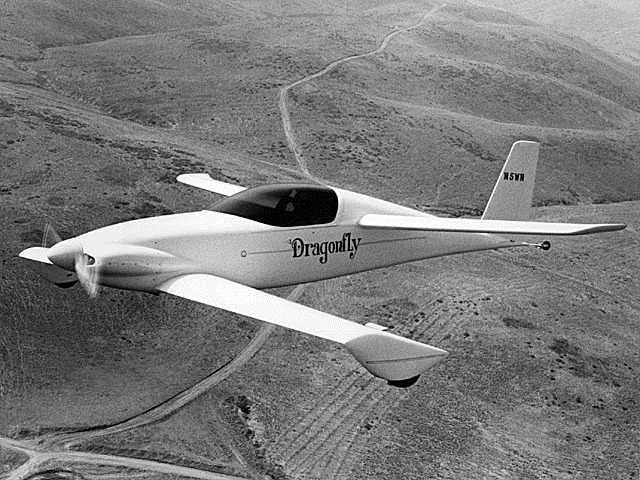 The Dragonfly
To find a web page with photos and stories was a rare lucky strike. Print magazines still ruled the day—that's where anyone with an ounce of journalistic talent was focused. But it was still thrilling. I remember finding a page dedicated to the Dragonfly experimental canard aircraft and being 100% sure that was the airplane I wanted. To find any kind of content posted by other pilots felt like getting a reply to a radio transmission sent into space. Building the web back then was crude but rewarding.
 My dad fueling up his Quicksilver ultralight at Field Station gas pumps in 1994
Where are we today with the integration of the Internet and flying? Nothing official aside from filing flight plans in a mobile app; there really is nothing forcing us to weave social media into our flying experience, but it seems to have become irrevocably enmeshed with the act. Ask yourself how your flying experience differs now that you either think about sharing with others, or consuming what others share before/after going flying. Are you inspired? Does it cause envy? Which part of your brain is getting the juice that watching Youtube or Instagram videos generates? I know what it does to me personally, and it's complicated.
Since the early days of photographing my flights and shooting video, I have been aware that this is both a blessing and a curse to be enabled with inexpensive digital media capture equipment. There is no cost for just one more frame—shoot as much as you want. Even before Youtube and editing videos, why was I capturing this stuff? To show people, hoping to impress them? To watch by myself later to relive the moment? And later when I really got serious about making videos, I grew conscious of spending so much time in the right seat behind the camera experiencing majestic landscapes through a viewfinder, rather than cementing a real memory of the moment.
 Here we see a young aviator, completely unencumbered by the slowing of his metabolism nor his perception of tire size.
These days the social media landscape is vast, rich, and complex. It feels like we're nearing the overwhelming dystopia promised by science fiction movies where the reach and influence of the global network is inescapable. The holograms appear in your living room to remind you to eat more riboflavin-enriched protein bars and wash them down with engineered energy drinks. It's a sweet-and-sour collective consciousness that has paved over the early feelings I had in flying, which were a motivation to escape, to see something beyond the mainstream and mundane; to completely exist in the moment of wearing my airplane and syncing with the resonant frequency salad of 6 cylinders humming; mostly just being present.
A common refrain from me and probably a handful of other similarly aged tech historians, is that the migration of participation from discussion forums like this onto social media platforms like Facebook has been a negative thing. Good in some ways, yes—but those platforms tune the experience to maximize user retention in the interest of making money, so great effort has been put into making them perform. There is no sense of responsibility to be good or bad or healthy/unhealthy. There is no nod to camaraderie or membership or ownership. It's a fluid medium where throngs of users—both human and automated—converge at various intersections, each no more important than the last. All interests conformed into a single "feed." And you certainly don't own anything you post there. I think it's both a step up technologically and a step down socially and especially mentally. There's a happy medium for how our information silos are organized and I feel it's much stronger as a distinct website that we visit deliberately; something with identity versus a generically named group in a sea of millions that flies by at a swipe.
Has this enhanced or degraded the sense of community in aviation? Seems it widened the radius for sure.
Of course I own this opinion with obvious bias—BCP is not flourishing as it once did. But maybe there are silver linings—the big socials have captured the participation of some of the older generation who may have not otherwise shown up. Maybe some sleep well with the confidence that Facebook will persist after the founder dies, whereas if I croak, BCP would have to be carried on by someone who actually cares. Our tech is aged, and to improve it competes with my precious time to enjoy life and my family.
I guess the point of my comparison is that while being firehosed with flying media from all the big platforms, engaging here has a more profound effect. Your mileage may vary and likely will.
That's a big but necessary departure from the true sentiment that triggered my rant—flying for flying, and creating memories for yourself and not others. I think that ultimately there is a price to be paid in the richness of experience. I've been forced to consider the evolution of my early flying experiences with the latter, and what's happened to make them different, both inside and out. As my ability to participate as PIC has waned in recent years, the envy I feel from being inundated with social media pilots doing what I want to be doing begins to grate on my nerves like the subwoofer from a lowered mini truck in the Dairy Queen parking lot. Or someone talking to me while I try to savor the blended Reese's in my Blizzard. And I don't like being manipulated emotionally. Social media, regardless your mental fortitude, can have a strong effect. You're hungry for a Blizzard now.
Your video, or mine, cannot compete with the memory of standing in the middle of the McKenzie Bridge grass runway as the hot sun slowly returned my body temp to normal after casting flies in the cold Cascade snowmelt of the river for way too long.

No photo can replace the actual experience of wondering if you dressed warmly enough to press on for another 1.5 hours at this altitude with no cockpit or windscreen, so now you make peace with being cold.


No video can express what it feels like to descend into the warm radiant air of a hot summer hayfield.

Or to experience some formation flight with a dude you only know from the Internet while also trying to decode what's going on with the weather.

Of course the irony is that many memories might be lost to natural archiving or maybe basic cerebral atrophy if not for a timely photo taken. As you grow older, the subtleties and weaker impressions of your adventures fade, like a river carving the silt away until only the buried basalt remain, or that one photo I uploaded in 2008. Sometimes I think the narrative of my life is only held together by these images, characters and events linked together with string and intertwined like the cubicle of some detective trying to catch a serial killer.
Here in Minnesota we're entering the long spring, for lack of a better term. Winter starts to peter out, daily highs stabilize above freezing, yellow grass starts to show, and I know it will only be a few weeks before the guys in the pattern start overflying my house to remind me that I'm a spectator. My time spent glued to my phone as an escape from whatever else in my life is weighing me down is having the reverse effect—it's pulling me back in to where I'm left wondering what the point even is. Days fly by with large gaps where the process of making memories is disabled by staring at the phone.
I'm an average man at best, and if statistics hold where the average longevity of a male in the United States is 78.4 years, then I've got less than 28 years to do something worth remembering. That's about 10,000 days left, more or less. Seems like a lot but I know it won't feel like it once I arrive. Will the memories be as vivid then as they are now? Or will social media consumption be the plaque that blanks them out?
I dunno, just something to think about. If you read this far, thank you. I achieved some catharsis.







 But I just dove in with an ounce of an idea and started tossing mud at the wall. It's maybe a little heavy on the personal side of things, maybe divisive, but I think I wrote it more for myself anyway.