I don't want to be right. I just want to help. I don't do river flying, but with over ten thousand hours in a 172 on pipelines at 200' AGL, I think I have some energy management ideas that might help make your river flying safer. Most of the videos I see are on rivers in fairly flat country, but the first thing that comes to mind energy wise is down drainage egress. Something you have, except in swamps or wetland areas, is the ability to fly down drainage. Not a major consideration in flat country, but as an old crop duster I always think of those times I wished I had more energy right then. While I did not generally have down drainage advantage on pipelines, there were places in the mountains where wind or other energy considerations along with grade would cause me to ridge lift up and then turn back and work a section down hill.
Another thing I see in videos, and I understand about airspeed reduction reducing radius of turn, is pilots only using part of the energy of their engine. Managed airspeed, as in zoom up for altitude gain and airspeed reduction, does not necessarily mean a decrease in cruise airspeed to gain a reduction in radius of turn. The law of the roller coaster applies here.
Further application of the law of the roller coaster has to do with the potential energy of altitude. Even if I forget a ninety degree turn close up ahead, I can use the potential energy of the 200' AGL traded for airspeed in the necessarily steep level turn to prevent stall. Staying ahead of the airplane, however, allows the safest and most efficient energy management turn utilizing both zoom up for altitude and radius reduction and that gained altitude for nose down 1g and airspeed increase to help prevent stall.
Wind management, so helpful in Ag work, is not manageable here. We get some help turning into the wind and some hurt turning downwind.
In the videos I see some power management, slow but increase in power and pitch up to make an energy management turn possible. For those using ground effect, zoom up to reduce radius and gain altitude for the down wing inside the turn works. Why start from a low power cruise, however?
In turns of greater than ninety degrees, the zoom up of the energy management turn gives us a good look down into the right of way or river going in the new direction before actually being there. Terrain and wires and towers often prevent going wings level and bailing out of the turn. Should something be down there, zoom up slowing and altitude gives us a longer look at the situation. A careful map recon, while necessary, will not move the wire that has been strung across the river.
Let me and other pilots know, as Larry does in his videos, what techniques you find safe and efficient for the kind of flying you do. What are you doing to have that little bit of extra energy when it is most needed? And for those who fly airplanes that will almost hover out of ground effect, we helicopter pilots also know about being out of airspeed, altitude (energy), and ideas. The law of the roller coaster works for all.
River flying.
Fri Nov 18, 2022 6:13 pm
- contactflying offline
- Posts: 4972
- Joined: Wed Apr 03, 2013 7:36 pm
- Location: Aurora, Missouri 2H2
Download my free "https://tinyurl.com/Safe-Maneuvering" e-book.
Sat Nov 19, 2022 10:44 am
Re: River flying.
I do a fair amount of river flying, nothing for pay just for fun. I fly like a college student very low, very slow with no money in the bank. With very little energy reserve I try to mitigate issues with passengers by only running with them off the high water season so we have lots of sandbars to land on. The other thing is I am always flying toward a crash site it becomes a habit after a while. As I round a bend or curve I am looking ahead for a place to crash, not land just crash!! Only looking for places to safely land without any damage leaves out a lot of spots one can safely crash and after some fresh paint and a new prop be back to flying. Once you see a spot lean the way and look for the next. Don't write off that nice group of 15 ft Alders, or rough rutted sandbar. Ya the helicopter is going to come but you should be fine. Stuff it on the inside of a big sweeping curve the water is usually shallow and not much current. Do a water assisted landing so when you hit the shore you are as slow as possible before going between the big trees. It is a mindset that you have to practice especially if low and slow. Emergency procedures in small single engine aircraft usually only take a few seconds to preform as you do them make sure you are pointed to the best crash site possible, then fly the plane all the way to the crash. If you are at 15 ft AGL and 20 mph above stall speed you are not going to have minutes to act it will only be seconds. I use the same technique flying low through mountains, large area of woods/lakes/swamps. Just fly crash site to crash site. If the pilot that is following is a IFR trained pilot they usually start whining after about the 3rd heading change. Even at 15-20 mph above stall speed you can do a energy management turn, around a 90 degree bend, you are only going to come up maybe 20 feet but that will help give the wing some room to dip, be smooth and coordinated, if you decide to use power do it early to get altitude not speed but get it off in the turn so you don't get pushed wide, almost like a ballroom dace smooth and steady. As always anytime you want to start pushing the edge make sure you up to date on Spin/Stall reflex. Just things to ponder over a cup of joe.
DENNY
DENNY
DENNY
Sat Nov 19, 2022 2:23 pm
Re: River flying.
So are you basically always in landing mode? Yes, at those airspeeds energy management would be life or death. Do you use topographical 1:25,000 scale maps?
- contactflying offline
- Posts: 4972
- Joined: Wed Apr 03, 2013 7:36 pm
- Location: Aurora, Missouri 2H2
Download my free "https://tinyurl.com/Safe-Maneuvering" e-book.
Sat Nov 19, 2022 4:04 pm
Re: River flying.
contactflying wrote:Do you use topographical 1:25,000 scale maps?
man are you missing the point...
My kind of flying... nothing better than flying just over the water for long stretches. One of my favorite days in the air was flying the most of the Copper River at grizzly height.
Great post Denny.
- Bigrenna offline


- Posts: 2358
- Joined: Sun Sep 25, 2011 4:02 pm
- Location: New England
- Aircraft: C180H / C170B
www.bushwagoneast.com
Sat Nov 19, 2022 4:18 pm
Re: River flying.
Usually just 1/2 not full flaps and trim for airspeed/load. Landing is usually full flaps full nose up. If I lost the engine it is easy to do full flaps takes 1/2 second I can live with whatever trim I have. I will slow to 38 mph on power off flair 36-37 power on. I usually plan my route and review with Google earth. During flight I have a Garmin 795 GPS mounted with top half above the dash so I can follow course and adjust for terrain ahead without looking down if needed, invaluable when scud running through the ranges. The advantage of flying slow is it gives you lots of time to pick a good route. I will do some rudder turns keeping the wings level, in a cub at 60 mph still feels stable (tested at altitude first). I think a lot of people get into trouble in mountains because they have it in there mind that you must always climb straight ahead. I learned to fly in a tired 150 hp pacer It is pretty easy to see if you are going to out climb the terrain just turn back and do some slow climbing circles until you have the altitude you need, it may take a extra 5 or 10 min but you are not going to fly into the mountain. If I am flying upstream I make sure I have the power to climb or altitude to clear any rise in terrain. We are lucky up here because lots of areas above tree line that you can fly for hours at 10 feet AGL and not worry about running into anything. Once you do that for a while 10 feet actually feels like a lot of altitude. I had an engine issue once taking off on a narrow tree lined stream I knew I could not out climb the trees in front of me so I just followed the 90 degree bend and landed with no problem whatsoever. Because I had the mindset to keep flying to the best crash site, which turned out to be just fine with no damage. On note of flying low and slow on the river. Be careful of winds rolling down over the treetops onto the river being banked with the wingtip 5 feet off the ground and getting a strange gust can get your attention. If It is blowing hard I get low to avoid the worst of it, but keep my speed up to punch through any weird stuff. The energy management techniques you teach work fine even if you are slow you just have to understand how much you have in the bank, and don't bounce the check, are you flying like a dirt poor collage student or a big paycheck Fed X pilot!!  DENNY
DENNY
DENNYDENNY
Sat Nov 19, 2022 4:52 pm
Re: River flying.
A long time ago when we were flying $10,000 dollar Stearmans and Pawnees, we did full rudder to the stop rudder turns around obstructions in the field. Ground effect and airspeed made that possible. Is the 90 degree turn the greatest rudder turn you have made. Multiple small ones would get you there with enough horizontal space I expect. We also use rudder turns to miss stuff while going over wires wings level with the nose down and under wires in ground effect.
- contactflying offline
- Posts: 4972
- Joined: Wed Apr 03, 2013 7:36 pm
- Location: Aurora, Missouri 2H2
Download my free "https://tinyurl.com/Safe-Maneuvering" e-book.
Sat Nov 19, 2022 5:55 pm
Re: River flying.
I don’t recall how many hours I had 5-800 or so, most of that in my all black beater TriPacer, I was terrain flying the usual western Alaskan rivers, skis in the winter, floats in the summer.
At some point I made a few videos, one going up the American and another coming down the braids of the Branch. Watching them I felt I was fighting it, rather then flowing from turn to turn, I was pulling hard gees like I had a Zero, Mig, or one of those blue Trooper Cubs on my tail.
Around that time a buddy of mine had flown out in spring to check some bear dens, second generation 135 kid with 150hp Tcrate. K. asked if I wanted to fly out and follow him, we zoomed and dived around some steep terrain in a way I never imagined I could, it was my first taste of energy conservation flying, AKA Contact Flying.
I started to do the same driving through the upper canyon of the Naknek and those couple of deep bends just upriver from No See Um Lodge.
I’ve never done crack, I might have done a bump or two of coke back in the day, but this was a high like non other, shit my hands are sweating and shaking a bit just typing this!
So I’m doing this energy conservation flying but all the time I wondering to myself if I’m doing it wrong, sure I might be all but dragging a Booster wing tip feet off a sockeye reddened oxbow, but am I going to stall out, drop a wing, become brown bear brunch?
Thus guy comes up from down in America to help me work in my Naknek hanger, he posts here now and again, we go flying a few times, pretty sure we were on wheels cause I took him into the little strip at Ron Hays’ place about a third up the Kvechak. He was offered a boat ride around the horn as the ARL guides were shuttling a few skiffs around to King salmon that day and he took it. Told me a few years later that he didn’t think we would get out of that strip alive so he took the boat ride instead. I’m not sure he was wrong, think I tickled the alders there at the end with just me aboard.
So Dave, ah that’s his name, hands me this book, says, you gotta read this.
It was Dunnlen’s Contact Flying and it answered all my questions about what and why I was having success with this flying style I was morphing into, but that I didn’t really understand. Just enough math and science but basically pages of common sense.
I know more then a few here in the BCP have voiced otherwise, I just don’t get it. First Mr Dunlen has served our country in battle, I know it sounds hooky but a hat tip to you Sir! If you don’t know then ask, it’s in the book. Respect and Honor. Contact flying is the real deal, if you don’t or can’t understand then keep your wings level and your airspeed up, and stay the the fuck out of our way…
Can’t say how many years it’s been since I’ve read Contact Flying, Stick and Rudder, DeReemers Float Flying ether. Seems I sucked the juice out of them, the books fall open to the key chapters, the best pages dog eared and edge stained with black fifty weight Beaver blood, fingerprints of red oil, I can taste it now, Hester smoke-fish…
And I can hear it now,
Rocket you on twenty two nine, saw you flying up King Salmon Creek, we got a mag issue Bravo Romeo.
I pause a moment or two, it’s late evening, I’m in the Batplane on floats heading to that secret lake no one ever lands in, I’ll tail her up to the agate beach no one has ever picked, throw a line around a stunted birch snaggle, lay back and drift off to sleep.
Roger that King Salmon, twenty minutes out, stack up the planes so I can tie up down river, we got a fresh mag in the shed…

Rocket
ps. We are luckiest people in the world today, wings and all, take a moment this Thursday for those of use who have fallen and those who will succeed us, and be thankful.
At some point I made a few videos, one going up the American and another coming down the braids of the Branch. Watching them I felt I was fighting it, rather then flowing from turn to turn, I was pulling hard gees like I had a Zero, Mig, or one of those blue Trooper Cubs on my tail.
Around that time a buddy of mine had flown out in spring to check some bear dens, second generation 135 kid with 150hp Tcrate. K. asked if I wanted to fly out and follow him, we zoomed and dived around some steep terrain in a way I never imagined I could, it was my first taste of energy conservation flying, AKA Contact Flying.
I started to do the same driving through the upper canyon of the Naknek and those couple of deep bends just upriver from No See Um Lodge.
I’ve never done crack, I might have done a bump or two of coke back in the day, but this was a high like non other, shit my hands are sweating and shaking a bit just typing this!
So I’m doing this energy conservation flying but all the time I wondering to myself if I’m doing it wrong, sure I might be all but dragging a Booster wing tip feet off a sockeye reddened oxbow, but am I going to stall out, drop a wing, become brown bear brunch?
Thus guy comes up from down in America to help me work in my Naknek hanger, he posts here now and again, we go flying a few times, pretty sure we were on wheels cause I took him into the little strip at Ron Hays’ place about a third up the Kvechak. He was offered a boat ride around the horn as the ARL guides were shuttling a few skiffs around to King salmon that day and he took it. Told me a few years later that he didn’t think we would get out of that strip alive so he took the boat ride instead. I’m not sure he was wrong, think I tickled the alders there at the end with just me aboard.
So Dave, ah that’s his name, hands me this book, says, you gotta read this.
It was Dunnlen’s Contact Flying and it answered all my questions about what and why I was having success with this flying style I was morphing into, but that I didn’t really understand. Just enough math and science but basically pages of common sense.
I know more then a few here in the BCP have voiced otherwise, I just don’t get it. First Mr Dunlen has served our country in battle, I know it sounds hooky but a hat tip to you Sir! If you don’t know then ask, it’s in the book. Respect and Honor. Contact flying is the real deal, if you don’t or can’t understand then keep your wings level and your airspeed up, and stay the the fuck out of our way…
Can’t say how many years it’s been since I’ve read Contact Flying, Stick and Rudder, DeReemers Float Flying ether. Seems I sucked the juice out of them, the books fall open to the key chapters, the best pages dog eared and edge stained with black fifty weight Beaver blood, fingerprints of red oil, I can taste it now, Hester smoke-fish…
And I can hear it now,
Rocket you on twenty two nine, saw you flying up King Salmon Creek, we got a mag issue Bravo Romeo.
I pause a moment or two, it’s late evening, I’m in the Batplane on floats heading to that secret lake no one ever lands in, I’ll tail her up to the agate beach no one has ever picked, throw a line around a stunted birch snaggle, lay back and drift off to sleep.
Roger that King Salmon, twenty minutes out, stack up the planes so I can tie up down river, we got a fresh mag in the shed…

Rocket
ps. We are luckiest people in the world today, wings and all, take a moment this Thursday for those of use who have fallen and those who will succeed us, and be thankful.
- rocket offline
- Posts: 182
- Joined: Tue May 15, 2012 3:08 pm
- Location: Talkeetna
- FindMeSpot URL: http://share.findmespot.com/shared/face ... 9GZmP4hOO2
Sat Nov 19, 2022 6:15 pm
Re: River flying.
You're a poet, Rocket. Some of us talk and write like we have marbles in our mouth.
- contactflying offline
- Posts: 4972
- Joined: Wed Apr 03, 2013 7:36 pm
- Location: Aurora, Missouri 2H2
Download my free "https://tinyurl.com/Safe-Maneuvering" e-book.
Sat Nov 19, 2022 9:06 pm
Re: River flying.
When you fly wider rivers that have a lot of trees and braids in the low season what you will notice is a lot of the trees are close to perpendicular to the river because that is the way the flow at flood stage pushed them. So often times landing 60-90 degrees to the normal flow may be best. It actually is good because you can bleed off speed with wide swing and line up. Some of the Copper below Chitnia has some extremely dangerous swift water with high rocky cliffs with no safe plane to land that is definitely a place you will be trying to park on a rocky ledge or trees and hope you don't slide downhill. Parts of that river when high even 2 grand AGL won't help. This is where planing ahead and just getting used to using a helmet on every flight is worth it. The urge to fly fast and get through a bad stretch of weather can lead to problems if you don't know the area or what is ahead of you. Slow down, pull flaps, trim so you don't have to control altitude with the stick. Just like driving in heavy rain or snow, slow down and make sure you are on the right course. DENNY
DENNY
Sat Nov 19, 2022 9:26 pm
Re: River flying.
contactflying wrote:A long time ago when we were flying $10,000 dollar Stearmans and Pawnees, we did full rudder to the stop rudder turns around obstructions in the field. Ground effect and airspeed made that possible. Is the 90 degree turn the greatest rudder turn you have made. Multiple small ones would get you there with enough horizontal space I expect. We also use rudder turns to miss stuff while going over wires wings level with the nose down and under wires in ground effect.
I think I did a 180 turn once up high just to see how it would work. I don't fly for money so I seldom have to push it that hard it is just nice to know what will happen if I try. I can usually just drop a wing around a corner but I have done several small rudder turns like you describe if I wanted to stay below tree top. It is kind of like a step turn on floats you just keep walking the rudder. Once you get a feel for a plane energy management is a lot easier.
DENNY
DENNY
Sun Nov 20, 2022 10:01 am
Re: River flying.
Trying to visualize what/why you guys are doing flying low & slow following a river. I guess I must do some landing gravel bars, but usually I just pick a spot from 2-300 feet and drop in and land.
Keeping it low otherwise saps concentration looking for wire crossings (still some old land-line wire around strung 70 years ago), or the 200' trees on an eroding bank that are now leaning into midstream for a few floods before they fall in. Some being dead snags with no branches, even harder to see on a buggy windshield with a low sun.
Not going to wear a helmet to magically mitigate risk. Never wore one long-lining with a helicopter, didn't even start wearing one kiteboarding until after I did the tray ride for a CAT scan. I'll leave helmets to the immortal young bucks with full hull insurance.
Keeping it low otherwise saps concentration looking for wire crossings (still some old land-line wire around strung 70 years ago), or the 200' trees on an eroding bank that are now leaning into midstream for a few floods before they fall in. Some being dead snags with no branches, even harder to see on a buggy windshield with a low sun.
Not going to wear a helmet to magically mitigate risk. Never wore one long-lining with a helicopter, didn't even start wearing one kiteboarding until after I did the tray ride for a CAT scan. I'll leave helmets to the immortal young bucks with full hull insurance.
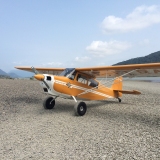
'74 7GCBC, 26" ABW, Aera 660 feeding G5 and FC-10 FF.
Sun Nov 20, 2022 10:50 am
Re: River flying.
Karmutzen wrote:Trying to visualize what/why you guys are doing flying low & slow following a river. I guess I must do some landing gravel bars, but usually I just pick a spot from 2-300 feet and drop in and land.
Keeping it low otherwise saps concentration looking for wire crossings (still some old land-line wire around strung 70 years ago), or the 200' trees on an eroding bank that are now leaning into midstream for a few floods before they fall in. Some being dead snags with no branches, even harder to see on a buggy windshield with a low sun.
Not going to wear a helmet to magically mitigate risk. Never wore one long-lining with a helicopter, didn't even start wearing one kiteboarding until after I did the tray ride for a CAT scan. I'll leave helmets to the immortal young bucks with full hull insurance.
I have to agree with Rocket sometimes you do it because coke still ain't legal. Other times because the ceiling is at 100 ft or treetop. I can only think of few long range hunting trips that I did not have to get down to or below treetop to get to or from the hunting area. Just like stalls/spins/landing/takeoffs the first time you do it should not be in crappy weather. There are only so many low routes through the Ranges up here, once you have flown them a few times you know where the dangers are, usually none because unlike the lower 48 once you get away from the roads just not a lot out here and the locals will all tell you of issues if you ask. I try to get out on good days and just go explore or take a new pilot through a pass so they don't fly into the side of a mountain on a bad day. It is nice to have the Zoom Reserve Jim talks about but sometimes speed and altitude are just not your friends. Workload/flying is a lot easier when you are slow, trimmed to hands off flying, and have some Proud Mary playing in the headset.
DENNY
DENNY
Sun Nov 20, 2022 1:04 pm
Re: River flying.
rocket wrote:I
I know more then a few here in the BCP have voiced otherwise, I just don’t get it. First Mr Dunlen has served our country in battle, I know it sounds hooky but a hat tip to you Sir! If you don’t know then ask, it’s in the book. Respect and Honor. Contact flying is the real deal, if you don’t or can’t understand then keep your wings level and your airspeed up, and stay the the fuck out of our way…
Man, you're a character. I laughed a few times at your post, especially the coke part, but I take exception to the above. I can't think of a single person who disagrees with the idea of energy management flying. And it's probably harder to find someone who would fault our combat vets or not feel pride to know someone who has flown helis under fire.
Is taking exception with poor articulation of aeronautical ideas using the English language tantamount to disrespecting vets? Is cringing at the autistic inability to read the room in a written conversation the same as disagreeing with the flying fundamentals under discussion?
Still trying to parse those few sentences to figure out who is involved as I "stay the the fuck out of our way".
I will give it to Jim Dulin, he remains polite and unwavering as he rolls his boulder back up the hill each day. And, as I understand, he gives informal dual to anyone who asks. Good on him. But I remain on the fence about whether his body of posts contributed here to make us better pilots or just serve to drive away some participation because of the volume. I've got that last part handled all on my own.


Sun Nov 20, 2022 2:03 pm
Re: River flying.
My hero, Will Rogers, never met a man he didn't like. A tough standard to attempt to live up to. Pushing boulders uphill is light work in comparison.
- contactflying offline
- Posts: 4972
- Joined: Wed Apr 03, 2013 7:36 pm
- Location: Aurora, Missouri 2H2
Download my free "https://tinyurl.com/Safe-Maneuvering" e-book.
Sun Nov 20, 2022 2:41 pm
Re: River flying.
It took me around two years to figure out what Jim was saying. The main reason is I was reading to quick and was not fully aware of some of the terms he used. Once I started to understand that it was going to take me 30-45 min just to absorb all he was saying in a few paragraphs I started bypassing the post unless I had a lot of time a a cup or two of coffee available. You are not being spoon fed an answer you have to think about what he said and put into context of your flying. Once I did that I tried to see how I was flying conpaired to what he was saying. Because my first instructor was a 70 some year old ex crop duster and follow on instructors had a lot of mountain and low slow time I was on the right path. However I saw areas that I could and did improve. My canyon turns got much better, as did general maneuvering in tight places. Overall I think I am safer with a better understanding of the edge. Once you learn to enjoy the absorption of Jims posts it becomes a great way to enjoy a cup or two of coffee in the morning. Sometimes the path leads to other interesting threads such as this one. On crappy winter days a joy to have handy. A big thanks to everyone on this site for all the input.
DENNY
DENNY
DENNY
Sun Nov 20, 2022 3:52 pm
Re: River flying.
Here’s what happens when playing these games in Lower 48. And, by the way one of these occurred a week ago near Anchorage. Wire strikes can ruin your week.

MTV
MTV


Sun Nov 20, 2022 6:26 pm
Re: River flying.
I just want to ask everyone one to stay to the right, I might be zorching my way down the other side of the same river 

Mon Nov 21, 2022 3:12 am
Re: River flying.
The heart of energy management is not about teasing the edge, it is about avoiding it with intelligent technique rather than with rules. Once in too deep, rules no longer protect. Good energy management can provide the extra above the edge that keeps us alive. We can rule that pilots do not turn level at steep enough bank that they stall. When it is either turn or CFIT because engine energy is all used up, intelligent technique which has been out there for years is all that will do. Many of us have described it in various languages, terms, an phrases but pilots continue to kill themselves as taught and ruled at the same rate.
- contactflying offline
- Posts: 4972
- Joined: Wed Apr 03, 2013 7:36 pm
- Location: Aurora, Missouri 2H2
Download my free "https://tinyurl.com/Safe-Maneuvering" e-book.
Mon Nov 21, 2022 6:36 am
Re: River flying.
contactflying wrote:The heart of energy management is not about teasing the edge, it is about avoiding it with intelligent technique rather than with rules. Once in too deep, rules no longer protect. Good energy management can provide the extra above the edge that keeps us alive. We can rule that pilots do not turn level at steep enough bank that they stall. When it is either turn or CFIT because engine energy is all used up, intelligent technique which has been out there for years is all that will do. Many of us have described it in various languages, terms, an phrases but pilots continue to kill themselves as taught and ruled at the same rate.
Jim,
The accident above had NOTHING to do with energy management. They never saw the wires.
MTV
Mon Nov 21, 2022 7:03 am
Re: River flying.
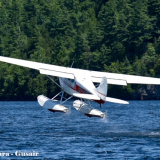
Did that silver plane get landed like that or did it end up in the water !?

vail
DISPLAY OPTIONS
Who is online
Users browsing this forum: No registered users and 7 guests
Latest Features
-
-
Featured Bush Planes
As one of the undisputed legends of bush flying, the Cessna 180 hauls a…Read More -
Aircraft Ownership and Maintenance
9 modification mistakes aircraft owners make when trying to "bush out" their birds—why some…Read More -
Live to Tell
A Minnesota pilot is surprised to learn that the sudden asymmetric drag of an…Read More




Latest Knowledge Base
-
Destinations
Canada offers some of the most spectacular backcountry flying on the continent. Here's what you need to know before you go.Read More -
Safety and Survival
Hope that you never have to use your survival vest but knowing you have it and knowing how to use…Read More -
Destinations
A regional guide with ideas for winter camping destinations in California, Nevada, New Mexico, and Arizona.Read More -
Aircraft
Finding an affordable aircraft that can handle the backcountry for $80K or less? A challenge for sure, but with the…Read More



