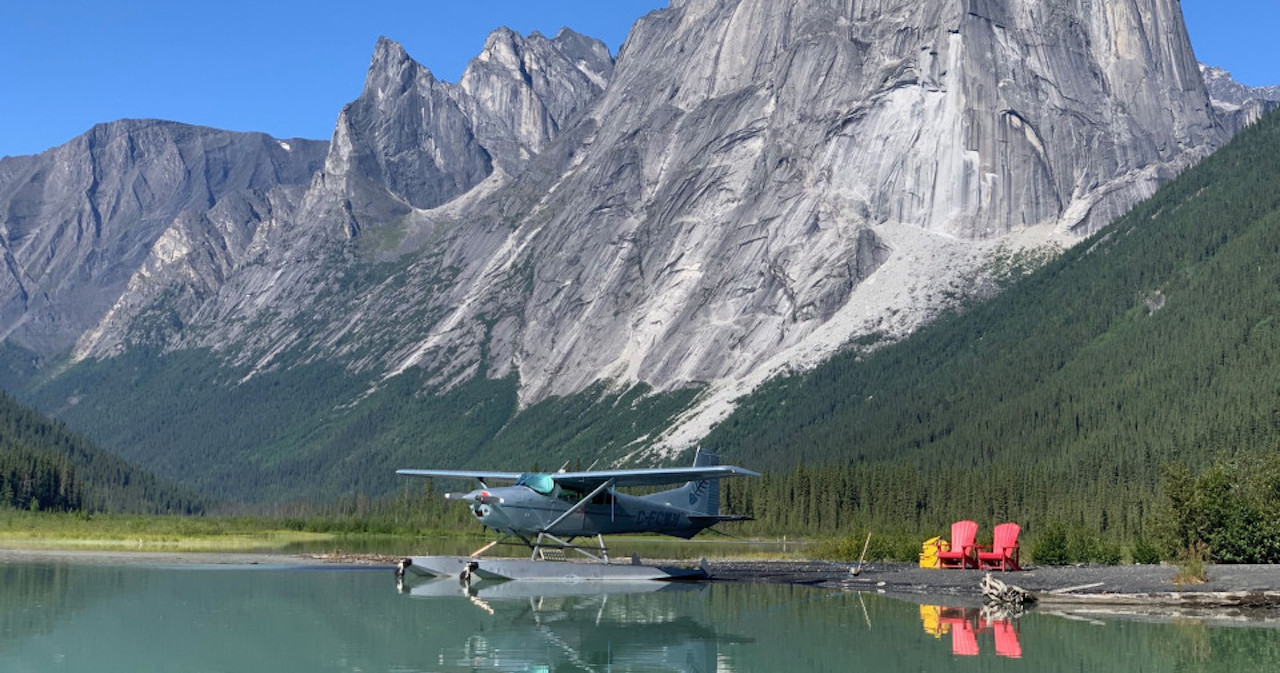
River flying.
Mon Nov 21, 2022 7:06 am
Re: River flying.
I was thinking more about pilots stalling rather than trading a bit of altitude for airspeed in their steep turn to miss stuff. This guy may have done the right thing, lose altitude rather than stall but hit the wire. I lost the top of the rudder where it sticks forward over the vertical stabilizer on a Pawnee to a wire. Just bent over nicely but still had the main part of the rudder behind the stabilizer. Looks like the 180 still had some vertical stabilizer but lost all the rudder.
- contactflying offline
- Posts: 4972
- Joined: Wed Apr 03, 2013 7:36 pm
- Location: Aurora, Missouri 2H2
Download my free "https://tinyurl.com/Safe-Maneuvering" e-book.
Mon Nov 21, 2022 10:39 am
Re: River flying.
low rider wrote:Did that silver plane get landed like that or did it end up in the water !?
It crashed just past the wires. That pic is the pretty part. Plane was destroyed, two participants, both severe and some permanent injuries.
As I noted, if you’re in Alaska and think this won’t happen, just last week a gent was killed in one of these deals north of Anchorage, after hitting a water sampling cable.
Bad stuff. I’ve spent a lot of time flying low for work. Got all the jollies I need from that. I much prefer to stay a bit higher over water courses.
MTV


Mon Nov 21, 2022 12:10 pm
Re: River flying.
All my river flying was on floats where I was landing on the river, east river to some small rivers in BFE, scout the thing out before you get low, wires and odd crap have a way of appearing across them
- NineThreeKilo offline
- Retired
- Posts: 1678
- Joined: Thu Dec 31, 2009 8:16 pm
- Location: _
Mon Nov 21, 2022 12:17 pm
Re: River flying.
There seems to be a misconception that utilizing energy management techniques somehow means you are flying faster, so you have speed to trade off.
I don't know Jim's techniques, training program, or flying philosophies, so I'm not speaking for him, but in my mind, energy management is something a person should be practicing clear to a stop, and not necessarily in a single directional plane. DENNY, energy management exists in your low and slow world, make friends with it. A spray plane loaded to 10,000#++ with a measly 600 hp on the nose is going to be going fast compared to you, but has an order of magnitude less maneuverability, and margin of error, and thus learns to live with energy management.
We are not flying jets on victor airways or assigned altitudes and headings, nor flying fighter jets. Everything you need to know about how and where your airplane is going can be determined by your butt, ears, eyes, and nose, and all of it should be directed by you, irregardless of wind direction or speed. If you really need a dial or LED to tell you something about where and how your next landing is going to be, than you simply need more 'quality' dual and / or hours in the seat.
Rivers are fun, wires are bad. Wires that cross rivers are mostly steel (worse than the ones ag planes tend to hit). I don't like hitting wires in an agplane, I'd not want to subject myself to that possibility in a GA airplane. Even when I am flying a river I have run before, I scour the banks. No wire was born on a river, it got hung there. Did someone just string up a new gauge or zip line? I dunno, but they don't often cross without a starting point like a tower on the bank. No guarantee, but much easier to spot than a single cable. I still fly on the rivers most of the time, not much higher than I'd care to fall out of it, but looking for wires is part of my day job, and even as such I've managed to 'find' a few.
Take care, Rob
I don't know Jim's techniques, training program, or flying philosophies, so I'm not speaking for him, but in my mind, energy management is something a person should be practicing clear to a stop, and not necessarily in a single directional plane. DENNY, energy management exists in your low and slow world, make friends with it. A spray plane loaded to 10,000#++ with a measly 600 hp on the nose is going to be going fast compared to you, but has an order of magnitude less maneuverability, and margin of error, and thus learns to live with energy management.
We are not flying jets on victor airways or assigned altitudes and headings, nor flying fighter jets. Everything you need to know about how and where your airplane is going can be determined by your butt, ears, eyes, and nose, and all of it should be directed by you, irregardless of wind direction or speed. If you really need a dial or LED to tell you something about where and how your next landing is going to be, than you simply need more 'quality' dual and / or hours in the seat.
Rivers are fun, wires are bad. Wires that cross rivers are mostly steel (worse than the ones ag planes tend to hit). I don't like hitting wires in an agplane, I'd not want to subject myself to that possibility in a GA airplane. Even when I am flying a river I have run before, I scour the banks. No wire was born on a river, it got hung there. Did someone just string up a new gauge or zip line? I dunno, but they don't often cross without a starting point like a tower on the bank. No guarantee, but much easier to spot than a single cable. I still fly on the rivers most of the time, not much higher than I'd care to fall out of it, but looking for wires is part of my day job, and even as such I've managed to 'find' a few.
Take care, Rob


Mon Nov 21, 2022 3:22 pm
Re: River flying.
Rob wrote:There seems to be a misconception that utilizing energy management techniques somehow means you are flying faster, so you have speed to trade off.
I don't know Jim's techniques, training program, or flying philosophies, so I'm not speaking for him, but in my mind, energy management is something a person should be practicing clear to a stop, and not necessarily in a single directional plane. DENNY, energy management exists in your low and slow world, make friends with it. A spray plane loaded to 10,000#++ with a measly 600 hp on the nose is going to be going fast compared to you, but has an order of magnitude less maneuverability, and margin of error, and thus learns to live with energy management.
We are not flying jets on victor airways or assigned altitudes and headings, nor flying fighter jets. Everything you need to know about how and where your airplane is going can be determined by your butt, ears, eyes, and nose, and all of it should be directed by you, irregardless of wind direction or speed. If you really need a dial or LED to tell you something about where and how your next landing is going to be, than you simply need more 'quality' dual and / or hours in the seat.
Rivers are fun, wires are bad. Wires that cross rivers are mostly steel (worse than the ones ag planes tend to hit). I don't like hitting wires in an agplane, I'd not want to subject myself to that possibility in a GA airplane. Even when I am flying a river I have run before, I scour the banks. No wire was born on a river, it got hung there. Did someone just string up a new gauge or zip line? I dunno, but they don't often cross without a starting point like a tower on the bank. No guarantee, but much easier to spot than a single cable. I still fly on the rivers most of the time, not much higher than I'd care to fall out of it, but looking for wires is part of my day job, and even as such I've managed to 'find' a few.
Take care, Rob
Victor airways are pretty low for a jet

But agree with everything you said
- NineThreeKilo offline
- Retired
- Posts: 1678
- Joined: Thu Dec 31, 2009 8:16 pm
- Location: _
Mon Nov 21, 2022 3:47 pm
Re: River flying.
NineThreeKilo wrote:
Victor airways are pretty low for a jet
But agree with everything you said


My two stroke mouth getting away from my Caterpillar slow brain...
Mon Nov 21, 2022 5:46 pm
Re: River flying.
I won the wire lottery about six years ago, means I walked away.
Mild engine roughness, I had one runway about twenty-five miles to the north of my location and one runway twenty-five miles to the south. Rock and hard place? I was about five miles east of the Parks highway, two laner, at tree top counting moose for fun after having lunch with my buddy in Big Lake.
I got that spider sense thing, looked down at my MAP and Tach gage but both on twenty-three, pulled the carb heat cause its a O-470, she barked one oddball after-fire and then nothing, something was there only it was subtle. I recall thinking to myself, shit I’m making power, firewall her, turned west and climbed to about 2,000 agl. The Parks was plugged with Saturday easter weekend traffic.
At least now had enough altitude to make a mid channel Sue river bar and spend a few precious seconds thinking about making Willow or PATK?
She starts to shake some more,
nope looks like a gravel bar or some tall trees. I’ve landed a few of those bars in my PA-22 with 8:50 mains and an Airglas and 8:00 on the nose, so I know I’ll walk away at least in this borrowed E model 182 sporting the same rubber.
More rough,
and as if that bitch I worship, Statistical Probability, was listening all the cars on the road disappear, don’t worry she wasn’t done with me yet, shouldn’t have called her a bitch.
At this point I turn a high downwind, I’ve got that long stretch, four miles of straight where the guys land to get a burger, Sheep Creak Lodge. I’m actively scanning for wires now…
Fucking rough now,
no more jerking around your gonna land here, turn final, and…
That’s how it happened.
I stoped thinking about power lines, forgot all about em… and yep, that old hag Statistical Probability wagged her finger at me, I’m guessing she was doing jello shots with her side dude, you know who I’m talking about, Ol’ Murphy, the pay me now or pay me later lawyer, he was standing there with his hand out to swat me out of the sky for dissen his lady.
At this point two cars came into the equation, both going my way about two hundred yards apart, figured I scoot up close to the lead car and then let down keeping as much room for the pickup behind me to slow down or whatever. The grand son in the little brown truck says to gramps, hay look that planes making an emergency landing! The old man told me it looked like the forth of July had exploded under my plane then said my nose gear assembly dropped out of the sky.
Copilot in the lead car just caught a glance and had to argue with her nurse girlfriend to turn around because a airplane just wrecked behind her, the RN told me later as she was working her little pen light from eye tom eye, she thought her friend was just joshing.
It’s funny, almost twenty years of flying in Wester Alaska you just don’t think about power lines as a rule, sure there were those big ones that cross the Naknek River to South Side but its not unusual to just fly under them, the radio tower abeam to the north and its wide guy wires are much more of a concern. My ex told me one foggy morning a 206 tangled with one of the guy wires unseen in the fog, sockeye fell from the sky and buried themselves in the tundra with only the tails sticking up like little organic Bristol bay fish bombs, said her husband was able to crawl under the pile of wreckage to keep the pilot company as he passed… not so funny.
One of the first mind fucks I had to get over in South Central Ak was trees, yep no tall trees out west, first few times in and out of the Village strip got my attention, that and that north takeoff over the Fairview Bar.
I recall being a little psyched out as I began to drop down between the eighty foot Cottonwood and Birch, notch of flaps, settling below the treetops as the ladies car speeds away, I trim her back, another notch of flaps. I actually said this out loud, Ive got this made! Lets see, who else in the Aviation pantheon can I insult? Ah yes, that ass Hubris, I got this indeed.
That set of power lines was pretty low, a long crossing run, twenty two feet off the road? Don’t think I pulled that last notch of flaps, still bleeding off some speed rather then descending, Hubris reached his hand out only he gently held the belly of Six Two Xray at power line hight just… a… little… longer…
Its odd, those power lines looked to me like they were four inches thick…
Rocket
Mild engine roughness, I had one runway about twenty-five miles to the north of my location and one runway twenty-five miles to the south. Rock and hard place? I was about five miles east of the Parks highway, two laner, at tree top counting moose for fun after having lunch with my buddy in Big Lake.
I got that spider sense thing, looked down at my MAP and Tach gage but both on twenty-three, pulled the carb heat cause its a O-470, she barked one oddball after-fire and then nothing, something was there only it was subtle. I recall thinking to myself, shit I’m making power, firewall her, turned west and climbed to about 2,000 agl. The Parks was plugged with Saturday easter weekend traffic.
At least now had enough altitude to make a mid channel Sue river bar and spend a few precious seconds thinking about making Willow or PATK?
She starts to shake some more,
nope looks like a gravel bar or some tall trees. I’ve landed a few of those bars in my PA-22 with 8:50 mains and an Airglas and 8:00 on the nose, so I know I’ll walk away at least in this borrowed E model 182 sporting the same rubber.
More rough,
and as if that bitch I worship, Statistical Probability, was listening all the cars on the road disappear, don’t worry she wasn’t done with me yet, shouldn’t have called her a bitch.
At this point I turn a high downwind, I’ve got that long stretch, four miles of straight where the guys land to get a burger, Sheep Creak Lodge. I’m actively scanning for wires now…
Fucking rough now,
no more jerking around your gonna land here, turn final, and…
That’s how it happened.
I stoped thinking about power lines, forgot all about em… and yep, that old hag Statistical Probability wagged her finger at me, I’m guessing she was doing jello shots with her side dude, you know who I’m talking about, Ol’ Murphy, the pay me now or pay me later lawyer, he was standing there with his hand out to swat me out of the sky for dissen his lady.
At this point two cars came into the equation, both going my way about two hundred yards apart, figured I scoot up close to the lead car and then let down keeping as much room for the pickup behind me to slow down or whatever. The grand son in the little brown truck says to gramps, hay look that planes making an emergency landing! The old man told me it looked like the forth of July had exploded under my plane then said my nose gear assembly dropped out of the sky.
Copilot in the lead car just caught a glance and had to argue with her nurse girlfriend to turn around because a airplane just wrecked behind her, the RN told me later as she was working her little pen light from eye tom eye, she thought her friend was just joshing.
It’s funny, almost twenty years of flying in Wester Alaska you just don’t think about power lines as a rule, sure there were those big ones that cross the Naknek River to South Side but its not unusual to just fly under them, the radio tower abeam to the north and its wide guy wires are much more of a concern. My ex told me one foggy morning a 206 tangled with one of the guy wires unseen in the fog, sockeye fell from the sky and buried themselves in the tundra with only the tails sticking up like little organic Bristol bay fish bombs, said her husband was able to crawl under the pile of wreckage to keep the pilot company as he passed… not so funny.
One of the first mind fucks I had to get over in South Central Ak was trees, yep no tall trees out west, first few times in and out of the Village strip got my attention, that and that north takeoff over the Fairview Bar.
I recall being a little psyched out as I began to drop down between the eighty foot Cottonwood and Birch, notch of flaps, settling below the treetops as the ladies car speeds away, I trim her back, another notch of flaps. I actually said this out loud, Ive got this made! Lets see, who else in the Aviation pantheon can I insult? Ah yes, that ass Hubris, I got this indeed.
That set of power lines was pretty low, a long crossing run, twenty two feet off the road? Don’t think I pulled that last notch of flaps, still bleeding off some speed rather then descending, Hubris reached his hand out only he gently held the belly of Six Two Xray at power line hight just… a… little… longer…
Its odd, those power lines looked to me like they were four inches thick…
Rocket
- rocket offline

- Posts: 182
- Joined: Tue May 15, 2012 3:08 pm
- Location: Talkeetna
- FindMeSpot URL: http://share.findmespot.com/shared/face ... 9GZmP4hOO2
Mon Nov 21, 2022 6:06 pm
Re: River flying.
Was the prop still turning and did it cut one wire?
- contactflying offline
- Posts: 4972
- Joined: Wed Apr 03, 2013 7:36 pm
- Location: Aurora, Missouri 2H2
Download my free "https://tinyurl.com/Safe-Maneuvering" e-book.
Tue Nov 22, 2022 5:55 am
Re: River flying.
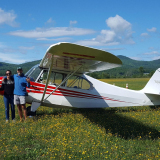
River flying is good fun, luckily not many wires up here, but there are other obstacles. About three weeks ago I was in this exact spot, maybe a little higher. Many times I would be down in the gorge, just a bit over the water. This day I had a friend and it was a bit bumpy, so I stayed higher. I had two Blackhawks fly under me and drop down to what looked like 50-100’, exactly where I would have been, flying the river. Cool, but definitely skeeved me out. Talked to a friend (on this site) that flys helicopters for the army. He thought a mid air was unlikely, but with no electronics they may not have seen me. Rotor wash could have been a issue though. I saw didn’t see them until they were only about a half mile out, quartering from behind me. Keep your eyes peeled.
Pete

Pete
Tue Nov 22, 2022 7:25 am
Re: River flying.
Pete, the advantage of your mountains is lower DA, but the disadvantage is less horizontal and vertical space available in the drainages. I really enjoy your pictures.
- contactflying offline
- Posts: 4972
- Joined: Wed Apr 03, 2013 7:36 pm
- Location: Aurora, Missouri 2H2
Download my free "https://tinyurl.com/Safe-Maneuvering" e-book.
Tue Nov 22, 2022 3:49 pm
Re: River flying.
contactflying wrote:Was the prop still turning and did it cut one wire?
Hay Jim,
I’m mostly certain the prop did not cut any of the wires. You’ll just have to wait for ‘ the rest of the story’, I’m still working on it
Zane,
You wouldn’t be the first to suspect I’m on the spectrum, I can’t say I haven’t always been that way but almost thirty years of the responsibility of aviation maintenance will turn the most sunny faced optimist into a total ass-hole, the only fucks I have to give are the ones I give; it’s been my signature and many lives on my shoulders.
I don’t have ten thousand hours, can’t say I haven’t done my share of really really stupid things in an aircraft, but I can say I’ve checked a lot of bush flying boxes many dream of, I’ve walked the walk, I’ve been on this forum for what, a decade, but less then fifty posts or so, I’m not here to waste anyones time, and I do enjoy sharing the flying dream I’ve been afforded on my life so far.
As a rule you run a tight ship and I admire you for it, herding an ego filled forum of pilots takes both tack and tenacity. I don’t doubt you deserve better and I’ll endeavor to make it so.
Rocket
- rocket offline
- Posts: 182
- Joined: Tue May 15, 2012 3:08 pm
- Location: Talkeetna
- FindMeSpot URL: http://share.findmespot.com/shared/face ... 9GZmP4hOO2
Fri Nov 25, 2022 9:51 am
Re: River flying.
mtv wrote:contactflying wrote:The heart of energy management is not about teasing the edge, it is about avoiding it with intelligent technique rather than with rules. Once in too deep, rules no longer protect. Good energy management can provide the extra above the edge that keeps us alive. We can rule that pilots do not turn level at steep enough bank that they stall. When it is either turn or CFIT because engine energy is all used up, intelligent technique which has been out there for years is all that will do. Many of us have described it in various languages, terms, an phrases but pilots continue to kill themselves as taught and ruled at the same rate.
Jim,
The accident above had NOTHING to do with energy management. They never saw the wires.
MTV
In fairness to Jim, I don't see anything in his post that implies that energy management would have somehow prevented that wire strike...
My experience flying helicopters NOE was that wires could be incredibly difficult to see. And that was when I was young, and still had 20/10 vision. (I'm at 20/20 with corrective lenses nowadays, yet still feel "blind" sometimes by comparison to my younger days.)
I'm not saying "don't do it." because I agree it can be incredibly fun and exhilarating. But please be careful. A good high-recon, followed by a mid-level recon – in both directions, by the way – is my minimum "insurance policy" before I would "fly the river" – any river... And remember, new wires can spring up literally overnight... I've had that experience right in the middle of a military reservation where everyone knew damn good and well that the entire area was used for low-level and NOE flight training. We even had written (signed) agreements with PG&E that they would NOT put up new electrical lines without notice. They just didn't care – they had a right-of-way, and those wires were going up, consequences be damned. Far too much trouble to notify the Army.

Fri Nov 25, 2022 12:02 pm
Re: River flying.
JP256 wrote:mtv wrote:contactflying wrote:The heart of energy management is not about teasing the edge, it is about avoiding it with intelligent technique rather than with rules. Once in too deep, rules no longer protect. Good energy management can provide the extra above the edge that keeps us alive. We can rule that pilots do not turn level at steep enough bank that they stall. When it is either turn or CFIT because engine energy is all used up, intelligent technique which has been out there for years is all that will do. Many of us have described it in various languages, terms, an phrases but pilots continue to kill themselves as taught and ruled at the same rate.
Jim,
The accident above had NOTHING to do with energy management. They never saw the wires.
MTV
In fairness to Jim, I don't see anything in his post that implies that energy management would have somehow prevented that wire strike...
My experience flying helicopters NOE was that wires could be incredibly difficult to see. And that was when I was young, and still had 20/10 vision. (I'm at 20/20 with corrective lenses nowadays, yet still feel "blind" sometimes by comparison to my younger days.)
I'm not saying "don't do it." because I agree it can be incredibly fun and exhilarating. But please be careful. A good high-recon, followed by a mid-level recon – in both directions, by the way – is my minimum "insurance policy" before I would "fly the river" – any river... And remember, new wires can spring up literally overnight... I've had that experience right in the middle of a military reservation where everyone knew damn good and well that the entire area was used for low-level and NOE flight training. We even had written (signed) agreements with PG&E that they would NOT put up new electrical lines without notice. They just didn't care – they had a right-of-way, and those wires were going up, consequences be damned. Far too much trouble to notify the Army.
I never intended ANY criticism of or connection between “energy management” and wire strikes. My point was, if you’re flying that low, over water courses, the risk isn’t hitting dirt….it’s hitting wires.
It’s easy to suggest that one should/does always do a high recon, but frankly, for most that’s just a theory, not a practice. I’ve spent a lot of flight time down low. Fortunately for me, the vast majority of that time has been where there are no human structures.
Fly low if you will, but there are a LOT of wires in most of the country.
MTV
Sat Nov 26, 2022 8:12 am
Re: River flying.
mtv wrote:I never intended ANY criticism of or connection between “energy management” and wire strikes. My point was, if you’re flying that low, over water courses, the risk isn’t hitting dirt….it’s hitting wires.
It’s easy to suggest that one should/does always do a high recon, but frankly, for most that’s just a theory, not a practice. I’ve spent a lot of flight time down low. Fortunately for me, the vast majority of that time has been where there are no human structures.
Fly low if you will, but there are a LOT of wires in most of the country.
MTV
Amen to that! And my apologies, since I seem to have misinterpreted your original reply.
My father-in-law (retired Air Force LTC Jack Benson) always said "Fly low and slow" – to which I always responded "...But watch for wires!"
DISPLAY OPTIONS
Who is online
Users browsing this forum: No registered users and 1 guest
Latest Features
-
-
Featured Bush Planes
As one of the undisputed legends of bush flying, the Cessna 180 hauls a…Read More -
Aircraft Ownership and Maintenance
9 modification mistakes aircraft owners make when trying to "bush out" their birds—why some…Read More -
Live to Tell
A Minnesota pilot is surprised to learn that the sudden asymmetric drag of an…Read More


Latest Knowledge Base
-
Destinations
Canada offers some of the most spectacular backcountry flying on the continent. Here's what you need to know before you go.Read More -
Safety and Survival
Hope that you never have to use your survival vest but knowing you have it and knowing how to use…Read More -
Destinations
A regional guide with ideas for winter camping destinations in California, Nevada, New Mexico, and Arizona.Read More -
Aircraft
Finding an affordable aircraft that can handle the backcountry for $80K or less? A challenge for sure, but with the…Read More