Rivet Nuts, Nut Plates and Tinnermans
Thu Jan 07, 2016 11:29 pm
Re: Rivet Nuts, Nut Plates and Tinnermans
For the floorboards and a few other places I am using Monadnock nuts. They're like a Tinnerman but they pop into your oversized hole with spring tension and stay there.
- Zzz offline


- Posts: 2855
- Joined: Fri Oct 08, 2004 11:09 pm
- Location: northern
- Aircraft: Swiveling desk chair
Half a century spent proving “it is better to be thought a fool than to open your mouth and remove all doubt.”
Fri Jan 08, 2016 2:11 am
Re: Rivet Nuts, Nut Plates and Tinnermans
Battson wrote:N-Jacko wrote:whee wrote:Loctite has some products that would greatly help secure a rivnut. Combine that with some anti-seize and they might be ok.
Yes, that has worked for me. Loctite, stainless screws, a whiff of Kroil on the thread, annual disassembly, and keyed rivnuts where spinning would really be a PITA.
PJ
Be aware, stainless screws in direct contact aluminium will cause galvanic corrosion. That starts under the paint and bubbles the paint in months, not years. Al and S/S are far enough apart on the galvanic scale that all you need is a little electrolyte (water will do, salty water is better) to get the process started. Cad or zinc plated hardware is better, if you can get it.
Clearly they are good in some applications, but I've learned a few lessons lately about building things to last.
That's an interesting point but I've never experienced or observed this alleged problem with stainless fasteners. We do get a bit of rain in Scotland and many of our beaches retain patches of salt water at low tide, so we have no shortage of electrolyte around our bushplanes.
If you still have doubts, next time you're near a marina, have a look at what kind of fasteners and fixings boatbuilders use in contact with their aluminium masts and spars...

Fri Jan 08, 2016 8:27 am
Fri Jan 08, 2016 10:13 am
Re: Rivet Nuts, Nut Plates and Tinnermans
There's a thing called a clip-nut-- like a tinnerman but made for use with machine screws instead of sheet metal screws.


Cessna Skywagon -- accept no substitute!
Fri Jan 08, 2016 11:25 am
Re: Rivet Nuts, Nut Plates and Tinnermans
I remember Battson started a thread about his experience with SS fasteners, maybe that was on the BH forum. I do find it interesting that my Aluminum boat uses all SS hardware. It does show some signs of corrosion around the bolts but it is a 40y/o boat.
The Monadnock nuts and clip nuts seem to be similar. Lots of good options I had never heard of. Thanks guys.
The Monadnock nuts and clip nuts seem to be similar. Lots of good options I had never heard of. Thanks guys.

Fri Jan 08, 2016 12:45 pm
Re: Rivet Nuts, Nut Plates and Tinnermans

You see this line of beavers? Every single external screw in every single one of these airplanes is SS. These airplanes are operated in salt water everyday.
We put a thin AL washer under the head as sort of a "sacrificial anode" which helps a great deal to protect the underlying structure.
Also, there are no rivnuts (ok, very few anyways) left in these airframes. Rivnuts suck.
Fri Jan 08, 2016 1:08 pm
Re: Rivet Nuts, Nut Plates and Tinnermans
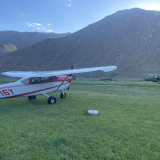
Off topic, but that's a great picture!
- CamTom12 offline

- Posts: 3705
- Joined: Sun Jul 08, 2012 1:08 pm
- Location: Huntsville
- FindMeSpot URL: https://share.delorme.com/camtom12
- Aircraft: Ruppe Racer
Experimental Pacer
home hand jam "wizard"
Sun Jan 10, 2016 12:56 am
Re: Rivet Nuts, Nut Plates and Tinnermans
N-Jacko wrote:That's an interesting point but I've never experienced or observed this alleged problem with stainless fasteners. We do get a bit of rain in Scotland and many of our beaches retain patches of salt water at low tide, so we have no shortage of electrolyte around our bushplanes.
If you still have doubts, next time you're near a marina, have a look at what kind of fasteners and fixings boatbuilders use in contact with their aluminium masts and spars...
Doubts isn't the right word to use...

whee wrote:I do find it interesting that my Aluminum boat uses all SS hardware. It does show some signs of corrosion around the bolts but it is a 40y/o boat.
OK - getting off topic, but - this is how I understand it, hopefully I am not telling you things you already know...
Alloy boats are usually made from a different alloy of Aluminium than aircraft are. Like 5052 for example, a marine grade designed for that application. Al 5052 doesn't corrode easily, in fact it takes extreme circumstances. This includes galvanic corrosion, as it's got a lower electrical potential (speaking loosely, to save time) with most of the common metals used on boats, so any galvanic cell is very weak. Pure aluminium doesn't form a strong galvanic cell with stainless steel either, purely from memory of the Galvanic Series, the difference it their electrical potential is too small.
Moreover, sea going boats - and probably that line of Beavers too - also have a sacrificial anode installed, in most cases. This anode is usual a piece of zinc attached under the waterline. The zinc anode reverses the normal flow of current between dissimilar metals by forming a stronger electric cell and corroding itself instead, if my basic understanding of this concept and my memory serves me... That prevents galvanic corrosion all over the place (provided there is an electrical connection), not just where the anode attaches.
Aircraft alloys are more prone to galvanic corrosion if not actively prevented, either by a grease, paint, washer, etc. to separate the metals with a significant difference in Nobility. Aircraft alloys tend to have a higher electrical potential with many stainless steels, so are prone to galvanic corrosion when combined with S/S. This is a compromise made during materials selection to get a better strength to weight ratio from the Aluminium.
With our plane, we've had lots of little instances of galvanic corrosion because I didn't take steps to prevent it. Especially those areas which water gets upon regularly. Aircraft with grease or paint separating the metals may see no such issue. It has caused me trouble.
Like I said, in certain conditions, galvanic corrosion is the lesser of two evils. Seaplanes was the obvious example I had in mind. Just like stainless steel cable, stainless fasteners and cable have their place in the world because they resist corrosion in and of themselves. However, they aren't a perfect solution every time, and using them is a compromise sometimes. On a related note, we also had with stainless steel cable wearing out prematurely. Galv cable is apparently better for most aircraft it seems, except seaplanes... which are a special case, per AC 43.13-1B - Acceptable Methods.
The other main reason to avoid using stainless fasteners (unless you have to) is thread galling, which they are well known for.

But there are many grades of S/S and Al, a LOT more than I know, and I am not an expert, so I could have some of this wrong.

DISPLAY OPTIONS
Who is online
Users browsing this forum: No registered users and 0 guests
Latest Features
-
Live to Tell
A Minnesota pilot is surprised to learn that the sudden asymmetric drag of an out-of-rig ski can…Read More -
Creators
Working in some of the Yukon's most beautiful and remote environments, photographer Simon Blakesley captures aircraft in…Read More -
Aircraft Ownership and Maintenance
Upgrading to big tires can make a huge difference in backcountry performance, but with those gains come…Read More -
Tales from Yesteryear
In this tale from bush flying yesteryear, Don Cogger signs up to help Atlee Dodge Jr recovery…Read More


Latest Knowledge Base
-
Destinations
A regional guide with ideas for winter camping destinations in California, Nevada, New Mexico, and Arizona.Read More -
Aircraft
Finding an affordable aircraft that can handle the backcountry for $80K or less? A challenge for sure, but with the…Read More -
Aircraft
01.29.2018 - Zane - Updated tire diameter graphic to add 8.50x10 Guide to tires for use in the backcountry and off-airport landing…Read More -
Pilots
12.22.2013 - Initial article format Operating aircraft on skis and negotiating a snow-covered landscape is an entirely unique skillset and environment.…Read More


