Thanks Gump for that. We learned before the Practical Test Standard came into being in the 70s. The PTS is, because of complete dependence on numbers from gauges, a basic instrument standard. There should be a contact test, like our instructors saw that we would be prepared for, and an instrument test that we got later. The two just don't mix well. Integrated contact and instrument became popular in the 70s as well.
Instructors have been intimidated into thinking the PTS is regulatory. It is a test standard, not a set of regulations. Instructors have been intimidated, by the PTS and the definition of maneuvering flight, into no longer teaching NOE flight, as our instructors taught us. In those old airplanes, in the mountains, all flight was NOE. There was insufficient power to be anywhere else.
You are correct that scud running is an art, not a science. The techniques that will keep us alive are not describable in terms of numbers on gauges. It is not all airspeed and altitude. We are low and we may need to slow down, by energy management or throttle change or flaps or a combination, to reduce our radius of turn. And we need to always know where the wind is from and which way is down hill. We need make use of both wind management and gravity thrust of altitude and thermals and ridge lift and ground effect. Too few pilots understand that being on top of a hill at 10' AGL is fine, if we are willing to fly down hill.
We are old and will be out of here before it goes all drone. I have taught a lot of kids and a lot are learning on their own. There will always be good pilots, but it is getting harder for them to learn without losing their paper.
Scud run mountain terrain
Mon Apr 13, 2015 6:11 pm
- contactflying offline
- Posts: 4972
- Joined: Wed Apr 03, 2013 7:36 pm
- Location: Aurora, Missouri 2H2
Download my free "https://tinyurl.com/Safe-Maneuvering" e-book.
Mon Apr 13, 2015 9:21 pm
Re: Scud run mountain terrain
all great points gump and others...just now getting my commercial ticket soon, i have since gained a lot more respect for my pair of instructors...my parttime work will be in the idaho back-country which i grew up in...and still i have days i feel totally like a beginner.....which i am.....really...!
guys like gump are diamonds of information and i really appreciate their info...
guys like gump are diamonds of information and i really appreciate their info...

jomac
Mon Apr 13, 2015 9:31 pm
Re: Scud run mountain terrain
Gump,
I don't teach scud running to students. I tell students that in general in flying. I understand that the way I wrote it might easily be misinterpreted.
I'm pretty strict with students about weather minimums. I just thought the phrase and mentality was especially true when pushing the limits.
D
I don't teach scud running to students. I tell students that in general in flying. I understand that the way I wrote it might easily be misinterpreted.
I'm pretty strict with students about weather minimums. I just thought the phrase and mentality was especially true when pushing the limits.
D
- littlewheelinback offline
- Posts: 331
- Joined: Mon Nov 29, 2010 8:03 pm
- Location: Bellingham, WA
Mon Apr 13, 2015 9:41 pm
Re: Scud run mountain terrain
Gump,
I am referring to primary students. If a more experienced pilot came to me, say having just moved to the PNW (like I did a few years ago) and was unused to the standards of scud in this area, I would be willing to work with them on increasing comfort and skill in this kind of weather. Primary students I really encourage (more like demand) a high standard of weather conditions for flight. They just don't have the skills to take those risks. I am also liable for what they do. I can't hold their hand but I can kick their ass. The last kid I endorsed for a PPL was only 17. He did well and will make a good pilot. He is going to get an aviation degree and make it his career. He has plenty of time to learn. I think getting an IFR rating is well worth it.
D
I am referring to primary students. If a more experienced pilot came to me, say having just moved to the PNW (like I did a few years ago) and was unused to the standards of scud in this area, I would be willing to work with them on increasing comfort and skill in this kind of weather. Primary students I really encourage (more like demand) a high standard of weather conditions for flight. They just don't have the skills to take those risks. I am also liable for what they do. I can't hold their hand but I can kick their ass. The last kid I endorsed for a PPL was only 17. He did well and will make a good pilot. He is going to get an aviation degree and make it his career. He has plenty of time to learn. I think getting an IFR rating is well worth it.
D
- littlewheelinback offline
- Posts: 331
- Joined: Mon Nov 29, 2010 8:03 pm
- Location: Bellingham, WA
Mon Apr 13, 2015 9:43 pm
Re: Scud run mountain terrain
I also am one who believes spin training should be mandatory
- littlewheelinback offline
- Posts: 331
- Joined: Mon Nov 29, 2010 8:03 pm
- Location: Bellingham, WA
Tue Apr 14, 2015 8:00 am
Re: Scud run mountain terrain
littlewheelinback,
You are entirely correct that IMC and scud can more safely be handled utilizing the ATC system under IFR. However, some work like bush and pipeline patrol requires contact flying. I was an instrument as well as contact instructor, both military and civilian, but I have seen fifty years of degradation of contact flying skills. Yes, our safety record has improved when number of incidents and accidents per thousand hours are considered. But, the number of fatalities per accident has gone south.
Gump and I were trained completely in contact flying as primary students. Everybody was back then. We appreciated it. I will tell no primary student, "you're too dumb to learn this, and if you go out and learn on your own you have made your bed."
Enough griping. It is not the fault of instructors. The system almost forces its instructors to teach only one integrated instrument system. The PTS for Private and Commercial are instrument standards. How can they not be when even wind management (ground reference maneuvers) and what used to be an artistic lazy eight are head in the cockpit numbers on gauges dependent?
Gump, MTV, Cary and I are going to die. Young instructors need to talk to old guys who flew and taught before there was a integrated instrument "box" to be inside. Primary students are not incapable of contact flying or safe maneuvering flight, if well taught. It ain't fair to refuse to teach them and then cite them when they are fatalities, like the FAA does.
Contact
You are entirely correct that IMC and scud can more safely be handled utilizing the ATC system under IFR. However, some work like bush and pipeline patrol requires contact flying. I was an instrument as well as contact instructor, both military and civilian, but I have seen fifty years of degradation of contact flying skills. Yes, our safety record has improved when number of incidents and accidents per thousand hours are considered. But, the number of fatalities per accident has gone south.
Gump and I were trained completely in contact flying as primary students. Everybody was back then. We appreciated it. I will tell no primary student, "you're too dumb to learn this, and if you go out and learn on your own you have made your bed."
Enough griping. It is not the fault of instructors. The system almost forces its instructors to teach only one integrated instrument system. The PTS for Private and Commercial are instrument standards. How can they not be when even wind management (ground reference maneuvers) and what used to be an artistic lazy eight are head in the cockpit numbers on gauges dependent?
Gump, MTV, Cary and I are going to die. Young instructors need to talk to old guys who flew and taught before there was a integrated instrument "box" to be inside. Primary students are not incapable of contact flying or safe maneuvering flight, if well taught. It ain't fair to refuse to teach them and then cite them when they are fatalities, like the FAA does.
Contact
- contactflying offline
- Posts: 4972
- Joined: Wed Apr 03, 2013 7:36 pm
- Location: Aurora, Missouri 2H2
Download my free "https://tinyurl.com/Safe-Maneuvering" e-book.
Tue Apr 14, 2015 8:34 am
Re: Scud run mountain terrain
I am not an expert on instructional matters, but from my own flight instruction experience, I can understand where you are coming from.
My first instructor taught the standards needed to pass the flight test, period. I could meet the standards, but felt very uncomfortable with the plane because I was unprepared for anything outside of the required maneuvers for the private pilot exam. Fortunately for me and my future passengers, circumstances forced me to change instructors to a 75 y/o gentlemen that had flown the Alaska bush his whole flying career, When he got done with me, I could fly that plane with confidence and I understood how to problem solve.
A world of difference.
My first instructor taught the standards needed to pass the flight test, period. I could meet the standards, but felt very uncomfortable with the plane because I was unprepared for anything outside of the required maneuvers for the private pilot exam. Fortunately for me and my future passengers, circumstances forced me to change instructors to a 75 y/o gentlemen that had flown the Alaska bush his whole flying career, When he got done with me, I could fly that plane with confidence and I understood how to problem solve.
A world of difference.
Tue Apr 14, 2015 8:36 am
Re: Scud run mountain terrain
I just think scud running/NOE is an important aspect of flying light aircraft that every pilot should be exposed to by someone proficient at it. Kind of like the minimal instrument time for a student private pilot which teaches the 180 turn out of IMC conditions. Even if it's taught stricly as a survival tool to get out of a scud situation and land ASAP.
Flying/navigating at 100 ft AGL under a low cloud deck with a mile or or two vis usually has a whole lot better outcome than a non-instrument pilot afraid of dropping below 1000 AGL, flying into those same clouds, and 90 seconds later popping out the bottom in a spatial disorientation induced spiral.
And there's the practical aspects. M6RV6 just posted a great little story on the Newport to Ketchikan thread about trying to climb out of Prince Rupert. No VFR on top or IFR due to the winds/wx, but because he has the training and experience, he had a safe, beautiful run up the Skeena River to Smithers at 200 ft AGL. Magical flying in a magical place.
Gump
Flying/navigating at 100 ft AGL under a low cloud deck with a mile or or two vis usually has a whole lot better outcome than a non-instrument pilot afraid of dropping below 1000 AGL, flying into those same clouds, and 90 seconds later popping out the bottom in a spatial disorientation induced spiral.
And there's the practical aspects. M6RV6 just posted a great little story on the Newport to Ketchikan thread about trying to climb out of Prince Rupert. No VFR on top or IFR due to the winds/wx, but because he has the training and experience, he had a safe, beautiful run up the Skeena River to Smithers at 200 ft AGL. Magical flying in a magical place.
Gump
Tue Apr 14, 2015 8:54 am
Re: Scud run mountain terrain
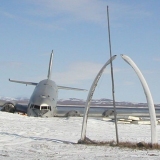
We can see stuff better down low. I would rather see and miss illegally than not see and hit legally. Just remember to go over only what you can't get around. We don't know how high those towers, sticking up into the ceiling, go.
- contactflying offline
- Posts: 4972
- Joined: Wed Apr 03, 2013 7:36 pm
- Location: Aurora, Missouri 2H2
Download my free "https://tinyurl.com/Safe-Maneuvering" e-book.
Tue Apr 14, 2015 6:40 pm
Re: Scud run mountain terrain
I teach students (as well as I can) to fly an airplane, not to pass a test. Passing a test is a result of knowing how to fly. If I am training a primary student he has to go under the hood without warning (not foggles, don't get me started about foggles) Climb out at vx, avoid terrain, contact a local radar facility, be vectored to an ILS and shoot it to minimums with a basic survival margin of error. This can take more than the 3 hours mandated by the FAA, but for a newly minted PP flying around here I can do no less for them. I make sure that we have flown VFR in relatively marginal conditions (although my personal minimums might be higher than some other pilots) so that they have actually seen it and know what less than 2 miles visibility looks like, or 500' ceilings. For an inexperienced pilot or someone not familiar with the PNW these conditions are intimidating and they should be. I don't really want to get into a back and forth, but there is a difference between a pilot who as thousands of hours and lots of time, shall we say, expanding their scudding skills and a pilot with 75 hours, a lot of which has been spent just learning how to land in a strong crosswind. I am betting that all of you very high time guys have had close calls in scud and have lost friends in it. I try to insure as much as possible that a guy who trains with me will proceed in his gaining flight experience in a slow, logical and cautious manner. Part of that is having pretty high personal minimums for weather in the early part of his flying. Getting a PPL is a license to learn and not much more. I want my students to have the time to learn.
- littlewheelinback offline
- Posts: 331
- Joined: Mon Nov 29, 2010 8:03 pm
- Location: Bellingham, WA
Tue Apr 14, 2015 7:28 pm
Re: Scud run mountain terrain
One of the reasons I never was, and never wanted to be, a CFI.
I'm glad some of you guys are willing to do it.
Gump
I'm glad some of you guys are willing to do it.
Gump
Tue Apr 14, 2015 8:42 pm
Re: Scud run mountain terrain
Gump,
I sometimes question flight instructing as a rewarding flying job. It is not really the kind of flying I would choose to do if it was reasonable for me to travel a lot. Several years ago I was offered a job by Zemex, a Swiss company that mostly flies in North Africa serving oil companies. They have Twin Otters and Porters. 6 weeks on and 6 weeks off, travel home paid and pretty decent pay on top. That was pretty tempting. But in my middle age I find myself the father of a young child and will not be an absent father. So I flight instruct and some summers I fly VFR 135 in the islands. I try to do more than just check the boxes while training students and sometimes I feel that, being more experienced than many CFI's I have something to offer. Other times I feel like an idiot. There are a lot of boxes to check, too. It does keep me in the air (not so much in the winter) and means I don't have to pay out of pocket to fly. Being a retired firefighter means the crap pay isn't that big a deal. Sometimes it would be nice not to be at the bottom rung of status among professional pilots...oh well.
Daryl
I sometimes question flight instructing as a rewarding flying job. It is not really the kind of flying I would choose to do if it was reasonable for me to travel a lot. Several years ago I was offered a job by Zemex, a Swiss company that mostly flies in North Africa serving oil companies. They have Twin Otters and Porters. 6 weeks on and 6 weeks off, travel home paid and pretty decent pay on top. That was pretty tempting. But in my middle age I find myself the father of a young child and will not be an absent father. So I flight instruct and some summers I fly VFR 135 in the islands. I try to do more than just check the boxes while training students and sometimes I feel that, being more experienced than many CFI's I have something to offer. Other times I feel like an idiot. There are a lot of boxes to check, too. It does keep me in the air (not so much in the winter) and means I don't have to pay out of pocket to fly. Being a retired firefighter means the crap pay isn't that big a deal. Sometimes it would be nice not to be at the bottom rung of status among professional pilots...oh well.
Daryl
- littlewheelinback offline
- Posts: 331
- Joined: Mon Nov 29, 2010 8:03 pm
- Location: Bellingham, WA
Tue Apr 14, 2015 8:55 pm
Re: Scud run mountain terrain
GumpAir wrote:I just think scud running/NOE is an important aspect of flying light aircraft that every pilot should be exposed to by someone proficient at it. Kind of like the minimal instrument time for a student private pilot which teaches the 180 turn out of IMC conditions. Even if it's taught stricly as a survival tool to get out of a scud situation and land ASAP.
Flying/navigating at 100 ft AGL under a low cloud deck with a mile or or two vis usually has a whole lot better outcome than a non-instrument pilot afraid of dropping below 1000 AGL, flying into those same clouds, and 90 seconds later popping out the bottom in a spatial disorientation induced spiral.
And there's the practical aspects. M6RV6 just posted a great little story on the Newport to Ketchikan thread about trying to climb out of Prince Rupert. No VFR on top or IFR due to the winds/wx, but because he has the training and experience, he had a safe, beautiful run up the Skeena River to Smithers at 200 ft AGL. Magical flying in a magical place.
Gump
This would be a good time to point out that the 180 turn out of IMC taught to vfr pilots is a standard rate turn usually shallow enough not to set off your inner ear sensory. Turning for a minute in a narrow valley may splatter you on the mountainside, and a tighter turn may miss the mountain but trick your head into thinking you're turning when you roll level, which starts the clock on the 178 second average life expectancy of those non rated pilots that wander into IMC . Navy pilots aren't taught the turn btw, since it's a fast track to spatial disorientation if not done perfectly.
I can appreciate scud training, but it seems to me being able to recover from unusual attitudes under the hood should be the first part of it if one is going to be encouraged to dabble near places that might suck them in.
There's a reason why 70% of weather related fatalities are vmc into imc. 90% involve low ceilings or visibility, and the typical decision height on an instrument approach is 200'
- Nosedragger offline
- Posts: 975
- Joined: Fri Dec 31, 2010 6:40 am
- Location: SE Idaho
- FindMeSpot URL: http://share.findmespot.com/shared/face ... ACzcbTgqlT
Wed Apr 15, 2015 1:30 am
Re: Scud run mountain terrain
Nosedragger wrote:GumpAir wrote:I just think scud running/NOE is an important aspect of flying light aircraft that every pilot should be exposed to by someone proficient at it. Kind of like the minimal instrument time for a student private pilot which teaches the 180 turn out of IMC conditions. Even if it's taught stricly as a survival tool to get out of a scud situation and land ASAP.
Flying/navigating at 100 ft AGL under a low cloud deck with a mile or or two vis usually has a whole lot better outcome than a non-instrument pilot afraid of dropping below 1000 AGL, flying into those same clouds, and 90 seconds later popping out the bottom in a spatial disorientation induced spiral.
And there's the practical aspects. M6RV6 just posted a great little story on the Newport to Ketchikan thread about trying to climb out of Prince Rupert. No VFR on top or IFR due to the winds/wx, but because he has the training and experience, he had a safe, beautiful run up the Skeena River to Smithers at 200 ft AGL. Magical flying in a magical place.
Gump
This would be a good time to point out that the 180 turn out of IMC taught to vfr pilots is a standard rate turn usually shallow enough not to set off your inner ear sensory. Turning for a minute in a narrow valley may splatter you on the mountainside, and a tighter turn may miss the mountain but trick your head into thinking you're turning when you roll level, which starts the clock on the 178 second average life expectancy of those non rated pilots that wander into IMC . Navy pilots aren't taught the turn btw, since it's a fast track to spatial disorientation if not done perfectly.
I can appreciate scud training, but it seems to me being able to recover from unusual attitudes under the hood should be the first part of it if one is going to be encouraged to dabble near places that might suck them in.
There's a reason why 70% of weather related fatalities are vmc into imc. 90% involve low ceilings or visibility, and the typical decision height on an instrument approach is 200'
Intersting info Nosedragger. I know from experience that when I fly into a cloud my brain doesn't wait more then about 2 seconds to tell me that I need to descend and turn right. It's fun y how it affects everyone differently, but I know for me that when I see IMC coming, I get on the Guage before I'm in it. Otherwise I have a heck of a time keeping it level.

Wed Apr 15, 2015 7:31 am
Re: Scud run mountain terrain
I have found it much safer to completely separate the IMC world from the VMC world. Scud running in uneven terrain need be, for safety, completely VMC. The Navy wings level climb is just the ticket, over water. The canyon turn is a VMC, not a IMC, maneuver. The turn has to be at whatever bank is necessary to reduce the radius of turn enough to miss the other ridge. That can't be done with a computer and it can't be done IMC.
The 180 degree (heading) turn to return to VMC is a IMC maneuver and completely different from the canyon turnaround. The best way for a pilot, who has not learned or kept up with IMC flight, to turn around is with rudder only, as Cessna suggested in their old airplane manuals before POH lawyers put them in the POH box. Put your hands in your lap and rudder turn at a very shallow bank using the turn and bank instrument. Don't worry about a little altitude loss.
If you want to learn how to get back out of marginal conditions, or scud, get with someone experienced in it. Note that he doesn't even care if there are instruments in the airplane. He ain't going there. He knows its the transition that kills you. You will find that you can see much better down on the deck and that scary thing that stick up are much more visible from down there. They would be much scarier just at or just below your altitude. And because you are in the maneuvering flight world, maneuvering quickly and at steep banks may be necessary to miss things. Maneuvering here is all turn to target, not turn to heading. Finally, if things get really uncomfortable, you can just land somewhere. It is much easier to land when you can see the ground.
The 180 degree (heading) turn to return to VMC is a IMC maneuver and completely different from the canyon turnaround. The best way for a pilot, who has not learned or kept up with IMC flight, to turn around is with rudder only, as Cessna suggested in their old airplane manuals before POH lawyers put them in the POH box. Put your hands in your lap and rudder turn at a very shallow bank using the turn and bank instrument. Don't worry about a little altitude loss.
If you want to learn how to get back out of marginal conditions, or scud, get with someone experienced in it. Note that he doesn't even care if there are instruments in the airplane. He ain't going there. He knows its the transition that kills you. You will find that you can see much better down on the deck and that scary thing that stick up are much more visible from down there. They would be much scarier just at or just below your altitude. And because you are in the maneuvering flight world, maneuvering quickly and at steep banks may be necessary to miss things. Maneuvering here is all turn to target, not turn to heading. Finally, if things get really uncomfortable, you can just land somewhere. It is much easier to land when you can see the ground.
- contactflying offline
- Posts: 4972
- Joined: Wed Apr 03, 2013 7:36 pm
- Location: Aurora, Missouri 2H2
Download my free "https://tinyurl.com/Safe-Maneuvering" e-book.
Wed Apr 15, 2015 7:48 am
Re: Scud run mountain terrain
I can appreciate scud training, but it seems to me being able to recover from unusual attitudes under the hood should be the first part of it if one is going to be encouraged to dabble near places that might suck them in.
Any increase in stick and rudder training for new students would be a good thing, including unusual attitude recovery. And I also think students need to be trained in actual spin recovery, actual (not hood) IMC flight including punching in/out of layers to see the transition, and flight close to the ground with low vis and ceilings.
Each skill relates to the other, but they're still apples and oranges different. Scud/NOE instruction needs to be way more in depth than "do a standard rate 180 to leave the area." It's demonstrating vis close to the clouds, vis close to the ground. When to really drop to the deck, when to go IMC as an escape, when to admit you're hosed if you don't land now.
When I worked in Barrow AK, as long as I was at least 300 ft AGL I could fly for hours IMC in any direction perfectly safe, and I did. On the other hand, when I fly from my property on Kimsquit Bay to Bella Coola BC on the deck at 100 feet under a hard ceiling, I keep the vertical rock on my left wing going to town, rock on right wing flying home, and I don't dare lose ground contact. Without moving map GPS, death would be in just a few seconds in IMC. Ceiling drops, I drop, and there have been a few times 100 feet was way above me.
Stuff happens to people who fly, especially those who fly in big areas with little wx reporting. Would training encourage the inexperienced to "dabble" where they don't belong? Maybe, just like kids might be tempted to do spins or anything else an airplane can do that's fun. But I think more might benefit from a few more items in their ever growing bag of tricks if they ever get caught in a bad situation.
Gump
Wed Apr 15, 2015 8:47 am
Re: Scud run mountain terrain
The moody outfit does a lot of training in the backcountry. I ran across one of the old science shows and thought it was cool. It starts with a radar approach into LA , goes into the science behind instrument flight , then takes you on an ifr flight that ends landing a twin in the desert next to the Lady b good crash that I had never heard of before. The pertinent part for this thread starts at 11 minutes and demonstrates how the inner ear works.
Last edited by Nosedragger on Wed Apr 15, 2015 12:48 pm, edited 2 times in total.
- Nosedragger offline
- Posts: 975
- Joined: Fri Dec 31, 2010 6:40 am
- Location: SE Idaho
- FindMeSpot URL: http://share.findmespot.com/shared/face ... ACzcbTgqlT
Wed Apr 15, 2015 11:57 am
Re: Scud run mountain terrain
Nosedragger,
I got an error message on the video. I don't have the best computer.
The Lady Be Good was a B-24 flying out of N. Africa in WWII. It did not return from a raid over Naples and was assumed lost in the Mediterranean. I saw a Walter Cronkite "You Were There" special on it in the 50s when they found it miles into Libyan desert in almost flyable condition. The coffee in the thermoses was still good. The crew, which had bailed out, were eventually recovered.
The golf architect who I started flying with, Press Maxwell, was a B-24 pilot in the same Group.
Contact
I got an error message on the video. I don't have the best computer.
The Lady Be Good was a B-24 flying out of N. Africa in WWII. It did not return from a raid over Naples and was assumed lost in the Mediterranean. I saw a Walter Cronkite "You Were There" special on it in the 50s when they found it miles into Libyan desert in almost flyable condition. The coffee in the thermoses was still good. The crew, which had bailed out, were eventually recovered.
The golf architect who I started flying with, Press Maxwell, was a B-24 pilot in the same Group.
Contact
- contactflying offline
- Posts: 4972
- Joined: Wed Apr 03, 2013 7:36 pm
- Location: Aurora, Missouri 2H2
Download my free "https://tinyurl.com/Safe-Maneuvering" e-book.
Wed Apr 15, 2015 12:28 pm
Re: Scud run mountain terrain
The aural Automatic Direction Finder, same as Press had in his C-180 in the 50s when I started flying with him, did not point to the station. You only knew, by listing to a morse code A or N or silence, that you were lined up. To know you were headed to the station, you had to turn the volume down. Going away from the station, you would lose the signal. Going toward the station, the signal would get stronger. So you used dead reconning until about twenty miles out where you should pick up an continuous A (.-) or N (-.). The you turned the set down until you lost signal or it got stronger. Then you turned, I can't remember which way if on the A side or N side, until you reached the cone of silence between the A and N. Now you have to get down as the signal strengthens and before it begins to weaken. You had to make small rudder turns, like the bombardier with the rudder trim, to dynamically pick up A, then N, then A, then N, etc. to dynamically stay on course and get information on distance by volume. If you stayed lined up perfectly in the cone of silence, not really possible, you would never hear the decrease in volume that would indicate station passage.
The Lady Be Good had unusual tailwind problems, as reported by those who made it back to base. They probably just didn't believe the volume was decreasing until it was too late. When they lost signal they probably thought they were over the Med and jumped because of low fuel. B-24s were thought to not ditch well.
The Lady Be Good had unusual tailwind problems, as reported by those who made it back to base. They probably just didn't believe the volume was decreasing until it was too late. When they lost signal they probably thought they were over the Med and jumped because of low fuel. B-24s were thought to not ditch well.
- contactflying offline
- Posts: 4972
- Joined: Wed Apr 03, 2013 7:36 pm
- Location: Aurora, Missouri 2H2
Download my free "https://tinyurl.com/Safe-Maneuvering" e-book.
Wed Apr 15, 2015 1:00 pm
Re: Scud run mountain terrain
As I recall, there was still a LF/MF radio range in operation in Alaska when I first got up there though I never flew anything equipped to use it. We did however use the NDB airways almost exclusively, and pretty much were dependent on the ADF for all our IFR enroute and village approaches.
GPS showed up and we never looked back, though I still use the ADF to point my way home just because it's a familiar old friend and I understand it.
Gump
GPS showed up and we never looked back, though I still use the ADF to point my way home just because it's a familiar old friend and I understand it.
Gump
DISPLAY OPTIONS
Who is online
Users browsing this forum: No registered users and 7 guests
Latest Features
-
Live to Tell
A Minnesota pilot is surprised to learn that the sudden asymmetric drag of an out-of-rig ski can…Read More -
Creators
Working in some of the Yukon's most beautiful and remote environments, photographer Simon Blakesley captures aircraft in…Read More -
Aircraft Ownership and Maintenance
Upgrading to big tires can make a huge difference in backcountry performance, but with those gains come…Read More -
Tales from Yesteryear
In this tale from bush flying yesteryear, Don Cogger signs up to help Atlee Dodge Jr recovery…Read More


Latest Knowledge Base
-
Destinations
A regional guide with ideas for winter camping destinations in California, Nevada, New Mexico, and Arizona.Read More -
Aircraft
Finding an affordable aircraft that can handle the backcountry for $80K or less? A challenge for sure, but with the…Read More -
Aircraft
01.29.2018 - Zane - Updated tire diameter graphic to add 8.50x10 Guide to tires for use in the backcountry and off-airport landing…Read More -
Pilots
12.22.2013 - Initial article format Operating aircraft on skis and negotiating a snow-covered landscape is an entirely unique skillset and environment.…Read More


