--Split from "new 170 driver in maryland" thread -Zane
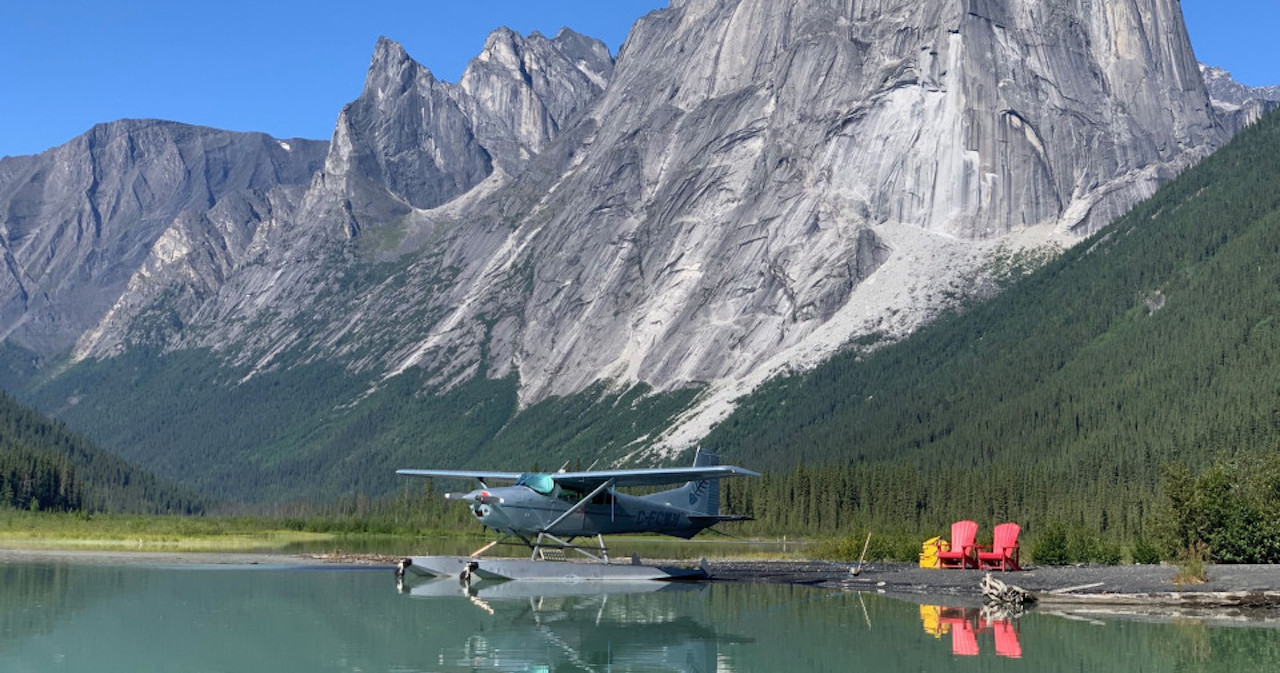
Hi guys been out of the loop for while, but Ive been trying to fly this 170. Can anyone say bounce? Having lots of fun though and all the nosewheelers just watch with wonder at why anybody would put themselves through this kind of stress. Theres just something about that huge tail and small wheel in the back that says adventure! Thanks for the welcome and once I get some more time in this thing my instructor and I are going to find the grass strips here in Md. So I'll post the names of the good ones we find.
Tailwheel landing tribulations
Wed Jan 11, 2006 6:42 am
Wed Jan 11, 2006 1:57 pm
Nicely put, Jr. I have kind of the opposite deal, my 3-points are much better than my wheel landings. My tw instructor didn't teach me the trim trick though, he just mainly had me do the same setup as a 3-point but start pushing when the mains touch. At that point, everything goes nuts. I feel like the left side of the runway there are gnomes with ropes and grappling hooks who have snared me and are all pulling on me as I gravitate that direction. Then reduction in airspeed and rudder authority really starts playing havoc with my directional control.
One thing I really want to practice next time out is hard braking. You see Greg and Loni in BR&LP and those guys are on the brakes hard with the tail up. Me, I would probably endo. I just don't have a good feeling for how hard I can brake and for how long before the aerodynamic braking and downforce on the tail peter out. I guess when the tail stands up is a good indicator, but I would let off at the first sign of that for sure and probably not get the best full effort braking.
One thing I really want to practice next time out is hard braking. You see Greg and Loni in BR&LP and those guys are on the brakes hard with the tail up. Me, I would probably endo. I just don't have a good feeling for how hard I can brake and for how long before the aerodynamic braking and downforce on the tail peter out. I guess when the tail stands up is a good indicator, but I would let off at the first sign of that for sure and probably not get the best full effort braking.

Wed Jan 11, 2006 3:41 pm
Sounds like how my Dad tought me to land his Cub, throttle down until you get close then up to about 1000 RPM. Makes for a much smoother landing though I still had some spectacular bounces with him chuckling in the back.
I knew I was checked out the day I took off without incident and I was startled by the sight of the rear stick being waved over my shoulder. It felt good!
I knew I was checked out the day I took off without incident and I was startled by the sight of the rear stick being waved over my shoulder. It felt good!
Wed Jan 11, 2006 6:53 pm
Zane, I don't feel you have to push on the stick, just relax back pressure. Setting the trim a hair nose-down like JR sez does help. The one exception is when you bounce a wheeler and it wanst to start porposing- you can salvage it by using forward stick to "pin it" on the runway.
A trick on applying brakes while up on the mains: you hold the tail up with brakes, and keep it from getting too high with back stick. Be careful, it is possible to nose over. The more tail-heavy the airplane is, the better for doing this.
There's a good essay on wheel landing on the skywagons.org wite, written about the techniques taught by Mission Aviation Fellowship. I use some of those techniques, but not all. I don't thinkthat there's only one "right" way to do things, but there is a way (or ways) that're right for you-- whatever works and you feel comfortable with.
I think a pilot should be competent in both 3-pointers and wheelers, as they both have their uses. And practice makes perfect.
Eric
A trick on applying brakes while up on the mains: you hold the tail up with brakes, and keep it from getting too high with back stick. Be careful, it is possible to nose over. The more tail-heavy the airplane is, the better for doing this.
There's a good essay on wheel landing on the skywagons.org wite, written about the techniques taught by Mission Aviation Fellowship. I use some of those techniques, but not all. I don't thinkthat there's only one "right" way to do things, but there is a way (or ways) that're right for you-- whatever works and you feel comfortable with.
I think a pilot should be competent in both 3-pointers and wheelers, as they both have their uses. And practice makes perfect.
Eric

Mon Mar 20, 2006 12:56 am
I had quite a time with my C180 when I first bought it, but then I learned the secret of life. An old timer told me, "If the stick isn't back as far as it can possibly go, and held there firmly, you will not get a good three pointer"
I tried it and by golly, it works!!
Cheers, Pete
P.S. I'm an old timer now myself?!?
I tried it and by golly, it works!!
Cheers, Pete
P.S. I'm an old timer now myself?!?
Building an RV-8 and dreaming of a Super Cub with big, fat, tires
Mon Mar 20, 2006 1:43 pm
zane wrote:Nicely put, Jr. I have kind of the opposite deal, my 3-points are much better than my wheel landings. My tw instructor didn't teach me the trim trick though, he just mainly had me do the same setup as a 3-point but start pushing when the mains touch. At that point, everything goes nuts. I feel like the left side of the runway there are gnomes with ropes and grappling hooks who have snared me and are all pulling on me as I gravitate that direction. Then reduction in airspeed and rudder authority really starts playing havoc with my directional control.
Zane,
On takeoff as you apply power and lift the tail, the nose of your aircraft will have a tendency to start turning left due to p-factor/torque. On wheel landings the opposite is true as you decrease power your aircraft will have a tendency to turn right. If you anticipate this tendency it will make a world of difference in keeping it straight. Keeping the slack out of both rudder pedals will also help you to make little corrections instead of big ones leading to over-correcting.
However you decide to trim, the key to a perfect wheel landing is in the smooth transition into the flair and power mangement. A lot of times just before I enter the flair I will give it a short blip on the throttle to arrest my descent, the little increased momentum allows me to keep the nose straight while transitioning into a nice smooth flair just before the mains kiss.
- Supercubber offline

- Posts: 213
- Joined: Sat Jul 16, 2005 1:18 pm
- Location: Rocky Mtns
Fly It Like You Mean It!
Thu Apr 06, 2006 4:30 pm
wheels vs 3 point
I just had several additional lessons in the new top cub. Its been twenty, count 'em, twenty years since I briefly flew the Maule in Alaska, after training in C-150 and loving my C-172 in Oklahoma and Arkansas.
The plan is to fly the cub from Vancouver, WA to Fairbanks this summer.
I navigated a super cub in the back seat, from Vancouver to Slidel, LA last summer, falling in love with the hand-held Garmin 296.
Have upgraded to the 396 this year.
This time I want to be the one up front and let my spouse navigate!
I think I like the wheel landings best, perhaps because I had so much time in tri gear. My question is, I have a file of pros and cons as to which landing is best in a cross wind. The opinions are about even, but it seems to me that planes with the larger sail in the back are better off doing the 3 point.
I, however, feel out of control once I pull the stick all the way back and wait to touch (or boing). I know I need lots more practice, and am in the process of doing just that, but wonder what your opinions are.
The plan is to fly the cub from Vancouver, WA to Fairbanks this summer.
I navigated a super cub in the back seat, from Vancouver to Slidel, LA last summer, falling in love with the hand-held Garmin 296.
Have upgraded to the 396 this year.
This time I want to be the one up front and let my spouse navigate!
I think I like the wheel landings best, perhaps because I had so much time in tri gear. My question is, I have a file of pros and cons as to which landing is best in a cross wind. The opinions are about even, but it seems to me that planes with the larger sail in the back are better off doing the 3 point.
I, however, feel out of control once I pull the stick all the way back and wait to touch (or boing). I know I need lots more practice, and am in the process of doing just that, but wonder what your opinions are.
Thu Apr 06, 2006 5:55 pm
NW/AKbird,
By coincidence, Stan from CC called this afternoon and said one of their guys was leaving Washington tomorrow with a truck and trailer heading to Florida to pick up a Top Cub that someone had wheel landed in a big wind, braked to hard, and nosed it over on it's back. Just a reminder not to get too aggresive braking. Was curious when you got your Top Cub and did you get your instruction there?
By coincidence, Stan from CC called this afternoon and said one of their guys was leaving Washington tomorrow with a truck and trailer heading to Florida to pick up a Top Cub that someone had wheel landed in a big wind, braked to hard, and nosed it over on it's back. Just a reminder not to get too aggresive braking. Was curious when you got your Top Cub and did you get your instruction there?
Last edited by steve on Sun Dec 29, 2013 3:53 pm, edited 1 time in total.

Thu Apr 06, 2006 8:22 pm
First of all, there are a couple threads on this technique thing on this site. Do a search for "MAF Wheel landing technique" or such.
Second: If you have a Cessna 170, make ABSOLUTELY certain, first and foremost that the dang thing is rigged right. I've seen a LOT of 170s which have not had the gear aligned right, and sometimes it makes them a pretty sporty plane to handle in ANY wind condition.
My airplane was a wierd handler when I got it. THe previous owner, who flew Mustangs in the Big One, warned me to be real careful, cause it could be a handful on pavement. It was.
I hounded the mechanics till they put the airplane on grease plates, and
"Whoa, that sucker is WAYYY out of kilter". After a fun afternoon of aligning the gear, it lands beautifully.
I have a friend who was ready to sell his airplane, for the reason that it scared him. I flew with him, and it scared me. I'm mostly numb from the waist up, so we figured it was serious. Put it on greaseplates, and it was worse than mine had been, PLUS he had a brake dragging.
Now, assuming you've verified by competent authority that your airplane is "normal" and rigged right, here are some thoughts on landings:
I don't care if you do wheel or three point landings. And, I don't care which you do when. That is up to the PIC: YOU.
But, you MUST, according to the PTS, be competent in both. I'm on board with that.
In a properly executed three point landing, the following all happens at the same time:
1) the airplane stalls
2) the stick reaches the aft stop (note: this does NOT mean two inches forward of the aft stop)
3) all three wheels touch the runway, simultaneously (that means all at the same time, not that the tailwheel touches two minutes before the mains).
4) in case you need a reminder, the throttle should be at the full aft stop as well.
In a properly executed wheel landing, the following happens in sequence:
1) You fly the airplane into ground effect, with a touch of power, and the tail 2 inches off the runway, or four inches--make yourself happy.
2) At the first touch, the throttle comes to idle, and the stick comes forward. DO NOT believe for a moment that all you have to do is "relax the backpressure" as posted by someone earlier. If you have nose down trim in at the touch, you can relax for one beat, then you'd BEST get that stick coming forward. If you don't, the airplane will remain nose up, and ANY gust of wind will cause issues. Period. The advantage of a wheel landing (other than you can see what's about to go under your tires) is that you get a NEGATIVE AOA on the wing--you unload the wing. It's not flying any more. Weight is on the WHEELS, not the wing.
3) the stick continues to come forward to keep the tail up, to maintain the attitude and keep the weight on teh mains.
4) as the elevator loses effectiveness, the tail will start to transition downward. Now's the time to transition to full AFT stick, to pin the tailwheel, and steer iwth it now.
Different airplanes prefer different techniques for different conditions.
Find an instructor who knows your airplane well. Spend some money to get them to you and your airplane, or to get you to them and their airplane. Learn whatever you can in that environment. It will pay off.
There are reasons other than insurance to get a good, thorough type checkout prior to operating any airplane.
I wouldn't think of jumping in a Bonanza without a really thorough checkout, and I have thousands of hours of experience in all sorts of airplanes (except Bonanzas). Why in the hey would someone get in a Cessna 170, or Beaver, or SUper Cub without any training in that type and think things will work out okay?
Oh, I forgot, you can always learn technique on the internet.
If you don't wreck your pride and joy first, that is.
MTV
Second: If you have a Cessna 170, make ABSOLUTELY certain, first and foremost that the dang thing is rigged right. I've seen a LOT of 170s which have not had the gear aligned right, and sometimes it makes them a pretty sporty plane to handle in ANY wind condition.
My airplane was a wierd handler when I got it. THe previous owner, who flew Mustangs in the Big One, warned me to be real careful, cause it could be a handful on pavement. It was.
I hounded the mechanics till they put the airplane on grease plates, and
"Whoa, that sucker is WAYYY out of kilter". After a fun afternoon of aligning the gear, it lands beautifully.
I have a friend who was ready to sell his airplane, for the reason that it scared him. I flew with him, and it scared me. I'm mostly numb from the waist up, so we figured it was serious. Put it on greaseplates, and it was worse than mine had been, PLUS he had a brake dragging.
Now, assuming you've verified by competent authority that your airplane is "normal" and rigged right, here are some thoughts on landings:
I don't care if you do wheel or three point landings. And, I don't care which you do when. That is up to the PIC: YOU.
But, you MUST, according to the PTS, be competent in both. I'm on board with that.
In a properly executed three point landing, the following all happens at the same time:
1) the airplane stalls
2) the stick reaches the aft stop (note: this does NOT mean two inches forward of the aft stop)
3) all three wheels touch the runway, simultaneously (that means all at the same time, not that the tailwheel touches two minutes before the mains).
4) in case you need a reminder, the throttle should be at the full aft stop as well.
In a properly executed wheel landing, the following happens in sequence:
1) You fly the airplane into ground effect, with a touch of power, and the tail 2 inches off the runway, or four inches--make yourself happy.
2) At the first touch, the throttle comes to idle, and the stick comes forward. DO NOT believe for a moment that all you have to do is "relax the backpressure" as posted by someone earlier. If you have nose down trim in at the touch, you can relax for one beat, then you'd BEST get that stick coming forward. If you don't, the airplane will remain nose up, and ANY gust of wind will cause issues. Period. The advantage of a wheel landing (other than you can see what's about to go under your tires) is that you get a NEGATIVE AOA on the wing--you unload the wing. It's not flying any more. Weight is on the WHEELS, not the wing.
3) the stick continues to come forward to keep the tail up, to maintain the attitude and keep the weight on teh mains.
4) as the elevator loses effectiveness, the tail will start to transition downward. Now's the time to transition to full AFT stick, to pin the tailwheel, and steer iwth it now.
Different airplanes prefer different techniques for different conditions.
Find an instructor who knows your airplane well. Spend some money to get them to you and your airplane, or to get you to them and their airplane. Learn whatever you can in that environment. It will pay off.
There are reasons other than insurance to get a good, thorough type checkout prior to operating any airplane.
I wouldn't think of jumping in a Bonanza without a really thorough checkout, and I have thousands of hours of experience in all sorts of airplanes (except Bonanzas). Why in the hey would someone get in a Cessna 170, or Beaver, or SUper Cub without any training in that type and think things will work out okay?
Oh, I forgot, you can always learn technique on the internet.
If you don't wreck your pride and joy first, that is.
MTV


Mon Apr 10, 2006 4:33 pm
Thanks for input
First, to Steve...Yes I got instruction at CC, but it was in the "Harley Cub" (a referbished Piper), which was not as "hell for stout" as my Top Cub. I have found the Top Cub to have much more oomph and the rudder pedals are stiffer.
Then I went to Lane Community College and found someone who is really great to work with and has lots of experience. He will be giving me me more training next week. Meanwhile, between weather and work obligations, I'm getting as much practice as possible.
to mtv, thanks for the input, I printed it out so as to absorb it all. Much of what you said, the instructor has already tried to drill into me. Getting it from all angles should make it sink in, as I practice.
Then I went to Lane Community College and found someone who is really great to work with and has lots of experience. He will be giving me me more training next week. Meanwhile, between weather and work obligations, I'm getting as much practice as possible.
to mtv, thanks for the input, I printed it out so as to absorb it all. Much of what you said, the instructor has already tried to drill into me. Getting it from all angles should make it sink in, as I practice.
Wed Apr 12, 2006 5:00 am
jrcubbuilder,
I guess I'm confused. It sounds like we're pretty much on the same page, except when you say you disagree with my comment that for a wheel landing, I PREFER the tail to be a couple inches off the ground.
Your comment that if the tail is off the ground at all the airplane can fly suggests you are describing a THREE POINT landing, not a WHEEL LANDING. By definition, a wheel landing requires that the tailwheel not touch the ground till the airplane is at a walking pace. My preference is for a tail low wheel landing, since this keeps the speeds slow on touchdown.
You are right, if you are trying to describe a three point landing, you do not want the tailwheel off the ground. By the same token, if you are doing a three point landing, you do not want to push the stick forward either.
It sounds like you may be mixing your metaphors, but maybe its' just communications, as usual.
Once the tail is on the ground, it needs to stay on the ground for steering.
MTV
I guess I'm confused. It sounds like we're pretty much on the same page, except when you say you disagree with my comment that for a wheel landing, I PREFER the tail to be a couple inches off the ground.
Your comment that if the tail is off the ground at all the airplane can fly suggests you are describing a THREE POINT landing, not a WHEEL LANDING. By definition, a wheel landing requires that the tailwheel not touch the ground till the airplane is at a walking pace. My preference is for a tail low wheel landing, since this keeps the speeds slow on touchdown.
You are right, if you are trying to describe a three point landing, you do not want the tailwheel off the ground. By the same token, if you are doing a three point landing, you do not want to push the stick forward either.
It sounds like you may be mixing your metaphors, but maybe its' just communications, as usual.
Once the tail is on the ground, it needs to stay on the ground for steering.
MTV
Wed Apr 12, 2006 9:05 pm
mtv wrote:..................................
In a properly executed wheel landing, the following happens in sequence:
1) You fly the airplane into ground effect, with a touch of power, and the tail 2 inches off the runway, or four inches--make yourself happy.
..........................................
MTV
To pick a nit, Mike, you didn't use the word "prefer". When I read that post, the take I got was that (in your opinion, of course), the ONLY way to wheel land is with the t/w 2 to 4 inches off the ground, no exceptions allowed--not that it was just your preferred way.
Generally speaking, I don't believe that there is only one right way to do anything. I have done & seen 1) tail-low wheel landings, 2) tail high wheel landings, 3) tail-even-higher
 wheel-landings, & 4) 3-pointers turned into wheelers after landing. Different conditions might suit one technique over another.
Eric
Cessna Skywagon -- accept no substitute!
Thu Apr 13, 2006 5:03 am
Yep,
Agreed on all counts. My comment "2 inches or four inches, make yourself happy" was intended to imply that the height of the tail is up to the operator, and you can take that to 50 inches if it pleases you.
I ALWAYS make the assumption and USUALLY offer the admonition that anything I write on these boards, in a magazine or tell you while offering flight instruction is my RECOMMENDATION.
I'm with you---there's no one way to do anything.
If you or anyone reads these boards and takes ANYTHING for gospel that's offered here, you are going to be sadly misled at some point.
That's the nature of the beast.
I can tell you, from long hard experience both in flying these things and in teaching in them, that most people find that a tail low wheel landing works far better than a much faster, tail high wheel landing.
But, that's just my experience, for what it's worth.
MTV
Agreed on all counts. My comment "2 inches or four inches, make yourself happy" was intended to imply that the height of the tail is up to the operator, and you can take that to 50 inches if it pleases you.
I ALWAYS make the assumption and USUALLY offer the admonition that anything I write on these boards, in a magazine or tell you while offering flight instruction is my RECOMMENDATION.
I'm with you---there's no one way to do anything.
If you or anyone reads these boards and takes ANYTHING for gospel that's offered here, you are going to be sadly misled at some point.
That's the nature of the beast.
I can tell you, from long hard experience both in flying these things and in teaching in them, that most people find that a tail low wheel landing works far better than a much faster, tail high wheel landing.
But, that's just my experience, for what it's worth.
MTV
Thu Apr 13, 2006 6:02 am
I agree with mtv, a tail wheel low landing is preferable. It's also the hardest to do well in my opinion. with the nose pointed up if you have almost any downward velocity when the mains touch it will bounce if not agressively pinned with foward stick. Again an opinion. It does provide good foward visibility with lower landing speeds than a tail high wheelie. It's the best way to land a Thrush AG plane. It's the best way to land my Maule also, but for some reason the Maule takes more finesse, it seems to like three points.
Fri Apr 14, 2006 1:36 pm
I would like to submit that the amount of "stick forward technique" after touchdown during a wheel landing is vastly different from aircraft type to aircraft type. In the Supercub and Citabria variants I have flown, you can aggressively push the stick forward and hang the tail in the air as long as possible. If you try this in my 170, you are about to go for a ride! My 170 is very happy with merely a release of back pressure when the wheels touch. I then cut power, retract the flaps, and let the tail ease to the ground. It is not a good idea (in my airplane, anyway) to force the tail to stay up. If you do, she looses directional control right before the tail comes down, and around you may go. The 180 and 185 I have flown were more directionally stable at low speeds with the tail up than my 170, but I don't have enough time in them to speak intelligently about them beyond that...
M
M
- punkin170b offline
- Posts: 210
- Joined: Fri Feb 04, 2005 4:48 pm
- Location: Northern UT
"Rule books are paper, they will not cushion a sudden meeting of stone and metal." E.K. Gann
Sat Apr 15, 2006 6:04 am
Punkin,
First, you need to get the mechanics to put that airplane on grease plates and get the gear aligned. I think if you do that, you may find it's a lot friendlier in that mode.
My 170 will happily hold its tail very high right up till the elevator runs out of ideas on the subject, and then settle without a swerve (unless I induce one with ham feet, of course).
You are correct that the amount of forward force required is different for each airplane type, and I'd take that even further and say that it's VERY different with different loadings in the same airplane.
But, what I THINK you are describing, if I understand it correctly, is most likely a misalignment of the landing gear. I have found that to be so common in 170's as to be almost universal. My airplane had bad alignment, and it did some strange things (some of which I had trouble blaming my self for) during landings.
I have had a couple of friends who bought 170's and were really struggling with them in ground handling. Put them on grease plates, aligned the gear, and voila.
Recently I moved to Minnesota. A sprayer here with lots of time in all sorts of tailwheel airplanes, including thousands of hours of spray time in Air Tractors, asked me what kind of airplane I have. I told him a 170. His response was that the 170 was the ugliest handling tailwheel airplane he'd ever flown. I asked how many he'd flown. Answer: One.
Have the gear checked. It shouldnt' start to get hinky as you slow. And neither should any of the other Cessna tailwheel airplanes.
MTV
First, you need to get the mechanics to put that airplane on grease plates and get the gear aligned. I think if you do that, you may find it's a lot friendlier in that mode.
My 170 will happily hold its tail very high right up till the elevator runs out of ideas on the subject, and then settle without a swerve (unless I induce one with ham feet, of course).
You are correct that the amount of forward force required is different for each airplane type, and I'd take that even further and say that it's VERY different with different loadings in the same airplane.
But, what I THINK you are describing, if I understand it correctly, is most likely a misalignment of the landing gear. I have found that to be so common in 170's as to be almost universal. My airplane had bad alignment, and it did some strange things (some of which I had trouble blaming my self for) during landings.
I have had a couple of friends who bought 170's and were really struggling with them in ground handling. Put them on grease plates, aligned the gear, and voila.
Recently I moved to Minnesota. A sprayer here with lots of time in all sorts of tailwheel airplanes, including thousands of hours of spray time in Air Tractors, asked me what kind of airplane I have. I told him a 170. His response was that the 170 was the ugliest handling tailwheel airplane he'd ever flown. I asked how many he'd flown. Answer: One.
Have the gear checked. It shouldnt' start to get hinky as you slow. And neither should any of the other Cessna tailwheel airplanes.
MTV
Sat Apr 15, 2006 6:32 am
I think all the the Cessnas are pretty docile, if in fact the gear is properly aligned and the pilot is doing his part.
Every tailwheel aircraft I have flown required forward stick in a wheel landing to stick the mains. If you fail to do so you are opening the door for disaster especially in windy conditions or situations where heavy braking is needed. If your carrying a little power during a wheel landing and your doing your part, the possibilities of nosing over are pretty slim. If your cutting power and hitting the brakes with the tail held up your probably going to be embarassed to say the least.
Sure, you can aggressively trim the thing to the point where releasing back pressure will stick it, but I wouldn't advise it.
The wildest tailwheel aircraft I ever flew had a left main seriously out of tweak. I had never flown this aircraft before and there were no indications during preflight, taxi or the takeoff roll that suggested anything was wrong. During landing I did a normal wheel landing but when the left main first touched to spin up to speed all heck broke loose. the wobble and vibration was so bad it was almost uncontrollable. During a slow roll up to speed for takeoff the thing was completely smooth. It just couldn't handle an instant run up to speed on touchdown. Parked the aircraft and wrote it up. Why the pilot who flew it before me didn't ground it is beyond me.
Every tailwheel aircraft I have flown required forward stick in a wheel landing to stick the mains. If you fail to do so you are opening the door for disaster especially in windy conditions or situations where heavy braking is needed. If your carrying a little power during a wheel landing and your doing your part, the possibilities of nosing over are pretty slim. If your cutting power and hitting the brakes with the tail held up your probably going to be embarassed to say the least.
Sure, you can aggressively trim the thing to the point where releasing back pressure will stick it, but I wouldn't advise it.
The wildest tailwheel aircraft I ever flew had a left main seriously out of tweak. I had never flown this aircraft before and there were no indications during preflight, taxi or the takeoff roll that suggested anything was wrong. During landing I did a normal wheel landing but when the left main first touched to spin up to speed all heck broke loose. the wobble and vibration was so bad it was almost uncontrollable. During a slow roll up to speed for takeoff the thing was completely smooth. It just couldn't handle an instant run up to speed on touchdown. Parked the aircraft and wrote it up. Why the pilot who flew it before me didn't ground it is beyond me.
- Supercubber offline
- Posts: 213
- Joined: Sat Jul 16, 2005 1:18 pm
- Location: Rocky Mtns
Fly It Like You Mean It!
Sat Apr 15, 2006 9:19 am
Supercubber,
Yep, I've flown a couple of those. The tough task is always (in my experience) getting the mechanics to get out the grease plates and go through the process of properly aligning the gear. It isn't difficult, but it is VERY tedious unless you get lucky on the first go.
I flew a 185 once which did some really interesting "dodges" at a certain point in each landing. Those would catch you if you weren't right on top of it. The first few times I flew it, it was gusty windy, and I just figured that was the issue.
Finally flew it on a totally calm day, and it was still twitchy as all get out.
Taxiing in, I watched the left tire splay out to the left, then catch itself and zoom back to track, and again. If you watched the gear closely you could actually see it on this thing. The left wheel wasn't pointed the same direction the airplane was, or the right wheel, for that matter.
But, getting mechanics to fix it nearly took a hissy fit. I wrote it up as unairworthy, and offered go find an FAA inspector to fly it......
](/phpbb3/images/smilies/eusa_wall.gif "Brick wall")
MTV
Yep, I've flown a couple of those. The tough task is always (in my experience) getting the mechanics to get out the grease plates and go through the process of properly aligning the gear. It isn't difficult, but it is VERY tedious unless you get lucky on the first go.
I flew a 185 once which did some really interesting "dodges" at a certain point in each landing. Those would catch you if you weren't right on top of it. The first few times I flew it, it was gusty windy, and I just figured that was the issue.
Finally flew it on a totally calm day, and it was still twitchy as all get out.
Taxiing in, I watched the left tire splay out to the left, then catch itself and zoom back to track, and again. If you watched the gear closely you could actually see it on this thing. The left wheel wasn't pointed the same direction the airplane was, or the right wheel, for that matter.
But, getting mechanics to fix it nearly took a hissy fit. I wrote it up as unairworthy, and offered go find an FAA inspector to fly it......
MTV
DISPLAY OPTIONS
Who is online
Users browsing this forum: No registered users and 1 guest
Latest Features
-
-
Featured Bush Planes
As one of the undisputed legends of bush flying, the Cessna 180 hauls a…Read More -
Aircraft Ownership and Maintenance
9 modification mistakes aircraft owners make when trying to "bush out" their birds—why some…Read More -
Live to Tell
A Minnesota pilot is surprised to learn that the sudden asymmetric drag of an…Read More


Latest Knowledge Base
-
Destinations
Canada offers some of the most spectacular backcountry flying on the continent. Here's what you need to know before you go.Read More -
Safety and Survival
Hope that you never have to use your survival vest but knowing you have it and knowing how to use…Read More -
Destinations
A regional guide with ideas for winter camping destinations in California, Nevada, New Mexico, and Arizona.Read More -
Aircraft
Finding an affordable aircraft that can handle the backcountry for $80K or less? A challenge for sure, but with the…Read More